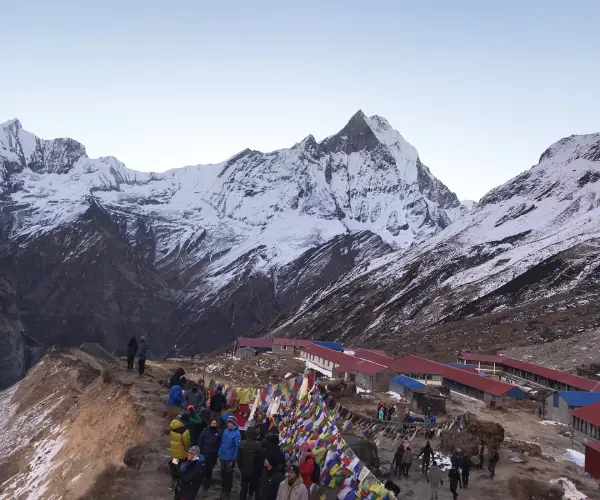
Exclusive Offer: 13 days annapurna base camp trek $350 Per Person
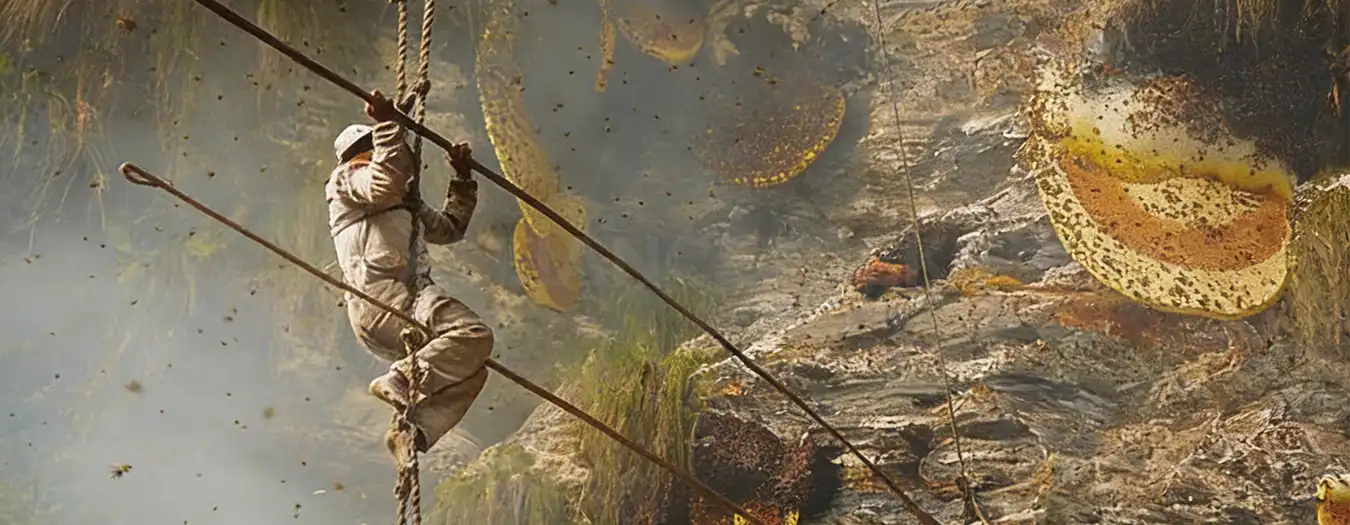
Honey hunting in Nepal is an unusual trip type practice that affords travelers an opportunity to view an uncommon cultural aspect of the Himalayan region. In this practice, intrepid honey hunters rapelling down vertical cliffs to harvest wild honey from the hives of giant Himalayan honeybee, Apis dorsata laboriosa, constitutes one of the oldest customs in the Himalayan region. Honey hunting tours in Nepal are renowned for blending adventure, culture, and natural beauty-an experience unrivaled by any seeking an authentic and exhilarating encounter.
Alliance Treks organizes these tours as well as the famous Nepal Annapurna base Camp trek or even the trek to Everest Base Camp, to provide a safe and nurturing environment. We cater to the cultural aspects of honey or anybody curious about its medicinal properties because this tour encompasses a complete spectrum of Nepal’s age-old bonding with nature and tradition.
+ view detailsDay 1 Arrive in Kathmandu (1310m)

Day 2 Honey Hunting Preparation
Day 3 Drive to Lamjung, Stay at Ghanpokhara
Day 4 Honey Hunting Preparation
Day 5 Honey Hunting Day
Day 6 Drive back to Kathmandu
Day 7 Departure for home country
Honey hunting in Nepal is a rare observation of a centuries old tradition that blends with adventure, culture, and nature. This daring operation, steeped in Gurung culture honey hunting, is really an adventure of harvesting honey from the world’s largest honeybee, the Apis laboriosa (Giant Himalayan honey bee), from the steep cliffs of the Himalayas. Alliance Treks customizes expeditions for unique experience seekers to witness this spectacular rite. So let us explore the traditional honey hunting Nepal and take a look at why it holds an attraction to adventurers from around the globe.
Honey hunting in Nepal has been practiced for thousands of years, which stretches back more than Twelve Thousand years ago, where indigenous communities like the Gurung manage to perfect an indigenous honey hunting methods Nepal. This was a ritualistic process that is currently being passed from one generation to another, signifying the bond between human strings and nature. Cliff honey hunting Nepal, perhaps not the greatest as a means of livelihood, is associated with honey hunting rituals Nepal and spiritual ceremonies.
The honey hunting festival Nepal paid honor to this ancient practice of the villagers raising their prayers to mountain deities for protection and bounty. Gurung honey hunters follow their ancient tradition to rely on handmade tools, be it bamboo roped lines or ladders that show their ingenuity to hunt honey from the cliffs. The villages embrace modernization but refuse to allow it to interfere with sustainable practices in cliff honey hunting so that this particular pollinator, the Giant Himalayan honey bee, may continue to thrive.
The cliff honey hunting Nepal is certainly an adventure to have, and one that is very hazardous. Each spring and autumn, honey hunters climb cliffs above 300 meters using honey hunting equipment Nepal such as hemp ropes and tangos (long bamboo poles). The bees are first pacified by smoking out the hives, after which the honey hunter carefully collects the combs filled with Nepal wild honey, including the famous mad honey Nepal, which is known for its psychoactive effects.
However, many risks abound in this. Honey hunting risks Nepal include falling down, bee stinging, and rock falling. Despite these dangers of honey hunting Nepal, hunters act as one unit, wisdom intertwined with ancestors. The protective gear for the honey hunters reflects mainly their acquired skills instead of the modern technological advancements.
Gurung honey hunters are the ones who are part and parcel of honey hunting and Nepalese traditions. Their villages, be it in the Annapurna honey hunting region or elsewhere, become centers for honey hunting rituals. Here, honey hunting tours Nepal, one can observe honey being ceremonially offered to local deities.
It even boasts its BBC honey hunting Nepal documentary, as well as The Last Honey Hunter documentary, which demonstrate their bravest actions. These two movies are revealing the economic challenges of Nepalese honey hunters since the younger generations have started moving to the cities and have made the decline of traditional honey hunting. Organizations like Alliance Treks partner with villages to promote sustainable honey hunting Nepal for the sake of culture preservation.
Mad honey Nepal, popularly known as “red honey,” is derived from rhododendron nectar. This psychoactive honey Nepal contains grayanotoxins and is hallucinate in high doses. Local communities are known to boast it medicinally, while tourists more likely will buy mad honey Nepal, because after all, “you only live once.” Mad honey benefits and risks must be weighed against one another, as an overdose may cause dizziness or heart problems.
Interestingly, ‘Apis laboriosa vs. Apis dorsata‘ discussion focuses on whether the former has really adapted to high altitudes. The role of Apis laboriosa in Nepal honey hunting is the one that matters most, since they pollinate most of the Himalayan flora. Climate change is now wreaking havoc in their habitats; Nepal honey hunting season is also affected, especially since the bees are sensitive to temperature fluctuations.
The best places for honey hunting in Nepal venues are the Annapurna honey hunting trails and the honey hunting Manaslu region. Remote villages like Bhujung and Nai Chi offer wild honey hunting in Nepal experiences. Alliance Treks organizes honey hunting packages in Nepal to these regions, combining trekking with cultural immersion with in the schedule.
Along the Himalayan honey hunting routes in Lamjung, tourists are treated to stunning landscapes. Tourists can join adventure honey hunting Nepal trips during the best time for honey hunting in Nepal, which are from March to May and September to November. These remote honey hunting villages Nepal give an authentic view of Gurung’s life.
While it is exciting, honey hunting in the Himalayas is hazardous. Honey hunting accidents in Nepal usually occur as a result of rope failures or loose cliffs. The impact of climate change on honey hunting increases the risks because erratic weather patterns affect bee colonies. Despite protective gear for honey hunters there still have been reported fatalities, which raise concern for caution.
In addition, the decline of traditional honey hunting with a shortage of labor and a falling price of honey is fading. Alliance Treks works on these issues through eco-tourism, promoting the conservation of wild bees in Nepal. Our Nepal honey hunting expedition tours fund community development projects so that hunters can receive fair pay.
Preserving honey hunting in Nepal requires balancing both traditional and ecological concern. Nowadays, hunters have already adopted sustainable practices in cliff honey hunting by leaving some portions of the hives intact for bee regeneration. Thus, NGOs are collaborating with many villages to document indigenous honey hunting methods Nepal so as to get against losing knowledge for the coming generations.
Moreover, Alliance Treks is an organization that supports the cause of sustainable honey hunting in Nepal by training hunters in safety and resource management. Our honey hunting photography tour Nepal that teaches visitors about ethical practices. All these efforts help fight the economic challenges of Nepalese honey hunters and save the Apis laboriosa species.
Alliance Treks assures you will have an unforgettable excitement by joining a honey hunting tour in Nepal. Our Nepal honey hunting photography trips involve guided treks to the cliffs and cultural exchanges with Gurung families. The travelers directly observe the honey hunting rituals in Nepal and taste the freshly harvested Nepali wild honey for sale.
Alliance Treks conducts honey hunting tours in Nepal for photographers, adventure travelers, and culture lovers. Remember to book during the Nepal honey hunting season. Moderate trekking is involved; therefore, prepare accordingly. Profits would go towards the conservation of wild bees in Nepal so your trip could have a meaningful impact.
Nepal honey hunting photography tours hint the best source for documenting this gunge vanishing tradition. The honey hunting documentary Nepal National Geographic and BBC honey hunting Nepal showcase the visual delight of it all. Alliance Treks cooperates with photographers to get priority places such as the honey hunting Manaslu region.
Additionally, the honey hunting festival Nepal provides colorful dance scenes and rituals. Mornings are beautiful for catching hunters who climb cliffs. This honey hunting photography tour Nepal package comprises workshops on visual storytelling to create this ancient practice within you.
The honey hunting risks in Nepal are a fall and a swarm of bees. But with proper precautions even a novice honey hunter can greatly mitigate these risks.
There are gray toxins in Mad Honey Nepal which gives its users gentle psychoactive effects. The said honey, though, was used in very small amounts in medications by the village people.
All of the honey hunting packages in Nepal options provided by Alliance Treks are guided expeditions. For instance, log in to their website and choose the option that happens to be relevant to you.
The best time for honey hunting in Nepal are carried out in the spring (March to May) or the autumn season (September to November).
Tourism revenues support sustainable honey hunting Nepal by preserving traditions and protecting bee species.
In conclusion, Honey hunting in Nepal is thus an enduring testimony to both human survival and culture. By supporting responsible operators such as Alliance Treks, you keep this age old practice alive. Whether it is adventure, culture, or photography, when you experience honey hunting Nepal, it is a different ball game altogether.
Alliance Treks & Expedition Pvt. Ltd. Once is not enough for naturally and culturally Himalayas