(Viber, Whatsapp, Cell) +977 9851022814

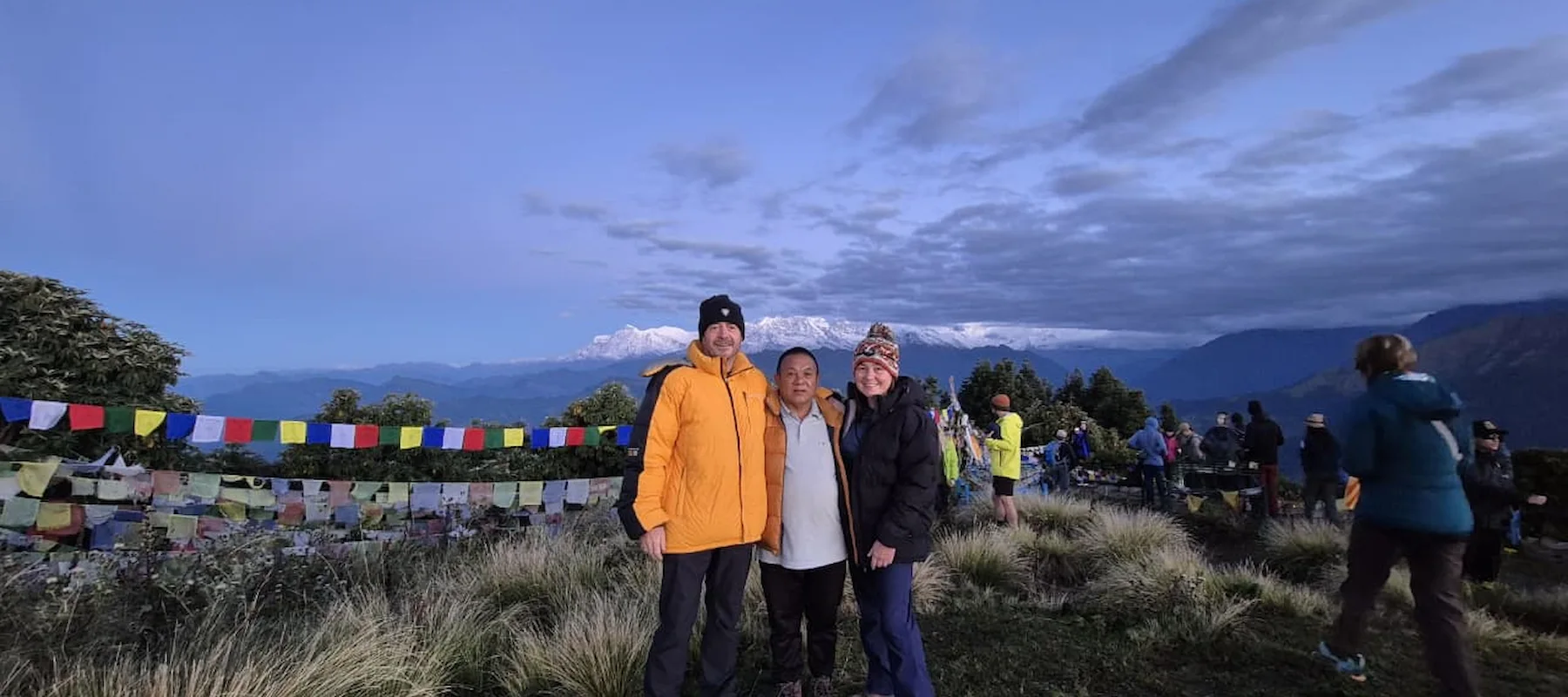
The Annapurna Foothills Trek is a 6-day walk through some of the most beautiful village and mountain scenery Nepal has to offer — all starting and ending from Pokhara. You pass through Gurung and Magar villages, climb through rhododendron forests, stay in friendly local teahouses, and finish with an early-morning walk to Poon Hill for a sunrise view of the Annapurna and Dhaulagiri ranges that you won’t forget. No technical climbing experience is needed — just a decent pair of boots and a willingness to walk.
The Annapurna Foothills Trek is one of the most beautiful and rewarding short trekking adventures in Nepal. This scenic journey takes you through charming Gurung and Magar villages, peaceful rhododendron forests, green terraced fields, and breathtaking Himalayan viewpoints. As a result, it is the perfect choice for trekkers who want to experience the beauty of the Annapurna region without trekking to very high altitude.
Often known as the Ghandruk Poon Hill Trek, Ghorepani Poon Hill Trek, Annapurna Panorama Trek, Annapurna Sunrise Trek, and Annapurna Rhododendron Trek, this route combines spectacular mountain scenery, rich local culture, and comfortable tea house accommodation. Therefore, it is one of Nepal’s most popular trekking holidays for families, couples, solo travelers, and first-time trekkers.
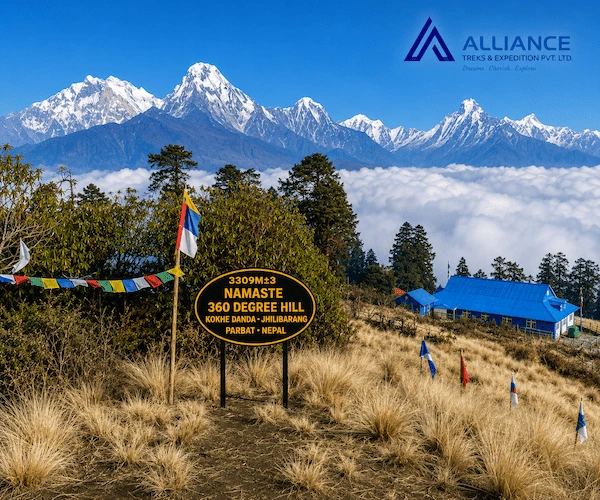
The highlight of the trek is the unforgettable sunrise from Poon Hill (3,210 m / 10,531 ft). Early in the morning, golden sunlight slowly lights up some of the world’s highest mountains, including Annapurna I (8,091 m), Dhaulagiri (8,167 m), Machhapuchhre (Fishtail), Hiunchuli, Nilgiri, Annapurna South, and many other snow-covered peaks. Consequently, Poon Hill is widely regarded as one of the finest sunrise viewpoints in Nepal.
In spring, the trail becomes even more beautiful as thousands of colorful rhododendron flowers bloom across the hills. Meanwhile, traditional villages such as Ghandruk, Ghorepani, and Ulleri welcome visitors with warm hospitality, local traditions, and authentic Himalayan lifestyles.
Unlike many high-altitude treks, the Annapurna Foothills Trek is suitable for people with average fitness. Moreover, the well-maintained trails, comfortable lodges, and moderate walking distances make it an ideal trekking holiday throughout the year, especially during spring (March to May) and autumn (September to November).
Whether you call it the Annapurna Foothills Trek, Ghandruk Poon Hill Trek, Annapurna Panorama Trek, Annapurna Sunrise Trek, or Ghorepani Poon Hill Trek, every step offers breathtaking scenery, rich cultural experiences, and unforgettable Himalayan memories.
The best seasons are spring (March to May) and autumn (September to November). During spring, the hills are covered with colorful rhododendron flowers. In autumn, clear skies provide outstanding mountain views and excellent weather for trekking.
The Annapurna Foothills Trek is an easy to moderate trek. Therefore, it is suitable for beginners, families, children, and active travelers looking for a comfortable Himalayan adventure without extreme altitude challenges.
With over 34 years of Himalayan trekking experience, Alliance Treks & Expedition Pvt. Ltd. offers professional guides, personalized service, flexible itineraries, quality tea house accommodation, and a strong commitment to safety. From your arrival until your departure, our experienced local team ensures a smooth, enjoyable, and unforgettable trekking experience in the Annapurna region.
Day 1 Pokhara (822m/ 2,696ft) - Tolkha (1,360m/ 4,482ft)
Day 2 Tolkha (1,360m/ 4,482ft) - Ghandrung (2,012m/ 6,601ft)
Day 3 Ghandrung (2,012m/ 6,601ft) - Banthanti (2,800m/9,200ft)
Day 4 Banthanti(2,800m/ 9,200ft) - Ghorepani (2,874m/ 9,429ft)
Day 5 Visit Poon Hill (3,210m/10,531ft) for the best Sunrise view - Hile (1,948m/6,391ft)
Day 6 Hile (1,948m/6,391ft) - Nayapul - Pokhara (822m/ 2,696ft)
I loved the peaceful atmosphere of the Annapurna foothills. The combination of mountain scenery, forests, villages, and local culture made the trek feel very authentic. Riddhi was a wonderful guide and was always helpful and encouraging, especially on the uphill sections. The six days passed quickly, and I returned with some great memories.
The Annapurna Foothills Trek was a fantastic adventure. The six-day itinerary was perfect for my schedule, and the scenery throughout the route was beautiful. Race was a professional and caring guide who made sure we were doing well each day. I would definitely recommend this trek to anyone looking for a shorter Himalayan experience.
This trek gave me a great chance to enjoy the natural beauty of Nepal at a relaxed pace. I especially loved walking through the forests and seeing the traditional mountain villages along the route. Riddhi was an excellent guide, very approachable and knowledgeable, and made the whole journey feel easy and enjoyable.
I had a great time on this six-day trek. The trails were scenic, the villages were welcoming, and the Himalayan views were incredible. Race was always there when we needed assistance and kept the walking pace comfortable for everyone. It was a peaceful way to experience the beauty of the Annapurna region.
The Annapurna Foothills Trek was even better than I expected. Every day had beautiful scenery, from lush hills and forests to spectacular views of the surrounding mountains. Riddhi was a very friendly and supportive guide, and his guidance made the trek feel comfortable and well organized. A great experience from start to finish.
This was a fantastic short trek for anyone who wants to experience the Himalayas without committing to a long journey. I loved the forests, small villages, and changing mountain landscapes. Race did a great job guiding us and also shared interesting details about the local culture. The whole trip was relaxing and memorable.
I really enjoyed exploring the Annapurna foothills. The trek was not overly rushed, and there was plenty of time to enjoy the scenery and local villages. Riddhi was an excellent guide who was patient, knowledgeable, and always ready to help. The mountain views in the morning were absolutely beautiful.
The 6-day Annapurna Foothills Trek was a wonderful experience. The peaceful trails, traditional villages, green hills, and views of the Annapurna range made the journey very enjoyable. Our guide Race was friendly and helpful throughout the trek and made sure we were comfortable at every stage.
Annapurna Foothill Trek is the best for age 7 to 75, I think. I am 78 this year and I did this trek with my lovely guide Ridhe and porter Jay. I was planning to do soft tours but Kishor recommended by to do this trekking. I am ex-army but resting for couple of hours not doing much trekking however this trek perfectly suited me and I really enjoyed. Thank you Mr. Kishor and Alliance Treks team arranging my beautiful Annapurna Foothill Trek.
Its easy, excellent surrounding landscape and just beautiful scenery.
Thank you team offering me such a beautiful trip.
Johan Mouldon
Germany
The Annapurna Foothills Trek is one of the most rewarding short treks in Nepal. It takes you into the lower reaches of the Annapurna Himalayan range — through traditional villages, terraced hillsides, and dense mountain forests — without the long acclimatisation days or high-altitude risk of more demanding routes. The trail is well-established, lodges are comfortable and easy to find, and the scenery is genuinely world-class from the very first day. It is the perfect trek for people who want to experience real Himalayan trekking without committing to two or three weeks on the trail.
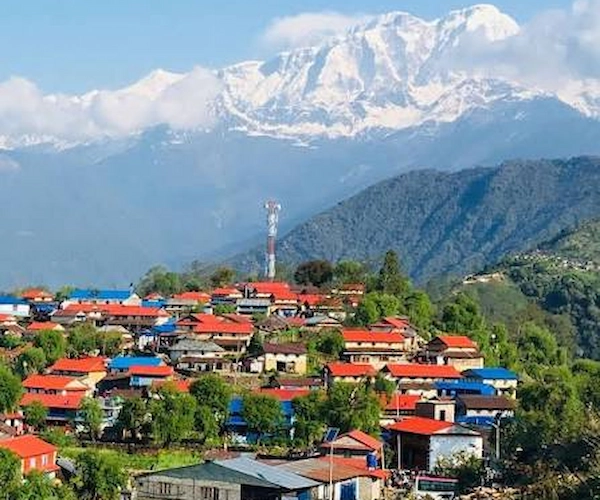
The trek starts with a drive from Pokhara to Tolka, a small hilltop settlement that marks the beginning of the walking section. From Tolka, you head to Ghandruk — one of the largest and most beautiful Gurung villages in the Annapurna region, sitting on a sunny south-facing slope with a direct view of Annapurna South and Machhapuchhre (Fishtail). From Ghandruk the trail climbs steadily through Banthanti and into the thick rhododendron and oak forests that the Ghorepani section is famous for. You spend a night in Ghorepani at 2,850 metres, wake before dawn on Day 5 for the one-hour climb to Poon Hill, and then descend all the way to Hile and on to Nayapul on the final day, where a short drive returns you to Pokhara. The whole loop covers around 40 kilometres of walking spread across 4 trekking days at a comfortable pace.
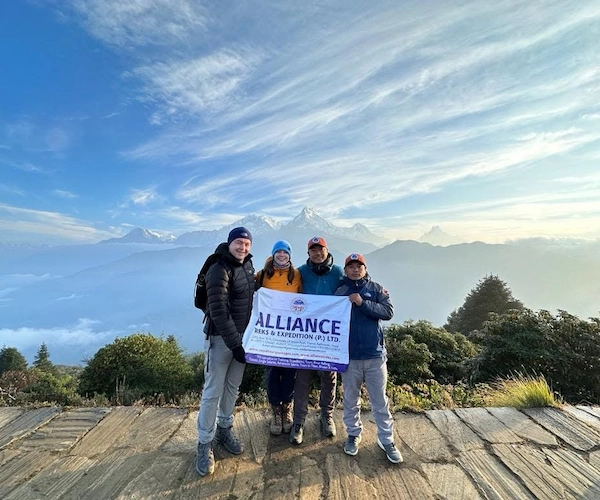
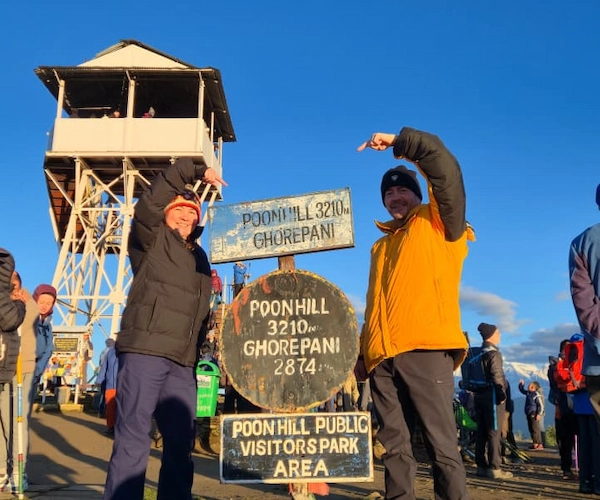
Poon Hill (3,210 m) is the single most famous viewpoint on any short Nepal trek, and it fully earns its reputation. You leave Ghorepani at around 4:30–5:00 AM, climb the stone-stepped path through the dark forest with your headlamp on, and arrive at the viewpoint tower just before first light. As the sky brightens, the silhouettes of Dhaulagiri (8,167 m), the full Annapurna range, Machhapuchhre, Nilgiri, and Tukuche Peak emerge one by one out of the darkness and turn gold in the rising sun. It is one of the most concentrated mountain panoramas you can see anywhere in the world from a single vantage point — and you get there on foot, without any technical gear or climbing experience.
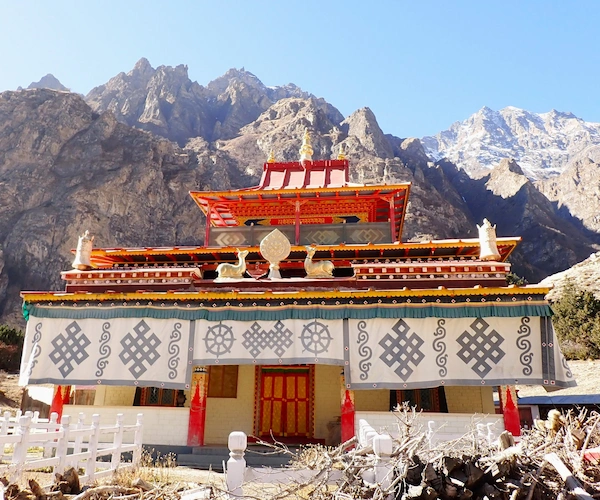
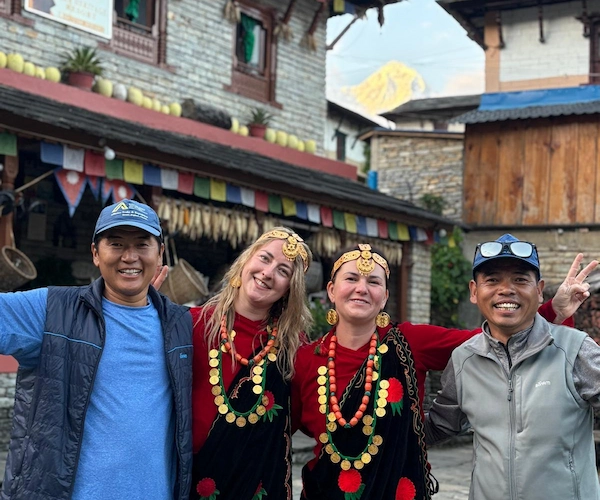
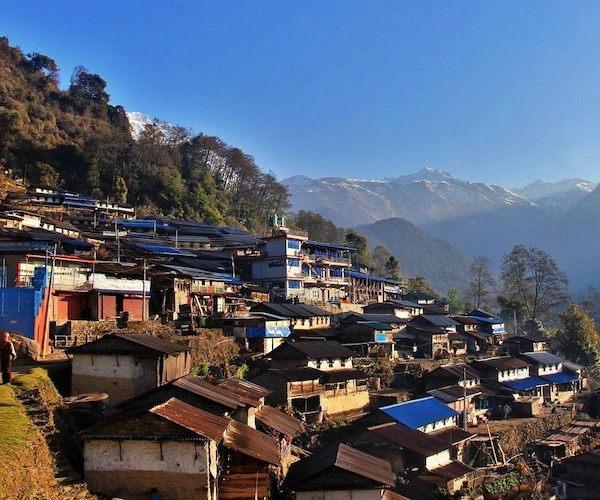
This trek passes through living, working mountain communities — not just scenery. Ghandruk is a Gurung village with a long tradition of military service and a strong sense of local identity. The village has a small museum dedicated to Gurung history and culture, active monasteries, traditional stone-paved lanes, and warm teahouse hosts who have been welcoming trekkers for generations. Further along the trail, the smaller settlements of Banthanti and Ghorepani offer a quieter, more remote feel. You get to eat local food, hear the Gurung language, watch daily village life unfold around you — and then walk on the next morning. It is one of the things that makes this trek feel genuinely meaningful rather than just a walk with a view.
A big part of what makes the Annapurna Foothills Trek so beautiful is the forest itself. The section between Ghandruk and Ghorepani passes through some of the finest rhododendron and oak forest in Nepal. In spring — roughly late March through April — the whole canopy blooms in red, pink, and white rhododendron flowers, with petals covering the trail underfoot. Even outside spring, the forest is dense, mossy, and full of birdsong. The Annapurna Conservation Area protects this entire landscape, and the biodiversity here is remarkable — Himalayan pheasants, deer, langur monkeys, and hundreds of bird species all live within the forest you walk through every day.
You stay in local teahouses and lodges throughout the trek. Rooms are simple — twin beds, a blanket, and usually a shared bathroom — but they are clean, warm enough with the right sleeping bag, and always run by friendly hosts. The dining rooms are where the social side of trekking happens: trekkers from different countries sharing a table over dal bhat, pasta, or hot soup after a long day on the trail. Breakfast is included in your package. Lunch and dinner are ordered from the menu and paid for directly at the lodge — giving you full flexibility to eat as much or as little as you like each day.
The Annapurna Foothills Trek is designed for anyone with a reasonable level of fitness who enjoys walking. You do not need prior trekking experience, altitude training, or technical skills. The longest walking days are 5–6 hours, with a maximum altitude of 3,210 metres on Poon Hill — well within the range where altitude sickness is uncommon. It works well for solo travellers, couples, small groups, and families with older children. If you can walk comfortably for a few hours on uneven ground and don’t mind sleeping in a simple lodge room, you will enjoy this trek.
The two best seasons are autumn (October and November) and spring (March to May). Autumn brings clear skies, dry trails, and the sharpest mountain views of the year — October is widely considered the single best month to trek in Nepal. Spring is slightly hazier due to atmospheric dust, but the rhododendron forests are in full bloom and temperatures are warmer and more comfortable for walking. The monsoon season (June to August) brings heavy rain and leeches on the trail, and winter (December to February) is cold but possible with the right gear. For first-time trekkers, October or November is the safest and most enjoyable choice.
Two permits are required for this trek. The Annapurna Conservation Area Permit (ACAP) covers entry into the protected landscape you walk through for the entire 6 days. The TIMS (Trekkers’ Information Management System) card is a trekking registration required for all visitors on Nepal’s main trekking routes. Both permits are arranged in Pokhara before the trek begins and are included in your package price — you don’t need to do anything except make sure your passport is with you when the permits are processed.
You don’t need a lot. Good, broken-in trekking boots are the single most important item — blisters on Day 1 will ruin the rest of the trek. Beyond that: a warm jacket and fleece for the cold mornings and evenings at Ghorepani, a waterproof outer layer, a headlamp for the Poon Hill pre-dawn climb, sunscreen and sunglasses, and enough cash in Nepali rupees to cover your meals and personal expenses on the trail. A sleeping bag is provided free of charge through your package if you need one. Trekking poles are not essential but are helpful on the steeper descents. Keep your daypack light — you only need water, snacks, a camera, and your warm layers.

Alliance Treks & Expedition Pvt. Ltd. Once is not enough for naturally and culturally Himalayas