(Viber, Whatsapp, Cell) +977 9851022814

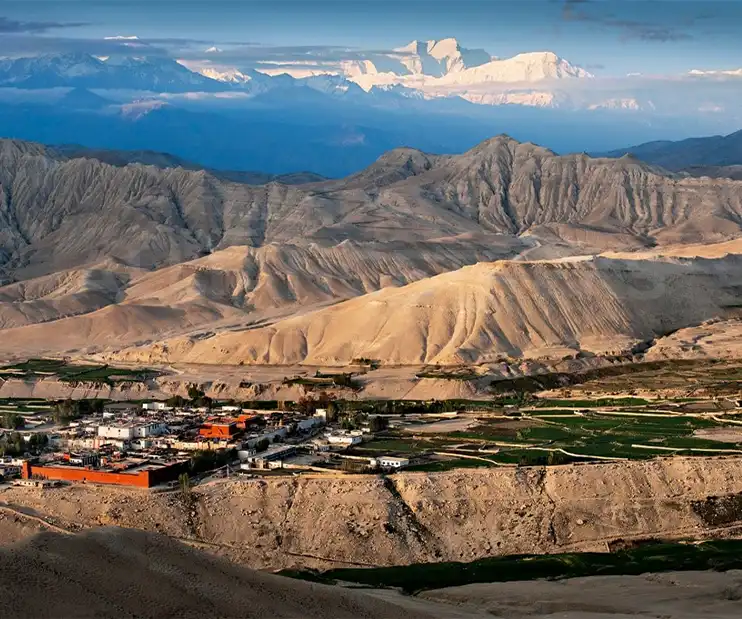
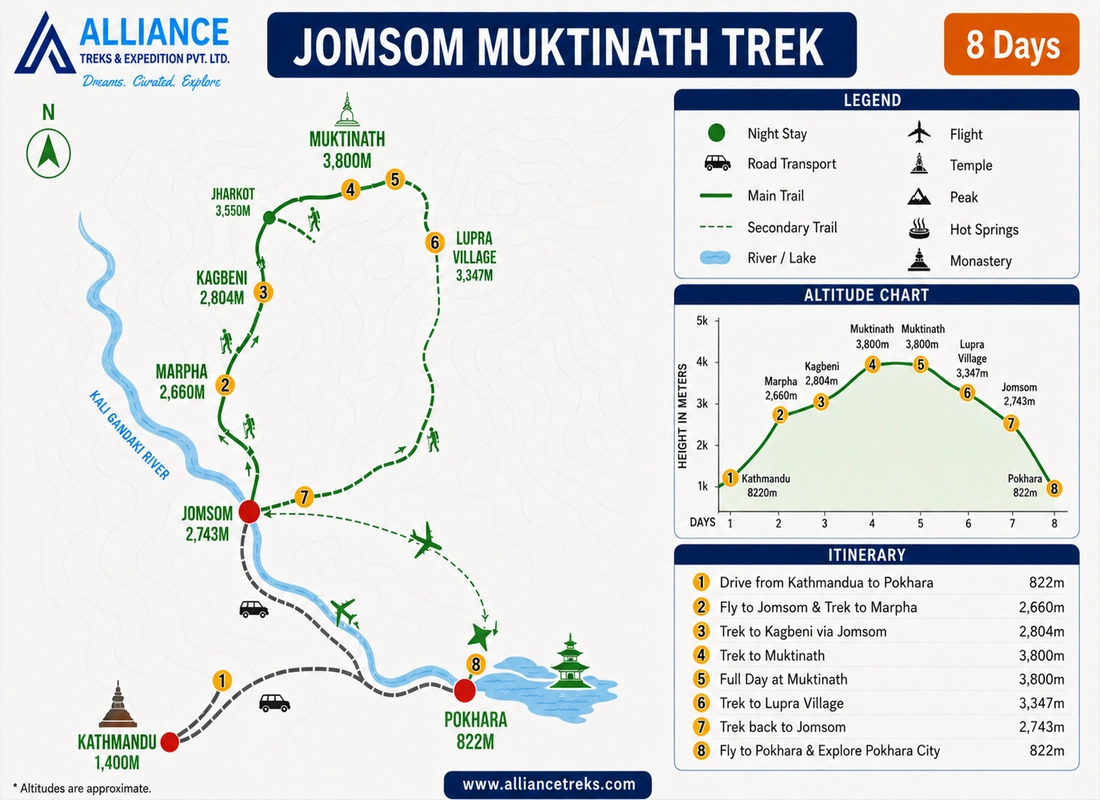
The Jomsom Muktinath Trek is an 8-day cultural and spiritual journey through Nepal’s mystical Lower Mustang region. Fly from Pokhara to Jomsom, trek through ancient Thakali villages, cross the world’s deepest gorge, and reach the sacred Muktinath Temple — revered by both Hindus and Buddhists — at 3,762m.
Day 1 Drive to Pokhara (822m/ 2,696ft)
You will depart Kathmandu early morning on the Prithvi Highway, passing towns, river valleys, and green hills. After 6 hours, arrive in Pokhara — Nepal's lakeside adventure capital. Check in to your hotel near Phewa Lake and enjoy a relaxed evening with views of the Annapurna range.
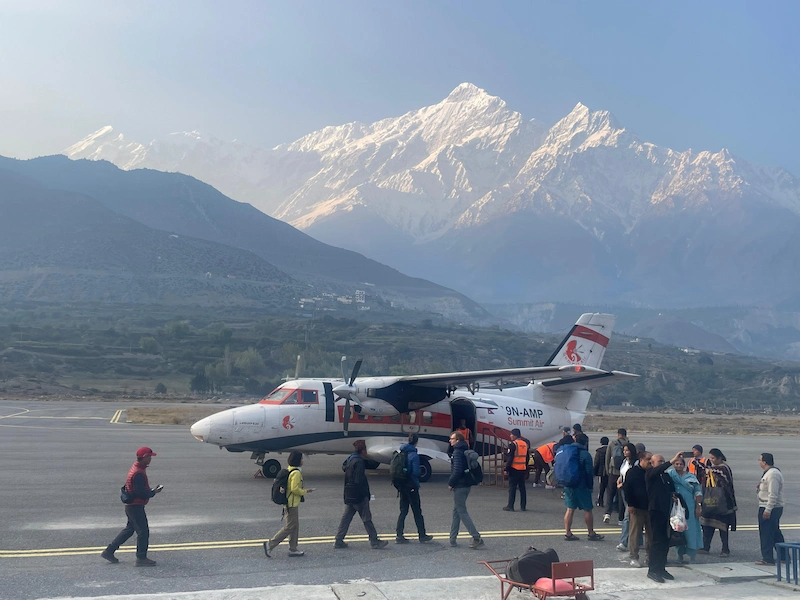
Day 2 Fly to Jomsom (2,743m/ 8,999ft) & Trek to Marpha (2,660m/ 8,730ft)
Day 3 Trek to Kagbeni (2,800m/ 9,200ft) via Jomsom (2,743m/ 8,999ft)
Day 4 Trek from Jomsom (2,743m/ 8,999ft) to Muktinath (3,800m/ 12,467ft)
Day 5 Full Day at Muktinath (3,800m/ 12,467ft)
Day 6 Trek from Muktinath to Lupra Village (3,347m/ 10,880ft)
Day 7 Trek fro Lupra Village (3,347m/ 10,880ft) to Jomsom (2,743m/ 8,999ft)
Day 8 Fly to Pokhara & Explore Pokhara City (822m/ 2,696ft)
I would definitely recommend this trek to travelers who want a taste of Mustang but have limited time. The itinerary offered a good combination of mountain scenery, village exploration, and cultural experiences. I enjoyed seeing the traditional houses in Marpha, wandering through Kagbeni, and visiting Muktinath. Each place felt different, so the trip never became repetitive. The landscape around the Kali Gandaki was particularly impressive, with huge open spaces and mountains rising on both sides. Race was a caring guide who kept the group organized and made sure we knew what to expect each day. The experience felt personal and relaxed, and the eight days passed quickly. It was one of the most rewarding parts of my visit to Nepal.
The Jomsom Muktinath Trek was a memorable way to experience the Annapurna region from a different perspective. I enjoyed the dramatic valley scenery, the views of the surrounding peaks, and the chance to visit traditional Mustang settlements. Kagbeni stood out because of its historic atmosphere, while Muktinath was fascinating for its spiritual importance and mountain setting. The weather and wind made some parts of the walk more demanding than expected, but the journey was enjoyable overall. Race was professional, friendly, and knowledgeable about the region. He handled the arrangements well and made sure we had time to appreciate the highlights. I came away with a better understanding of Mustang’s culture and landscape.
I wanted a trek that would let me enjoy the mountains without committing to a very long expedition, and this itinerary worked beautifully. The walking days gave us plenty of time to appreciate the scenery, while the village stops offered opportunities to explore and learn about local culture. I particularly liked Marpha’s quiet streets and the views around the Kali Gandaki Valley. Visiting Muktinath was another highlight, and I found the religious history of the site fascinating. Race was supportive and attentive, especially when we needed guidance about the walking pace and daily schedule. The whole journey felt comfortable and well coordinated. I would gladly choose another trek with this team in the future.
This was my first time trekking in the Mustang region, and it gave me a real appreciation for how diverse Nepal’s landscapes can be. The dry, open valleys and rocky hills were very different from the lush scenery I had expected. I enjoyed the walks around Jomsom and Kagbeni, and the approach to Muktinath was a highlight. There was also plenty to learn about local life, architecture, and religious traditions. Race was a great guide who made sure the group understood the daily arrangements and felt comfortable throughout the trip. I especially appreciated his calm approach and the time he took to answer questions. For an eight-day holiday, this trek offered a lot of variety and some wonderful memories.
I enjoyed the quieter moments of this trek just as much as the main highlights. Walking through the villages, watching daily life unfold, and taking in the wide mountain views made the trip feel authentic. Muktinath was especially memorable because of the spiritual atmosphere and the mix of visitors who come there for different reasons. I also loved the traditional architecture in Kagbeni and the peaceful feeling of Marpha. Race was considerate and knowledgeable, and he made it easy to ask questions about local customs and the route. The trip was well organized from day to day, and I never felt that we were simply moving from one destination to the next without enjoying it.
I booked this trek because I wanted a mountain adventure that included more than just walking, and it delivered exactly that. The landscapes were dramatic, the villages were interesting to explore, and the visit to Muktinath added a cultural dimension to the journey. I particularly enjoyed the walk around Kagbeni and the views across the valley toward the surrounding peaks. The afternoon wind in the open valley was stronger than I expected on some sections, so having suitable clothing was useful. Race was encouraging and kept us informed about the route and daily plans. He made the experience feel organized while still leaving room to enjoy the scenery. Overall, it was a great eight days in Mustang.
What made this trek special for me was the combination of beautiful landscapes and cultural experiences. The villages had their own character, and I enjoyed noticing the prayer flags, monasteries, traditional houses, and local customs along the way. Muktinath was a particularly interesting visit because it is important to both Hindu and Buddhist pilgrims. I also loved exploring Kagbeni and seeing the old lanes and buildings up close. Race was kind, knowledgeable, and respectful when explaining the religious traditions of the region. The eight days felt well balanced, with enough walking to enjoy the outdoors and enough time to appreciate the places we visited. It was a very rewarding experience.
The landscape was the part of this trek that impressed me most. Walking through the broad Kali Gandaki Valley with towering mountains on either side felt completely different from the forest trails I had experienced elsewhere in Nepal. I loved seeing the dry hills, rocky slopes, scattered settlements, and occasional green fields around the villages. The route toward Muktinath was especially beautiful, and the views made stopping for photographs worthwhile. Race was a dependable guide who knew the region well and was happy to answer questions along the way. He also helped us manage the walking pace comfortably. This trek offered a great mix of scenery and culture, and I would happily recommend it to anyone looking for a shorter Himalayan adventure.
I had limited time for trekking in Nepal, so the eight-day Jomsom Muktinath itinerary suited my plans perfectly. The trip included beautiful mountain scenery, traditional settlements, and an interesting cultural experience at Muktinath. Kagbeni was particularly memorable because of its old architecture and its position beside the Kali Gandaki River. I also enjoyed seeing how the landscape changed between the villages. Race was organized, patient, and attentive throughout the journey. He helped us understand the daily plan and made sure we had time to rest and enjoy the surroundings. The trek was active without feeling like a race against the clock, which made the whole experience much more enjoyable.
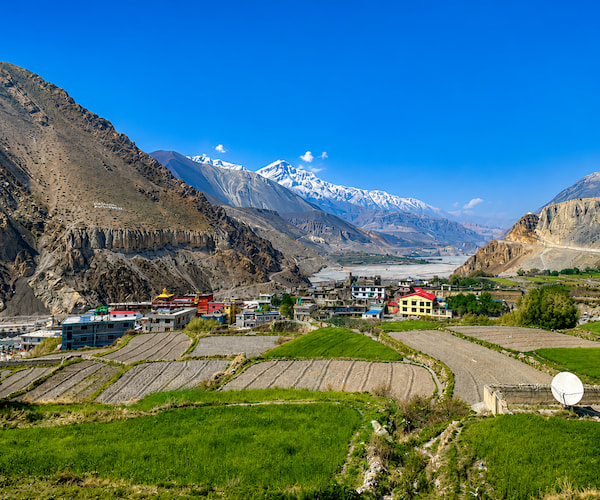
I really enjoyed the entire eight-day journey, but Marpha was probably my favorite stop. The whitewashed houses, stone-paved lanes, and apple orchards gave the village a distinctive character. It was lovely to walk around in the afternoon and enjoy a slower pace after spending time on the trail. The scenery throughout Lower Mustang was impressive too, particularly the views of Nilgiri and the surrounding mountains. Race was approachable and helpful, and he shared interesting details about the Thakali communities and local traditions. I liked that this trip combined outdoor adventure with opportunities to experience village life. It was a great way to discover a different side of Nepal without needing a longer expedition.
I was interested in this trek because of Muktinath’s spiritual importance, and the visit turned out to be much more meaningful than I had expected. The temple area has a special atmosphere, with pilgrims, prayer flags, shrines, and the surrounding mountain scenery. I also enjoyed walking through the villages on the way, especially Kagbeni, where the traditional buildings and quiet lanes were fascinating. Race explained the cultural significance of the places we visited in a thoughtful and respectful way. The trek was well paced, and I appreciated having time to explore rather than rushing through every stop. It was a memorable cultural and mountain experience.
The Jomsom Muktinath Trek was one of the most enjoyable parts of my visit to Nepal. I loved how different the Mustang landscape felt compared with the greener mountain regions I had seen earlier. The wide Kali Gandaki Valley, dry hills, traditional villages, and distant snow-covered peaks made the walking days really interesting. Visiting Muktinath was a special experience, and I also enjoyed exploring Kagbeni’s narrow streets. Race was a friendly and knowledgeable guide who helped us understand the local culture and kept the trip well organized. Eight days gave us a wonderful introduction to this part of Nepal, and I returned home with some fantastic memories.
The Jomsom Muktinath Trek is a cool trip in Nepal, which has a lot of culture and amazing views. It is a trek that takes you to a special pilgrimage place, an old trade route that people still use, and some of the most beautiful desert landscapes in the Himalayas. This 8-day adventure is great for people who like to trek, visit places, and learn about new cultures. You do not have to worry about going too high up or doing anything difficult.
The trip starts with a flight from Pokhara to Jomsom. Jomsom is a town in the Mustang area of the Annapurna Conservation Zone. From there, you walk along the Kali Gandaki River valley. This is an old trade route that connects Nepal and Tibet. You will see the towns of Marpha and Kagbeni. Marpha is known for its houses, apple trees, and friendly people. Kagbeni is a town that is like a gate to Upper Mustang. It has a lot of influence.
Then you will go to the Muktinath Temple. This temple is really important for Hindus and Buddhists. It is at a point of 3,762 meters. The temple has 108 water spouts and a special flame that burns all the time. You can see the mountains of Dhaulagiri, Nilgiri, and Tukuche from there. It is a spiritual and beautiful place.
You will also visit the village of Lupra. This is a village that not many people visit. It has a monastery that is even older than Buddhism. This trek is not too hard. You can do it even if you have never trekked before. It is good for families and people who want to visit places. You will walk for 3 to 5 hours a day on trails that are easy to follow. The Jomsom Muktinath Trek is in one of the beautiful places in Nepal. The Jomsom Muktinath Trek has a lot of things to see and do.
Alliance Treks & Expedition Pvt. Ltd. Once is not enough for naturally and culturally Himalayas