(Viber, Whatsapp, Cell) +977 9851022814

The ridge country of the Annapurna Foothills, located above the Western part of Pokhara’s Phewa Lake, hides for most visitors and tourists to Pokhara. The Panchase Trek is a 4-day journey through beautiful landscape – a trail that starts with a rowing boat across the Phewa Lake and ends with a beautiful panoramic ridge top viewpoint over some of the most famous mountains on Earth.
Panchase Hill at 2,500m altitude takes its name from an ancient philosophical tradition, the word meaning the five seats of the divine mother, the five planes of human experience: thinking, feeling, sensing, manifesting above, and below. It’s a name that sums up the quality of this trek; it’s not just a place to stop and admire a view, but a landscape to traverse, slowly and attentively, a place where the mountains, forests, villages, and people all exist on one plane.
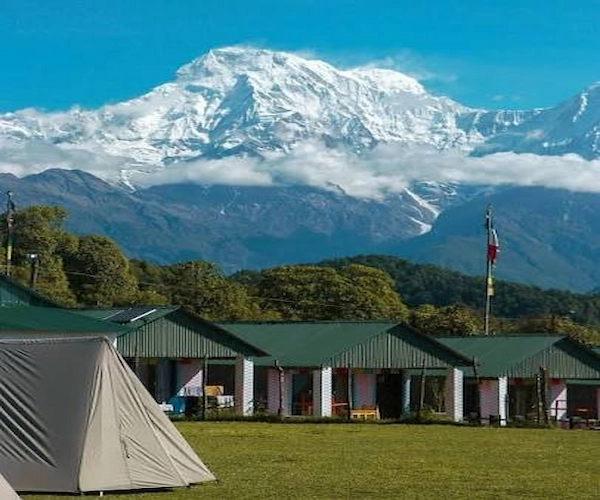
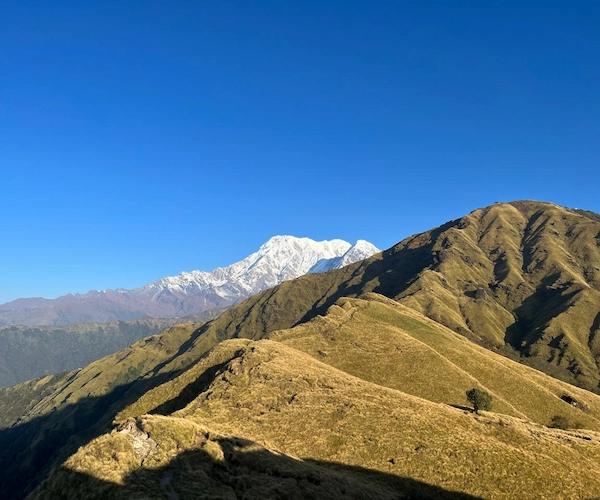
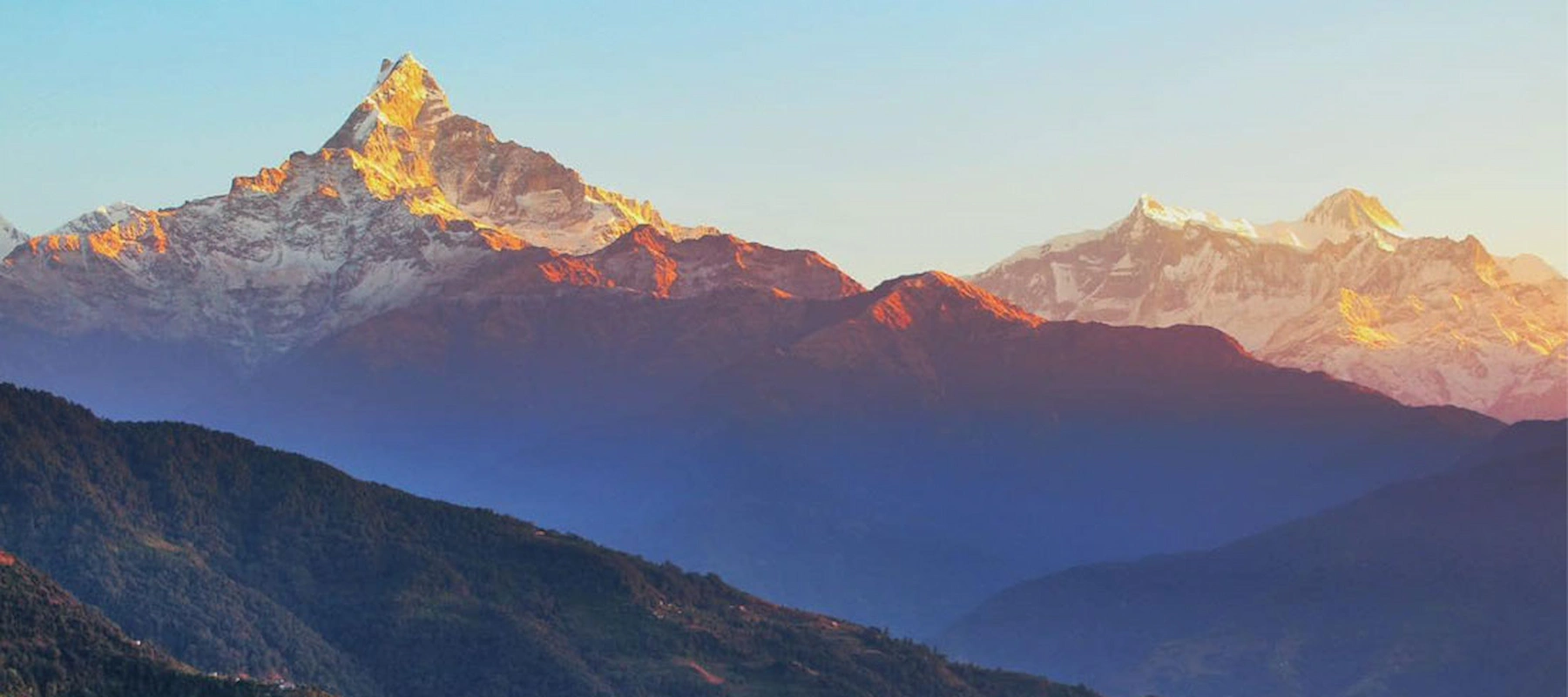
From the top of the Panchase Hill, the panoramic view of Machhapuchhre (Fishtail, 6,993m) directly ahead, Annapurna I (8,091m), Annapurna South, Annapurna III, Gangapurna, and Lamjung Himal spread across the eastern horizon, and also the giant Dhaulagiri (8,167m).
Day 1 Boat Across Phewa Lake & Trek to Bumdi
Day 2 Trek Bumdi to Panchase Bhanjyang
Day 3 Hike Panchase Hill (2,500m) & Trek to Bhadaure
Day 4 Trek to Naudanda & Drive to Pokhara
The Panchase Trek is one of the most uniquely designed short treks in the entire Annapurna region, to start with the rowing boat across the tranquil waters of Phewa lake! The lake crossing in the early morning, with mist rising from the lake, the Annapurna range reflected in the lake, the white dome of the pagoda of world peace at the forested ridge above, is one of the most beautiful beginnings to any trek in Nepal, before anyone has even set foot on the actual trail.
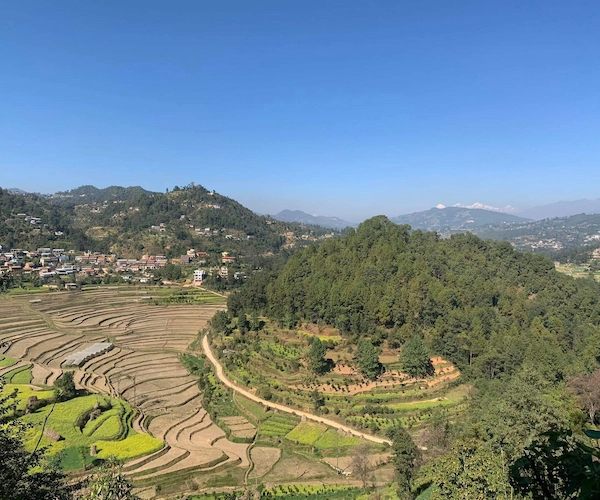
After landing on the west side of Phewa Lake the walk passes straight through sub-tropical woodlands and the village of Lukum Swara and then up the ridge above the lake to the village of Bumdi, a traditional Gurung and Brahmin village and a place where there are warm teahouse guesthouses as well as the first wide views of the Pokhara Valley and the mountains above. Bumdi is situated at the junction where the thick forest with birds abounds meets the first open ridge country, and feeling like you are away from the city altogether is complete.
The second day takes you along the same trail on a northward route through the protected forest zone of the Panchase area—an incredible patch of woodland that is a protected area and is home to more than 100 orchid species, as well as a wealth of rhododendron groves which burst into crimson bloom in spring, and a birding hotspot that includes the Himalayan monal, Kalij pheasant and several species of eagle and hawk. The trail is not too busy (the Panchase route is only about twice as busy as Ghorepani or Mardi Himal) and the forest parts in morning light are truly refreshing with a deep mountain calm.
The pass or saddle below Panchase Hill is known as Panchase Bhanjyang and is the overnight base for the summit hike (a broad, open ridge with views in both directions, and a small community of teahouses, the base from which early morning summit walks take place). One of those little mountain adventures that puts this trip to Nepal into the annals of memories is an ascent to Panchase Hill (2,500m) before dawn, with the help of a headlamp, and warm layers, where the trail is barely visible in the pre-sunrise darkness. The entire Himalayan landscape unfolds in stages, as the sky darkens to deep blue and then to rose gold above the Annapurna range, followed by Machhapuchhre’s unique double summit, the great wall of Annapurna, and the west ridge of Dhaulagiri, which was plastered in ice by the first rays of morning light.
The descent from Panchase goes through Bhadaure, a pleasant multi-ethnic village, where the people of the Brahmin, Gurung and Kami families have terraced fields on a hillside, marigold gardens and farmhouses with slate roofs.The descent from Panchase passes through the village of Bhadaure, which is a pleasant village with people from all ethnic groups living in the same village, with the terraced fields on a hillside, the marigold gardens and slate roofed farmhouses. The trek also has an ecological significance as the trek area is the source of several tributaries of Phewa lake, the Pokhara Valley which includes the Harpan khola.
Alliance Treks & Expedition Pvt. Ltd. Once is not enough for naturally and culturally Himalayas