(Viber, Whatsapp, Cell) +977 9851022814

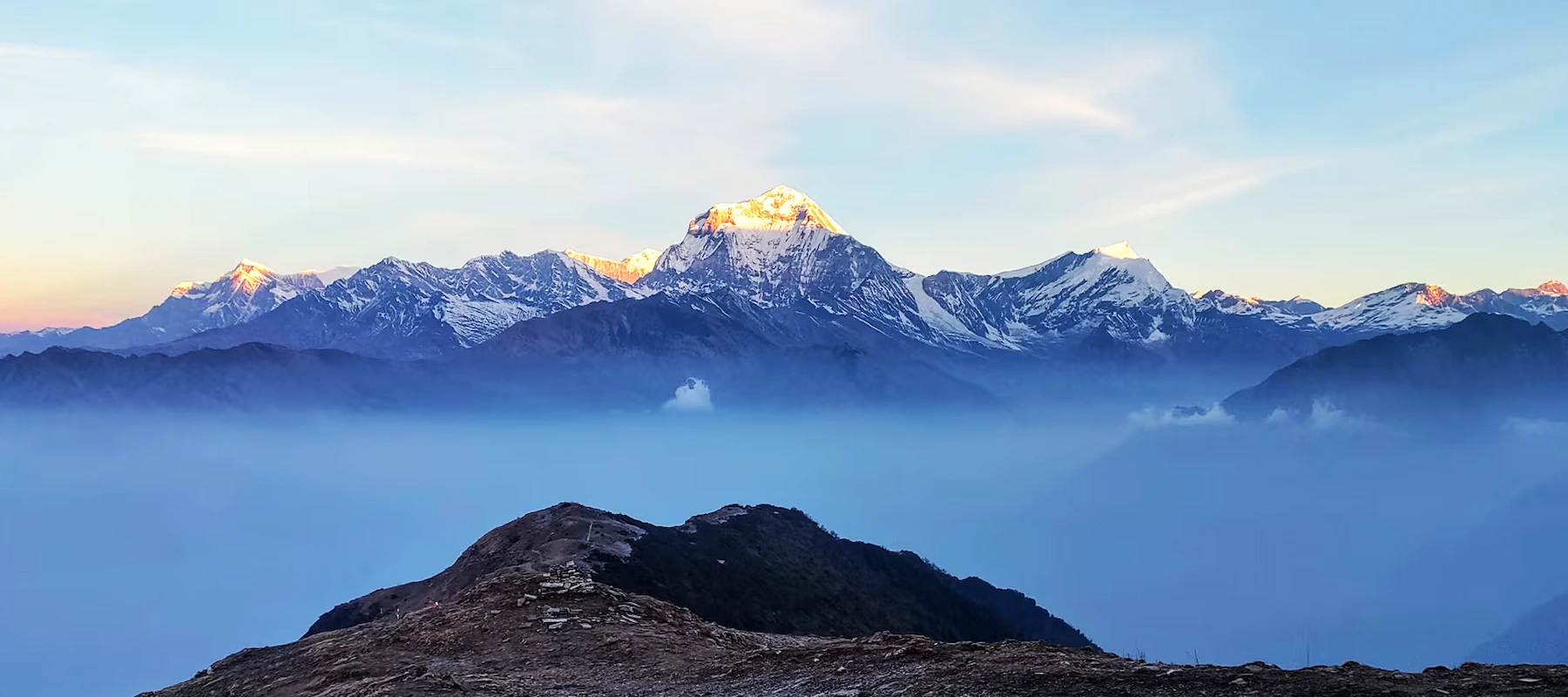
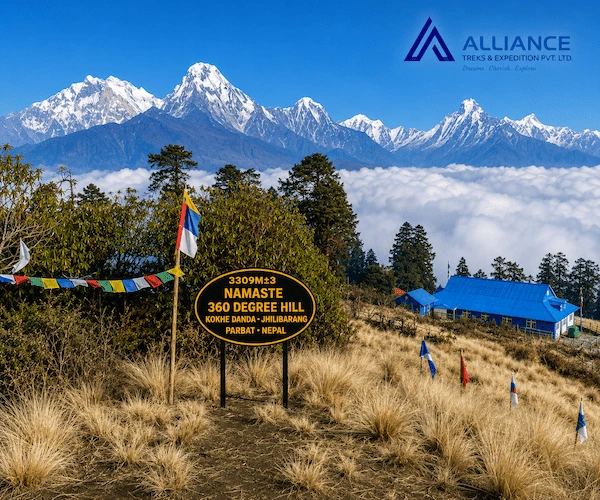
The Khopra Ridge Trek is one of the most underrated trekking trails in Nepal. This trail is one of the least crowded treks in the Annapurna region of Nepal. Over 11 days, this beautiful off-the-beaten-path route takes you from the Gurung village of Ghandruk, dense rhododendron forests, remote high-altitude ridges, and sacred alpine lakes. Along with that, you can enjoy the panoramic views of Annapurna South, Nilgiri, and Machhapuchhre (Known as Fishtail) mountain ranges.
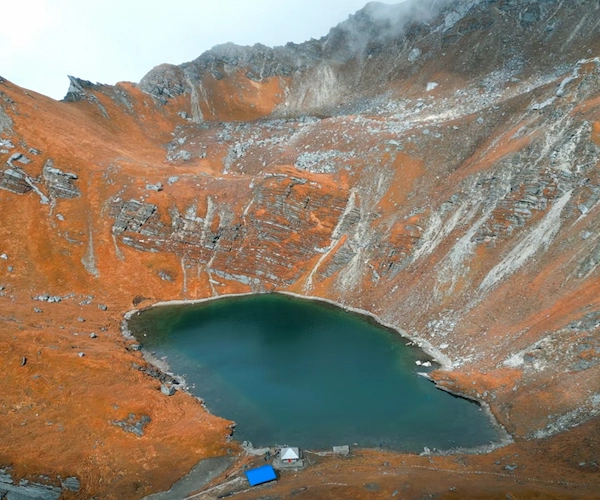
The highlights of the trek are the combination of Khopra Ridge (3,640m) and sacred Khayer Lake (4,827m) – a high altitude glacier lake considered holy by local Hindu and Buddhists. Unlike other crowded destinations like Poon Hill and Annapurna Base Camp routes, Khopra Ridge offers genuine solitude, authentic Gurung and Magar culture, and one of the finest ridge-walking in Nepal. Khopra Ridge Trek is perfect for trekkers with a moderate level of fitness who want a step beyond the Poon Hill trek.
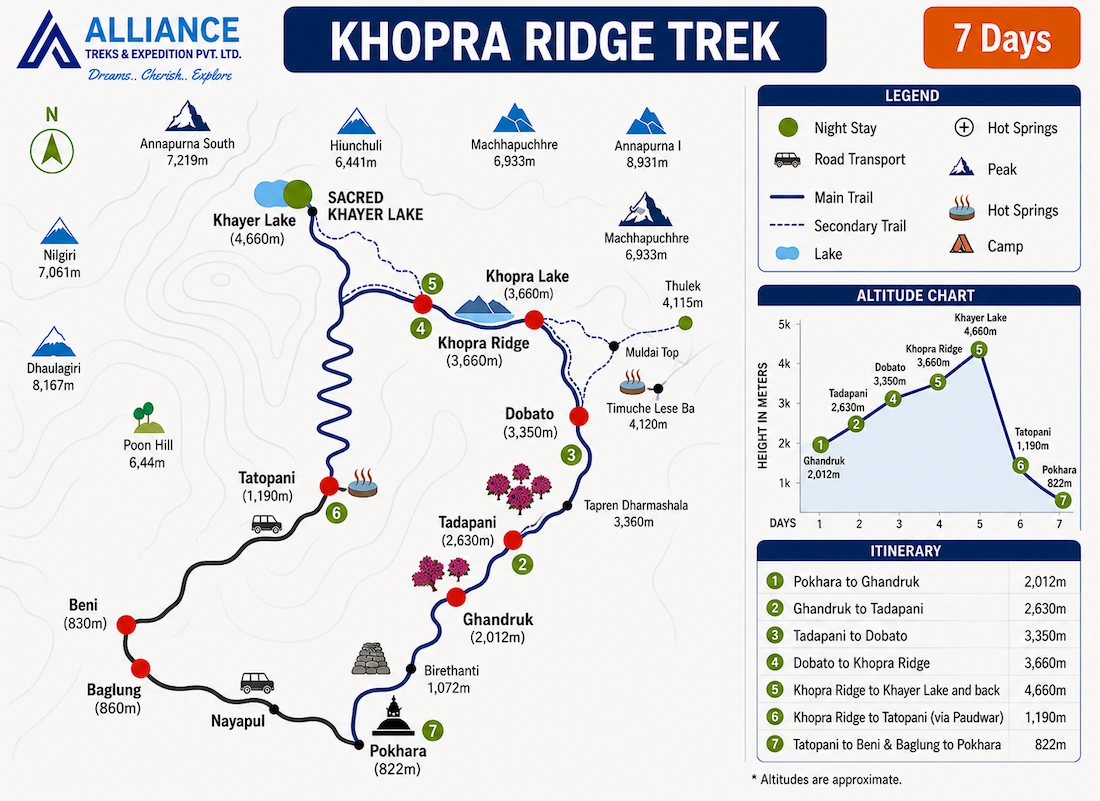
Day 1 Pokhara (822m/ 2,696ft) - Nayapul & Trek to Ghandruk (2,012m/ 6,601ft)
Day 2 Ghandruk (2,012m/ 6,601ft) - Tadapani (2,630m / 8,629ft)
Day 3 Tadapani (2,630/ 8,629ft) - Dobato (3,446m/ 11,250ft)
Day 4 Dobato (3,446m/ 11,250ft) - Khopra Ridge (3,660m / 12,008ft)
Day 5 Hike to Sacred Khayer Lake (4,660m/ 15,288ft) & Return to Khopra Ridge (3,660m/ 12,008ft)
Day 6 Khopra Ridge (3,660m/ 11,942ft) - Tatopani (1,190m/ 3,900ft)
Day 7 Drive Tatopani (1,190m/ 3,900ft) - Pokhara (822m/ 2,696ft)
This trek gave me a much deeper appreciation for the Annapurna region. The lower sections through Gurung and Magar villages were peaceful and full of character, while the higher trail felt wild and spacious. Khopra Ridge itself was incredible, with mountains appearing in every direction. I found the trek moderately challenging, especially on the longer uphill sections, but the pace was comfortable and the scenery made it easy to keep going. The quiet atmosphere and genuine local interactions were what made this trip stand out for me.
I chose Khopra Ridge mainly because of the mountain photography opportunities, and it did not disappoint. Every day seemed to have a different landscape — forests, villages, waterfalls, open ridges and huge snow-covered peaks. The sunrise from the ridge was probably my favourite moment of the entire Nepal trip. I also liked that there were fewer trekkers on the trail, so it was easy to stop and take photographs without feeling rushed. The walk to Khayer Lake added another completely different landscape to the journey.
What I enjoyed most about the Khopra Ridge Trek was how naturally the scenery and culture came together. We passed through traditional villages, met local families and stayed in community lodges before reaching the higher mountains. The views of Annapurna South and Dhaulagiri were spectacular, especially around sunrise and sunset. The higher sections were more demanding, but our guide kept a comfortable pace and gave us plenty of time to enjoy the surroundings. It felt like a genuine Himalayan adventure rather than a rushed sightseeing trip.
I had originally planned to do Poon Hill but decided on Khopra Ridge instead, and I am very happy with that decision. The trail was much quieter than I expected, and we had some incredible mountain views without crowds around us. Walking through the rhododendron forests was especially beautiful in the morning. Khopra Ridge gave us a fantastic viewpoint over the Annapurna range, and the local hospitality along the route was excellent. It was challenging enough to feel adventurous but still manageable with reasonable fitness.
The hike to Khayer Lake was definitely the hardest part of our trip, but also one of the most rewarding. The landscape changed completely as we climbed higher, and the views became more dramatic with every hour. Reaching the lake after the long walk felt like a real achievement. I also enjoyed the quieter sections of the Khopra Ridge route and staying in small community lodges along the way. The combination of mountain scenery, local villages and the sacred lake made this trek very memorable.
Khopra Ridge was an amazing experience from beginning to end. I really wanted to avoid the busy trekking routes, and this trail gave us exactly the peaceful Himalayan experience I was looking for. The rhododendron forests were beautiful, but the highlight was reaching Khopra Ridge and seeing the huge Annapurna and Dhaulagiri ranges in front of us. The trail felt remote without being too difficult, and the community lodges made the experience feel very welcoming. Definitely a trek I would recommend to anyone who wants something quieter.
The Khopra Ridge Trek is a moderately difficult 11-day trek, starting and ending in Pokhara in Nepal’s Annapurna Conservation Area. It is one of the most off-the-beaten-path hikes in the Annapurna region, with a blend of the cultural magic of the lower Gurung villages and the raw alpine beauty of high altitude ridges, and a sacred glacial lake most Annapurna trekking tours never visit. It is sometimes referred to as the Khopra Danda Trek or the Khopra Ridge Danda Trek, and is located between two popular trekking destinations in Nepal, namely the Poon Hill Trek, and the Annapurna Base Camp Trek, both in terms of altitude and difficulty. It is considerably less crowded than either, and is an obvious progression for many trekkers who have already visited Poon Hill.
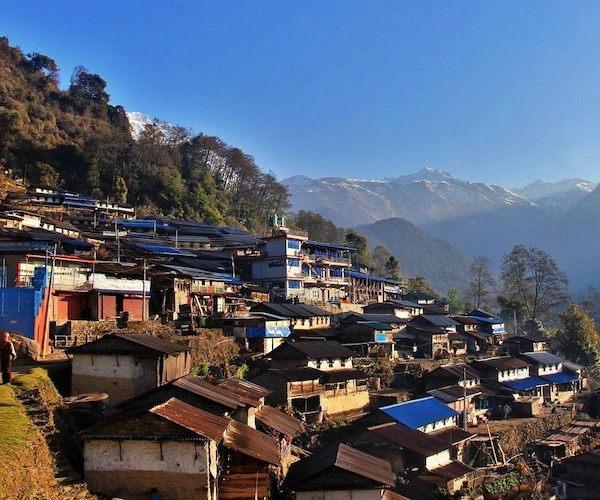
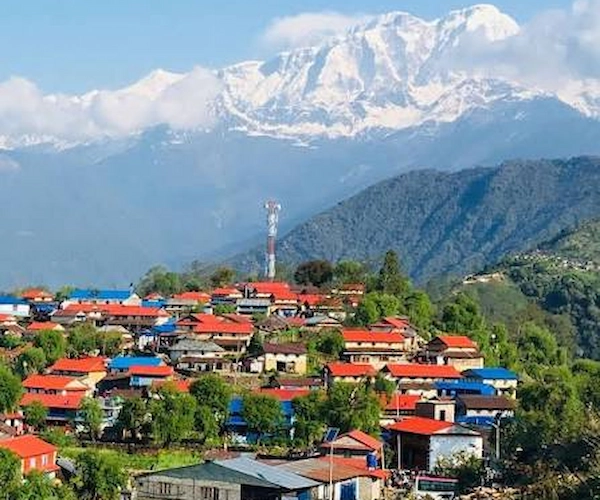
The journey starts with a 5-hour drive from Pokhara to Nayapul and then follows a trek to Ghandruk, one of the biggest and most photographed Gurung villages in Nepal. From Ghandruk the trail leads through the classic Annapurna foothills trail to Tadapani, then branching off from the main trails, traverses more and more remote and high elevation areas of the region, climbing onto Khopra Ridge.
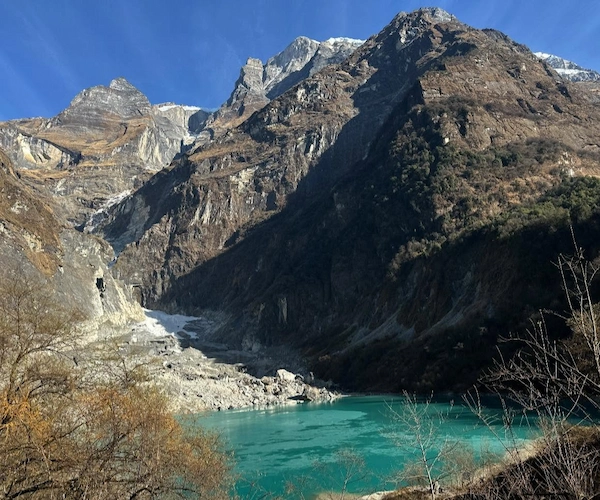
The ridge is located at 3640m, and provides the starting point for Day 5 — the trek up to Khayer Lake at 4827m. This is the spiritual and physical highlight of the entire trek and is a sacred glacial lake nestled under the walls of the Annapurna South. Few trekkers ever get to it, and gazing at the Annapurna massif from the vantage point of its edge and in the clear still waters is truly a remarkable experience. Instead, the route to the descent is very different — there are some dramatic descents through Chitre, Phalate, and Shikha to the warm valley of the Kali Gandaki at Tatopani that have natural hot springs at the end of five days of high altitude walking.
The Khopra Ridge Trek is ideal for trekkers with a moderate level of fitness who have done some hiking before. No technical climbing skills required. Altitude awareness is key as the highest point is at 4,827m at Khayer Lake — the program is designed with a suitable ascent profile to minimise the risk of altitude sickness. Walking a day would be 4-7 hours, depending on the day.
It is suited especially for those hikers who have been on Poon Hill and are looking for something higher, noisier, and more remote. It is also an ideal substitute for the Annapurna base camp for those seeking a high altitude adventure, but without the crowds.
The section of the forest between Ghandruk and Tadapani traverses some of the best rhododendron and oak forests found within the Annapurna Conservation Area. The rhododendrons flower in a succession of colors from red, pink, to white in spring (March to May), and are one of the most natural and iconic experiences in Nepal. The forest gradually steps aside to alpine meadows and high pasture land, where yaks roam the lands freely, and the silence of the high Himalayas prevails.
Snow leopards, Himalayan tahr, red pandas, and hundreds of bird species, including Nepal’s national bird, the Himalayan monal, can be spotted in this conservation area. The highest rate of wildlife sightings occurs in the early morning on the higher parts of the route.
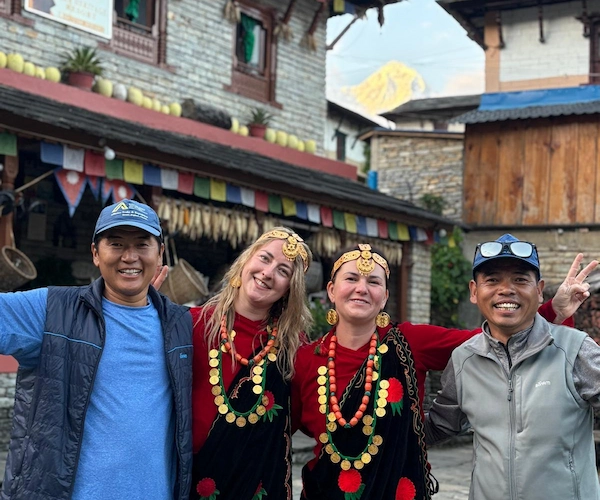
The Khopra Ridge Trek is not a staged tour but a way of life. Ghandruk is a well-developed Gurung village where military service has been a tradition for a long and there is a small yet good museum about the Gurung history and culture. The Tadapani, Dobato, and villages en route to Tatopani are inhabited by the Gurung and Magar communities, who have retained their traditions, language, and architecture largely intact from the impact of modern tourism.
Your trekking fees go straight into the hands of the local family and rural community, and the local trekking lodge is one of the finest examples of a community-run facility in the entire Annapurna region, the Khopra Danda Community Homestay on the ridge itself.
The spring months (March to May) and autumn (September to November) are the two best seasons. Spring brings blooming rhododendrons, rising temperatures, and excellent visibility over the mountains. October is the best time to trek in Nepal, with the clearest blue skies and clearest mountain views of the year.
In winter (December to February), the Khopra Ridge Trek is possible for experienced trekking parties who are equipped for cold and snow above 3000m. Heavy rainfall, leeches on the lower trails, and poor visibility during the monsoon season (June to August) are not recommended for most trekkers.
Yes. Drinking water is available at teahouses. Using a water purification tablet, filter, or reusable bottle is recommended to reduce plastic waste.
Mobile network coverage is available in many places, and some teahouses offer Wi-Fi. However, the connection may be slow or unavailable in remote areas.
Alliance Treks & Expedition Pvt. Ltd. Once is not enough for naturally and culturally Himalayas