(Viber, Whatsapp, Cell) +977 9851022814

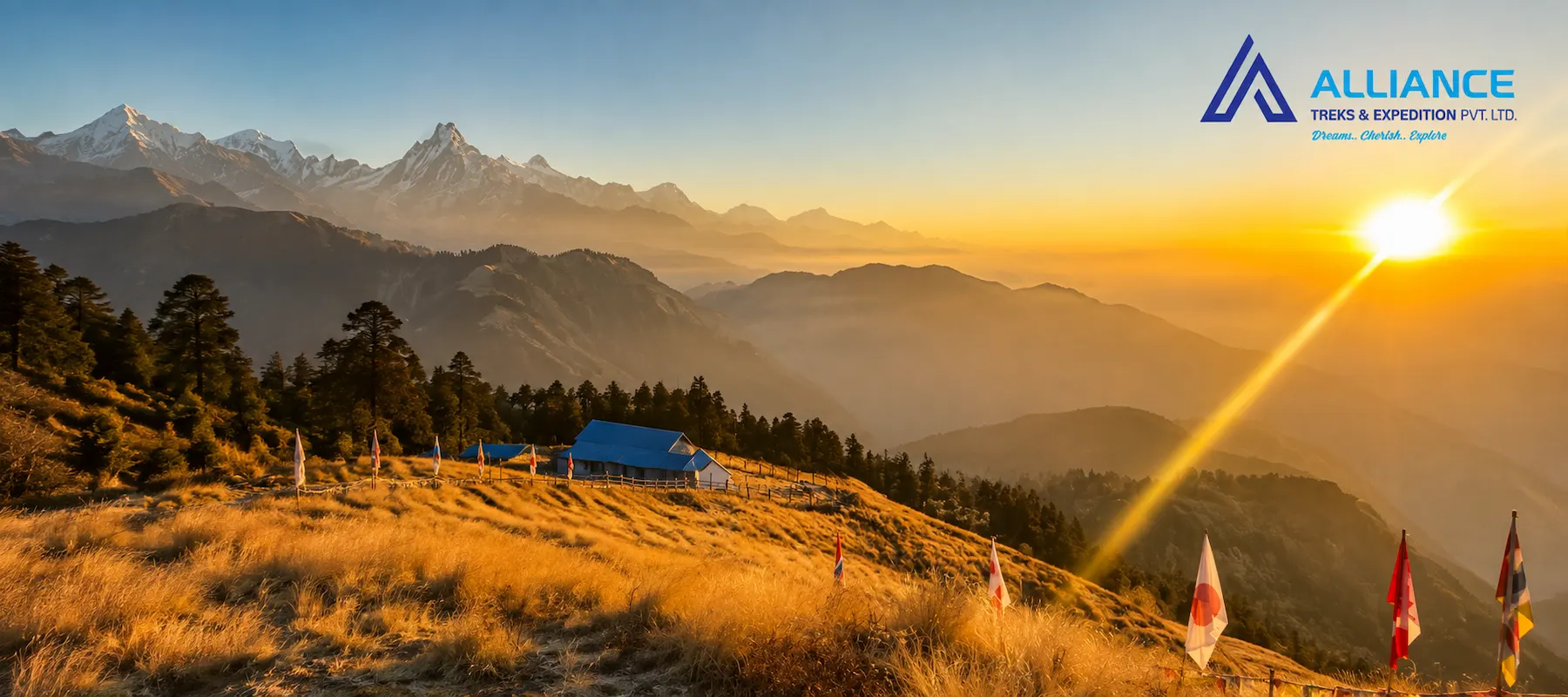
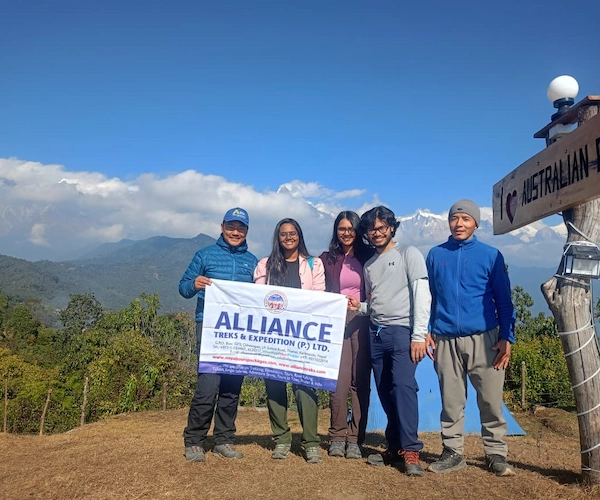
The Kokhe Danda Trek is a 6-day circuit through one of the Annapurna foothills’ best-kept secrets — a summit at 3,303m that stands as the highest point in Parbat district, with a viewing angle on Dhaulagiri that many trekkers rate above even the famous Poon Hill. From the top, on a clear day, three of the world’s 8,000m giants line up in a single sweep: Dhaulagiri, Annapurna, and Manaslu, with Langtang visible further east and, in the best conditions, a glimpse of Pokhara Valley and Phewa Lake far below.
What sets Kokhe Danda apart isn’t just the view — it’s how few people share it. Sitting just beside the popular Mohare Danda viewpoint, Kokhe Danda offers a comparable, arguably better, panorama while staying almost entirely off the radar of the crowds that fill the Poon Hill and Ghorepani trails each morning. It also lies outside the Annapurna Conservation Area (ACAP) boundary, meaning the core route requires no trekking permit at all — a rare and welcome simplicity in a region where permit paperwork is usually part of the package.
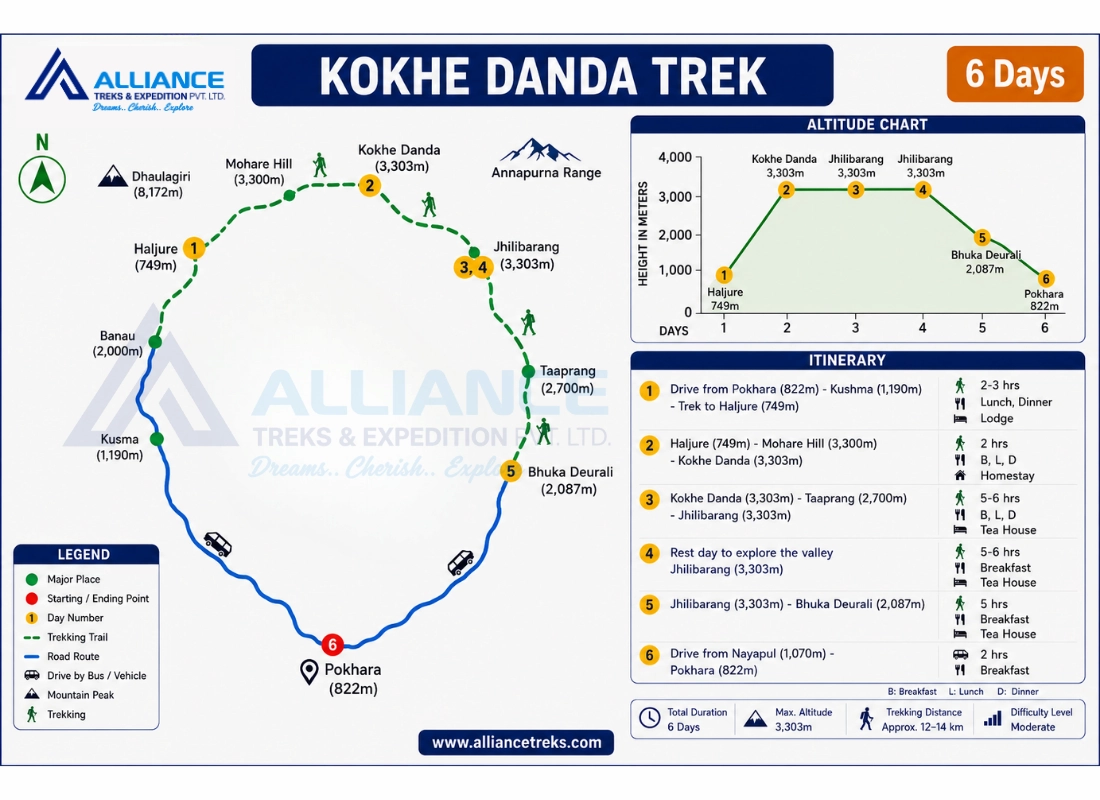
The 6-day itinerary threads together quiet villages, rhododendron forest, and a night at a homestay in Sarga before climbing past Jaljala and Mohare Danda to the summit lodge at Kokhe Danda. The return route winds back through Taaprang, Jhillibarang, and Bhuka Deurali to Nayapul, deliberately routed to avoid the ACAP boundary on the way down so the permit-free promise holds for the whole trip. It’s an excellent choice for trekkers who’ve done Poon Hill or Mardi Himal before and want a similarly scenic, similarly easy trek — minus the trail traffic.
Day 1 Drive from Pokhara (822m/2,696ft) - Kushma (1,190m/3,903ft) - Trek to Haljure (749m/ 2,445ft)
Day 2 Haljure (749m/ 2,445ft) - Mohare Hill (3,300m/10,827ft) - Kokhe Danda (3,303m/ 10,833ft)
Day 3 Kokhe Danda (3,303m/10,833ft) - Taaprang (2,700m/8,855ft) - Jhilibarang (3,303m/10,833ft)
Day 4 Rest day to explore the valley Jhilibarang (3,303m/ 10,833ft)
Day 5 Jhillibarang (3,303m/ 10,833ft) - Nayapul (1,070m/ 3,510ft) via Bhuka Deurali (2,087m/ 4,970ft)
Day 6 Drive from Nayapul (1,070m/ 3,510ft) - Pokhara (822m/ 2,696ft)
The Kokhe Danda Trek was one of the highlights of my Nepal visit. I loved being able to experience mountain trails, local villages, and spectacular Himalayan scenery within just six days. The route was peaceful, and the views from Kokhe Danda were beautiful in the morning. Our guide was very friendly and made sure the whole group was comfortable. The organization was excellent from start to finish. A great short trekking option for anyone visiting Nepal.
I had an excellent experience on the Kokhe Danda Trek. The scenery changed constantly throughout the trek, from green hills and forests to open viewpoints with beautiful Himalayan panoramas. The trek was challenging enough to feel adventurous without being overwhelming. Our trekking team was organized and always ready to help. I particularly enjoyed the quiet mountain environment and interactions with people in the local villages. Definitely a trek I would recommend.
The Kokhe Danda Trek exceeded my expectations. I wanted a shorter trekking route with beautiful mountain scenery, and this trip delivered exactly that. The walking days were enjoyable, with a good mixture of forest trails, villages, and open mountain viewpoints. The sunrise and panoramic views from Kokhe Danda were unforgettable. Everything was organized smoothly, and our guide was professional and supportive. A great option for travelers with limited time in Nepal.
I really enjoyed my Kokhe Danda Trek. The route was peaceful and much quieter than some of the more popular trekking trails in Nepal. Walking through local villages and green forests was a highlight of the journey, while the Himalayan views from the ridge were amazing. Our guide took excellent care of us and explained a lot about the local lifestyle and culture. Six days was the perfect length for this beautiful Nepal trekking experience.
The Kokhe Danda Trek was one of the most peaceful trips I had during my time in Nepal. I loved that the itinerary was short enough to fit easily into my holiday but still gave us a proper mountain experience. The village homestay, forest walks and ridge sections each had something different to offer. The final climb to Kokhe Danda was worth the effort, especially when the mountains appeared above the clouds. Watching the morning light over Dhaulagiri and the Annapurna range was something I will remember for a long time.
This was my first trek in the Annapurna foothills and I wanted something peaceful rather than a busy route. Kokhe Danda was a great choice. The walking days were comfortable, but there were enough uphill sections to make it feel like a real mountain adventure. I especially liked the forest trails and the changing views as we climbed higher. From the summit, the Himalayan panorama was incredible, and having so few people around made the experience even better. I would definitely choose this route again
I really enjoyed this trek because it felt like we were exploring a less-known part of the Annapurna foothills. The walk was manageable and the scenery changed nicely from villages and farmland to beautiful forest and high ridges. Staying with a local family in Sarga was one of my favourite experiences because we got to see a more authentic side of village life. Kokhe Danda itself was breathtaking. The mountain panorama from the top was much bigger than I expected for a relatively short trek.
Kokhe Danda was a fantastic surprise. I had heard about Poon Hill before coming to Nepal, but I wanted somewhere quieter, and this trek was exactly that. The trails were peaceful, especially through the rhododendron forests, and we barely met other trekkers on some sections. The sunrise from Kokhe Danda was the highlight of the trip. Seeing Dhaulagiri, Annapurna and Manaslu together from the ridge was an unforgettable experience. The small lodge at the top also made the stay feel very special.
The 6-day Kokhe Danda Trek was a wonderful experience and a great way to explore the Himalayan foothills without committing to a long trek. The trail passed through peaceful villages, forests, and beautiful mountain landscapes. The views from Kokhe Danda were spectacular, especially in the early morning. Our guide was friendly, knowledgeable, and very helpful throughout the journey. The itinerary was comfortable and well organized. I would highly recommend this trek for anyone looking for a scenic short trek in Nepal.
This was my first trekking experience in Nepal, and Kokhe Danda was a fantastic choice. The trail was beautiful, with lush forests, traditional villages, and impressive views of the Himalayan mountains. I enjoyed the slower pace and peaceful atmosphere along the route. Our guide was patient and encouraging, especially during the uphill sections. The 6-day itinerary was well balanced and allowed plenty of time to enjoy the surroundings.
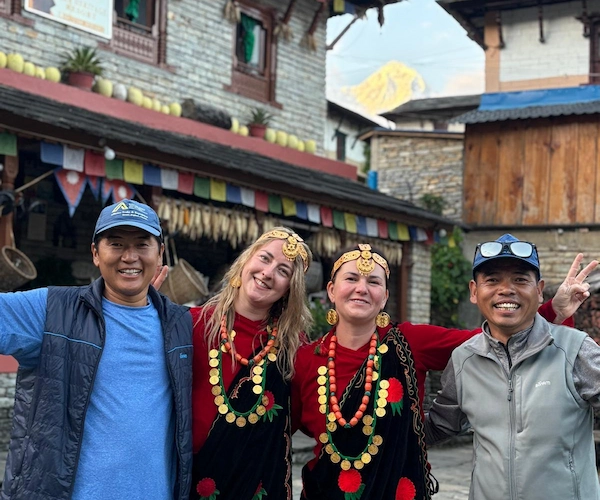
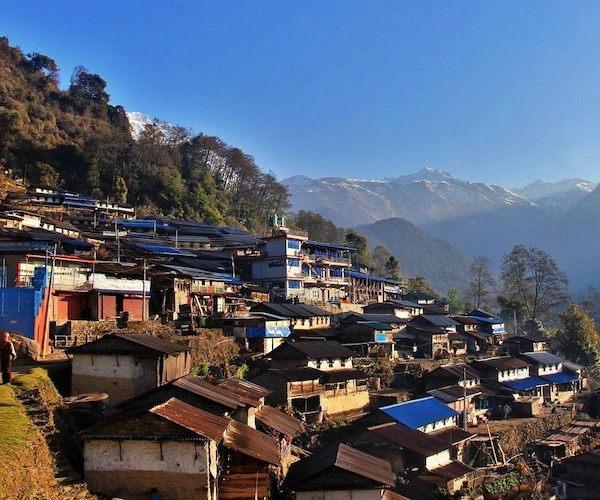
The trek begins in Kushma, a short drive from Pokhara, before climbing through Haljure — a ridge village that, on a clear morning or evening, offers a panorama running the full length from Dhaulagiri to Langtang. From here, the route eases into a shorter second day through the traditional village of Lespar to Sarga, where a homestay night offers a closer look at daily life in this quiet corner of Parbat district, well away from the busier trails further east.
The third day is the trek’s centerpiece: a five-to-six-hour climb via Jaljala and the well-regarded Mohare Danda viewpoint, arriving at the Kokhe Danda summit and its newly built lodge. At 3,303m, this is the highest point in Parbat district, and the view earns its reputation — three separate 8,000m peaks visible from a single vantage point, an angle on Dhaulagiri that many trekkers consider even more striking than the famous shot from Poon Hill, and on the clearest days, a distant glimpse of Pokhara Valley and Phewa Lake.
The return route, spread across Days 4 and 5, has been deliberately planned to skirt the Annapurna Conservation Area boundary — descending via Taaprang and Jhillibarang, then on to Nayapul via Bhuka Deurali on a trail that runs parallel to, but separate from, the busier Nayapul–Tikhedhunga corridor. The result is a trek that starts and ends without a single permit fee on the core route, a genuine rarity in this part of Nepal.
At Alliance Treks, we offer the best Kokhe Danda Trek with more than 34 years of trekking experience in Nepal. Our professional trekking guides are licensed, trained by NATHM (Nepal Academy of Tourism and Hotel Management), and know this quieter Parbat district route well, including the permit-free routing on the return leg. Meals are cooked fresh by local kitchens along the way — traditional Nepali dishes alongside simple continental options — and accommodation ranges from teahouses to a village homestay at Sarga and the summit lodge at Kokhe Danda itself, each offering a different slice of the region’s hospitality.
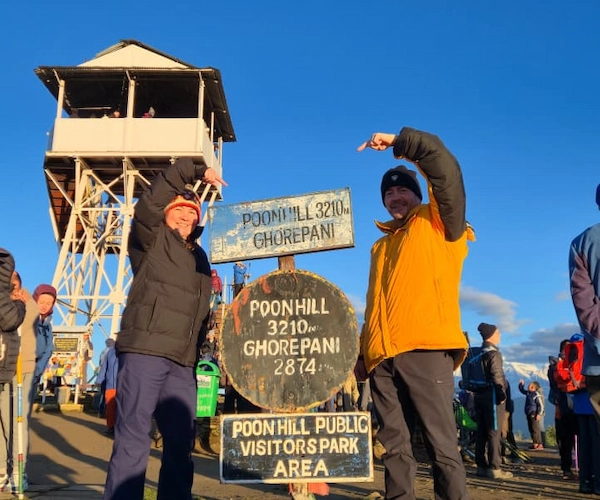
The best seasons for the Kokhe Danda Trek are Spring (March–May) and the Autumn-to-early-Winter window (September–December), when skies are clearest and the surrounding rhododendron forests are at their most vivid in spring. The trek is graded easy overall, though Days 3 and 4 each involve 5–6 hours of walking, so a reasonable level of fitness is recommended. For trekkers with less time, a shorter 4-day version is available via Banau and Dhima Danda, and a day hike to Poon Hill can be added directly from the Kokhe Danda lodge before heading back down. The itinerary above can also be extended toward Annapurna Base Camp, Khopra Danda, or Jomsom-Muktinath for a longer Himalayan journey.
Please write to us by email or on WhatsApp: +977-9851022814, or visit our website for more details: www.alliancetreks.com or even write email inquiry on [email protected]
Alliance Treks offers a wide variety of treks and tours across Nepal, Tibet, Bhutan, and India in every season, so if you need further details or a tailor-made itinerary, our team is available 24/7.
Kokhe Danda Trek is easier, cultural, soft hilly region as well as mesmerizing compared to Annapurna Circuit Trek, Everest Base Camp Trek, Manaslu Circuit Trek or even Annapurna Base Camp Trek. Although all those treks are more adventure, scenic some trekkers who are looking for cultural, easy and very gentle walk like 4-5 or maximum 5-6 hours a day Kokhe Danda Trek is the best trek however do do recommend you alternative trek like Ruby Valley Trek, Langtang Valley Trek too despite this trek is quite unique and less crowded with breathtaking Annapurna ranges views.
Alliance Treks always happy to assist you the best itinerary, cost, Map, trek guide, lodge, meals, transportation and lead you different but the safe and secure way so we are here 24/7 to response you.
Trekkers stay in comfortable local tea houses and mountain lodges. These lodges provide clean rooms, warm hospitality, and freshly prepared meals.

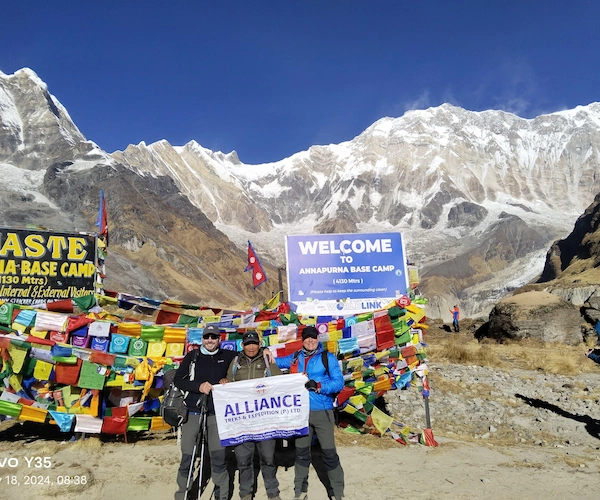
Alliance Treks & Expedition Pvt. Ltd. Once is not enough for naturally and culturally Himalayas