Exclusive Offer: 7 Days Annapurna Base Camp Trek $405 Per Person

(Viber, Whatsapp, Cell) +977 9851022814 +977 9841451681

Experience

Nepal Winter Trek - 9 Days

  • Duration 9 Days
  • Trip Grade Easy
  • Max Height 3210m.
  • Start From Kathmandu
  • Ends at Kathmandu
  • Group Size 2 - 15
  • Transportation Private Vehicle / Tourist Bus
  • Trip Meals Breakfast
  • Accommodation Tea House / Lodges/ Hotels
  • Best Season December–February

Nepal Winter Trek — Embrace the Cold, Conquer the Challenges, Discover the Extraordinary !

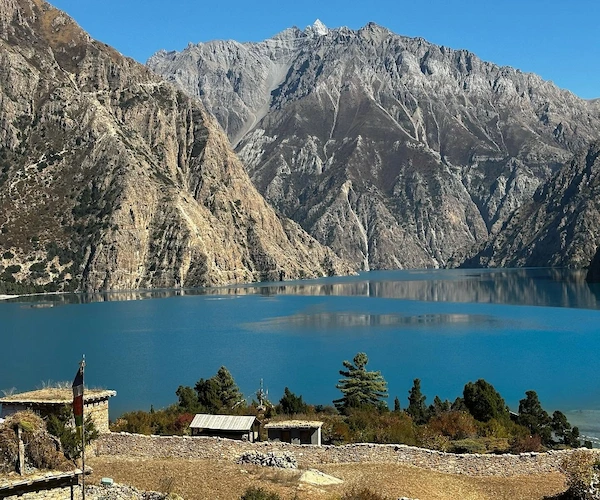
Nepal winter Trek  is one of Nepal’s most underrated trekking seasons. While many travelers assume the Himalaya shuts down once the cold arrives, the reality is quite the opposite at lower and mid-altitude elevations — clear skies, crisp mountain visibility, and near-empty trails make December through February an excellent time to trek, provided you choose a route that stays below the snow line. This 9-Day Nepal Winter Trek does exactly that, tracing a classic loop through the Annapurna foothills via Dhampus, Landruk, Jhinu Danda, and Ghorepani, culminating in the sunrise views from Poon Hill before returning to Pokhara and Kathmandu.

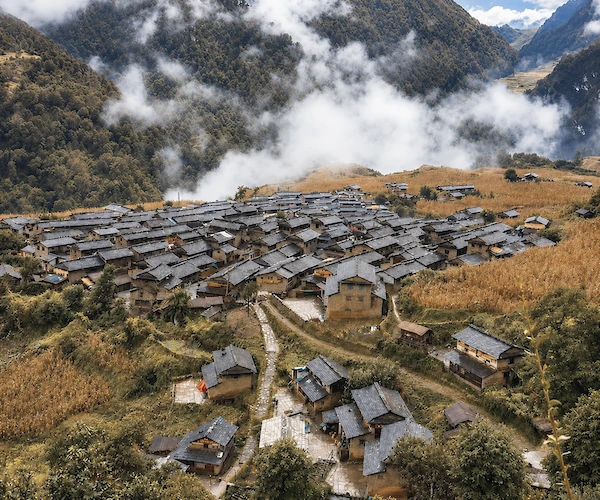
Because this route never climbs above 3,210m, it avoids the heavy snow and trail closures that affect higher routes in winter, while still delivering the classic Annapurna and Dhaulagiri panoramas that make this corridor so popular. Along the way, the trail passes through Gurung villages, dense rhododendron forest (bare of blooms in winter, but strikingly quiet and atmospheric), and the natural hot springs at Jhinu Danda — a particularly welcome stop after a cold day on the trail. Winter’s clear, pollution-free air often delivers some of the sharpest mountain views of the entire year, making this a genuinely rewarding time to walk this route.

Recommended Winter Trek in Nepal

If this itinerary isn’t quite the fit you’re looking for, here are some of the best-regarded winter trekking options across Nepal, each suited to different time frames and interests:

  • Poon Hill Trek (3–4 Days): Famous for its sunrise views over the Annapurna and Dhaulagiri ranges, this remains one of the most popular short winter treks in the country.
  • Panchase Trek (3 Days): A quiet, off-the-beaten-path trek near Pokhara, ideal for travelers wanting solitude without sacrificing mountain scenery.
  • Ghandruk Trek (3–4 Days): A chance to experience authentic Gurung culture in one of the most picturesque villages in the Annapurna region.
  • Pikey Peak Trek (6–7 Days): A hidden gem in the Everest region, offering exceptional Himalayan panoramas and ideal winter trekking conditions.
  • Chisapani Hike (2 Days): A short trek just outside Kathmandu, offering surprisingly good Himalayan views for very little time investment.

Why Choose Alliance Treks for Your Nepal Winter Trek ?

  • 34+ Years of Experience planning treks suited to Nepal’s varying seasons, including winter-specific routing
  • Careful Route Selection, keeping winter itineraries below the snowline to avoid closures and hazardous conditions
  • Experienced Local Guides familiar with winter trail conditions in the Annapurna foothills
  • Small Group Sizes for a more comfortable, flexible pace during the colder months
  • Warm, Well-Chosen Teahouses selected specifically for reliable heating and comfort in winter
  • Full Logistics Support, including all Kathmandu-Pokhara transfers and trekking arrangements
  • Off-Peak Advantage, with quieter trails and better availability than the busier autumn and spring seasons
  • Transparent Pricing with no hidden costs on transport, permits, or accommodation
  • 24/7 Support throughout your trip, from arrival to final departure

Trip Highlights

  • Trek the classic Annapurna foothills loop via Dhampus, Landruk, and Ghorepani during Nepal's clearest, quietest season
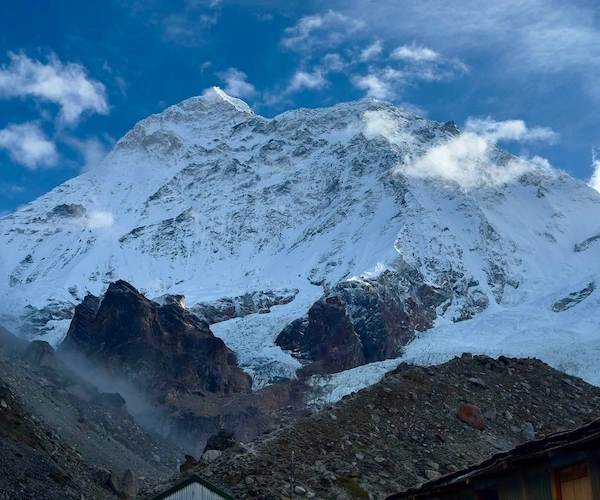
  • Enjoy sharp, pollution-free winter visibility of the Annapurna and Dhaulagiri ranges
  • Relax in the natural hot springs at Jhinu Danda after a day on the trail
  • Experience authentic Gurung village culture away from peak-season crowds
  • Walk through quiet rhododendron forest, atmospheric even without spring's blooms
  • Watch sunrise from Poon Hill (3,210m/10,531ft), one of Nepal's most iconic viewpoints
  • Benefit from a low-altitude route that avoids winter snow and trail closures
  • Enjoy significantly fewer trekkers on the trail compared to autumn and spring seasons
  • A well-paced, achievable itinerary suited to beginners and travelers with moderate fitness

Trip Itinerary

Day 1 Drive from Kathmandu to Pokhara (822m/2,697ft) (~200km)

  • Highest Altitude822m/2,697ft
  • AccommodationHotel
The trek begins with a scenic drive from Kathmandu to Pokhara, following the Prithvi Highway alongside the Trishuli and Marshyangdi rivers, with the terraced hills gradually giving way to the wide, lake-studded Pokhara valley. Arriving in the afternoon leaves time to relax beside Phewa Lake before setting off on the trek the following morning.

Day 2 Drive to Dhampus Phedi, Trek to Pothana (1,530m/5,019ft)

  • Walking Distance3-4 hrs
  • Highest Altitude1,530m/5,019ft
  • AccommodationTeahouse
  • Included mealsBreakfast
A short drive from Pokhara brings you to Dhampus Phedi, the starting point of the trek, from where the trail climbs steadily through terraced farmland and pine forest to Pothana. Even on this first day, winter's clear air often delivers strong early views of the Annapurna range, a promising sign of what's to come later in the trek.

Day 3 Trek from Pothana to Landruk (1,565m/5,134ft)

  • Walking Distance5-6 hrs
  • Highest Altitude1,565m/5,134ft
  • AccommodationTeahouse
  • Included mealsBreakfast
Today's trail winds through forested ridgelines and small Gurung settlements, with the path undulating gently rather than climbing steeply. Landruk is a picturesque village with excellent close-up views of Annapurna South and Machhapuchhre (Fishtail), and the winter chill in the evening air makes the warmth of a teahouse dining room especially welcome.

Day 4 Trek from Landruk to Jhinu Danda Hot Spring (1,780m/5,840ft)

  • Walking Distance3-4 hrs
  • Highest Altitude1,780m/5,840ft
  • AccommodationTeahouse
  • Included mealsBreakfast
A relatively short and relaxed walking day leads down to the Modi Khola river and up to Jhinu Danda, home to one of the most popular natural hot springs in the Annapurna region. After a cold morning start, few things beat soaking in the warm mineral waters here, and this day is often considered one of the most restorative stops on the entire trek.

Day 5 Trek from Jhinu Danda to Tadapani (2,121m/6,959ft)

  • Walking Distance5-6 hrs
  • Highest Altitude2,121m/6,959ft
  • AccommodationTeahouse
  • Included mealsBreakfast
The trail climbs steadily today, passing through Gurung and Chhomrong village terrain before entering the region's characteristic rhododendron forest. Bare of blooms this time of year, the forest still offers a quiet, atmospheric beauty in winter, with occasional views of Annapurna South and Hiunchuli breaking through the trees.

Day 6 Trek from Tadapani to Ghorepani (2,820m/9,252ft)

  • Walking Distance5-6 hrs
  • Highest Altitude2,820m/9,252ft
  • AccommodationTeahouse
  • Included mealsBreakfast
Continuing to climb, today's trail passes through forest and small ridge settlements before arriving in Ghorepani, a lively trekking village and the base for tomorrow's sunrise excursion to Poon Hill. Given the added elevation, temperatures noticeably drop this evening, and a warm teahouse dinner is a welcome way to end the day.

Day 7 Sunrise at Poon Hill (3,210m/10,531ft), Trek to Tatopani (1,190m/3,904ft)

  • Walking Distance7-8 hrs
  • Highest Altitude3,210m/10,531ft
  • AccommodationTeahouse
  • Included mealsBreakfast
A pre-dawn climb takes you to the summit of Poon Hill, where winter's exceptionally clear air often delivers some of the sharpest, most vivid mountain panoramas of the entire year, spanning the Annapurna and Dhaulagiri ranges. After descending back to Ghorepani for breakfast, the trail continues on a long, steady descent to Tatopani, dropping significantly in altitude and finishing at another set of natural hot springs — a fitting way to end the trek's walking days.

Day 8 Drive from Tatopani to Pokhara

  • Walking Distance5-6 hrs
  • Highest Altitude822m/2,697ft
  • AccommodationTeahouse
  • Included mealsBreakfast
A private vehicle carries you back to Pokhara along the scenic Kali Gandaki gorge road, retracing the valley you trekked through in reverse. Arriving back in Pokhara in the afternoon leaves time to relax beside Phewa Lake, enjoy a proper hot shower, and reflect on the trek over a good meal.

Day 9 Drive from Pokhara to Kathmandu

  • Highest Altitude1,325m/ 4,344ft
The final day retraces the drive back to Kathmandu, closing out a 9-day winter trek that combined classic Annapurna scenery, warm cultural encounters, and some of the clearest mountain views the season has to offer.

Nepal Winter Trek Cost Includes

  • Kathmandu–Pokhara and Pokhara–Kathmandu private vehicle transfers
  • Dhampus Phedi drive and Tatopani–Pokhara return transfer
  • 2 nights hotel accommodation in Pokhara (twin sharing, BB basis)
  • All meals during the trek (breakfast, lunch, dinner)
  • Annapurna Conservation Area Project (ACAP) permit
  • Trekkers' Information Management System (TIMS) card
  • An experienced, licensed trekking guide
  • Porter service (on request, typically shared between two trekkers)
  • First aid kit and basic trekking support

Nepal Winter Trek Cost Excludes

  • Nepal entry visa fee
  • International airfare
  • Lunch and dinner in Pokhara and Kathmandu
  • Personal travel insurance (mandatory)
  • Alcoholic beverages, hot/cold drinks, and bottled water
  • Hot showers and battery charging at teahouses (small local fees may apply)
  • Personal expenses such as laundry and phone calls
  • Tips for guide and porter (customary but not included)
From US$ US$ (Price varies by group size)

Detailed Overview – Defy the Cold, Conquer the Heights, Feel the Himalayan Magic – 9 Days

There’s a common assumption that trekking season in Nepal ends when autumn does — that once the leaves turn and the temperature drops, the mountains close their doors until spring. For anyone trekking above 4,000 or 5,000 meters, that’s largely true. But for a route like this one, which never climbs higher than Poon Hill’s 3,210m, winter isn’t a limitation — it’s arguably the best-kept secret of the entire Nepali trekking calendar.

The reason comes down to air quality and light. Kathmandu and Pokhara’s skies are often hazier in spring, when agricultural burning and pre-monsoon dust soften the mountain views, and in autumn, when the trails are also at their busiest. Winter strips all of that away. Cold, dry, high-pressure systems settle over the region for days at a time, and the result is some of the sharpest, most saturated mountain photography conditions of the year — the kind of crystal-clear Annapurna and Dhaulagiri panoramas that trekkers chase but don’t always get in the “better known” seasons.

This itinerary is built specifically to take advantage of that. Starting in Pokhara rather than requiring a long trek-in, the route climbs gently through Dhampus and Pothana before settling into a rhythm of forested ridgeline walking through Landruk and down to the Modi Khola valley. The stop at Jhinu Danda’s natural hot springs on Day 4 is deliberately placed here — not as a throwaway rest day, but because a short, easy walking day followed by a hot mineral soak is exactly what makes winter trekking comfortable rather than punishing. Cold mornings are offset by warm afternoons in the sun, and a hot spring after a chilly day on the trail is a small luxury that feels considerably bigger in December than it would in April.

From Jhinu Danda, the trail climbs more seriously through Tadapani’s forest — technically the same rhododendron corridor that draws crowds in spring for its blooms, but in winter this becomes something else entirely: quiet, bare-branched, and strangely beautiful in its stillness, with none of the crowds and all of the same mountain backdrop. By the time you reach Ghorepani, you’re at the trek’s coldest overnight stop, and this is where good gear and a well-chosen, well-heated teahouse actually matter — which is also why guide and lodge selection become more important on a winter itinerary than a fair-weather one.

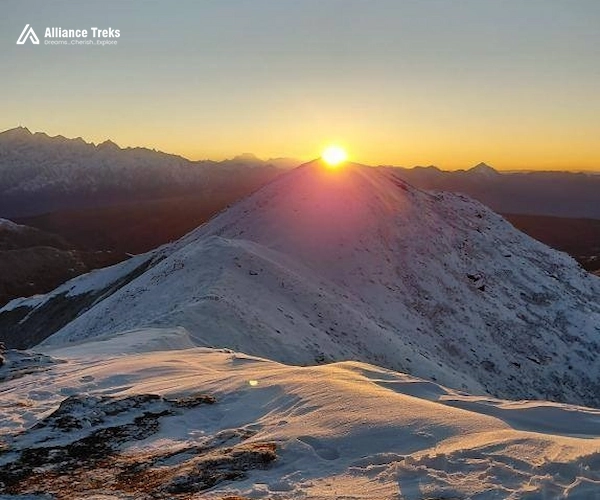
The payoff arrives before dawn on Day 7, on the short, steep climb to Poon Hill. This viewpoint is popular for good reason in every season, but winter sunrise here has a particular character — the mountains often appear almost impossibly sharp against a deep blue sky, with none of the seasonal haze that can soften the view in busier months. From the summit, a long descent day carries you down through a dramatic change in climate and vegetation to Tatopani, where a second set of hot springs waits at the bottom of the valley — a genuinely satisfying way to close out the trekking portion of the trip before the drive back through Pokhara to Kathmandu.

What makes this itinerary work so well as a winter trek specifically isn’t just that it avoids the snowline — plenty of low routes technically do that. It’s that every design choice in the itinerary, from the hot spring placements to the manageable daily distances to the elevation profile, seems built around making cold-weather trekking comfortable rather than simply survivable. For travelers who’ve written off winter as “the wrong time” to trek in Nepal, this route is a genuinely good argument to reconsider.

Nepal Winter Trek Difficulty

This trek is graded easy to moderate, with daily walking hours ranging from 3 to 8 hours and a maximum altitude of 3,210m/10,531ft at Poon Hill. Because the route stays below the snowline even in the coldest months, it remains accessible to trekkers with reasonable fitness and no prior high-altitude experience. The main consideration in winter is cold temperatures, particularly at night in Ghorepani and Tatopani, so proper insulated clothing and a good sleeping bag are essential.
Best Time for the Nepal Winter Trek

  • December: Cold but generally dry, with excellent visibility and thinning crowds as peak season winds down.
  • January: The coldest month, especially at higher points like Ghorepani and Poon Hill, but typically the clearest skies of the year.
  • February: Temperatures begin to moderate while visibility remains excellent, making this a favorite month for winter trekking.
  • Note: Occasional winter snowfall can affect higher points like Ghorepani and Poon Hill; a flexible guide and proper gear are recommended.

Alliance Treks & Expedition Pvt. Ltd. Once is not enough for naturally and culturally Himalayas
Contact us