(Viber, Whatsapp, Cell) +977 9851022814

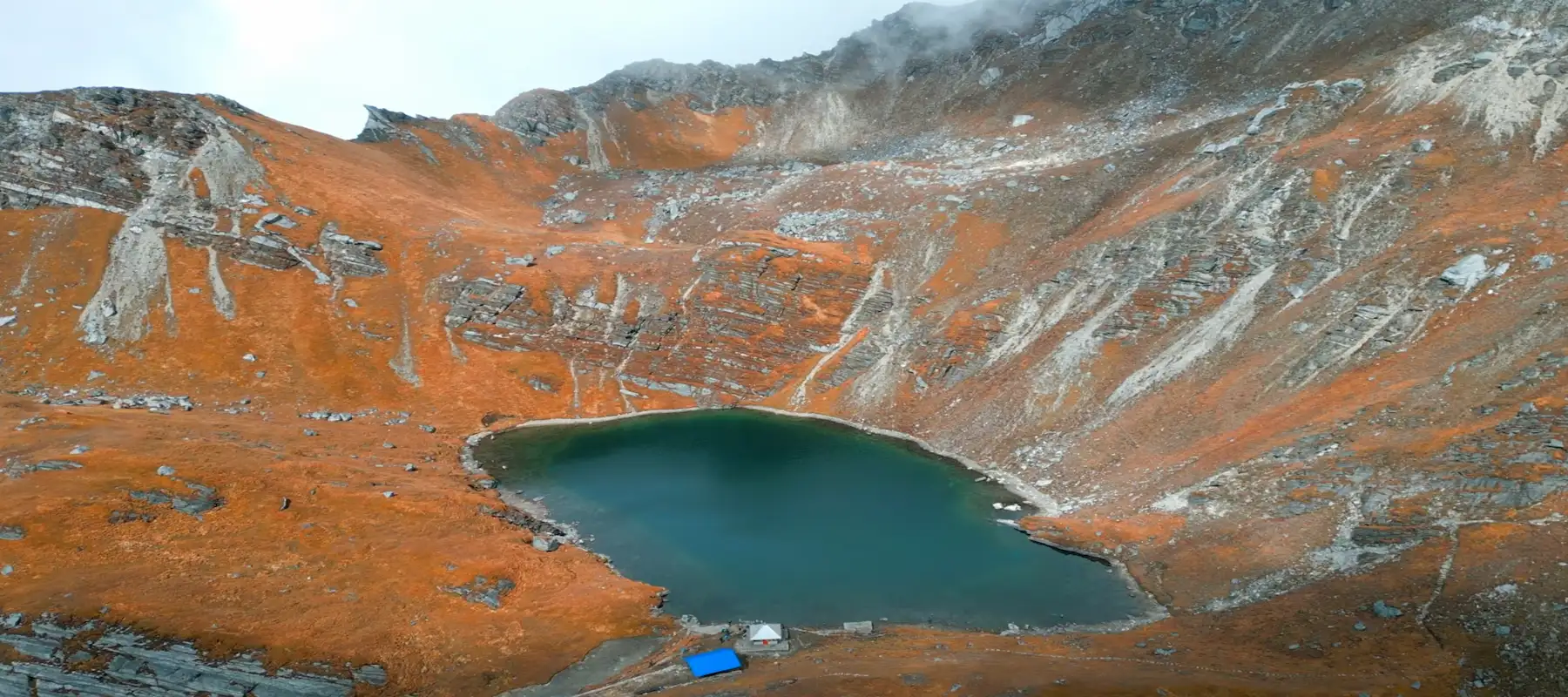
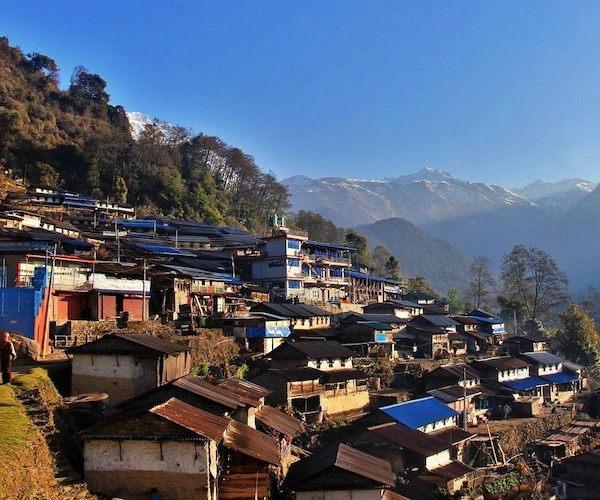
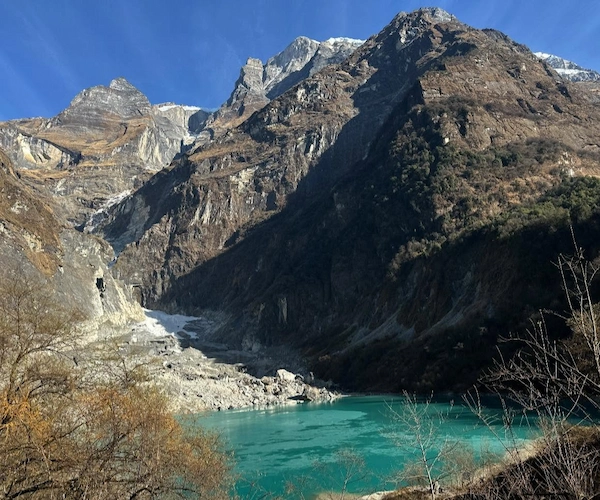
The Khayer Lake Trek is an 11-day journey through the southern Annapurna foothills, starting at Ghandruk, a large Gurung village above the Modi Khola valley, and climbing through forest and ridge trail to Khopra Danda (3,640m). From there, a full-day hike leads to Khayer Lake, a sacred lake set below Annapurna South and regarded as holy by both Hindu and Buddhist pilgrims. After the lake hike, the route descends through Swanta and Ghorepani, rejoining Nepal’s best-known short trekking trail for a sunrise excursion to Poon Hill before continuing down through Tadhapani and Jhinu Danda — known for its riverside hot springs — back to Pokhara.
This itinerary works well for trekkers who want more than a short Poon Hill trip but don’t have the time or need for a full Annapurna Base Camp or Annapurna Circuit trek. The first half moves through quieter ridge country that sees a fraction of the traffic on the main Annapurna trails, while the second half delivers one of Nepal’s most recognisable mountain views. It’s a genuine mix of solitude and a classic Himalayan highlight in a single, manageable trip, run by Alliance Treks & Expeditions, in the business of Nepal trekking since 1992.
Day 1 Arrival at Tribhuvan International Airport, Kathmandu (1,325m/ 4,344ft)
Day 2 Fly from Kathmandu (1,325m/ 4,344ft) to Pokhara, (822m/ 2,696ft) then Drive to Ghandruk (2,012m/ 6,601ft)
Day 3 Trek from Ghandruk (2,012m/ 6,601ft) to Bayeli (3,432m / 11,261)
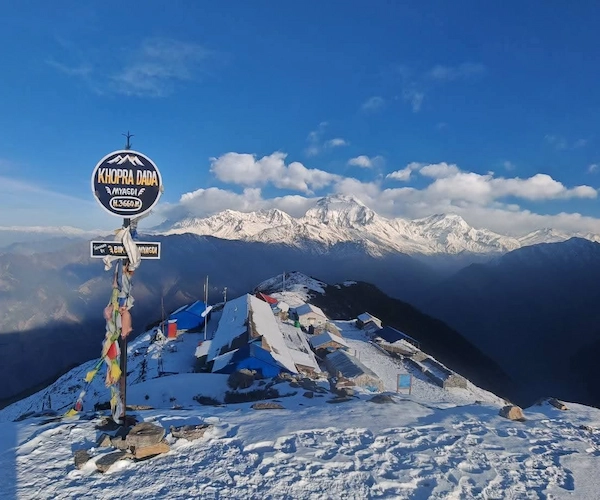
Day 4 Trek from Bayeli (3,432m / 11,261) to Khopra Danda (3,669m/ 12,008ft)
Day 5 Day Hike from Khopra Danda (3,669m/ 12,008ft) to Khayer Lake (4,660m/ 15,2289ft)
Day 6 Trek from Khopra Danda (3,669m/ 12,008ft) to Swanta (2,214m/ 7,264 ft)
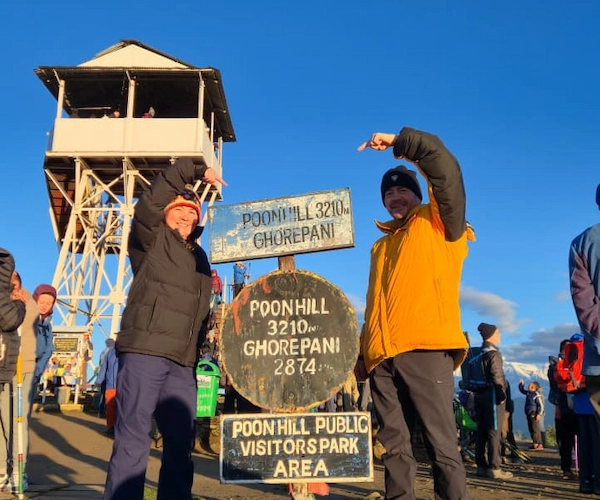
Day 7 Trek from Swanta (2,214m/ 7,264 ft) to Ghorepani (2,874m/ 9,429 ft)
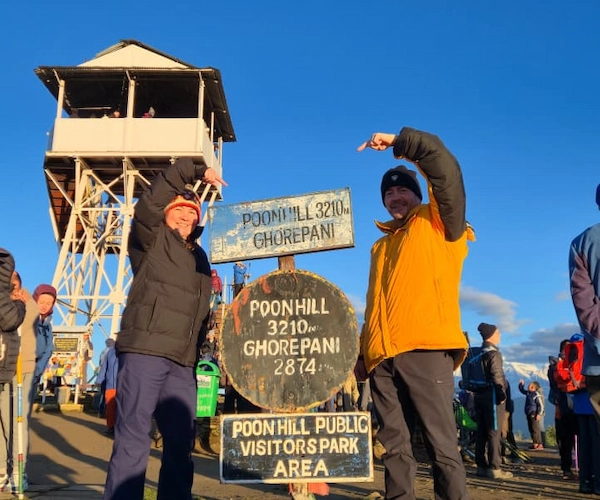
Day 8 Excursion Hike to Poon Hill, (3,210m/ 10,531ft) then Trek to Tadhapani (2,610m/ 8,563)
Day 9 Trek from Tadhapani (2,610m/ 8,563) to Jhinu Danda, (1,780m/ 5,840ft) then Drive to Pokhara (822m/ 2,696ft)
Day 10 Flight from Pokhara (822m/ 2,696ft) to Kathmandu (1,325m/ 4,344ft)
Day 11 Final Departure and Farewell (1,325m/ 4,344ft)
I had an amazing time on the Khayer Lake Trek. The eleven days gave us enough time to really enjoy the journey instead of rushing from one place to another. I loved the quiet forests, mountain villages, changing landscapes, and incredible Himalayan views. The final day at Khayer Lake was definitely the highlight for me. Race looked after our group very well and made the whole experience feel safe and enjoyable. I would happily do this trek again.
This trek felt very genuine from the beginning. I enjoyed walking through local villages and forests before gradually entering the higher mountain areas. The scenery was beautiful, and the peaceful atmosphere made the journey even more enjoyable. Reaching Khayer Lake after all those days of walking was a very special moment. Race was knowledgeable, friendly, and always willing to help. I thoroughly enjoyed the entire experience.
The Khayer Lake Trek was challenging in places, but that made reaching the destination even more rewarding. I loved the forests, mountain landscapes, and quiet trails along the way. Every day brought a different view, and I took far more photos than I expected. Race was patient and encouraging, especially on the harder walking days. Overall, I had a fantastic time and would definitely recommend this trek.
I really enjoyed exploring a quieter part of the Annapurna region. The trail gave us plenty of time to enjoy nature, local villages, and spectacular mountain views. I especially liked the feeling of being away from the busy trekking routes. Khayer Lake was the highlight and was even more beautiful than I expected. Race was an excellent guide and made sure our group stayed comfortable throughout the trek.
The journey to Khayer Lake was an experience in itself. I really enjoyed watching the landscape change from green forests and villages to rugged mountain terrain. The final approach was tiring, but seeing the lake surrounded by the mountains made it completely worth it. Race was a wonderful guide—friendly, caring, and knowledgeable. He helped make the eleven days feel comfortable and enjoyable.
This was one of my favorite trekking experiences in Nepal. I loved the combination of village life, forests, mountain scenery, and the beautiful lake at the end. The trek had some challenging days, but the changing landscape kept us excited throughout. Race was very supportive and always made sure we were walking at a comfortable pace. I came back with some amazing memories from this journey.
What I enjoyed most about this trek was the peaceful atmosphere. We walked through beautiful forests, villages, and open mountain landscapes without feeling surrounded by crowds. The scenery around the higher parts of the trail was spectacular. Khayer Lake itself felt very special after the long journey. Race was knowledgeable about the route and local area and made the entire trek relaxed and enjoyable.
Some parts of the trek were definitely demanding, but I never regretted taking this route. The landscapes became more impressive every day, and the views from the higher sections were fantastic. The moment we reached Khayer Lake was probably my favorite part of the whole trip. Race was an excellent guide and helped us whenever the trail became difficult. It was a very rewarding eleven-day adventure.
The Khayer Lake Trek was an incredible experience from beginning to end. I really enjoyed walking through the peaceful forests and traditional villages before reaching the higher mountain landscapes. The final journey to Khayer Lake was challenging, but the views made every step worthwhile. Race was a caring and knowledgeable guide who kept us comfortable and motivated throughout the eleven days. I enjoyed this trek very much.
I absolutely loved the Khayer Lake Trek. The trail was peaceful, the scenery kept changing, and there was something beautiful to see almost every day. I especially enjoyed the quieter sections through the forest and the dramatic mountain views as we gained altitude. Reaching Khayer Lake felt like a real achievement. Race was friendly, patient, and always checking that everyone was doing well.
The Khayer Lake Trek takes place in the southern part of the Annapurna Conservation Area, west of Pokhara, in Nepal’s Annapurna region. The route begins at Ghandruk, a large Gurung village above the Modi Khola valley, and climbs south of the main Annapurna Sanctuary trail toward the Khopra Danda ridge and Khayer Lake, both sitting below Annapurna South. From there, the trek loops back down and rejoins the well-known Ghorepani–Poon Hill trail for its final days, descending through Tadhapani and Jhinu Danda before reaching the road at Nayapul and continuing to Pokhara. Geographically, this places the trek in the hill country between the Annapurna Base Camp route to the north and the lower Modi Khola valley to the south — close enough to Nepal’s most popular trekking trails to share their access points and infrastructure in Pokhara yet largely separate from them for the first week of walking.
This is a trek of two distinct halves. The first, from Ghandruk through Bayeli to Khopra Danda, climbs through oak and rhododendron forest into open, high-altitude ridge terrain that carries noticeably less foot traffic than the routes toward Annapurna Base Camp just a valley or two away. Villages thin out considerably along this stretch, accommodation becomes simpler, and the trail itself feels more like a genuine hill route than a well-worn trekking highway. Khopra Danda, at 3,640m, serves as the base for the trek’s central experience: a long day hike to Khayer Lake, a sacred lake set in a quiet alpine basin below Annapurna South. For Hindu and Buddhist pilgrims, this lake carries real religious weight, particularly during the Janai Purnima festival in July and August, and reaching it on foot after a demanding climb gives the visit a different character than arriving at a roadside viewpoint.
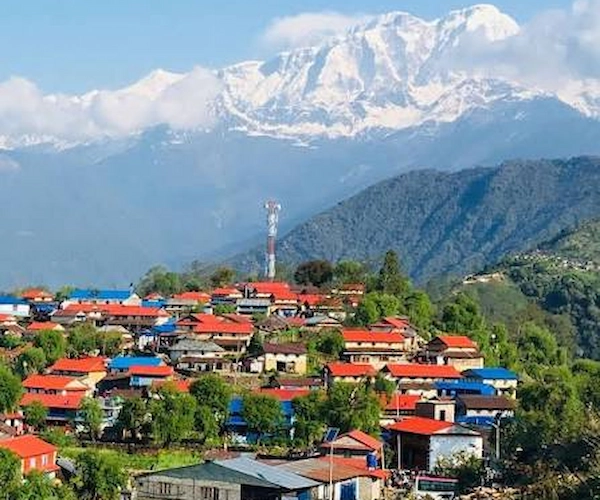
The trek’s second half changes tone considerably. Descending from Khopra Danda through Swanta to Ghorepani, the route rejoins one of Nepal’s most recognisable short trekking circuits. From Ghorepani, the pre-dawn climb to Poon Hill for sunrise over the Annapurna and Dhaulagiri ranges is a highlight familiar to a much wider range of visitors, and including it here gives the trek a well-earned, scenic finale after several quieter days. The descent continues through Tadhapani’s rhododendron forest and down to Jhinu Danda, where natural hot springs beside the Modi Khola offer a genuinely welcome stop before the final road transfer back to Pokhara.
Most short Annapurna treks fall into one of two categories: a quick Poon Hill loop, or a longer push to Annapurna Base Camp. The Khayer Lake Trek does something different by building its main body around the quieter Khopra Danda ridge and a genuine pilgrimage site, and treating Poon Hill as an addition at the end rather than the whole purpose of the trip. That structure matters in practice — trekkers get several days of comparatively undisturbed forest and ridge walking, a physically demanding but rewarding day hike to a lake with real cultural and religious significance, and then a classic, reliable mountain viewpoint to close out the trip. Few itineraries in the Annapurna region combine an off-the-beaten-path high lake with one of Nepal’s best-known sunrise views in a single, moderate-length trek.
Trekkers choose this route over the standard Annapurna Base Camp or Poon Hill treks mainly for the balance it strikes: longer and quieter than a plain Poon Hill trip, but shorter and less demanding than a full Annapurna Base Camp or Annapurna Circuit trek. The Khopra Danda and Khayer Lake section gives genuine distance from the crowds without requiring the altitude, duration or camping logistics of the bigger routes, while still finishing with Poon Hill’s well-known sunrise rather than skipping it entirely. The trade-off is that the final days rejoin busier trail sections around Ghorepani, so this isn’t a trek that stays remote the whole way through — if uninterrupted solitude for all 11 days is the priority, a more consistently off-trail route would suit better. For trekkers who want a genuine mix of quiet ridge trekking and one of Nepal’s classic views in a single, moderate-length trip, this itinerary delivers both.
The Khayer Lake Trek is best described as moderate to challenging. Most days run 4–6 hours, with two notably longer days — Day 3 (Ghandruk to Bayeli, 7–8 hours) and Day 5, the Khayer Lake round trip (8–9 hours), the toughest single day of the trek. Terrain moves from forested trail through oak and rhododendron on the lower and middle sections to open ridge and alpine ground around Khopra Danda and on the approach to Khayer Lake, while the Poon Hill and Ghorepani sections follow well-established, clearly marked trail. The trek gains altitude steadily from Ghandruk (1,940m) to Khopra Danda (3,640m) over three trekking days, with the Khayer Lake hike adding a further steep ascent and descent in a single day, before the second half loses altitude fairly steadily back down to Jhinu Danda (1,780m). Because Khayer Lake is reached and left within one day hike rather than an overnight stay, prolonged exposure to the trek’s maximum altitude is limited — though the gain on that day is still significant and should be taken at a steady pace. A good base of cardiovascular fitness and some experience with long, consecutive walking days is recommended, and weather above Khopra Danda can change quickly, so the Khayer Lake hike is best attempted in clear conditions.
Two permits are required for this trek. The Annapurna Conservation Area Permit (ACAP) covers entry to the Annapurna Conservation Area, which the entire route passes through, and is mandatory. The TIMS Card (Trekkers’ Information Management System) registers trekkers with Nepal’s tourism authorities for safety and monitoring and is also mandatory. Both are obtained through a licensed trekking agency and are arranged by Alliance Treks as part of standard trek preparation — please confirm current fees at the time of booking, as these are periodically revised.
Alliance Treks & Expeditions has been running treks in Nepal since 1992, and that background is useful on a route like this one, which mixes quiet, less-visited ridge trail with one of the country’s busiest short trekking sections around Ghorepani and Poon Hill. Knowing how to pace an itinerary across both — pushing on through the quieter days while managing lodge availability and crowds near Poon Hill — comes from operating in this region for over three decades. Our guides know the Khopra Danda and Khayer Lake side of the trek well, including how to pace the demanding Day 5 round trip sensibly rather than pushing too hard on the ascent. Permits are arranged in advance, accommodation is booked with local lodges Alliance Treks has worked with over the years, and support runs from your arrival in Kathmandu through to departure, with the team available to discuss customisation such as an extra day at Khopra Danda or adjustments around your own schedule.

Alliance Treks & Expedition Pvt. Ltd. Once is not enough for naturally and culturally Himalayas