(Viber, Whatsapp, Cell) +977 9851022814

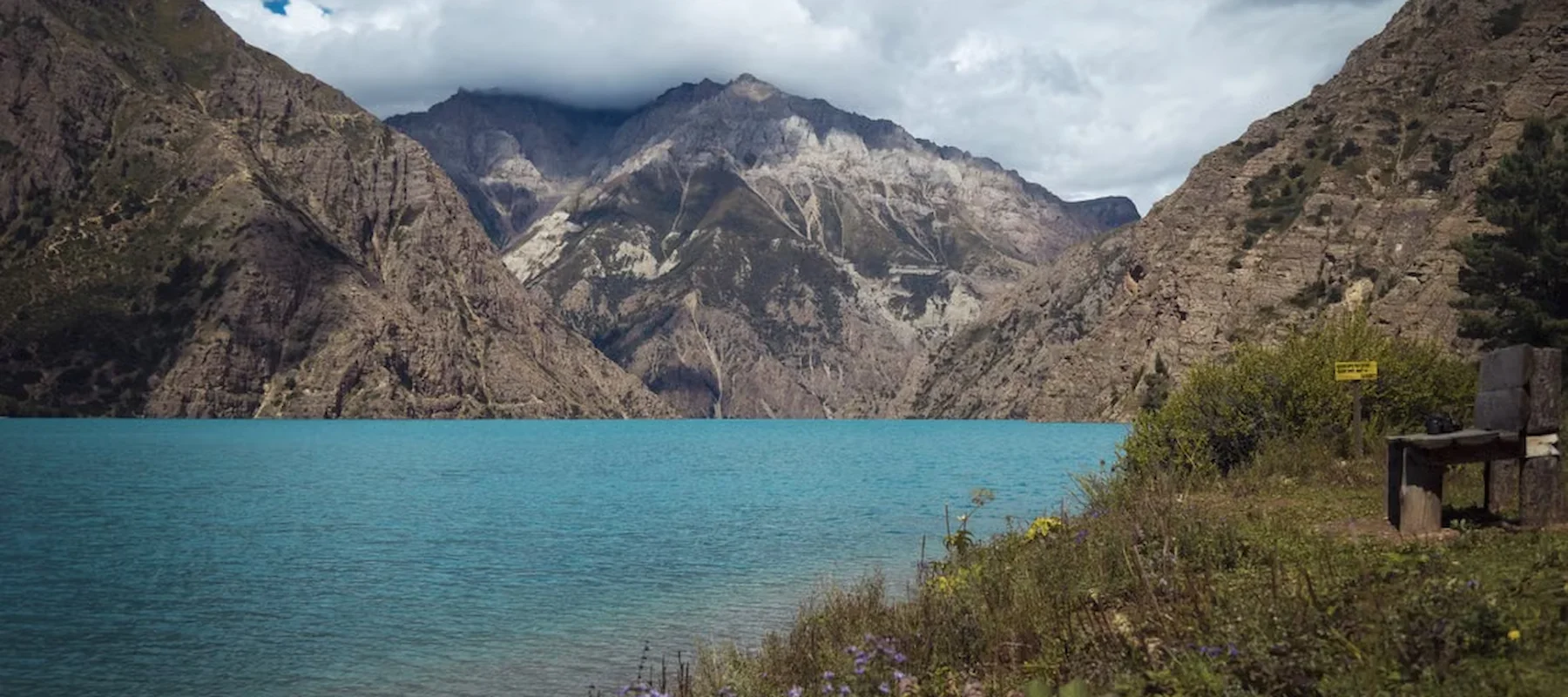
The Lower Dolpo Trek is a 12-day journey into one of Nepal’s more remote and restricted trekking regions, built around a single, striking destination: Shey Phoksundo Lake, the deepest lake in the country and one of the most visually distinctive sights in the Himalaya. After flying via Nepalgunj to Juphal, the route follows the Thulo Bheri and Suli Gad rivers through forested valleys and traditional villages — Dunai, Chhepka, Jharana Hotel and Shyangta — to reach the lake at Ringmo, with a full exploration day at the lakeshore before retracing the route back to Juphal for the return flights.
Unlike the longer Upper Dolpo circuit, this itinerary stays within Lower Dolpo, meaning a shorter permit process, lower overall cost, and a route that can largely be completed using teahouses rather than full camping, while still delivering the genuine remoteness and restricted-area character that draws trekkers to this part of Nepal. Run by Alliance Treks & Expeditions, trekking in Nepal since 1992, this trek suits travellers who want a serious, moderate-length trek into one of Nepal’s least-visited regions without committing to the scale of a full Upper Dolpo expedition.
Day 1 Arrival at Tribhuvan Airport, Kathmandu (1,324m/ 4,344ft)
On arrival in Kathmandu, an Alliance Treks representative will meet you and transfer you to your hotel. Given the remoteness of this trek, the pre-departure briefing is particularly important, covering permit documentation, flight arrangements via Nepalgunj to Juphal, and a realistic look at the limited services available once the trek moves beyond Dunai. Overnight in Kathmandu.
Day 2 Sightseeing Tour of Kathmandu's UNESCO World Heritage Sites (1,325m/ 4,344ft)
Day 3 Flight from Kathmandu (1,324m/ 4,344ft) to Nepalgunj, (150m/ 492ft) then Drive to Bardiya National Park
Day 4 Fly from Nepalgunj (150m/ 492ft) to Juphal (2,500m/ 8,200ft), then Trek to Dunai (2,140m/ 7,020ft)
Day 5 Trek from Dunai (2,140m/ 7,020ft) to Chhepka (2,883m/ 9,500ft)
Day 6 Trek from Chhepka (2,883m/ 9,500ft) to Jharana Hotel (3,110m/ 10,203ft)
Day 7 Trek from Jharana Hotel (3,110m/ 10,203ft) to Phoksundo Lake (3,611m/ 11,849ft)
Day 8 Exploration Day at Phoksundo (3,611m/ 11,849ft)
Day 9 Trek from Phoksundo Lake (3,611m/ 11,849ft) to Shyangta (3,850m/ 12,631ft)
Day 10 Trek from Shyangta (3,850m/ 12,631ft) to Juphal (2,500m/ 8,200ft)
Day 11 Fly from Juphal (2,500m/ 8,200ft) to Nepalgunj (150m/ 492ft), then Fly to Kathmandu (1,325m/ 4,344ft)
Day 12 Final Departure at Tribhuvan International Airport (1,325m/ 4,344ft)
The Lower Dolpo Trek was one of the most rewarding adventures I have experienced in Nepal. The combination of dramatic mountains, remote valleys, fascinating culture, and peaceful trails made every day special. It was certainly more demanding than an ordinary trek, but that was part of the experience. Race was an excellent guide who looked after our group from start to finish. I would strongly recommend Lower Dolpo to experienced adventure lovers.
Lower Dolpo completely exceeded my expectations. The scenery was dramatic and incredibly peaceful, and the remote character of the region made the trek feel like a genuine expedition. I particularly enjoyed the traditional villages and learning about the local lifestyle. Race was very supportive and made the challenging sections much easier to handle. An outstanding trekking experience.
Every day of this trek gave us a new experience. We crossed rugged landscapes, walked through peaceful mountain areas, and visited traditional settlements that felt wonderfully untouched. The remoteness of Dolpo was what made the journey so special for me. Race was attentive and professional throughout the trek. I returned home with some truly unforgettable memories.
The Lower Dolpo Trek was exactly the kind of adventure I was looking for. The route felt wild and remote, and there were amazing views around almost every corner. I enjoyed the feeling of being far away from modern life and experiencing the mountains at a slower pace. Race was a fantastic guide and kept our group motivated throughout the trek.
This trek showed me a completely different side of Nepal. Instead of busy trails and large groups, we experienced remote villages, rugged mountains, and peaceful landscapes. The cultural aspect of the journey was just as interesting as the scenery. Race explained many things about the local communities and traditions. It was a challenging but incredibly rewarding twelve-day adventure.
Lower Dolpo is definitely a trek for people who enjoy adventure and remote landscapes. The trails were demanding in places, but the scenery made every difficult section worthwhile. I particularly enjoyed the quiet mountain valleys and traditional settlements. Race was an experienced and dependable guide who took great care of our group. I would happily return to Dolpo in the future.
I had been dreaming about visiting Dolpo for years, and this trek exceeded my expectations. The remote valleys and huge mountain landscapes were breathtaking. I also appreciated how different the culture and lifestyle felt from other parts of Nepal. Race was friendly and very knowledgeable about the region. The twelve-day itinerary gave us enough time to truly appreciate the journey.
The landscapes of Lower Dolpo were absolutely amazing. Some sections of the trail felt completely untouched, and the changing scenery kept surprising us every day. I loved seeing the traditional villages and learning more about the local culture. The trek was challenging at times, but Race was always encouraging and helped us maintain a comfortable pace. Highly recommended for adventurous trekkers.
Lower Dolpo is an incredible destination for anyone who wants to get away from the usual trekking crowds. The scenery was spectacular, with rocky mountains, deep valleys, forests, and peaceful settlements. Every day brought something new. Race did a great job managing the trek and making sure everyone was comfortable. This was definitely one of my most memorable trips in Nepal.
The Lower Dolpo Trek was unlike any trekking experience I have had before. The remote landscapes, dramatic valleys, quiet villages, and rugged trails made the journey feel like a real adventure. I especially enjoyed experiencing the traditional way of life in the mountains. Race was an excellent guide who was knowledgeable, patient, and supportive throughout the twelve days.
Shey Phoksundo National Park — Nepal’s largest national park and one of the country’s designated restricted trekking areas. The route is accessed by flying from Kathmandu to Nepalgunj in the low-lying Terai near the Indian border, then on to Juphal, a small mountain airstrip that serves as the practical starting point for all trekking in this region. From Juphal, the entire route is on foot, following the Thulo Bheri river and then the Suli Gad (Phoksundo Khola) upstream into increasingly remote, forested valley terrain that eventually opens out at Shey Phoksundo Lake, roughly at the southern edge of what is generally considered Upper Dolpo territory. Because the trek doesn’t cross into the higher, more restricted Upper Dolpo region beyond the lake, it requires a simpler and less expensive permit process than a full Upper Dolpo itinerary, while still sitting well outside Nepal’s standard trekking network in terms of both geography and infrastructure.
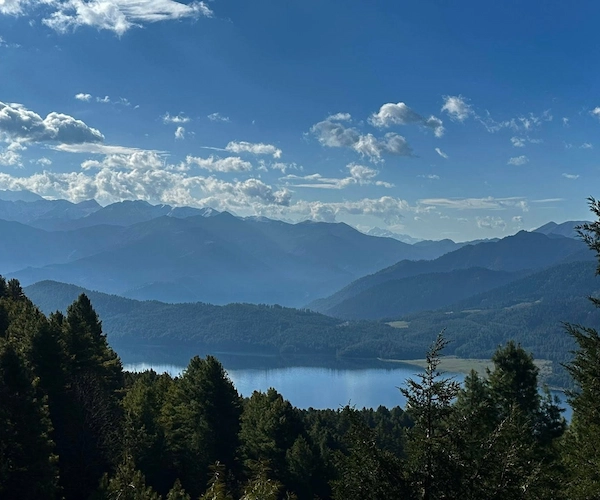
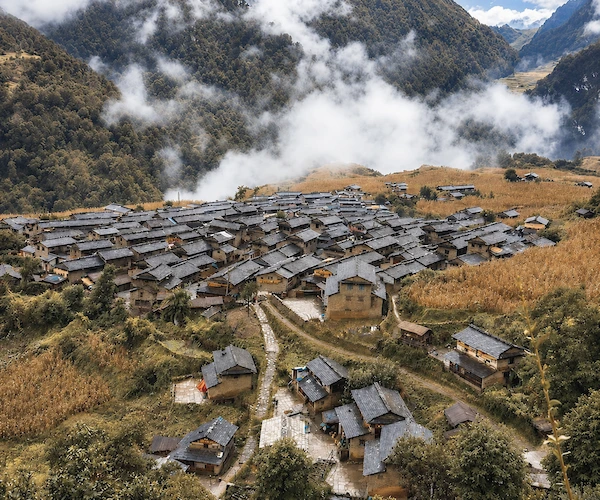
From Juphal, the trail descends into the Thulo Bheri valley and follows the river to Dunai, the administrative headquarters of Dolpa district and the last settlement of any real size before the trek moves into more remote country. From Dunai, the route crosses the Bheri River and follows the Suli Gad upstream through a series of forested villages — Chhepka, Jharana Hotel and Shyangta — passing through mixed forest of pine, walnut, maple and rhododendron, with waterfalls, suspension bridges and increasingly dramatic canyon scenery along the way. The trail also passes through visible signs of Tibetan Buddhist culture as it climbs — prayer flags, mani walls and small monasteries reflecting the strong Bon and Buddhist heritage of this part of Dolpo. The valley eventually opens out at Ringmo village and Shey Phoksundo Lake itself, where a full exploration day allows time to properly take in the lake, its monastery, and the surrounding high peaks before the route retraces its steps back down to Juphal for the flights home. Because much of the route follows a single river valley in each direction, the trek has a clear, legible shape — a steady climb in, a full day at the highlight, and a comparatively quick descent back out.
What sets this trek apart from many of Nepal’s other short teahouse routes is the combination of genuine restricted-area remoteness with a manageable 12-day format and teahouse-based accommodation for most of the route. Trekkers get the atmosphere and permit requirements of a serious Dolpo expedition — small numbers, distinct Tibetan Buddhist culture, forested river valleys rarely visited by foreign trekkers — without the extended duration, high-altitude passes, or heavy camping logistics of the full Upper Dolpo circuit. The lake itself is also a destination in its own right rather than simply a way-point: as the deepest lake in Nepal, with a colour and setting genuinely distinct from Nepal’s more commonly visited lakes, it gives this shorter itinerary a clear, memorable centrepiece.
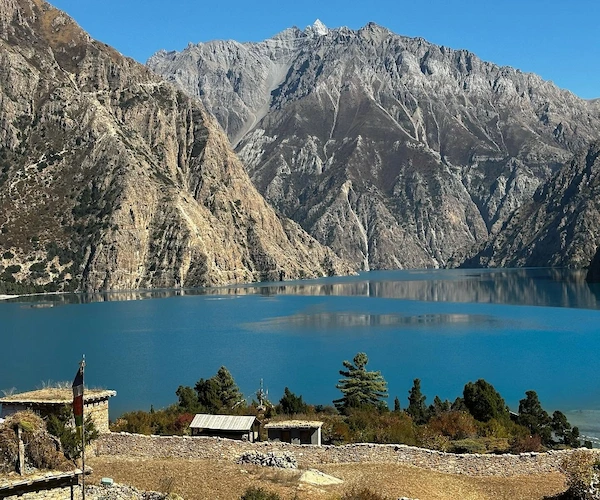
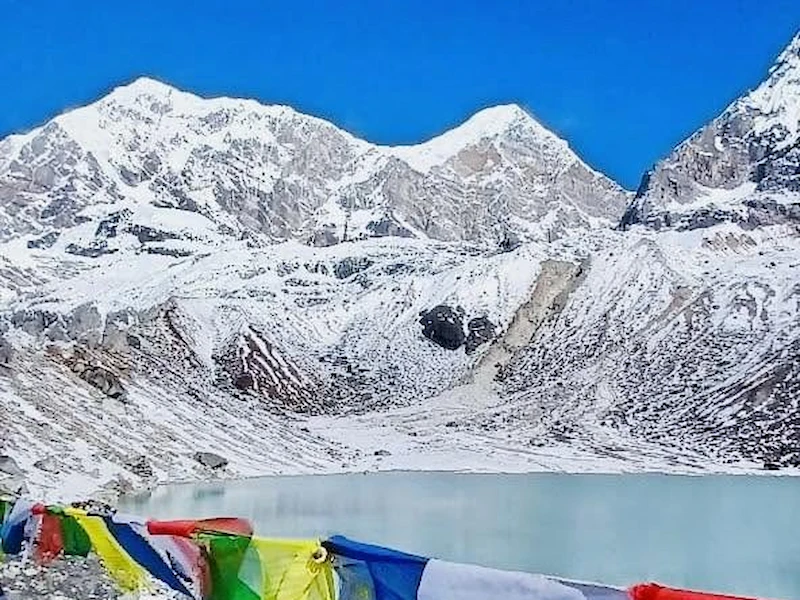
Shey Phoksundo Lake (3,600m) — the deepest lake in Nepal, known for its striking turquoise blue colour and dramatic mountain backdrop.
Ringmo village — a Tibetan Buddhist settlement at the edge of the lake, with its own monastery and traditional stone architecture.
Shey Phoksundo National Park — Nepal’s largest national park, home to snow leopard, blue sheep, Himalayan tahr and a wide range of forest wildlife.
The Suli Gad (Phoksundo Khola) valley — a mixed forest of pine, walnut, maple, spruce and rhododendron, with waterfalls and suspension bridge crossings.
Dunai — the administrative headquarters of Dolpa district and the last substantial settlement before the more remote upper valley.
Traditional Dolpo villages — Chhepka, Jharana Hotel and Shyangta, each offering a glimpse of everyday life in one of Nepal’s least-visited regions.
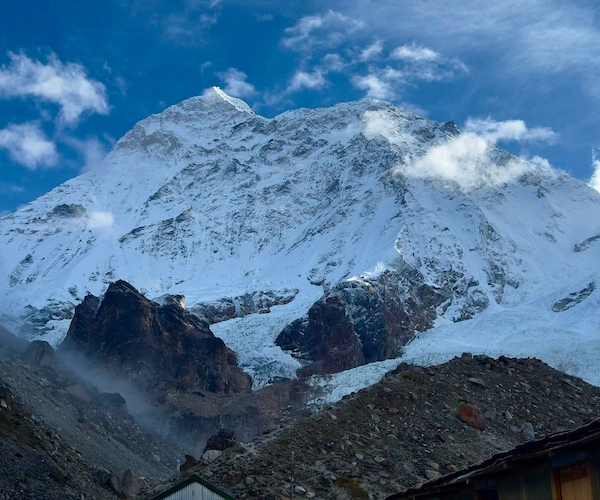
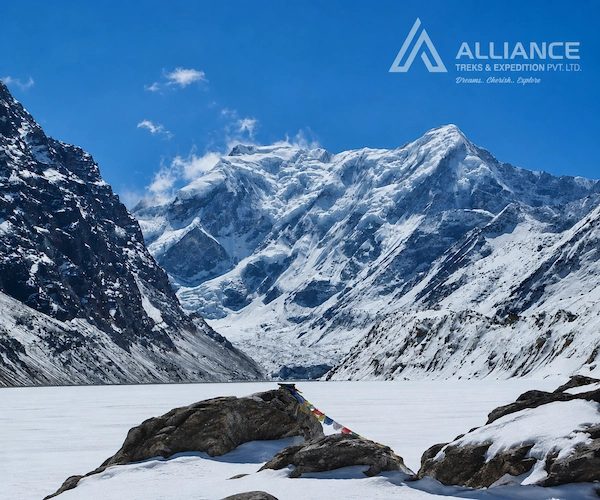
Views of Kanjiroba Himal and surrounding peaks from higher points along the route.
Trekkers choose this route over a full Upper Dolpo circuit when they want genuine restricted-area remoteness and Nepal’s deepest lake without committing three to four weeks and a substantially larger permit cost to the trip. Compared to the Everest or Annapurna regions, Lower Dolpo sees a fraction of the trekking traffic, and the permit and guide requirements keep numbers genuinely low, giving the trek a sense of remoteness that’s increasingly hard to find elsewhere in Nepal. Compared to Upper Dolpo, this itinerary is considerably more accessible — mostly teahouse-based, without high 5,000m passes, and completed in under two weeks. The trade-off is that it doesn’t reach Shey Gompa, Saldang or the wider Upper Dolpo villages; trekkers specifically wanting that deeper cultural and geographic immersion should look at the full Upper Dolpo itinerary instead. For those who want a serious, restricted-area trek to one specific, exceptional destination within a realistic two-week window, this is a strong, well-matched choice.
The Lower Dolpo Trek is graded moderate. Trekking days generally run 4–7 hours, with the two longest days being Dunai to Chhepka and Chhepka to Jharana Hotel (both 6–7 hours). The trail follows river valleys for almost the entire route, with a mix of forest path, riverside trail and several suspension bridge crossings, and gains altitude gradually rather than via any single steep climb or high pass. The trek’s highest point, Shey Phoksundo Lake at 3,600m, is reached gradually over four trekking days from Juphal, giving the body reasonable time to adjust, and the dedicated exploration day at the lake (Day 8) provides further acclimatisation before any additional altitude gain, though this route does not go higher than the lake itself. Trail conditions are generally good, though the remoteness of the region means less consistent trail maintenance and signage than on Nepal’s more heavily used routes. A reasonable level of general fitness is recommended, along with comfort walking multiple consecutive days of 5–7 hours in a genuinely remote setting with limited services.
Two permits are required for this trek. The Shey Phoksundo National Park Entry Permit (approximately USD 30 per person, with no time limit) is mandatory, as the entire route lies within the park. The Lower Dolpo Restricted Area Permit is also mandatory, priced at approximately USD 20 per person for the first week, plus USD 5 per person for each additional day beyond that — given this trek’s length, this typically covers close to two weeks of permit validity. As with all of Nepal’s restricted areas, solo trekking is not permitted, and trekkers must be accompanied by a licensed guide throughout; a minimum group size has historically applied to restricted area permits, though this requirement has been relaxed by some agencies in recent years. Both permits are arranged by Alliance Treks as part of standard trek preparation, and — because restricted area permits require processing time — should be arranged well in advance of departure. Please confirm current fees and group-size requirements with Alliance Treks at the time of booking.
Alliance Treks & Expeditions has been organising treks across Nepal, including in Dolpo, since 1992. For a restricted-area trek like this one, that experience matters in ways that aren’t always obvious from the itinerary alone — knowing current flight patterns and realistic contingency planning for the Nepalgunj–Juphal route, understanding which villages along the Suli Gad valley currently have reliable teahouse accommodation versus where camping backup may be needed, and having the administrative relationships in Kathmandu to process restricted area permits smoothly and on time. Our guides know this route well, including the practical realities of trekking in a region with limited infrastructure and services, and are trained to manage pacing and any health concerns appropriately given the remoteness involved. Permits are arranged in advance, and support runs from your arrival in Kathmandu through to your final departure, with the team available to discuss questions about this specific itinerary or how it compares to the fuller Upper Dolpo trek if you’re deciding between the two.
Alliance Treks & Expedition Pvt. Ltd. Once is not enough for naturally and culturally Himalayas