(Viber, Whatsapp, Cell) +977 9851022814

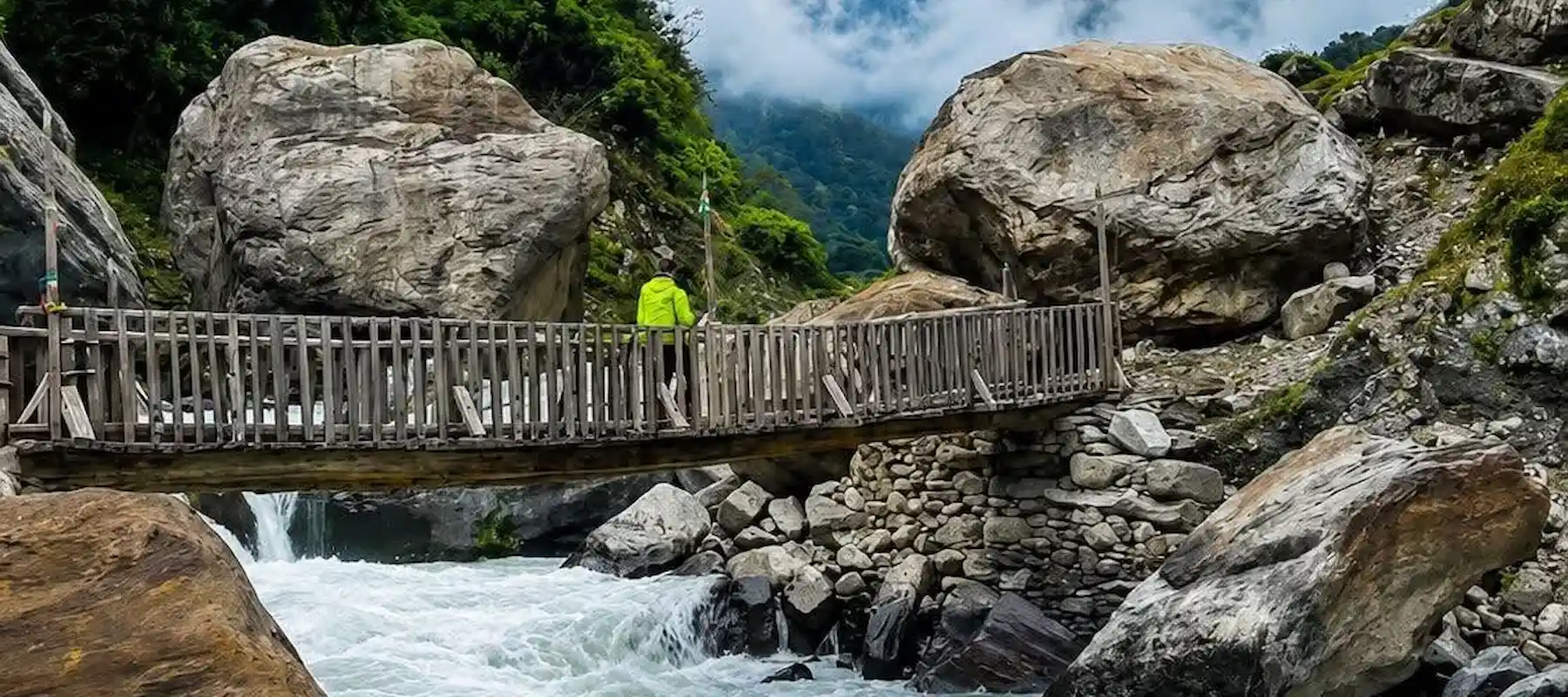
Makalu Base Camp Trek is Nepal’s greatest remote Himalayan adventure — a 21-day journey into the heart of the Makalu Barun National Park to the base of Makalu (8,485m), the world’s fifth-highest mountain and one of the most technically demanding and visually dramatic peaks on earth.
While Everest Base Camp receives tens of thousands of trekkers every year, Makalu Base Camp sees only a few hundred. There are no crowded teahouse queues, no lines at mountain passes, no buzz of helicopter traffic above the valley. What you find instead is exactly what most trekkers are looking for but rarely encounter — genuine Himalayan wilderness, untouched forest, authentic mountain communities, and the overwhelming scale of a great Himalayan peak seen from its base without another trekker in sight.
The route passes through the Makalu Barun National Park — the most biodiverse protected area in Nepal, connecting with Sagarmatha (Everest) National Park to the north and preserving an extraordinary range of ecosystems from subtropical riverine forest to permanent glacial terrain. Red pandas, snow leopards, Himalayan black bears, and over 440 bird species inhabit in this park — making this as much a wildlife and nature experience as it is a mountain trek.
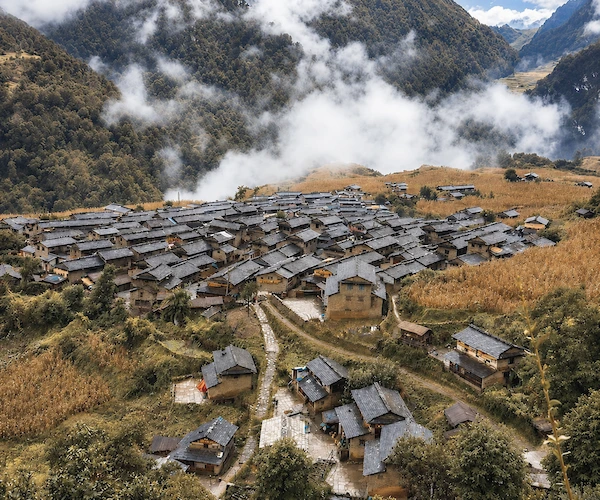
The approach takes you through traditional Rai and Sherpa villages where ancient cultures and ways of life continue largely untouched by modern tourism. The trails are quiet, the landscapes are vast, and the sense of achievement on reaching Makalu Base Camp at 5,000m is proportional to the distance and effort required to get there.
This is not a trek for those seeking comfort and convenience. It is a trek for those who want the real thing — and Alliance Treks has been guiding trekkers safely through this extraordinary landscape for over 34 years.
Alliance Treks provides experienced, licensed, and NATHM-certified local trekking guides for the Makalu Base Camp Trek. We also provide strong, experienced, and well-equipped porters who carry up to 20 kg each, with one porter for every two trekkers.
The Makalu Base Camp Trek cost is reasonable for the service provided. Although it is slightly higher than the Everest Base Camp, Annapurna Circuit, or Manaslu Circuit Trek because of its remote location, limited transportation, and longer duration, it offers one of Nepal’s most rewarding trekking experiences.
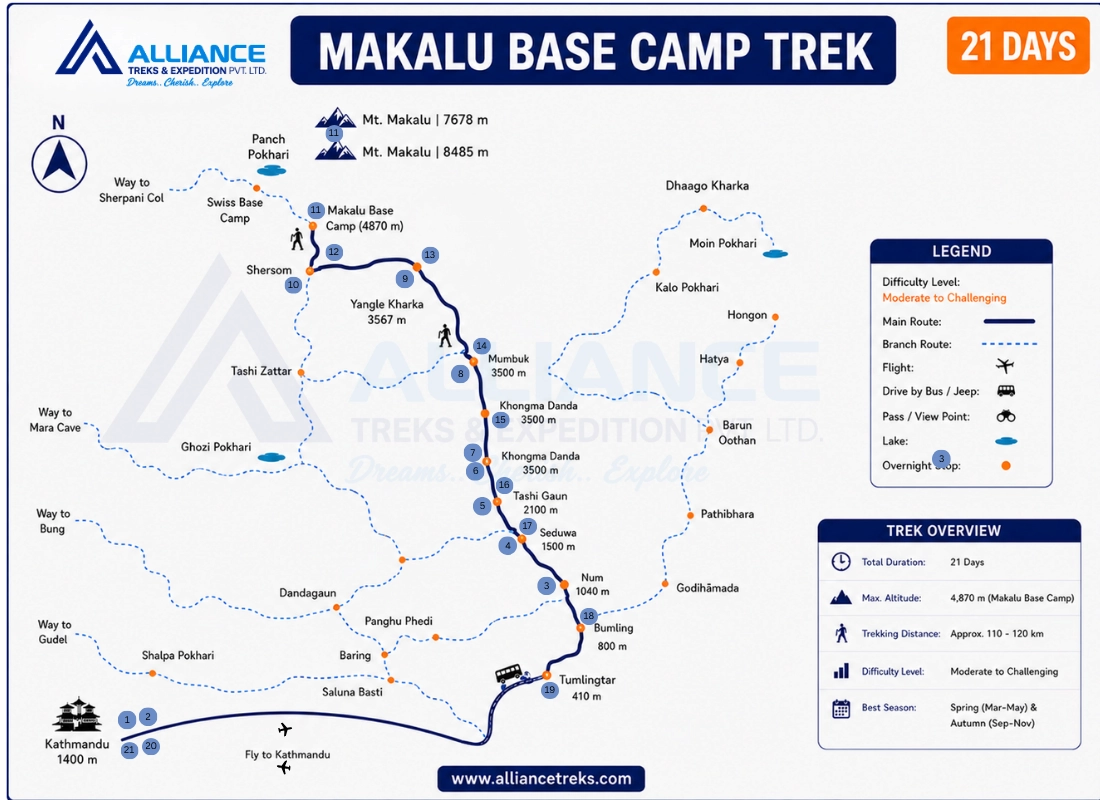
Moreover, we have designed a flexible and well-planned itinerary with the latest trekking map, detailed route information, and practical daily schedule. Therefore, you can enjoy a safe, comfortable, and memorable journey to Makalu Base Camp.
Good trekking equipment is very important for a safe and comfortable Makalu Base Camp Trek. Since you will walk for several hours each day through different landscapes and weather conditions, you should prepare the right gear before your trip.
For easy packing, divide your trekking equipment into three parts:
For your comfort, Alliance Treks provides a down jacket, down sleeping bag, raincoat, duffel bag, reusable water bottle, and trekking poles (subject to package details). These items help you stay warm, safe, and comfortable throughout the trek.
During the Makalu Base Camp Trek, you will stay in clean and comfortable local lodges and teahouses available along the trail. Although the facilities are more basic than on popular trekking routes, they offer a warm and friendly atmosphere.
We provide three fresh meals every day:
We always encourage trekkers to eat nutritious food and drink enough water to maintain their energy during the trek.
A professional trekking guide and porter make your journey safer, easier, and more enjoyable. They know the trail well and provide valuable support throughout the trek.
Tipping is not compulsory, but it is a respected tradition in Nepal and greatly appreciated for good service. As a general guideline:
However, the final tip depends entirely on your satisfaction and is always your personal choice.
The best time for the Makalu Base Camp Trek is during the spring (March to May) and autumn (September to November) seasons.
During these months, you can enjoy:
Although trekking is possible throughout the year, each season offers a different experience.
The weather on the Makalu Base Camp Trek changes with altitude and season.
At lower elevations, the weather remains warm and comfortable for most of the year. As you climb above 3,500 meters, temperatures become much colder, especially during the morning and evening. During winter, temperatures at higher elevations can fall to around -5°C or lower, while daytime temperatures are usually more comfortable when the sun is out. In spring and autumn, daytime temperatures are pleasant, making these seasons ideal for trekking.
Because mountain weather can change quickly, we recommend carrying warm clothing and waterproof gear throughout your journey.
Day 1 Arrive in Kathmandu (1,325m/ 4,344ft)
Day 2 Kathmandu Valley Sightseeing and Trek Preparation
Day 3 Fly from Kathmandu (1,325m/ 4,344ft) - Tumlingtar (400m/ 1,312ft) - Num (1,560m/ 5,118ft)
Day 4 Num (1,560m/ 5,118ft) - Seduwa (1,500m 4,921ft)
Day 5 Seduwa (1,500m 4,921ft) - Tashi Gaun (2,100m/ 6,890ft)
Day 6 Tashi Gaon (2,100m/ 6,890ft) - Khongma Danda (3,560m/ 11,680ft)
Day 7 Acclimatization day in Khongma Danda (3,2455m/ 11,680ft)
Day 8 Khongma Danda (3,245m/ 11,680ft) - Mumbuk (3,560m/ 11,680ft)
Day 9 Mumbuk (3,560m/ 11,680ft) - Yangle Kharka (3,700m/ 12,139ft)
Day 10 Yangle Kharka (3,700m/12,139ft) - Shersom (4,615m/ 15,141ft)
Day 11 Shersom (4,615m/ 15,141ft) - Makalu Base Camp (4,870m/ 15,978ft)
Day 12 Rest day / Explore around Shersom (4,615m/ 15,141ft)
Day 13 Makalu Base Camp (4,870m/ 15,978ft) / Shersom (4,615m/15,141ft) - Yangle Kharka (3,700m/12,139ft)
Day 14 Yangle Kharka (3,700m/12,139ft) - Mumbuk (3,560m/ 11,680ft)
Day 15 Mumbuk (3,560m/ 11,680ft) - Khongma Danda (3,245m/ 11,680ft)
Day 16 Khongma Danda (3,245m/ 11,680ft) to Tashi Gaon (2,100m/ 6,890ft)
Day 17 Tashi Gaon (2,100m/ 6,890ft) - Seduwa (1,500m/ 4,921ft)
Day 18 Seduwa (1,500m/ 4,921ft) - Bumling
Day 19 Trek from Bumling - Tumlingtar (400m/ 1,312ft)
Day 20 Fly Tumlingtar (400m/ 1,312ft) to Kathmandu (1,325m/ 4,344ft) & Transfer to Hotel
Day 21 Departure from Kathmandu (1,325m/ 4,344ft)
Sat - Fri Dec 5, 2026 to Dec 25, 2026
US$ 2139 US$ 1769
I’ll admit there were moments when I questioned why I signed up for a 21-day trek, especially during the long uphill days. But once we reached Sherson and finally stood at Makalu Base Camp, every bit of effort made sense.
The scenery was simply breathtaking, and the feeling of remoteness made the whole experience even more special. We hardly saw other trekkers, which made the mountains feel untouched.
Alliance Treks did an outstanding job from the first airport pickup until the final farewell in Kathmandu. Excellent guides, hardworking porters, and great organization throughout.
I would happily trek with them again on another remote Himalayan adventure.
This wasn’t just a trek—it felt like a genuine expedition into one of Nepal’s wildest mountain regions. The route through Makalu Barun National Park was spectacular. We saw colorful birds, yak caravans, waterfalls, glaciers, and endless mountain views. Every day offered something different. Alliance Treks organized everything professionally. Our guide adapted the pace for the group, encouraged us during the difficult climbs, and made sure everyone stayed healthy. The memories from Makalu Base Camp will stay with me forever.
Makalu Base Camp had been my dream trek for years. It was much harder than I expected, but also far more beautiful. The Barun Valley was incredible, especially the days above the tree line, where the landscape became completely wild. I loved how peaceful everything felt compared to the busier trekking routes. The porters and guides worked incredibly hard every day and always greeted us with a smile. Their kindness made a huge difference during the difficult sections of the trek.
Thank you to Kul and everyone at Alliance Treks for making this adventure possible.
I specifically chose Makalu because I wanted somewhere less commercial than Everest, and it exceeded all my expectations. The villages felt authentic, the forests were beautiful, and every day the scenery completely changed. Alliance Treks handled all the logistics perfectly, from the flights to Tumlingtar to the camping equipment near base camp. Our guide constantly checked everyone’s health and made sure we acclimatized properly. I always felt safe, even at higher elevations. If you’re after a genuine Himalayan adventure, this trek is absolutely worth the effort.
I’ve completed the Everest Base Camp and Annapurna Circuit treks before, but Makalu Base Camp was on another level. It was much quieter and felt like a real expedition. Some days we didn’t meet another trekking group at all.
Our guide from Alliance Treks was incredibly knowledgeable about the mountains, wildlife, and local villages. Reaching Makalu Base Camp after so many days of walking was emotional. Standing in front of Makalu with those massive glaciers around us is something I’ll never forget.
The trek is definitely challenging, but if you’re looking for a true wilderness experience, I can’t recommend it enough.
Makalu Base Camp Trek of all Nepal’s base camp treks, Mt. Makalu (8,485m) the fifth highest mountain in the world stands apart as completely genuine, completely remote. The Barun Valley has no road access, no helicopter landing pads near the base camp, and almost no trekking infrastructure beyond the most basic teahouses in the lower villages. Getting to Makalu Base Camp requires commitment — roughly 8 days of walking from the road head at Num — and that commitment is precisely what makes it so extraordinary.
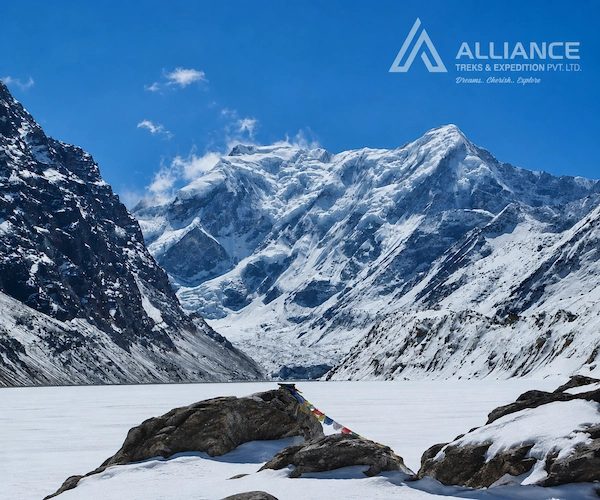
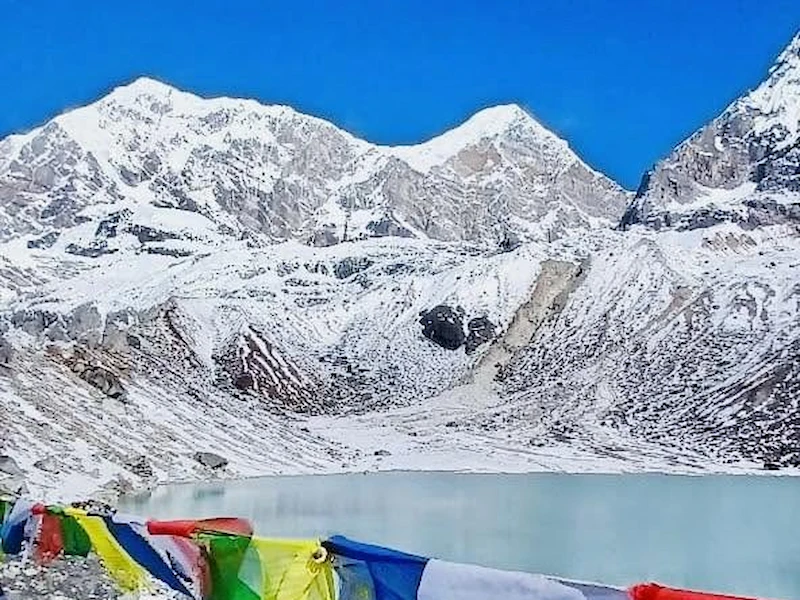
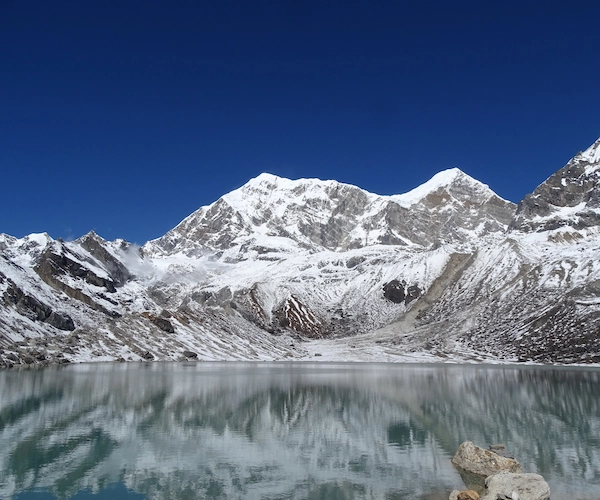
The mountain itself is extraordinary. Makalu’s perfectly pyramidal southwest face — visible from the upper Barun Valley in breathtaking clarity, It is one of the most spectacular sights in the entire Himalaya. Unlike Everest Base Camp, where the mountain itself is largely hidden by surrounding terrain, Makalu dominates its valley with full visual force from Sherson and the base camp itself.
Established in 1992, the Makalu Barun National Park covers 1,500 square kilometres of the most biodiverse terrain in Nepal. It is the only protected area in the world that preserves an unbroken ecological corridor from subtropical lowlands (below 1,000m) to the summit of an 8,000m peak. The park’s extraordinary biodiversity includes 47 species of mammals, 440 bird species, 75 orchid species, and 47 primula species.
Walking through the park over 21 days, you witness this biodiversity personally — subtropical forest in the lower Arun valley, temperate rhododendron and oak forest above Tashi Gaon, high alpine meadows and scrub above 4,000m, and finally the glacial moraines and permanent snowfields of the upper Barun. Each ecosystem transition is dramatic and visible within a single day’s walking.
The trek begins with a flight from Kathmandu to Tumlingtar — a small airstrip in the Arun valley serving the Sankhuwasabha district of eastern Nepal. From Tumlingtar, a 4-hour drive climbs to Num at 1,560m — the actual trailhead. The walking begins immediately, descending into the Arun gorge at Seduwa before climbing steeply to Tashi Gaon — a traditional Sherpa village at 2,070m and the last permanent settlement before the high country.
Above Tashi Gaon, the trail enters the national park and the character of the trek changes completely. The trail becomes steeper, narrower, and less maintained. Villages give way to seasonal herder settlements at Kauma and Mumbuk. The forest becomes denser and more diverse. The altitude increases each day noticeably.
Neha Kharka at 3,700m is the last high-altitude meadow before the dramatic final push to Sherson (4,615m) — the upper Barun campsite from which Makalu dominates the horizon with full magnificence. From Sherson, a 4–5 hour walk leads to Makalu Base Camp at 5,000m — a flat glacial area at the foot of the Barun Glacier with towering peaks surrounding it, including Makalu, Makalu II, Chomo Lonzo, and Baruntse.
A full acclimatization day at base camp allows you to explore the surrounding glacial terrain, attempt higher viewpoints, and simply absorb the overwhelming scale of the landscape before the long descent begins.
The return route follows a slightly different path — descending via Pakuwa and Bumling to Tumlingtar, adding new villages and perspectives to the journey. The flight back to Kathmandu from Tumlingtar completes the loop, offering a final aerial view of the eastern Himalayan giants before landing back in the capital. Accordingly your whole trek will be inside the Makalu Barun National Park and either going up and descending to Timlingtar most of the trekking days will be inside the national park so it will be great opportunity for you to observe, experience and
Makalu Base Camp Trek needs Makaslu Barun National park entrance permit and Trekkers’ Information Management System (TIMS) permit from the trekking company like Alliance Treks (only the Nepal Government registered trekking company) for your safe and sound trekking in this area. I will be close to Kanchanjunga Trekking where you need Kanchanjunga Conservation Area Project (KCAP) permit but as you do not cross the border you do not need KCAP permit at all although if you want to cover few days Kanchanjunga part too then you have to have it.
The Makalu Base Camp Trek is rated challenging and is best suited to experienced trekkers with prior high-altitude experience above 4,000m. Daily walking of 5–9 hours on remote, sometimes poorly marked trails requires good stamina and strong navigation support from your guide. The maximum altitude of 5,000m at base camp demands proper acclimatization — the itinerary includes two dedicated acclimatization days at Kauma (3,470m) and Makalu Base Camp (5,000m) to manage this safely.
Physical preparation should begin 2–3 months before departure and include long-distance hiking, cardiovascular training, and ideally some experience on trails above 3,500m.
If you are only 2-3 people, Alliance Treks organizes tea house trekking as most of the places you easily find very basic local shelter (Yak huts, season tea shops etc..) where you can have over night adventurous sleep however if you are more than 4 or 5 people then you better to have tents with you for night shelter with mattresses and good sleeping bag with personal warm clothes. In addition, you can rent in Kathmandu tents like USD 4-5 per day unless you have your own and if you want to take tent/s, we can arrange with additional cost other than we have quoted here your Makalu Base Camp Trek. Tea houses are quite basic too but warm enough along the way specially up to Tashi Gaun.
Alliance Treks & Expedition Pvt. Ltd. Once is not enough for naturally and culturally Himalayas