(Viber, Whatsapp, Cell) +977 9851022814

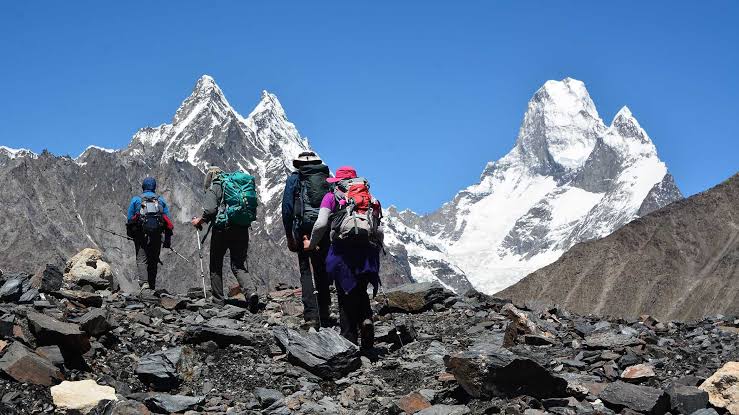
The Ama Lapcha Pass Trek (also known as the Amphu Laptsa Pass Trek) is one of Nepal’s most extraordinary high-altitude wilderness adventures. Over 19 days, this route traverses two of the most spectacular and remote valleys in the Khumbu region, the Hinku and the Khumbu, connected by the dramatic Ama Lapcha Pass at 5,800m, one of the highest and most technically demanding trekking passes in Nepal.
The Amphu Laptsa (also spelled Ama Lapcha, Amphu Labtsa, or Amphu Laptsa) is not a standard trekking pass. At 5,800m, it sits among permanent snow and glaciated terrain that requires basic crampon and fixed rope technique on the crossing day. This is precisely what separates it from every other pass trek in Nepal — the Ama Lapcha crossing is a genuine high-mountain challenge that delivers a sense of achievement proportional to the effort and skill required.
The route begins in the Hinku Valley — one of Nepal’s most remote and least-visited Himalayan valleys, accessible only via the Zatrawala Pass (4,610m) from Lukla or by a multi-day walk from the south. The Hinku is wild, silent, and magnificent — a valley of glaciated peaks, remote lakes, yak pastures, and almost no other trekkers. Above the valley, the route climbs through Khare to Mera La Pass (5,350m) before crossing into a glaciated plateau that leads eventually to the Ama Lapcha high camp and the crossing itself.
On the other side of the Ama Lapcha Pass lies Chhukung in the Khumbu — the heart of the Everest region — from where the return to Lukla follows the classic trail through Pangboche and Khumjung. The contrast between the remote wilderness of the Hinku and the relatively developed infrastructure of the Khumbu is dramatic and memorable — two completely different Himalayan worlds connected by a single extraordinary pass.
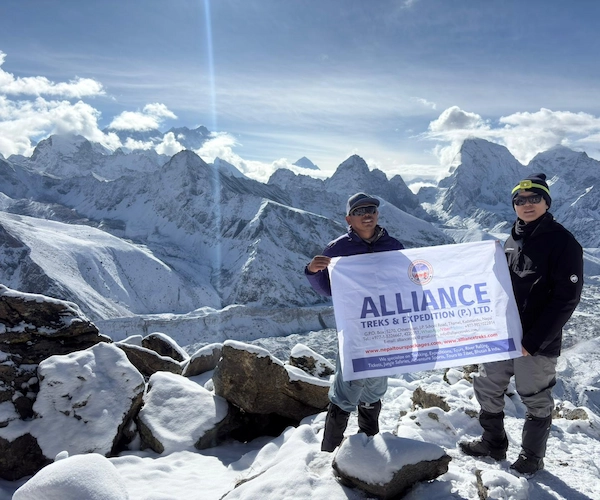
This trek is recommended for experienced trekkers with prior high-altitude experience above 5,000m and a basic understanding of glacier travel. Alliance Treks provides all necessary technical support, equipment, and experienced guides for the pass crossing.
Ama Lapcha Pass Trek is one of Nepal’s most exciting technical trekking adventures, combining breathtaking Himalayan scenery, glacier crossings, and a true mountaineering experience in the Everest Khumbu region.
This trek is suitable for experienced trekkers and physically fit adventurers who are looking for a challenging high-altitude Himalayan expedition. Your safety is our highest priority. Our experienced guides carefully monitor weather, altitude, and your health throughout the journey. Our itinerary includes proper acclimatization to help your body adjust to the altitude and reduce the risk of Acute Mountain Sickness (AMS).
Cross the technical sections confidently with our licensed climbing guides, fixed ropes, and professional safety equipment. Enjoy a fully supported camping experience with comfortable tents, freshly prepared meals, and a dedicated expedition crew. Witness spectacular views of Mount Everest, Lhotse, Makalu, Baruntse, Ama Dablam, Mera Peak, and many other Himalayan peaks. We follow eco-friendly trekking practices and respect local culture while protecting the pristine Himalayan environment.
Capture unforgettable sunrise views, glaciers, alpine lakes, Sherpa villages, and some of the world’s highest mountains. Our team is well prepared to handle emergencies and coordinate rescue services whenever necessary. We offer flexible itineraries for individuals, couples, private groups, and climbing expeditions based on your schedule and experience. With over 34 years of Himalayan experience, Alliance Treks provides professional service, trusted local knowledge, and personalized care from arrival to departure.
Day 1 Arrival in Kathmandu (1,325m/ 4,344ft
Day 2 Kathmandu Sightseeing & Trek Preparation
Day 3 Fly Kathmandu (1,325m/4,344ft) - Lukla (2,860m/ 9,383ft) & Trek to Chuthanga (3,450m/ 11,319ft)
Day 4 Chutanga (3,450m / 11,319ft) - Khartitang (3,900m / 12,795ft) via Zatrawala Pass (4,600m / 15,120ft)
Day 5 Khartitang (3,900m / 12,795ft) - Kothe (3,600m / 11,811ft)
Day 6 Kothe (3,600m / 11,811ft) - Tangnang (4,356m/ 14,271ft) via Sabal Tsho Lake (4,600m)
Day 7 Acclimatization Day at Tangnang (4,356m / 14,271ft)
Day 8 Tangnang (4,356m / 14,271ft) - Khare (5,045m / 16,552ft)
Day 9 Rest Day at Khare (5,045m / 16,552ft)
Day 10 Khare (5,045m / 16,552ft) - Mera La Pass (5,350m / 17,766ft) & Kongmanima (5,220m)
Day 11 Kongmanima (5,220m / 17,126ft) - Seto Pokhari (4,500m / 14,764ft)
Day 12 Seto Pokhari (4,500m / 14,764ft) - Ama Lapcha High Camp (5,500m / 18,044ft)
Day 13 Cross Ama Lapcha Pass (5,800m / 19,029ft) - Descend to Chhukung (4,800m / 15,748ft)
Day 14 Trek Chhukung (4,800m / 15,748ft) - Pangboche (3,985m / 13,074ft)
Day 15 Pangboche (3,985m / 13,074ft) - Khumjung (3,790m / 12,434ft)
Day 16 Khumjung (3,790m / 12,434ft) - Monjo (2,835m / 9,301ft)
Day 17 Monjo (2,835m / 9,301ft) - Lukla (2,863m / 9,186ft)
Day 18 Fly from Lukla (2,863m/9,183ft) - Kathmandu (1,310m/4,296ft)
Day 19 Departure for home country
I had a wonderful experience on the 16-day Ama Lapcha Pass Trek. The route offered a great combination of adventure, nature, and local Himalayan culture. The mountain scenery was breathtaking, especially around the higher sections of the trek. Our guide was knowledgeable and always made sure everyone was comfortable during the journey. The organization was smooth and the itinerary was well planned. It was a challenging trek, but definitely one I will remember for a long time.
I really enjoyed my 16-day Ama Lapcha Pass Trek. The trail was demanding, but the scenery made every difficult section worthwhile. Our guide explained the local culture and helped us manage the high-altitude sections safely. The organization was excellent, from transportation to accommodation and meals along the route. The views from the pass were spectacular. I would recommend this trek to anyone with good high-altitude trekking experience.
The Ama Lapcha Pass Trek was one of the most challenging and rewarding adventures I have experienced in Nepal. The 16-day itinerary was well organized, and our guide was extremely helpful throughout the trek. The remote landscapes, Sherpa villages, and spectacular Himalayan views were unforgettable. Crossing Ama Lapcha Pass was definitely the highlight of the journey. A fantastic trek for experienced hikers looking for something beyond the usual Nepal trekking routes.
Alliance Treks & Expedition provided outstanding service before and during the trek. Communication was quick, permits were handled smoothly, and our porter and guide worked incredibly hard throughout the journey. The entire trip felt safe, enjoyable, and very well organized. I highly recommend them to anyone visiting Nepal.
Everything was professionally organized, from airport pickup to the final farewell. The guides shared local culture and history throughout the trek, making the journey even more enjoyable. The food and accommodation were excellent for the mountains, and the scenery was spectacular every day. I would definitely choose Alliance Treks again.
My Annapurna Base Camp Trek with Alliance Treks exceeded all my expectations. Our guide was knowledgeable, friendly, and always ensured everyone was comfortable. The itinerary was well paced, the tea houses were better than expected, and the mountain views were breathtaking. Reaching Annapurna Base Camp at sunrise was unforgettable. I highly recommend this company to anyone planning to trek in Nepal.
The Annapurna Base Camp Trek was an unforgettable adventure. Every day brought amazing mountain views and warm hospitality from local tea houses. Our guide was professional and attentive, making the entire experience enjoyable and stress-free. I returned home with wonderful memories and would happily trek with Alliance Treks again.
This was my first trek in Nepal, and I couldn’t have asked for a better experience. The guide carefully monitored our acclimatization and encouraged us throughout the journey. Every day offered incredible landscapes, waterfalls, forests, and snow-covered peaks. Annapurna Base Camp is truly one of the most beautiful places I’ve ever visited.
This was an incredible experience from beginning to end. The Ama Lapcha Pass Trek took us through beautiful forests, mountain villages, glaciers, and spectacular Himalayan landscapes. I particularly enjoyed the quieter sections of the route where we saw very few other trekkers. Our guide was patient and supportive, especially on the difficult days. The 16-day itinerary gave us enough time to enjoy the journey without feeling rushed. Highly recommended for adventure travelers.
The Ama Lapcha Pass Trek was exactly the kind of adventure I was looking for. The route was physically demanding, but the combination of remote landscapes and incredible mountain views made it worthwhile. Our trekking team was professional and friendly, and they handled the logistics very well. The crossing of Ama Lapcha Pass was the most memorable part of the trip. Anyone planning this trek should be prepared for challenging terrain and high altitude.
Ama Lapcha Pass Trek – The Hinku Valley is one of the least-visited major valleys in the Khumbu region of eastern Nepal. Flanked by Mera Peak (6,476m), Kusum Kangguru (6,367m), and a series of unnamed peaks and glaciers, the valley sees only a fraction of the trekker numbers of the adjacent Khumbu and Gokyo regions. There are no road connections, no helicopter landing pads in the upper valley, and very limited teahouse infrastructure above Kothe.
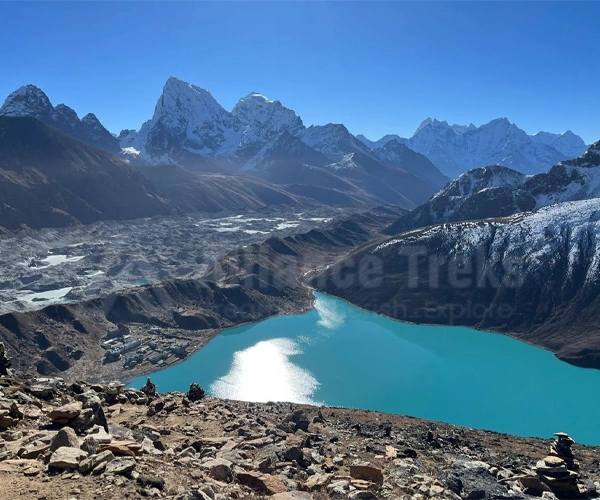
What the Hinku offers instead is exactly what serious trekkers and wilderness lovers seek — genuine remoteness, untouched glacial landscapes, absolute silence above 4,000m, and the extraordinary privilege of walking through a major Himalayan valley almost completely alone. The Sabal Tsho Lake at 4,600m in the upper valley is one of the finest high-altitude lakes in eastern Nepal and is rarely visited even by the small number of trekkers who enter the Hinku. Accordingly Everest Region has only few trekking which are extremely tough trekking like Everest Base Camp Gokyo Lake Trekking & Everest Three Pass Trekking.
This 19-day route crosses three significant high passes — each with its own character and challenge.
Zatrawala Pass (4,610m) on Day 4 is the entry point to the Hinku Valley from Lukla. A long, cold crossing through rocky alpine terrain with views of Kusum Kangguru and the remote peaks of the Hinku Himal — it sets the tone for the adventure immediately and separates this route from standard Khumbu trekking from the very first full day.
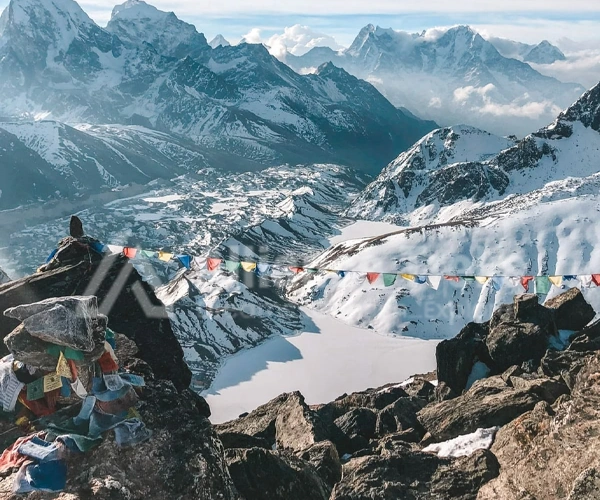
Mera La Pass (5,350m) on Day 10 is the gateway between the lower and upper Hinku — a glaciated high pass with one of the most celebrated panoramic views in Nepal. On a clear morning from Mera La you can see five 8,000m peaks simultaneously — Everest (8,848m), Lhotse (8,516m), Makalu (8,485m), Cho Oyu (8,201m), and Kanchenjunga (8,586m) — all visible in a single unobstructed sweep. This view alone justifies the journey.
Ama Lapcha Pass (5,800m) on Day 14 is the centerpiece of the entire trek. The approach from Seto Pokhari via the high camp at 5,500m involves glacier travel, and the pass crossing itself requires basic crampon technique and fixed rope assistance provided by your Alliance Treks guide. The descent into Chhukung on the Khumbu side is steep and technically demanding — but arriving in the Khumbu having crossed from the Hinku via this extraordinary pass is one of the great achievements of Himalayan trekking.
The Ama Lapcha Pass Trek reaches serious altitude early and stays high for an extended period. Two dedicated acclimatization days — at Tangnang (4,356m) on Day 7 and at Khare (5,045m) on Day 9 — are built into the itinerary as non-negotiable safety requirements. Trekkers should be aware that the crossing of Mera La (5,350m) on Day 10 and the Ama Lapcha (5,800m) on Day 14 both occur after these acclimatization days — the itinerary is designed with this progression specifically to maximize safety and summit success.
Any trekker experiencing serious altitude symptoms (severe headache, confusion, inability to walk straight, or breathlessness at rest) must descend immediately. Alliance Treks guides carry emergency oxygen and satellite phones on all high-altitude sections.
The Ama Lapcha Pass crossing requires basic glacier and snow travel skills. Your Alliance Treks guide will brief you fully on crampon fitting and use, ice axe self-arrest technique, and fixed rope protocol before the high camp day. Prior mountaineering experience is not required, but comfort on steep rocky and snowy terrain is essential. Trekkers who have previously crossed passes above 5,000m on snow are best prepared for this route.
The best seasons are Spring (late April to May) and Autumn (October to November). The Ama Lapcha Pass carries permanent snow, and the crossing is most stable in these seasons when weather windows are longest and glacier conditions are most predictable. Early spring (March to early April) can be cold with significant snow on the passes — possible but demanding. The monsoon season (June to September) makes the pass crossing dangerous due to unstable snow conditions and poor visibility. Winter (December to February) is not recommended for this route becaus temperature gets -30°C. Furthermore, if you have to time, we do recommend to do Ruby Valley Trek or Annapurna Base Camp Trek or even Langtang Valley trek for your acclimatization.
It is considered one of Nepal's most technical and difficult trekking routes. Previous high-altitude trekking experience is highly recommended.
The highest point is Ama Lapcha Pass at 5,845 meters (19,182 feet) above sea level.
Alliance Treks offers experienced climbing guides, quality camping equipment, professional support staff, excellent safety standards, and personalized service throughout the expedition.
Alliance Treks & Expedition Pvt. Ltd. Once is not enough for naturally and culturally Himalayas