(Viber, Whatsapp, Cell) +977 9851022814

The Renjo La Pass Trek is one of the Everest region’s most rewarding high-altitude journeys, combining the turquoise beauty of the Gokyo Lakes, a sweeping summit view from Gokyo Ri, and a genuinely challenging crossing of Renjo La — a high pass that delivers some of the best close-up Everest views anywhere in the Khumbu, without the heavy foot traffic of the standard Everest Base Camp trail.
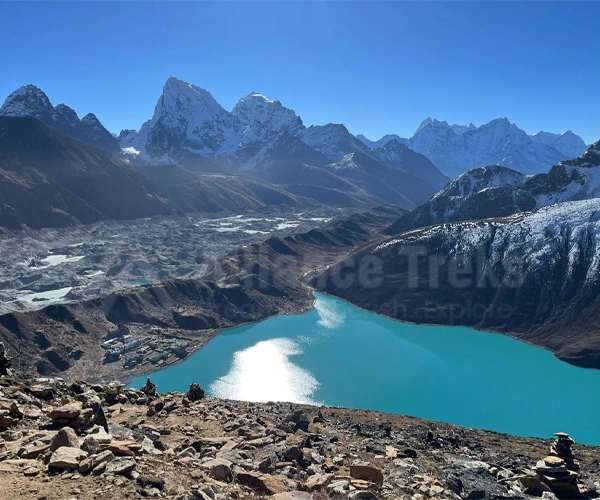
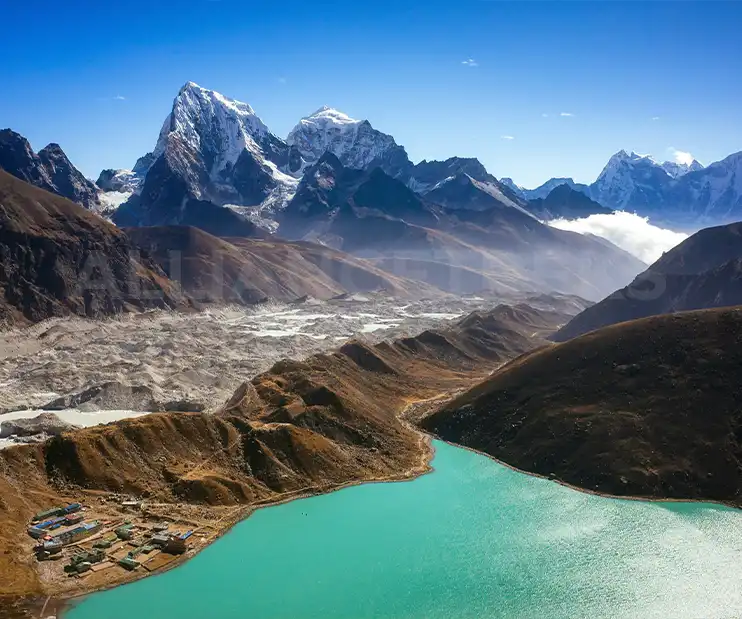
The trek begins with the now-legendary flight into Lukla before following the Dudh Koshi river valley up through Sherpa villages to Namche Bazaar, the Khumbu region’s bustling trading hub. From there, rather than continuing toward Everest Base Camp, the route branches west into the quieter Gokyo valley, climbing steadily through Dole and Machhermo to reach Gokyo village on the shore of its glacial lake system, alongside the Ngozumpa Glacier — the largest glacier in Nepal.
A pre-dawn climb up Gokyo Ri delivers one of the most complete mountain panoramas in the entire Himalaya, with Everest, Lhotse, Cho Oyu, Makalu, and Gyachung Kang all visible from a single summit. From here, the trek’s defining moment follows: the crossing of Renjo La Pass at over 5,300m, connecting the Gokyo valley back to the main Khumbu trail near Thame, a village with deep mountaineering history and a much quieter, more traditional Sherpa atmosphere than Namche. The descent back through Namche and Lukla brings the trek full circle before flying back to Kathmandu for a well-earned rest and a buffer day to explore the valley’s other heritage sites.
Because this route sees a fraction of the traffic on the main Everest Base Camp trail, it’s an excellent choice for experienced trekkers who want equally spectacular — arguably even more dramatic — mountain views, combined with a stronger sense of solitude and adventure.
Day 1 Arrival in Kathmandu (1,310m/4,296ft)
Day 2 Full-Day Kathmandu Sightseeing & Trek Preparation
Day 3 Fly from Kathmandu ( 1,310m/4,296ft) - Lukla (2,860m/9,383ft) then trek to Phakding (2,610m/8,563ft)
Day 4 Phakding (2,610m/8,563ft) - Namche Bazaar (3,440m/11,286ft)
Day 5 Acclimatization Day in Namche Bazaar (3,440m/11,286ft)
Day 6 Namche Bazaar (3,440m/11,286ft) - Dole (4,200m/13,779ft)
Day 7 Dole (4,200m/13,779ft) - Machhermo (4,410m/14,468ft)
Day 8 Machhermo (4,410m/14,468ft) - Gokyo (4,790m/15,715ft)
Day 9 Climb Gokyo Ri (5,365m/17,601ft) & Explore Gokyo Lakes
Day 10 Gokyo (4,790m/15,715ft) - Cross Renjo La Pass (5,345m/17,536ft) - Thame (3,820m/12,533ft)
Day 11 Thame (3,820m/12,533ft) - Namche Bazaar(3,440m/11,286ft)
Day 12 Namche Bazaar(3,440m/11,286ft) - Lukla (2,860m/9,383ft)
Day 13 Fly from Lukla (2,860m/9,383ft) - Kathmandu (1,310m/4,296ft)
Day 14 Buffer Day in Kathmandu
Day 15 Final Departure
Most trekkers arriving in the Khumbu region head straight for Everest Base Camp, and there’s no faulting that instinct — but the Renjo La Pass Trek offers something arguably more rewarding for those willing to take the road less traveled. Rather than ending at a base camp with no direct mountain view of Everest itself (a fact that surprises many first-time trekkers), this route delivers unobstructed, close-range views of Everest and its neighboring giants from not one but two spectacular vantage points: the summit of Gokyo Ri and the crossing of Renjo La itself.
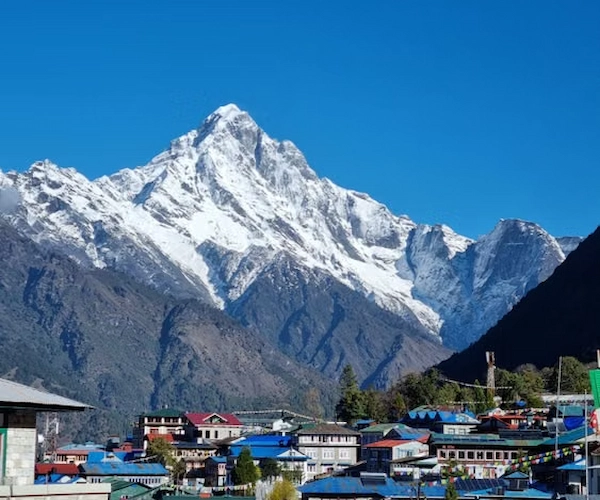
The early stages of the trek follow familiar Khumbu territory — the dramatic short flight into Lukla, the walk along the Dudh Koshi river through pine and rhododendron forest, and the climb to Namche Bazaar, where a full acclimatization day allows time to explore the region’s largest Sherpa town, its markets, bakeries, and mountaineering history, along with an optional hike to a nearby viewpoint for early views of Everest and Ama Dablam.
From Namche, the trail diverges from the crowds, climbing through Kyangjuma and the quiet settlements of Dole and Machhermo into the Gokyo valley — noticeably less trafficked than the main trail to Everest Base Camp, even in peak season. Reaching Gokyo village, set beside a chain of pristine glacial lakes and within sight of the Ngozumpa Glacier, feels like stepping into an entirely different, more tranquil side of the Khumbu. The pre-dawn ascent of Gokyo Ri the following morning is widely considered one of the finest viewpoints in the entire Everest region, with a panorama that includes four of the world’s six highest peaks in a single sweep.
The trek’s true test comes on the crossing of Renjo La Pass itself — a long, demanding day that rewards every step with what many experienced trekkers consider the single best mountain panorama available anywhere in the Khumbu, encompassing Everest, Lhotse, Makalu, and Cho Oyu simultaneously from a genuinely wild, high-altitude vantage point. The descent on the far side brings you to Thame, a village with deep roots in Everest mountaineering history and a noticeably quieter, more traditional atmosphere than the increasingly modernized Namche Bazaar.
From Thame, the return journey passes through one of the Khumbu’s oldest monasteries, home to a recognized reincarnate lama, before rejoining the main trail back to Namche and down to Lukla. A final scenic flight returns you to Kathmandu, with a built-in buffer day for weather contingencies or simply to explore Bhaktapur and Patan Durbar Squares before your departure — a thoughtful addition given how often Lukla flights are affected by mountain weather.
The Renjo La Pass Trek is graded strenuous to challenging, involving sustained trekking above 4,000m/13,000ft for much of the second half of the journey and a demanding high-pass crossing at 5,345m/17,536ft. Daily walking hours range from 4 to 9 hours, with the Renjo La crossing itself being a particularly long and physically taxing day. Prior trekking experience and good overall fitness are strongly recommended, though no technical climbing skills are required.
Your Complete Guide to Accommodation, Food, Permits, Flights, Weather, Trekking Trails and High-Altitude Safety in Nepal’s Everest Region
The Renjo La Pass Trek is a remarkable high-altitude trekking adventure in the Everest region of Nepal. It takes you through traditional Sherpa villages, beautiful mountain valleys, the famous Gokyo Lakes, and spectacular viewpoints overlooking some of the world’s highest mountains.
At approximately 5,360 metres (17,585 feet), Renjo La Pass is one of the most rewarding high mountain crossings in the Khumbu region. Along the way, you can explore the Gokyo Valley, hike to Gokyo Ri, enjoy views of Mount Everest, Lhotse, Makalu and Cho Oyu, and discover the peaceful trails around Thame.
However, this trek requires good physical fitness, proper preparation, and enough time for acclimatization. Therefore, understanding the accommodation, meals, permits, flights, weather, equipment, and safety arrangements will help you enjoy a more comfortable and rewarding Himalayan journey.
At Alliance Treks & Expedition (P.) Ltd., we help trekkers prepare for their Everest region adventure with practical advice, experienced local trekking support, and carefully planned itineraries.
Accommodation on the Renjo La Pass Trek mainly consists of local teahouses and mountain lodges. These family-run establishments provide a welcoming place to rest after a day of walking.
In popular villages such as Lukla, Phakding, Namche Bazaar, Dole, Machhermo, Gokyo, Lungden and Thame, you can find lodges with basic to more comfortable rooms. However, facilities become more limited in remote areas and during busy trekking seasons.
Most lodges offer twin-sharing rooms with beds, mattresses, pillows and blankets. Nevertheless, we recommend bringing a suitable sleeping bag because nights can become very cold at higher elevations.
Hot showers, attached bathrooms, private rooms and reliable electricity may be available in some places. However, these services can cost extra and may not always be available, particularly in remote villages.
Our recommendation: Book suitable accommodation in advance during the busy spring and autumn seasons. Furthermore, carry a warm sleeping bag and personal toiletries to make your stay more comfortable.
Most teahouses serve freshly prepared meals using locally available ingredients. Although the menu becomes more limited as you gain altitude, trekkers can usually find enough food to maintain their energy throughout the journey.
Common meals include:
Vegetarian meals are widely available. However, if you follow a vegan diet or have food allergies, inform your trekking company before departure so the team can help arrange suitable meals.
Food and drinks usually become more expensive at higher elevations because porters, animals or other transport methods must carry supplies to remote villages.
Helpful tip: Eat regular, balanced meals and drink enough safe water. Moreover, avoid relying on a very small amount of food during long walking days, as your body needs extra energy at high altitude.
Before starting the Renjo La Pass Trek, you must arrange the required entry permits and local fees.
The main requirements generally include:
The trekking route passes through Sagarmatha National Park, a protected area known for its high mountains, glaciers, wildlife and Sherpa culture. The Nepal Tourism Board currently lists the entry fee for foreign visitors at NPR 3,000 per person.
Trekkers also need to pay the local entry fee for the Khumbu region. The Nepal Tourism Board’s published trekking permit information lists for the trekking information in the restricted area however in the Khumbu Pasang Lhamu Rural Municipality entry permit is Rs. 3,000 per person . Alliance Treks & Expedition (P.) Ltd. arranges the required permits for you and your group. If by any reason, you do not get in Kathmandu then Alliance Treks arranges on the check post too with your passport copy and one passport size photo.
A knowledgeable trekking guide trained from Nepal Academy of Tourism and Hotel Management (NATHM) can make your Renjo La Pass adventure safer, more organised and more enjoyable.
The route includes long walking days, steep mountain trails, high-altitude terrain and remote sections where weather can change quickly. Therefore, an experienced guide can help manage the pace, identify suitable rest stops, monitor your condition and respond to unexpected situations. A trekking guide can also help you understand local Sherpa culture, Buddhist traditions, mountain life and the natural environment.
A porter can carry your main backpack, allowing you to walk with a lighter daypack containing drinking water, snacks, warm clothing, sun protection and other daily essentials. For a high-altitude crossing such as Renjo La Pass, we recommend arranging a guide and porter according to your group size, fitness, luggage and support needs. Confirm current guide requirements before departure.
At Alliance Treks, we focus on proper planning, responsible trekking practices and practical support throughout your Himalayan journey.
The most common way to begin the Renjo La Pass Trek is to fly to Tenzing-Hillary Airport in Lukla and start walking towards Phakding and Namche Bazaar.
The flight from Kathmandu to Lukla usually takes approximately 30–40 minutes when operated directly. However, during certain busy trekking seasons (Spring and Autumn), airlines may operate flights from Ramechhap Airport instead of Kathmandu’s domestic airport. The departure airport depends on the operating schedule and aviation arrangements. Alliance Treks arranges it for you so no worries yourself.
When flights depart from Ramechhap, you must travel by road from Kathmandu to Ramechhap either early morning 1:00AM or 7:00AM or evening evening 5:00pm from Kathmandu, which generally takes around 6-7 hours, depending on road and traffic conditions. If you want to share a mini bus/Van/Jeep or even Car then you may need to leave Kathmandu very early in the morning however having your own private transportation will make you departure in anytime in your convenience.
Flights to Lukla depend heavily on weather and visibility. Therefore, delays, cancellations and schedule changes can occur even during the main trekking seasons. This is reason Alliance Treks highly recommends all the trekkers/climbers make sure that you have at least 2-3 days contingency day/s just incase you may have to wait in Lukla to fly back to Kathmandu to catch your international flight though you have helicopter option to fly back paying USD 600 per person.
After completing the trek, you will usually walk back to Lukla and take a return flight to Kathmandu or the designated operating airport, depending on the schedule.
Weather in the Everest region changes with altitude, season and local conditions. While lower villages may enjoy pleasant daytime temperatures, the higher Gokyo Valley and Renjo La Pass can be extremely cold, windy and snowy.
The main trekking seasons are spring and autumn.
Spring offers warming temperatures, beautiful mountain scenery and longer daylight hours. Rhododendrons bloom in lower forest areas, while higher trails remain surrounded by snow-covered peaks. However, early spring may bring snow and icy conditions around Renjo La Pass.
Autumn is one of the most popular seasons for trekking in the Everest region. After the monsoon, skies are often clear, mountain views can be excellent, and daytime conditions are generally suitable for trekking. Nevertheless, cold nights and sudden weather changes remain possible.
Winter brings very cold nights, possible heavy snow and challenging conditions on the high pass. Some lodges may close, and the route may become difficult or temporarily unsafe.
The monsoon season brings rain, cloud, wet trails and possible flight disruption. Although the upper Everest region receives less rain than many lower areas, visibility and trail conditions can still be poor.
Temperatures vary considerably by location and weather. At higher elevations, temperatures can fall well below freezing, particularly at night and during the Renjo La crossing.
Our recommendation: Choose spring or autumn for the best balance of weather and trekking conditions. However, always check the latest forecast and trail conditions before crossing the pass.
Safe drinking water is essential during the Renjo La Pass Trek in the Khumbu region. You can usually obtain water from lodges, shops and local water sources along the main trekking route of Everest. However, availability varies between villages and remote sections.
Lodges along the way especially including trek to Everest Base Camp, Everest Three Passes Trek, Everest Base Camp Gokyo Trek boiled water for a fee. Bottled water may also be available in some places, but it becomes expensive and creates plastic waste. We recommend carrying reusable water bottles or a hydration system and using a reliable water-treatment method, such as a suitable filter, purification tablets or another approved treatment system. If you use boiling as your treatment method, allow enough time to obtain and cool the water safely. Do not assume that clear stream water is safe to drink without treatment. Your trekking guide certainly suggests you for proper method.
Carry enough water for each day’s walk, especially when crossing Renjo La Pass. The high trail may have no convenient drinking-water source, and you may spend several hours away from lodges.
Furthermore, drink regularly throughout the day, but do not force excessive amounts of water. Proper hydration supports your trekking performance, although it does not prevent altitude sickness on its own.
The right equipment helps you stay warm, dry and comfortable during the Renjo La Pass Trek. Because the route reaches approximately 5,360 metres, you should prepare for cold temperatures, wind, possible snow and long walking days.
Essential clothing
Essential trekking equipment
Optional but useful items
Your final equipment list should match the season, current trail conditions and the services included in your trekking package. A guide can help you check your gear before departure and we strongly recommend you to visit Everest Trekking Equipment or packing list – 2026
Altitude sickness is one of the most important safety concerns on the Renjo La Pass Trek. As you climb higher, the amount of oxygen available to your body decreases. Therefore, even fit and experienced trekkers can develop altitude-related symptoms.
The trek reaches more than 5,000 metres, so you must allow your body enough time to adjust to the increasing altitude.
Common symptoms of acute mountain sickness (AMS) include:
To reduce the risk, follow a gradual itinerary, include suitable acclimatization days, walk at a steady pace and avoid increasing your sleeping altitude too quickly.
A typical Renjo La Pass itinerary includes an acclimatization stay in Namche Bazaar and enough time in the Gokyo area before attempting the pass. The exact plan should depend on your previous altitude experience, health and walking pace.
Never continue ascending to sleep at a higher altitude if you develop symptoms of altitude sickness. If symptoms worsen or you develop difficulty breathing at rest, confusion, loss of coordination or severe weakness, seek urgent help and descend immediately with assistance. These may be signs of a serious altitude-related illness. We are more than happy to visit Acute Mountain Sickness (AMS) detail for the any trekking in Nepal no matter even you do an alternative trekking like Annapurna Circuit Trek, Annapurna Base Camp Trek, Manaslu Circuit Trek, Kanchanjunga Circuit Trek along with Renjola Pass Trek.
Before travelling, discuss altitude risks and any preventive medication with a qualified healthcare professional. Also, ensure your guide knows how to respond to an altitude emergency.
The Renjo La Pass Trek follows a network of established mountain trails through the Everest region. The route begins in the lower Dudh Koshi Valley before climbing towards Namche Bazaar and continuing into the Gokyo Valley.
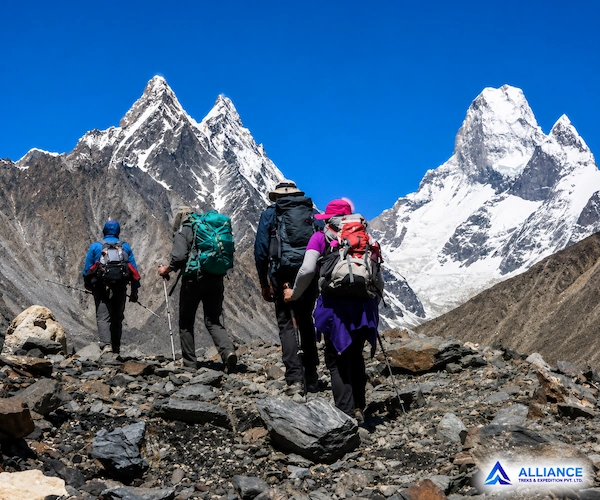
Along the way, you will walk through forests, cross suspension bridges, pass traditional settlements and follow rocky alpine paths. As you gain altitude, the vegetation becomes thinner, and the landscape changes to open mountain terrain, glacial valleys and snow-covered peaks.
The trail can include long uphill climbs, uneven stones, loose gravel and steep descents. Therefore, good footwear, trekking poles and a steady pace are useful.
Walking times vary according to the route, altitude, weather, trail conditions and individual fitness. Most trekking days may require around 4–7 hours of walking, while the Renjo La crossing can take approximately 7–9 hours or longer in difficult conditions.
Your guide should assess conditions and adjust the day’s plan whenever necessary.
Renjo La Pass, at approximately 5,360 metres, is the highest point of this trekking route and one of its greatest highlights.
The usual approach climbs from the Gokyo Valley towards the pass before descending to the Lungden area. The ascent becomes steep in places, and the high altitude makes even moderate walking feel more demanding.
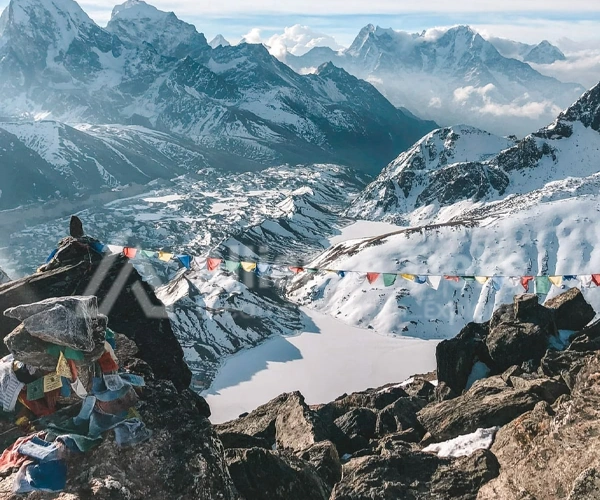
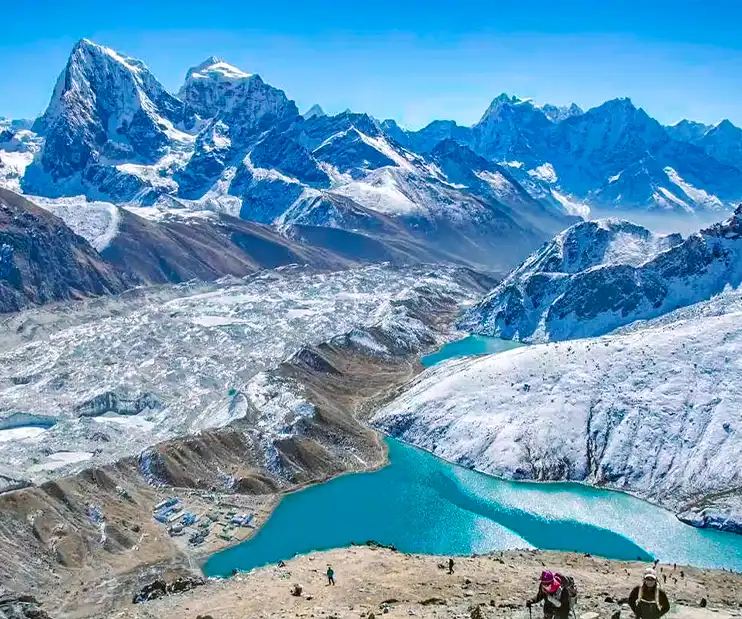
From the top, trekkers can enjoy remarkable views of Mount Everest, Lhotse, Makalu, Cho Oyu and the surrounding Himalayan landscape. On clear days, the turquoise Gokyo Lakes and the vast glacial terrain create an unforgettable mountain panorama.
However, this is a serious high-altitude trekking day rather than a simple viewpoint walk. Snow, ice, strong winds and poor visibility can make the crossing more difficult.
Start early with your guide, carry sufficient water and warm clothing, and check the weather before leaving Gokyo. If conditions become unsafe, postpone the crossing or follow an alternative route recommended by your guide.
Your safety must always come before reaching the top of the pass.
Gokyo Ri is a famous mountain viewpoint above Gokyo Village, offering spectacular views of the Everest region. Its summit is approximately 5,357 metres, although published elevations can vary slightly. Accordingly it is quite popular naming the Gokyo Ri Trek too.
The climb from Gokyo Village is steep and physically demanding because of the altitude. However, the reward is a wide panorama of Mount Everest, Lhotse, Makalu, Cho Oyu, the Ngozumpa Glacier and the beautiful Gokyo Lakes.
Many trekkers choose to climb Gokyo Ri early in the morning, when the weather and visibility may offer excellent mountain views. Nevertheless, conditions change quickly, so your guide should check the forecast and your physical condition before starting.
The Gokyo Ri hike also offers a useful opportunity to experience the altitude before crossing Renjo La Pass, provided the itinerary allows adequate recovery and acclimatization.
Do not rush the climb or continue if you feel unwell. The aim is to enjoy the views while protecting your health and safety.
Mobile network and Wi-Fi services are available in parts of the Everest region, but coverage becomes less reliable as you travel into remote areas.
Namche Bazaar generally offers more communication options than smaller settlements. Many teahouses in the Gokyo Valley and other villages provide Wi-Fi for an additional fee, although speed, reliability and availability vary.
Mobile coverage also depends on your network provider, location and weather conditions. Therefore, you should not expect uninterrupted internet access throughout the Renjo La Pass Trek.
Our recommendations:
The remote nature of the trail is part of its appeal. With some preparation, you can enjoy the mountains while staying connected whenever the local services allow.
Most lodges provide some form of electricity, but charging facilities may cost extra. In remote villages, power supplies can be limited, and charging sockets may be shared.
Cold temperatures can also reduce battery performance. Therefore, keep your phone, camera batteries and power bank warm when possible.
Charge your essential devices whenever facilities are available, and carry a headlamp with spare batteries. A headlamp is particularly important for early morning departures and the Renjo La Pass crossing.
Travel insurance is an important part of preparing for the Renjo La Pass Trek. Before departure, choose a policy that specifically covers trekking at your planned maximum altitude and emergency helicopter evacuation, where available.
Read the policy carefully, as some insurers exclude high-altitude trekking or impose specific conditions for rescue claims.
Keep your insurance details, policy number and emergency contact information accessible during the trek.
Helicopter evacuation depends on weather, visibility, landing conditions, location and operational availability. It may not be possible immediately, particularly during severe weather.
Your guide and trekking company can help coordinate an emergency response, but insurance does not remove the need to make safe decisions on the trail.
The Renjo La Pass Trek is best suited to trekkers with good general fitness and a willingness to walk for several hours a day at high altitude. You do not need to be a professional mountaineer, but you should prepare for steep climbs, uneven trails, cold weather and the physical demands of walking above 5,000 metres.
Before travelling, consider:
Start your preparation well in advance and increase the workload gradually. If you have a medical condition that may affect high-altitude travel, seek medical advice before booking.
The Everest region is home to Sherpa communities with rich cultural traditions and a close connection to the Himalayan environment. During the Renjo La Pass Trek, you can learn about local mountain life, Buddhist customs, monasteries and the history of Himalayan travel.
Please respect local customs, ask permission before photographing people, and follow your guide’s advice when visiting religious sites.
You can also support local communities by using local lodges, respecting workers, avoiding unnecessary plastic waste and carrying rubbish back to suitable disposal points.
When visiting the Gokyo Lakes and Sagarmatha National Park, stay on established trails and avoid disturbing wildlife or damaging fragile alpine vegetation.
Responsible trekking helps protect the natural beauty and cultural heritage that make this journey so special.
Spring and autumn are generally the most popular seasons for the Renjo La Pass Trek.
Spring (March–May): Suitable for trekkers seeking mountain views, warming weather and longer days. However, snow may remain on the high pass, especially early in the season.
Autumn (September–November): Often offers clear skies and excellent mountain visibility, although temperatures drop as winter approaches.
December to February can bring heavy snow and severe cold, while the monsoon months can bring cloud, rain and flight disruption. Conditions vary from year to year, so the pass may not be safe even during the main trekking seasons.
Book your trek early if you plan to travel during spring or autumn. Furthermore, allow extra days for possible flight delays and changes in mountain weather.
At Alliance Treks & Expedition (P.) Ltd., we understand that a successful Himalayan adventure requires more than beautiful mountain views. It also needs careful planning, reliable local support, suitable acclimatization and attention to each trekker’s needs.
We help our guests prepare for the Renjo La Pass Trek by providing practical information about the route, accommodation, meals, permits, equipment and high-altitude conditions.
Our team can assist with arranging a suitable itinerary, trekking guide, porter services and transport, according to your requirements and the services included in your package.
Moreover, we value responsible tourism, local culture and the natural environment. We want you to experience the Everest region with confidence, respect and a genuine connection to the mountains and the people who call them home.
Whether you are travelling alone, with friends or in a small group, we can help you plan your journey according to your available time, experience and preferences.
Explore the Everest Himalayas with Alliance Treks & Expedition — Trusted Adventure Partner Since 1992.
Website: www.alliancetreks.com
Email: [email protected]
Alliance Treks & Expedition Pvt. Ltd. Once is not enough for naturally and culturally Himalayas