(Viber, Whatsapp, Cell) +977 9851022814

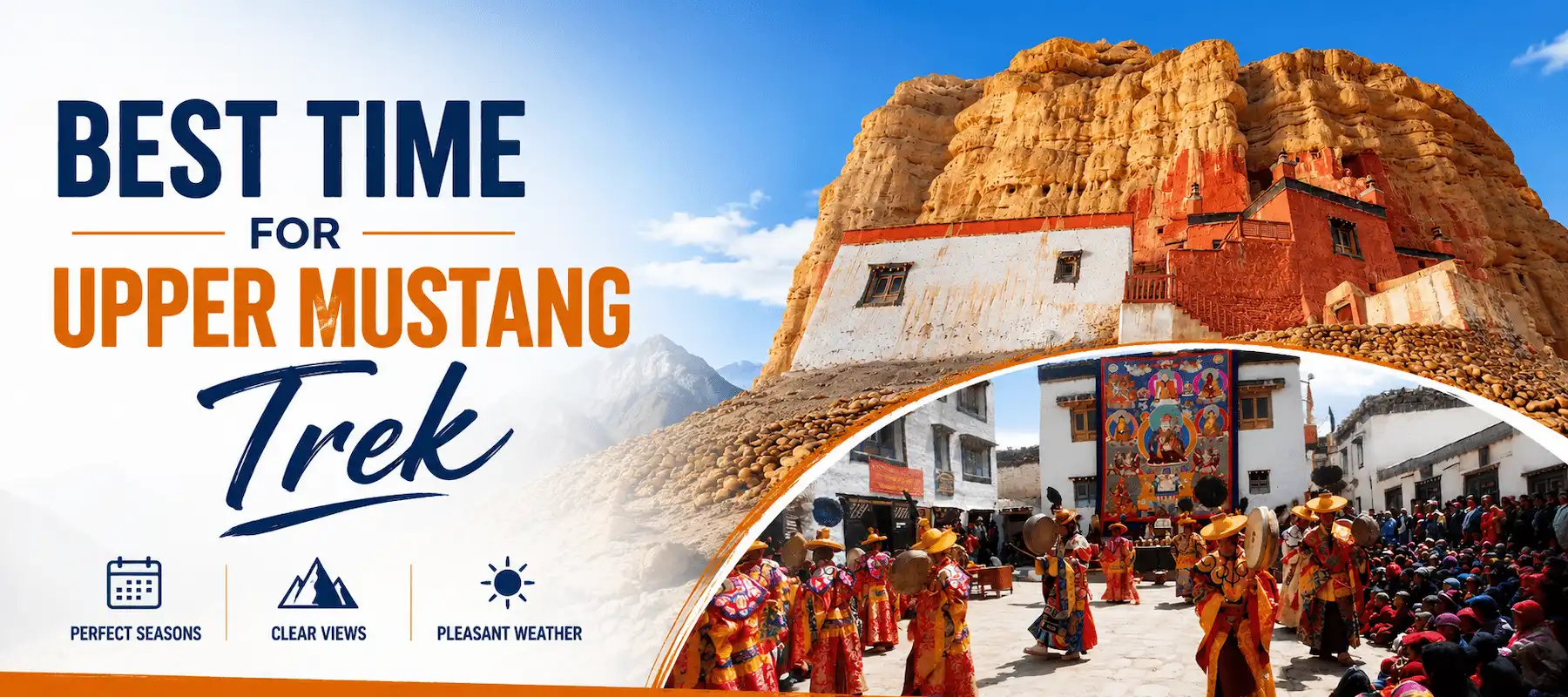
October-November (Autumn) is the best overall. However, May (spring) is also a very special time, as is the Tiji Festival.
Upper Mustang has its own uniqueness with respect to the other treks in Nepal. It’s a restricted area with an arid desert-like landscape. Weather more extreme – stronger winds, drier, temperature swings. This makes the choice of season even more important. This blog is about the Best Time for Upper Mustang Trek.
In the fall, the weather is pretty stable and the weather is not too hot or too cold.In the Fall, the weather is fairly dry, the weather is not too hot or too cold. The old walled city of Lo Manthang (3,810m) will be seen ideally and the desert scene is photo-worthy. There is wind but it is not extreme.
Spring is also a fine time and has something special – the Tiji Festival, typically in May. This is a three-day Buddhist festival, unique in Lo Manthang, where they perform masked dances and the stories of the Buddha. This festival is a reason for many trekkers to specifically plan their trek. Oh, and the wildflowers begin to bloom in the lowlands in the spring.
Winter is harsh. Cold winds make the dry climate even drier. At night, temperatures fall below freezing. Days can be cold. However, if cold is a handle than solitude is, indeed, complete and the skies are crystal clear.
Monsoon is problematic. The region is dry and monsoon rains are not as heavy as in central Nepal. But as the wind gets stronger, you can’t see far enough, and when it rains, it isolates you more.
The only thing special about Upper Mustang: The Tiji Festival (May) happens once in a lifetime. Time the hike to coincide with May, and it’s really special.
Upper Mustang is a 15 day trek to the old Tibetan Kingdom. It’s really in the middle of nowhere and really very different from other treks in Nepal. Everything is affected by the seasons!
Trail Conditions: Weather is a main factor for trail conditions. Upper Mustang is located in an arid plateau. The air is thin, the land is desolate, the wind is mightier at higher altitudes. In fall, winds are strong but not too much. Winds increase in strength during monsoons. Winter winds can be fierce! The season makes trekking nice or difficult.
Experience is greatly influenced by temperature. The winter season is comfortable (15-20°C during the day, 0-5°C at night). The temperature in the spring is comparable. Winter drops to 5-10°C day, -10°C night. On the dry plateau there is no cover—the wind is colder. Even with proper sleeping bags, the nights in basic tea houses are cold.
Your views are what make you come. You’re on a trek to visit the medieval walled city of Lo Manthang. You’re trekking through red sandstone canyons. You are in the desert and in Tibetan monasteries. In the fall, it’s hard to see, because the clouds are all gone. Clouds can occur in the spring afternoon, but are manageable. The sky in the winter is clear. Monsoon clouds obscure the view of all.
The Tiji Festival is a game changer. This three day celebration is only held in May (dates change from year to year). May is a time to see it, in masked dances, chanting, and Buddhist celebrations. It’s transformative. But in Spring (a bit less predictable weather than Fall).
Availability and cost of permits. When visiting Upper Mustang, a special Restricted Area Permit (10 days USD $500, and USD $50 per additional day) is required. Permits can be obtained throughout the year, with a higher number of guides/porters during peak season.
The Best Overall Time for Most Trekkers
The best weather and safest conditions are September through November.
The weather becomes wonderfully stable. Once the monsoon rains are over, this dry area is covered by high pressure giving clear skies. October, particularly, is like a crystal clear month. During the day, conditions are comfortable (15-20°C) at lower elevations. Nights at higher elevation reach 0-5°C but do not get much colder. It will have virtually no rain—you may see an afternoon shower but nothing of significant amounts.
The actual key is clarity. At 3810m, Lo Manthang is in an arid landscape. It is easily visible in the autumn. The old city walls are whitewashed, glistening in the sunlight. The red sandstone surrounding the area is colourful. Photographs are stunning. It is extremely clear and can see across the Tibetan plateau for 30-40 km.
Winds exist, this is a windy plateau. September and October winds are not too strong. It’s easy to walk around. The wind keeps the skies clear as it pushes the clouds away.
There’s a little crowd but it’s light. There are perhaps 3-5 trekking groups each fall (15-25 western trekkers). This is a little easier than a hike. Tea houses are open and made up. Your guide will be able to get a place to stay. It’s the time of year when most trek operators offer their trips.
The most expensive but justifiable. Trek packages run USD $2,800-3,200. It is higher than the other seasons, but it reflects the reliability of the situation and full tourism infrastructure. Everything runs smoothly.
Best specific weeks:
Early September (1-15) is great: monsoon is over, skies are clear, wind is not yet at its peak, less rush than in October, and prices are slightly lower.
Mid October (10–25) is when autumn is at its best. Ideal weather, beautiful views, safe passes to cross, ease. Book 2-3 months ahead.
Early November (1-10) is still very good. Weather is still fine, crowds are considerably less in October and prices are lower, but by mid-November winter is setting in.
Avoid mid-November onward. Winter winds increase. Clouds start building. Predictability of weather decreases.
This season is special for the Tiji Festival and Wildflowers.
Something autumn cannot do is the event called Tiji Festival in May from March to May. Wildflowers also start blooming in lower elevations.
Spring wildflowers are unique. In lower elevations (before Jomsom), wildflowers bloom. Blue primulas, white anemones and rhododendrons begin to show bloom. The flowers are scattered but beautiful in Upper Mustang as compared to the spectacular alpine meadow flowers of Kanchenjunga. The photographs are good, but not exceptional.
The Tiji Festival truly is unique. This three-day Buddhist holiday is only celebrated in Lo Manthang, typically between May 10-15 (dates vary). It’s a scene with masked dancers performing Buddhist mythology, local monks chanting and hundreds of locals wearing traditional Tibetan attire. This festival is seen if you trek mid-May. It’s transformative.
The temperature and comfort are great. The temperature is mild (15-22°C) during the day in spring. The nights are cool (5-10°C at camps). This is actually easier to walk around in than autumn. The warm days are more pleasant than the cool days in the Fall.
The mountain views are available, but not as solid as in the fall. The morning sky is clear of clouds most of the time. Clouds tend to develop by afternoon. The trade off of this spring is that you get the festival and slightly warmer weather, but not as clear a view as in the fall.
Crowds are light. There are 2-4 trekking groups (around 10-20 western trekkers) in Spring. Even lighter than fall. Authentic, local feeling.
The cost is moderate. Trek packages run USD $2,600-2,900, about USD $200-300 cheaper than autumn peak.
Best specific weeks:
Early-April (1-15) is a nice time of the year with low festival costs, but no festival.
Tiji Festival (10-25) is a window specific event. The dates of the festivals change from year to year. Please book with Alliance Treks to confirm exact dates. This is the “sweet spot” of festival trekkers.
Avoid late May (25+). Monsoon edge approaching. Rains increase. Weather becomes unstable.
For Experienced Trekkers Seeking Harsh Beauty
Upper Mustang is extremely cold in the winter. The dry conditions are even worse. For those who are ready, it’s beautiful.
The cold is severe. Temperatures at lower elevations are cool for the day (5-12°C). The days are approximately 5-10°C at Lo Manthang (3,810m) and nights get below freezing, reaching -5°C or even lower. With wind, it will feel 5-10°C cooler. In the light of night in the basic tea houses, you are in a sleeping bag trying to keep warm. Requires experience and adequate equipment (-15°C or lower rated sleeping bag).
The plateau is exposed to wind due to the lack of shelter. Winter winds are strong. Wind chill is real. But there’s something extraordinary that also takes place in the extreme conditions: complete clarity of light. The air is clear. The scene is barren and picturesque.
Solitude is absolute. There may be 0-2 trekking groups in Winter. Don’t expect to see any other Western trekkers during the day for days. Tea houses don’t make a lot of noise. There are local families still living here and you’re never in danger, but never at home either.
The light is amazing. In the winter, high pressure brings crystal clear skies. Sunsets and sunrises are spectacular. Very clear skies in thin dry air. Photography is stunning.
Cost will be the most cost-effective. During the fall, trek packages cost USD $2,500-2,800, which is close to 30% more expensive than the summer.
February is better than January. January is the coldest and roughest. February is a little warmer, but still conditions are excellent, solitude and clarity.
Why Not to Trek Monsoon
The monsoon is troublesome here, although less so than in the central part of Nepal as Upper Mustang is dry.
The wind and the weather grow rough. The wind and the weather grow rough. This area is where monsoon moisture meets the Tibetan plateau. Central Nepal is receiving less precipitation, but winds become stronger. There is a risk of afternoon rain. Clouds block views. The weather makes the landscape feel isolated, even more so when it’s already far away.
The view of the landscape isn’t visible. Clouds cover Lo Manthang. These rock formations in the red sandstone are concealed. You’re on an unguided tour to the highlights.
Experience is the most expensive; cost is the least. USD $2,200-2,500, but you walk without scenery, wind and sometimes rain, and without feeling isolated.
The Tiji festival has a category all on its own because it is an integral part of the Upper Mustang experience.
So, what is the Tiji Festival? A three-day Buddhist celebration held annually in Lo Manthang (dates vary yearly, usually around May 10-15). It is a ritual of good overcoming evil with masked dances, chanting, and spiritual celebration, according to Buddhist mythology. Hundreds of people from the local community participate. It is not a show for tourists, it is a way of life.
What you will see: The masked dancers dressed in elaborate costumes perform ancient Buddhist tales. Prayer sessions by monks for hours. People are getting together in traditional Tibetan attire. Energy is spiritual and authentic. Here are some incredible moments in culture captured by photography.
Why it matters: For most westerners, authentic Buddhist festivals are a thing they never experience. Tiji festival is one of the most authentic cultural events in Nepal. If you can make your hike at this time, it’s a game-changer.
Tickets and logistics: The dates of the Tiji Festival will change annually (typically May 10-15). If you are planning to do a trek during the festival, you will have to arrange it for that period. Alliance Treks arranges exact dates. The 15 days trek it takes is normal, but you reach Lo Manthang on festival days.
Cost impact: Tiji Festival treks are not expensive, but one has to book well in advance. Please make a festival trek 3-4 months in advance for May.
The extreme of winter is at the end of January. Average temperatures of 5-8°C. during the day and below freezing (-5 to -10°C.) at night. There is some wind and sometimes strong. This is the worst month.
However, the weather is perfectly clear. The landscape is barrenly beautiful. It’s pretty much the only place where you won’t find many other trekkers. It is amazing if you are an experienced mountaineer with the proper equipment. Otherwise, it’s merely harsh.
Great for: Adventure-oriented hikers who enjoy high altitude and extreme weather conditions
Trekker getting in for the first time to the Upper Mustang, or sensitive to cold.
February is still a winter month, but better than January. Daytime temperatures in the range of 8-12°C. Nights around -5°C (warmer than January). Winds continue, but are slightly diminished.
The clouds are clear and good. Solitude continues. Prices stay low. It’s the best month of the winter – ideal weather with less extreme cold.
Perfect for: If you have experience with the budget track, and you like solitude.
Better than: January
Spring Begins in March. temperatures are comfortable during the day (10-18°C). Nights cool (5-10°C). There is little rainfall (March is very dry).
Trails are clear. Wildflowers can begin to appear in lower elevations. Winds begin calming. Crowds are light. Prices are reasonable.
The only downside is no festival, and very little flower.
Best for: Budget and weather combination, dry trails.
April is the middle of spring. Daytime tempature are warm (15-22°C). Nights cool (5-10°C). Rainfall remains light, but soaring in late April in the afternoon.
Wildflowers are more prominent. The wind is calming. The weather is pleasant. Crowds are light. It’s a great time to trek to the festival.
The opportunity for pre-festival trekking in good weather and cultural preparation. The area pre-festival crowds.
Best for: Trekkers prior to festival, ones desiring warmer spring.
The month of May is a special Month! Daytime temperature are warm (15-22°C). Nights cool (5-10°C). Late May to early-mid May is okay as rainfall increases.
This is the month of the Tiji Festival. These same dates change every year (typically 10-15 May). If you hike to see the festival, then it is your month. The weather is nice to walk in. The festival experience is unrivalled.
Wearing it is ideal for Tiji Festival trekking.
Advance booking for festival dates is required: 3-4 months prior to event
Do not eat after: May 20 (Monsoon edge coming in)
Monsoon starts in June. The temperature is 12-18°C during the day and rainfall begins. Wind picks up. Cloudy sky with mountains in the background.
This is the beginning of a bad season. Not recommended.
Best for: Only necessary if time is an issue
Avoid if: Any other month possible
The monsoon peak is in July. Expect rain frequently. The wind is strong. Views are blocked. The landscape becomes isolating.
It’s the worst month of the year. It’s not pleasant to trek in the rain, blown by the wind. You are able to see almost nothing.
Best for: No one who has other options.
Avoid: Completely
Monsoon is still in effect and getting better in August. Wind remains but rains decrease by late August. As of August 25+, the weather becomes more pleasing.
The first eight days of August are still pretty rainy. The end of August is a little better. If it is necessary to do the trek during the monsoon season, late August is the least unpleasant.
Recommended for: If absolutely necessary, allow August to be booked as a best option.
Avoid if: September possible (one month away, completely different)
September is the first month of Fall. Skies clear, weather becomes stable at the end of the monsoon.
Temperatures during the day are comfortable (15-20°C). Nights cool (0-5°C). Rainfall is minimal. Daily views of the mountains are getting better. Winds are strong but decreasing. People begin to come in but have not yet reached their peak.
It’s a nice time of the year before all the booking activity that takes place during October.
The best seasons to visit are autumn, when the quality of the plants is excellent, but no one is around in October.
October is the height of the fall season. Perfect weather (15-20°C day, 0-5°C night). Excellent visibility. Winds are strong and steady. Passes are safely crossable.
The crowds are heavy (possibly 3 or 5 groups total-light by trekking standards). Prices are highest (USD $2,800+). Infrastructure has been put in place.
The most popular week is October 10-25. Book 3 months ahead.
Excellent for: First Time Trekkers in Upper Mustang, Guaranteed conditions
It’s the late of autumn in November. Still a good time early November (1-10) with good weather, less people than October and falling prices.
It is the time of year known as mid or late November, and winter is approaching. Wind increases. Clouds build. The window is closed by November 15.
Early November is a great period to enjoy autumn without the crowds.
Best season: Fall (September or October if not too busy)
Avoid after: November 10
December is the beginning of winter. Early December (between 1st and 15th) is manageable, with daytime temperatures of 10 to 15°C, and nights of -5 to -10°C.
Skies are clear. Solitude begins. Prices drop. Wind increases. It’s not typical December snow for such a low elevation.
Early December is a good entry point to winter trekking—good weather, starting solitude, lower cost.
Great for: Winter time switchers, budget + weather types
The upper Mustang is situated on a dry plateau at an altitude of 3000-3800m. This adjusts the weather patterns to a fundamental one.
Some reduction in rain and increased wind in dry area. Monsoon moisture is supplied to central Nepal. It is dry and has less precipitation, but the air is very dry in Upper Mustang. Winds over the plateau will be more persistent and vigorous. The wind is a particular feature of trekking in the fall and spring seasons.
Autumn stability. Excessive pressure provides a very stable environment. The best time of the year is October. The clear, dry air results in exceptional visibility.
Spring transition. As temperature increases, low pressure is created. Clouds start to form, and updrafts start to develop. However, this is a slow process as early May is fine, late May is not.
Winter extremes. Low moisture combined with Northwesterly continental cold air. Little snowfall is noted here at lower elevations (3800m), however strong wind chill is noted. There is no cover on the plateau.
Monsoon complexity. Monsoon is more a time of instability in an arid region than due to rain. But it’s not pretty as the wind blows and several showers fall.
Elevation effects: 100m increase in elevation, 1℃ drop in temperature. The temperature at So Lo Manthang (3,810m) is approximately 10°C lower than the temperature at Jomsom (2,720m). During the night it is more noticeable.
Upper Mustang is remote and less visited than other treks, but permit availability constrains trekking.
This is Upper Mustang’s major appeal. You get authentic Nepal without tourist crowds.
Mistake 1: Choosing Monsoon to Save Money
Savings is not worth the loss of experience. It’s a trek with the wind in your face and the rain drip-feeding down. There are hardly any mountains visible. Contrary to common folk wisdom, wind does not make things easier, it makes them harder. Opt for March or early spring (better weather conditions and same budget).
Mistake 2: not taking into account the impact of the wind.
There is a strong wind in upper Mustang. Winter and monsoon wind is quite serious. It impacts on temperature (wind chill), visibility (dust raising) and walking comfort. Autumn and spring winds are easily controlled. Winter winds can be fierce.
Mistake 3: Missing Tiji Festival Because Unsure
The festival is really worth experiencing if you can make May. Make a reservation 3-4 months before in advance, in conjunction with Alliance Treks, and be prepared. It’s one of their top experiences on their entire trip to Nepal, for many trekkers.
Mistake 4: Not Booking Early Enough
During the peak season, it is difficult to get books. The month of early October is a busy one. Make a booking 3 months in advance (July for October trek).
Mistake 5: Making the wrong choice of season for the fitness level
Bad plan. Winds and cold during the winter will wear you down more quickly. If fitness is concern, then autumn (moderate temperatures, no wind extremes) is an alternative.
Mistake 6: Not understanding Permit Complexity
A special Restricted Area Permit (USD $500 for 10 days) is required for Upper Mustang. Your tour guide needs to have restricted area license. Your trek leader/operator should be approved. Don’t underestimate logistics.
Mid-October (10–25 October) is widely considered the best time to visit Upper Mustang. Expect stable weather, crystal-clear mountain views, safe trail conditions, and ideal trekking temperatures. Since this is the most popular period, booking at least three months in advance is recommended.
Both seasons are excellent. Autumn offers the clearest skies and the most reliable weather, while spring is famous for the colorful Tiji Festival in Lo Manthang. Choose autumn for the best mountain views or spring if experiencing local culture is your priority.
Although the trail generally remains open, monsoon trekking is not recommended. Strong winds, unstable weather, and reduced visibility can affect the overall experience. Most trekkers will enjoy the route much more during spring or autumn.
Winter trekking is challenging for those without cold-weather experience. Night temperatures often fall below -5°C, and strong winds make conditions feel even colder. Autumn and spring are much more comfortable for most trekkers.
The Tiji Festival usually takes place around May 10–15, although the exact dates vary each year. If you want to experience this unique cultural event, book your trek at least 3–4 months in advance so your itinerary can be planned around the festival.
Yes. Upper Mustang is a high-altitude desert plateau where strong winds are common throughout the year. Autumn and spring usually have manageable winds, while winter and monsoon bring much harsher conditions.
February and March are generally the most affordable months, with package prices often ranging from USD $2,200–2,500. Although temperatures are colder, the trails are quieter and costs are lower than during peak seasons.
The Upper Mustang Restricted Area Permit costs USD $500 for the first 10 days. Each additional day costs USD $50. For a typical 15-day trek, the total permit fee is USD $750 per person.
Yes. Solo travelers are welcome, but Nepali regulations require every trekker to be accompanied by a licensed guide. You can trek independently with your own guide or join a small group.
Upper Mustang is a more remote, 15-day trek that reaches the ancient walled city of Lo Manthang and requires a special Restricted Area Permit (USD $500 for 10 days). Lower Mustang is shorter, more accessible, does not reach Lo Manthang, and only requires standard trekking permits.
Alliance Treks & Expedition Pvt. Ltd. Once is not enough for naturally and culturally Himalayas