(Viber, Whatsapp, Cell) +977 9851022814

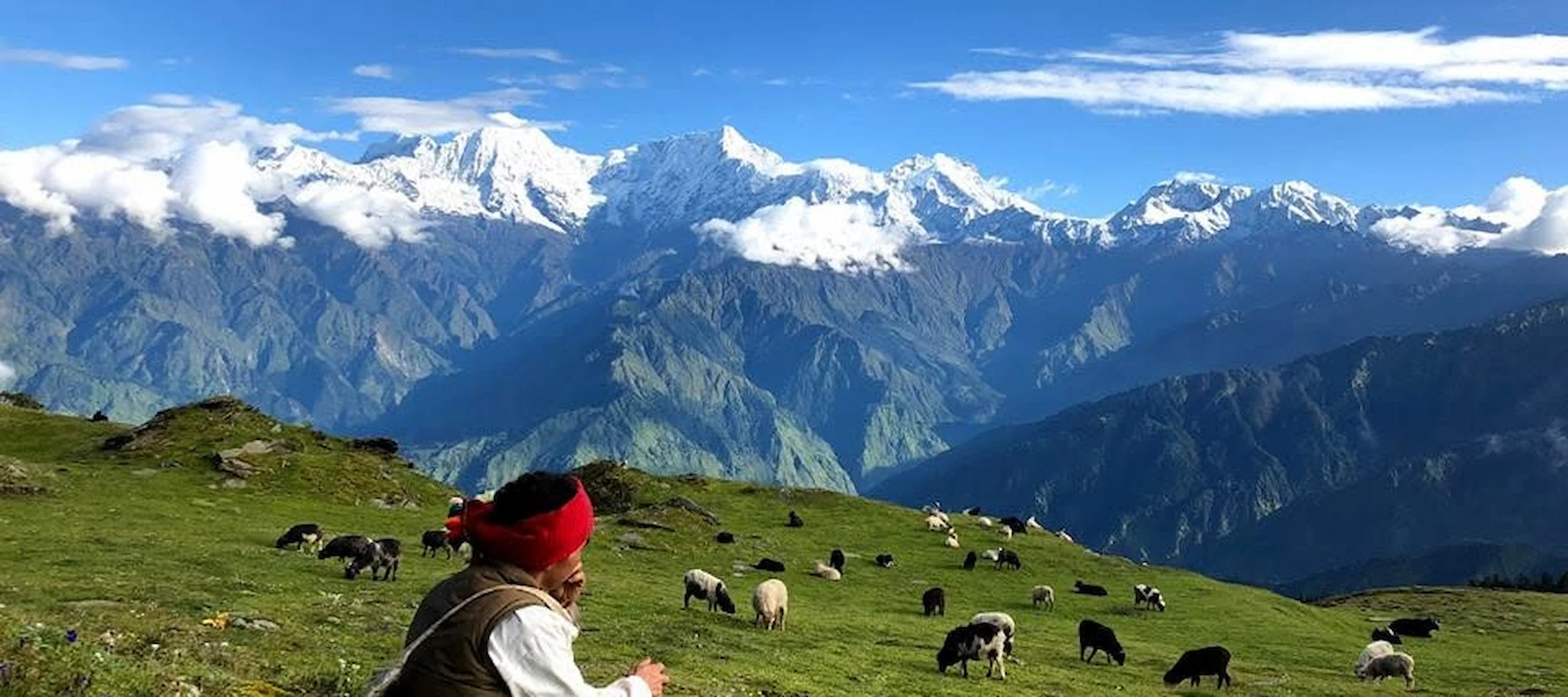
Singla Pass trek is what happens when you take everything that makes the Ruby Valley Trek extraordinary — the remoteness, the Gurung, Tamang, Ghale, Dalit and Newar culture, the Ganesh Himal panorama — and push it higher, wilder, and further from the infrastructure that modern trekking has come to expect.
Most trekkers who come to the Ruby Valley region cross Pangsang Pass (3,850m/12,628ft) that is the standard route calling it Ruby Valley Trek or even it is famous calling Ruby Valley Circuit Trek. That is the teahouse trails starting from Syabru Besi the gate way to Langtang Valley Trek through Langtang National Park then enter Rubi Valley Rural Municipality. Accordingly Pangsang Pass Trek is genuinely excellent — a 3,850m crossing with mountain views that stop you mid-step and a cultural context that makes the effort feel like it means something.
Singla Pass is what lies beyond that. Two hundred metres higher. A camping trek rather than a teahouse route. A pass with a name that translates from Tamang Bon as village deity — a place that has been drawing pilgrims, shamans, and communities from across the Ganesh Himal region for longer than trekking tourism has existed in Nepal. At Alliance Treks, our founder Kul Gurung was born in Ruby Valley. Our guides have crossed Singla Pass in monsoon mist and October clarity, in the ordinary quiet of a trekking day and on the full moon of Janai Purnima when the pass fills with pilgrims from villages across two districts. This is everything we know about it that is honestly told, without the brochure language.
Singla Pass (also written as Sing La, Shing La, or Singla La) sits at an altitude of 4,020 to 4,050 metres in the Ganesh Himal region of central Nepal, straddling the border between Dhading and Nuwakot districts. It is a high mountain pass connecting the Tamang communities of the Ruby Valley with the villages of the northern Nuwakot slopes which is a crossing that has served both as a trade route and a pilgrimage site for generations of Himalayan communities.
In the Tamang Bon language, Shing means village and Shing La means village deity. It is believed that along with the construction of every village, some form of power is manifested in that village and it is believed that if the deity is happy by worshipping it, the village will prosper.
This origin matters. Singla Pass is not simply a geographical crossing. It is a named deity in the Tamang cosmological framework. The pass has a presence, a character, an authority in local belief that predates any trekking route or map designation. When the Tamang communities of Sertung, Tipling, Bhalche, and the surrounding villages cross Singla, they are not just moving between valleys. They are moving through sacred space.
It is said that there is a deity residing in this place. According to local belief, if someone falls while walking down the ridge, they will be stopped midway by the deity’s handprint. Nobody has ever died here because the deity prevents them from falling to their death.
This story — shared by guides at the small ridge on the approach to the pass is the kind of detail that changes how you walk the trail. The mountains here are not backdrop. They are inhabited.
Singla Pass sits at an altitude of 4,020 metres above sea level and is an important religious place in Dhading district. Other sources place it slightly higher at 4,045m or 4,050m — the variation reflects different measurement points on the broad ridge rather than a genuine discrepancy.
What 4,000+ metres demands in practice:
The approach to Singla Pass climbs steeply from Sertung village (1,900m) — a vertical gain of over 2,000 metres across two to three days. The trail passes through rhododendron and bamboo forest in the lower sections, opens into high pasture and alpine meadow on the upper approach, and arrives at the pass itself across exposed rocky ridgeline.
From Bhalche to Gongka Kharka (2,600m), trekkers pass through rhododendron and bamboo forest. This is a pasture for seasonal cow herders. Trekkers may have chances to witness Langur, barking deer, wild boars, and Himalayan pheasant.
The altitude at Singla Pass does not carry the extreme risk profile of the high passes above 5,000m as there are no crampons, no ropes, no glacial terrain. The risk is real altitude sickness if the ascent is rushed. The standard camping itinerary builds the elevation gain across enough days to allow proper acclimatization. Please do not attempt to compress this.
The cold at 4,000m on the ridge is significant in every season. Pre-dawn starts on pass day are cold enough to require full thermal layers. Wind on the exposed ridge amplifies the chill considerably beyond the air temperature. Warm layers that feel excessive at lower camps become necessary at Singla.
The panorama from Singla Pass is the visual reward that the camping nights, the steep trail, and the early starts have been building toward.
Singla Pass gives an extraordinary panoramic view of the Himalayan snowcapped peaks. There are three groups of peaks between Kathmandu and Pokhara — Ganesh Himal, Langtang, and Manaslu including the Annapurna Range.
In practice, from the ridge at Singla the view resolves into distinct sections that reward patient attention:
Ganesh Himal dominates the northern horizon. Ganesh I (7,422m), the highest of the group and the peak that gives the entire region its name, presents as a dramatic ice pyramid above the lower ridgeline. The Ganesh Himalayan range stands out like crystal. The mountains on the range are Ganesh I, II, III and IV.
Langtang Himal stretches to the east which is a long, serrated ridge of ice and rock that is visible from Kathmandu on clear days but takes on a completely different scale and character from the altitude of Singla.
Manaslu (8,163m) is the the eighth highest mountain in the world that appears to the west, its distinctive summit pyramid visible above the intervening ridgeline. Seeing Manaslu from Singla Pass in the same view as Ganesh Himal and Langtang is one of those Himalayan panoramas that does not reduce to a photograph.
From Singla Pass, the stunning mountain ranges of Manaslu and Langtang are visible alongside Ganesh Himal, with just a touch of the Annapurna on exceptional clear days.
The best light at Singla Pass is in the two hours around dawn — before the clouds that build from the valleys below reach the ridge. This is the primary reason the pass day itinerary involves an early start. Arriving at the pass as the sun rises over the Langtang range is an experience that justifies every uncomfortable pre-dawn moment.
Of everything that distinguishes Singla Pass from the other high points in the Ruby Valley region, the annual Janai Purnima gathering is the most significant and the least known outside the communities that participate in it.
At the pinnacle of Singla Pass, there is a magnificent and towering mani which is a sacred site that draws Hindu pilgrims from near and far. The full moon day of Shrawan, known as Janai Purnima, sees an influx of pilgrims from Sertung and Tipling villages in Dhading, as well as Bhalche, Deurali, and Meghang in Nuwakot, all seeking spiritual connection at this sacred location.
Every year, on the occasion of Janai Purnima, a big fair is held at Singla. In that fair, Bombo or Jhakris, traditional Tamang shamans transfers the knowledge they have to their disciples. This method of imparting knowledge is called Wankur in the local language. Also, on the same day, sisters who come to see Singla make garlands of wildflowers and leaves and give them to their brothers. The brothers also give Dakshina to their sisters as much as they can.
On the small ridge called Gochhar, every year on the day of Janai Purnima, the bombos dance and sing about the legend of Singla.
What happens at Singla during Janai Purnima is not a performance for visitors. It is a living transmission of knowledge, shamanic tradition passing between generations on a high mountain pass, in the same way it has passed for centuries. The flower garlands, the Dakshina exchange between siblings, the Wankur ceremony of the Jhakris are the practices rooted in a pre-Buddhist Tamang spiritual framework that survives here, at altitude, in ways it no longer survives in more accessible communities.
For trekkers who time the Singla Pass trek to coincide with Janai Purnima — late July or early August — the pass crossing becomes something considerably beyond a mountain hike. It becomes participation, however peripheral, in one of the most intact traditional cultural practices remaining in the Himalayan region.
Unlike Pangsang Pass, which is accessible from both north and south on a teahouse route, the Singla Pass trek involves a camping itinerary on its upper sections — teahouse infrastructure does not extend beyond Sertung village on the southern approach.
Primary approach — from Kathmandu via Bhalche (north):
The trek begins with a scenic drive from Kathmandu to Bhalche village via Trishuli Bazaar and Betrawati Bazaar which is a trade centre for locals. Bhalche is a Tamang ethnic community village at 1,900m. The trail then ascends to Gongka Kharka (2,600m) through rhododendron and bamboo forest before continuing to Rupchet Kharka on the upper approach to the pass.
Stage breakdown:
| Stage | Route | Altitude | Trek Type |
| Drive | Kathmandu to Bhalche | 1,900m | Road (8–9 hrs) |
| Day 1 | Bhalche to Gongka Kharka | 2,600m | Teahouse / Camping |
| Day 2 | Gongka Kharka to Rupchet Kharka | 3,500m+ | Camping |
| Day 3 | Rupchet Kharka to Singla Pass to Descent | 4,020–4,045m | Camping |
| Day 4 | Descent to Sertung | 1,900m | Homestay |
| Drive | Sertung / Dhading Besi to Kathmandu | — | Road (7 hrs) |
Alternative approach — via Sertung from south (Dhading): Some itineraries approach from Dhading Besi, ascending through Sertung to the pass before descending north. This reverses the gradient — a longer initial ascent followed by the downhill north approach to Bhalche. Both directions are valid; your Alliance Treks guide will recommend based on season and group fitness.
Many trekkers in the Ruby Valley region face this choice. Here is the honest comparison:
| Feature | Singla Pass | Pangasang Pass |
| Altitude | 4,020–4,045m | 3,842m |
| Trek Type | Camping required above Sertung | Full teahouse route |
| Difficulty | Moderate to strenuous | Moderate |
| Duration | 7 days minimum | 7–10 days |
| Infrastructure | Basic – bring all camping gear | Teahouses throughout |
| Cultural Significance | Janai Purnima pilgrimage site and a sacred Tamang mountain pass | Buddhist prayer flags and a traditional seasonal Tamang crossing |
| Best For | Experienced trekkers seeking wilderness and cultural immersion | First-time Nepal trekkers and all fitness levels |
| Combined Option | Yes – Three Passes & Three Kunda itinerary | Yes – Standard Ruby Valley itinerary |
The honest recommendation: If this is your first Nepal trek or your first multi-day Himalayan experience, you start with Pangsang Pass. The teahouse infrastructure, the gentler approach and the still-extraordinary views give you the full Ruby Valley experience without the camping logistics of the Singla extension.
If you have prior multi-day trekking experience, are comfortable with camping conditions, and want the pass that carries genuine historical and spiritual weight as well as higher altitude and greater remoteness — Singla Pass is the more significant experience.
For those with 12 days and the right preparation, the three pass three kunda variant covers both, adding Magne Goth (2,950m) and the sacred lakes of Kalo Kunda, Seto Kunda and Ganesh Kunda to create the most complete traverse of the Ruby Valley region available.
The Ganesh Himal region through which the Singla Pass trek travels is one of the most biodiverse corridors in central Nepal.
The Ganesh Himal region alone is home to more than 526 species of flowering plants with orchid and rhododendron dominant. Trekking in Ganesh Himal in spring provides the most colourful appearance due to these plants blossoming at their fullest.
On the approach to Singla Pass, trekkers may witness Langur monkeys, barking deer, wild boars, and Himalayan pheasant in the forested lower sections.
The broader Ganesh Himal Singla Pass trek region provides opportunities to spot diverse species of birds, wildlife, and plant life, including rare animals such as Snow Leopard, Red Panda, Himalayan Tahr, Wild Yak, and Musk Deer, along with more than 300 species of birds.
The rhododendron forests on the lower trail are the most visually dramatic in spring, when the bloom creates a layer of red and pink colour against the green hillside below and the snow peaks above. The upper alpine meadows approaching the pass support a different flora — smaller, more concentrated, adapted to the altitude — and the silence at this elevation has a particular quality that the lower forest does not offer.
| Season | Conditions | Verdict |
| October–November | Stable weather, clear skies, and the best mountain visibility | Ideal |
| March–May | Blooming rhododendrons with pleasant temperatures and variable weather | Excellent |
| Janai Purnima (Late July–August) | Pilgrimage season with lush landscapes and vibrant cultural experiences | Unique – Best with an experienced guide |
| December–February | Cold temperatures, possible snowfall at the pass, and challenging camping conditions | Experienced winter trekkers only |
| General Monsoon (June–September) | Heavy rain, slippery trails, and leeches below 2,500m | Not recommended without a specialist guide |
Timing the Singla Pass trek for Janai Purnima is a specific choice worth considering separately. The pass fills with pilgrims which is an extraordinary contrast to the normal solitude of the route and the cultural experience of witnessing the Jhakri ceremonies and community gathering at this altitude is genuinely rare. Alliance Treks runs Janai Purnima-timed Singla Pass itineraries for trekkers specifically seeking this experience.
The Singla Pass trek requires camping capability above Sertung. Beyond the standard Ruby Valley Trek packing list, the additional requirements for Singla include:
Everything else on the standard Ruby Valley Trek packing list applies. View the full Ruby Valley Trek packing list here.
The Singla Pass trek sits within the Langtang National Park boundary on its northern approach sections. Required permits:
Alliance Treks handles all permit arrangements as part of every Singla Pass trek package. You can simply provide documents and photos, and we handle the process before your trek begins.
The Singla Pass trek connects naturally with several other trekking routes, making it an excellent centrepiece for a longer Nepal itinerary:
Singla Pass + Tamang Heritage Trail — descending from Singla into the Tamang Heritage Trail corridor creates a combined route that covers both the high pass experience and the cultural village trail through Gatlang and Briddim.
Singla Pass + Gosaikunda — the Ruby Valley region connects with the Gosaikunda sacred lake trail to the east. A combined itinerary covering Singla Pass and the Gosaikunda pilgrim route is one of the more unusual and rewarding 14–16 day Nepal trekking options available.
Three Pass Three Kunda — the full Three Pass Three Kunda Ruby Valley Trek covers Sing La (4,050m), Pang Sang (3,850m), and Magne Goth (2,950m), and takes in the three sacred lakes of Kalo Kunda, Seto Kunda, and Ganesh Kunda, as well as the twin waterfalls of Ganga and Jamuna. The most complete traverse of the Ruby Valley region available anywhere.
The Singla Pass trek is not the right trek for everyone and we will tell you that honestly before you book anything. The camping logistics, the altitude, the remote upper sections and the limited infrastructure beyond Sertung mean this route requires a specific level of preparation and a specific appetite for wilderness conditions.
For the trekker who meets those criteria, the pass delivers something that the teahouse trails of Nepal, however beautiful, cannot replicate at all. A sacred place with its own deity and its own story. A panorama that includes four Himalayan ranges simultaneously. A cultural calendar that has been gathering communities on this ridge for longer than modern Nepal has existed.
Alliance Treks founder Kul Gurung was born in Ruby Valley. Our team has crossed Singla in every condition and every season. We arrange the permits, the camping equipment, the guide, and the porter — and we build every Singla Pass itinerary around the specific trekker taking it, not around a standard template.
Get a Free Custom Singla Pass Itinerary — Free Consultation →
Singla Pass (Sing La) sits at an elevation of 4,020–4,050 meters above sea level in the Ganesh Himal region, between the Dhading and Nuwakot districts of Nepal.
In the Tamang Bon language, Shing La means village deity. The pass is considered a sacred place where a protective deity resides, making it an important spiritual site in Tamang culture.
Yes. The upper section of the trek beyond Sertung does not have teahouse facilities, so camping is required. Most trekking companies, including Alliance Treks, provide all necessary camping equipment.
From Singla Pass you can enjoy spectacular views of Ganesh Himal I, II, III, and IV, Langtang Himal, Manaslu, and, on exceptionally clear days, parts of the Annapurna Range.
Singla Pass is higher (4,020–4,050m), requires camping, and offers a more remote cultural experience. Pangsang Pass is lower (3,842m), follows a full teahouse route, and is more suitable for beginner trekkers. Both are located in Nepal’s Ruby Valley region.
During Janai Purnima, pilgrims from nearby Tamang villages gather at Singla Pass. Traditional Tamang shamans perform the sacred Wankur ceremony, while families celebrate with flower garlands, blessings, and cultural rituals passed down through generations.
The standard Singla Pass Trek takes 7 days from Kathmandu. Trekkers looking for a longer adventure can choose the Three Pass Three Kunda itinerary, which typically lasts 12–14 days.
Not usually. Because the trek involves camping, higher altitude, and remote terrain, it is better suited to trekkers with previous multi-day hiking experience. First-time visitors to Nepal are generally advised to start with the Pangsang Pass route.
Yes. The Singla Pass Trek can be combined with the Tamang Heritage Trail, Gosaikunda Trek, or the extended Three Pass Three Kunda itinerary for a longer and more diverse trekking experience.
Alliance Treks & Expedition Pvt. Ltd. Once is not enough for naturally and culturally Himalayas