(Viber, Whatsapp, Cell) +977 9851022814

Planning the Ruby Valley Trek often begins with excitement but quickly turns into dozens of browser tabs and unanswered questions.
How fit do I actually need to be? What does this cost, realistically? Will my phone work out there? Is the water safe? Should I go with a guide or can I figure this out myself?
These are good questions. They’re also the exact questions we get asked every week at Alliance Treks — by phone, by email, and increasingly by people who message us after reading about Ruby Valley somewhere else and want the version of the answer that doesn’t come from a brochure.
So here it is. The honest, detailed, no-fluff guide to planning the Ruby Valley Trek — written by people who know this valley personally, because our founder Kul Gurung was born there and several of our guides grew up walking these exact trails before they ever led a tourist down them.
This is the question that matters most, and it deserves an honest answer rather than a sales pitch.
The Ruby Valley Trek suits you if you want genuine cultural immersion alongside Himalayan scenery, if you’re drawn to trails that aren’t crowded with other trekking groups, and if you’re comfortable with a moderate physical challenge that doesn’t require technical climbing skills. It’s an excellent fit for trekkers who’ve done a popular route like Poon Hill Trek or Langtang Valley Trek and are ready for something with more remoteness and more authentic village life.
It’s probably not right for you if you’re looking for luxury teahouse infrastructure with Wi-Fi in every room and a menu that changes daily — the Ruby Valley Trek is simpler than that, and that simplicity is part of what makes it special.
If you’re still unsure, that’s a completely normal place to be — and it’s exactly the kind of question our team can help you answer with a quick, honest conversation before you commit to anything.
You don’t need to be an athlete. You do need a reasonable baseline of cardiovascular fitness and the ability to walk for 5–7 hours a day on uneven terrain, often with sustained ascents and descents.
A good benchmark: if you can comfortably hike for 3–4 hours on hilly terrain back home, carrying a light daypack, you have the fitness foundation for the Ruby Valley Trek. We’d recommend building up to longer hikes in the 6–8 weeks before you travel if your current activity level is lower than that — stairs, hill walks, or a regular cardio routine all help significantly.
Age is rarely the limiting factor on this trek. We’ve guided trekkers in their 60s and 70s who managed it comfortably, and fit twenty-somethings who struggled because they underestimated the daily walking hours. Preparation matters more than age.
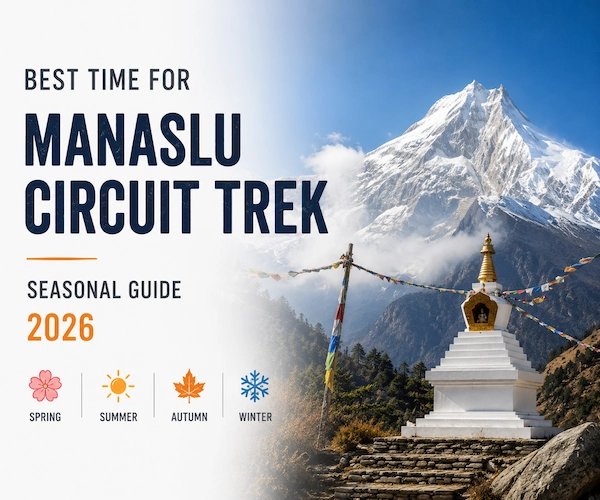
The Ruby Valley Trek is walkable across several seasons, each offering something different.
October to November is the most reliable window — clear skies, stable weather, the best mountain visibility of the year. This is when most trekkers choose to go, and for good reason.
March to May brings the rhododendron forests into bloom along the lower and mid-altitude sections of the trail — a striking contrast to the autumn experience. Weather is slightly more variable, but the trade-off is worth it for many trekkers.
June to September (monsoon) is the quiet season — green, lush, and almost entirely free of other trekkers. Trail conditions require a more experienced guide due to occasional slippery sections, but for travelers specifically seeking solitude, this is an underrated time to go.
December to February is cold, with possible snow at higher points on the route. Manageable for experienced winter trekkers with the right gear, but not the easiest introduction to the trail.
Cost is one of the questions people are most hesitant to ask directly, so let’s just answer it plainly.
A guided Ruby Valley Trek package typically includes permits, a licensed guide, porter service, accommodation along the route, and all meals during the trek. Costs vary depending on group size, trip length, and the level of accommodation (standard teahouse versus homestay-inclusive itineraries), but as a general structure, your budget should account for:
For an exact quote based on your group size, trek length, and preferred accommodation style, the most accurate numbers come directly from a custom itinerary — generic published prices online rarely reflect what you’ll actually pay once dates and group size are factored in.
Request a free, no-obligation cost breakdown for your Ruby Valley Trek → Alliance Treks
Two permits are required for the standard Ruby Valley Trek:
TIMS Card (Trekkers’ Information Management System) — a national trekking registration required for all independent and guided trekkers in Nepal.
No restricted area permit is required for the standard route, which keeps the permit process relatively straightforward compared to treks like Tsum Valley Trek or Upper Dolpo.
Alliance Treks arranges all permits as part of every trekking package — you won’t need to queue at government offices or handle the paperwork independently.
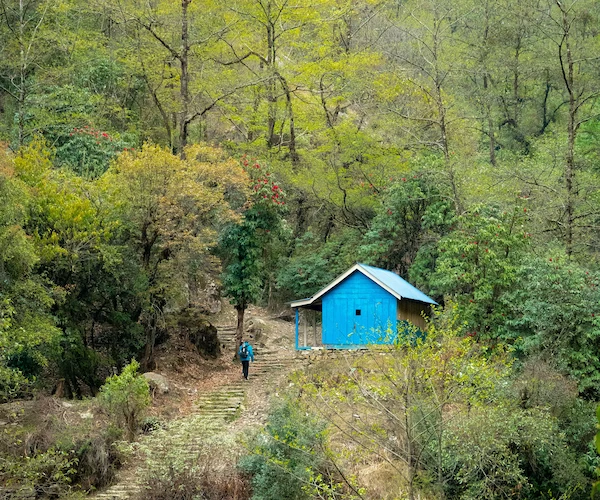
Accommodation along the Ruby Valley Trek is simple by design — this is not a trail with boutique lodges. Expect basic teahouses with twin rooms, shared bathroom facilities in most locations, and the option of genuine homestays in villages like Chalish, where you’ll eat dinner with a Gurung family rather than in a separate dining hall.
Food is hearty and consistent: dal bhat (lentils, rice, vegetable curry) is the trekking staple across Nepal for good reason — it’s filling, it’s available everywhere, and most teahouses offer free refills. You’ll also find noodle dishes, simple soups, eggs, and seasonal vegetables. Don’t expect an extensive menu; do expect food that’s freshly prepared and genuinely good.
Boiled or treated water is available to purchase at most stops, though we recommend carrying your own purification system as a backup — more on that below.
Honest answer: connectivity is limited and inconsistent.
Nepali mobile networks (NTC and Ncell) provide patchy coverage in lower villages like Arughat and Lapubesi, but signal becomes unreliable or absent once you climb into the higher sections around Tipling, Shertung, and Gatlang. A local NTC SIM card with a data plan is worth having for the moments when coverage does appear, but don’t plan around being reachable throughout the trek.
Wi-Fi is rare and where it exists, it’s slow and unreliable — this is not a trail with paid Wi-Fi packages at every teahouse the way the Everest or Annapurna routes have developed. For most trekkers, this turns out to be one of the trip’s quiet gifts rather than an inconvenience.
If you need to stay reachable for work or family reasons, let your guide know in advance — they’ll know exactly where signal pockets exist along the route.
Most teahouses along the Ruby Valley Trek have basic electricity, often solar powered, with charging available for a small fee per device. Reliability varies, particularly in the higher and more remote sections of the route.
We strongly recommend carrying a portable power bank (20,000mAh or higher) as your primary charging solution, with teahouse electricity as a backup rather than the plan. Bring your charging cables and a universal adapter — Nepal uses Type C, D, and M sockets.
Tap water is not safe to drink anywhere on the trek. Boiled water and bottled water are available for purchase at most teahouses, though bottled water becomes more expensive and less environmentally responsible the further you get from road access.
The better approach: carry a reusable water bottle along with a purification method — either water purification tablets or a filter system like a Sawyer Squeeze or LifeStraw bottle. This keeps your costs down, reduces plastic waste on a trail that deserves to stay clean, and means you’re never dependent on teahouse availability.
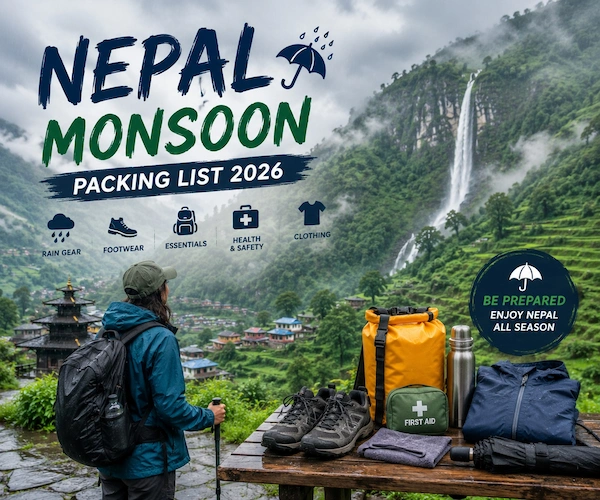
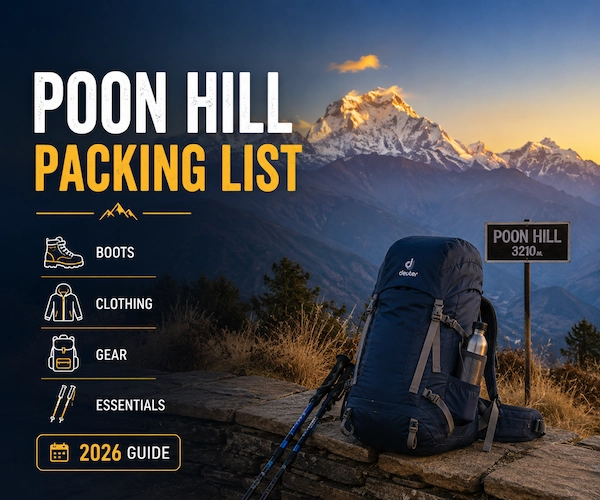
A full packing breakdown deserves its own detailed guide, but the essentials for the Ruby Valley Trek specifically include:
Waterproof trekking boots with good ankle support and grip, a quality rain jacket (especially if trekking during monsoon), layered clothing in quick-dry fabrics rather than cotton, a warm mid-layer for cooler evenings at altitude, trekking poles for the steep descents, a basic first aid kit, sun protection even on cloudy days, and a headlamp for teahouses with limited evening lighting.
For the complete, detailed packing list — including what to leave at home — see our full guide: What to Pack for a Nepal Monsoon Vacation
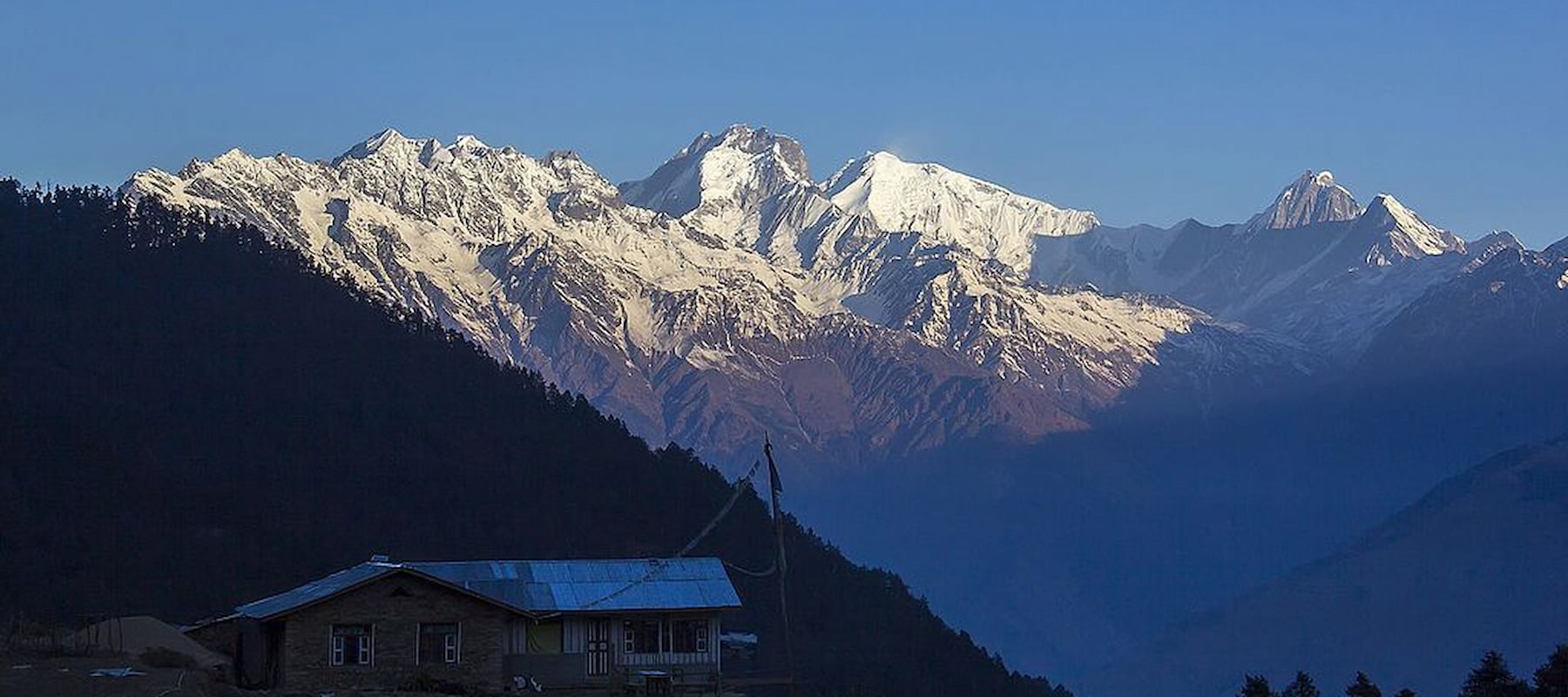
Weather shifts noticeably as you gain altitude on this route. Lower sections near Arughat and the Budhi Gandaki river valley are warm and humid, particularly outside winter months. As you climb upwards, temperatures drop, and nights above 3,000m can be genuinely cold even in the warmer trekking seasons.
Afternoon cloud build-up is common, particularly in spring and monsoon, occasionally bringing short rain showers even in otherwise clear seasons. Mornings tend to offer the clearest mountain visibility — a pattern worth planning your photography and viewpoint hikes around.
The highest point on the standard Ruby Valley Trek itinerary sits around 3,800–4,000m — high enough that altitude awareness matters, though this trek doesn’t carry the same altitude risk profile as routes crossing 5,000m passes.
Mild symptoms like headache, slight breathlessness, or fatigue are common as you adjust and are generally not cause for concern with proper pacing. Drink plenty of water, ascend gradually, and communicate honestly with your guide about how you’re feeling — experienced guides are trained to recognize early signs of altitude sickness and adjust the day’s plan accordingly.
Travel insurance that covers high-altitude trekking and helicopter evacuation is non-negotiable for this or any Nepal trek. Confirm your policy covers the specific altitude range of your itinerary before you travel.
Getting to the Ruby Valley is entirely up to you. Public buses are available for budget-conscious travelers, while those seeking a more comfortable journey can opt for private transport. If you book with Alliance Treks, private transport is included in every Ruby Valley Trek package, making the journey to the trailhead simple and hassle-free.
The highest point on the Ruby Valley Trek is approximately 3,800–4,000 metres, depending on the exact itinerary and route variation.
No previous trekking experience is required. However, you should have a reasonable level of fitness and be comfortable walking 5–7 hours per day on uneven mountain trails. Many first-time trekkers complete the Ruby Valley Trek successfully with the support of an experienced guide.
Yes. When trekking with a reputable agency such as Alliance Treks, the Ruby Valley Trek is considered a safe option for solo female travellers. Local communities are welcoming, and experienced guides provide additional support, safety, and cultural assistance throughout the journey.
Yes. Alliance Treks offers fully customized Ruby Valley Trek itineraries based on your travel dates, fitness level, group size, and interests. Options include extended cultural experiences, additional villages, and combination treks with routes such as the Tamang Heritage Trail.
This guide answers the planning questions — but if you want to go deeper into the trail itself, these resources will help:
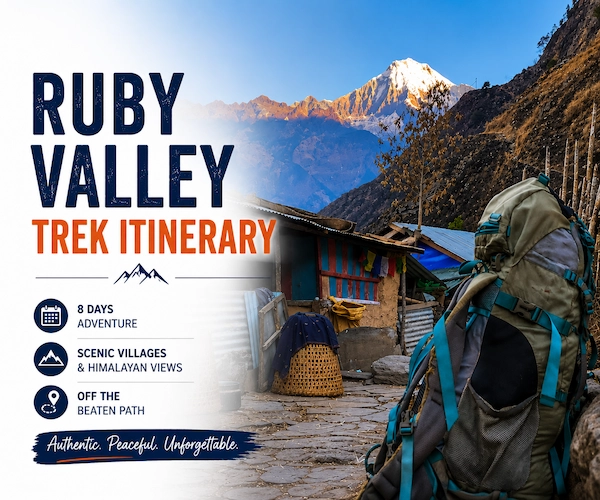
Ruby Valley Trek Itinerary — Day by Day — the full 7-day route breakdown, including what each day actually looks like on the ground.
Ruby Valley Cultural Trek — for travellers who want to prioritise homestays, village life, and deeper cultural engagement over a faster-paced itinerary.
Ruby Valley Trek 8 Days — the extended itinerary option, with an additional day built in for exploration or rest.
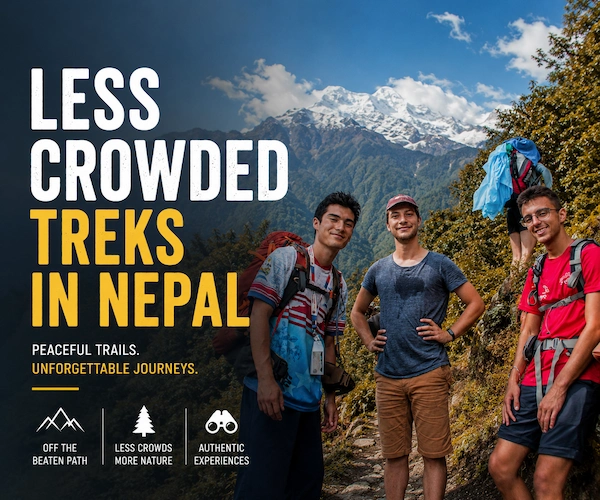
Less Crowded Treks in Nepal — if you’re still comparing Ruby Valley against other off the beaten path options before deciding.
Every trekker’s situation is a little different, and the honest answer to most of the questions above is “it depends on you.” The fastest way to get a genuinely useful answer is a direct conversation with people who know this trail personally.
Our founder, Kul Gurung, was born in Ruby Valley. Several of our guides grew up in the villages this trek passes through. When you talk to us, you’re not talking to a call center reading from a script — you’re talking to people who can tell you, specifically, whether this trek is right for you.
Get Your Free Ruby Valley Trek Consultation → Alliance Treks
No obligation. No pressure. Just an honest answer to whatever question is still on your mind.
Alliance Treks & Expedition Pvt. Ltd. Once is not enough for naturally and culturally Himalayas