(Viber, Whatsapp, Cell) +977 9851022814

Ruby Valley Trek itinerary searches have been quietly climbing for the past two years. And if you’re reading this, you’re probably already ahead of most travellers — because the trail itself is still blissfully, stubbornly uncrowded.
That won’t last forever. It never does.
Nepal has a pattern: a hidden trail gets discovered by a handful of experienced trekkers, whispered about in forums, and within a few seasons it’s on every agency’s homepage and the teahouses are full. The Ruby Valley Trek is somewhere in the early middle of that arc right now. Known enough that the infrastructure exists. Unknown enough that you can spend an entire day on the trail and not pass another trekking group.
If you’ve done Everest Base Camp Trek or the Annapurna Circuit Trek and loved them but quietly missed the solitude you were promised — this is the trek you were actually looking for.
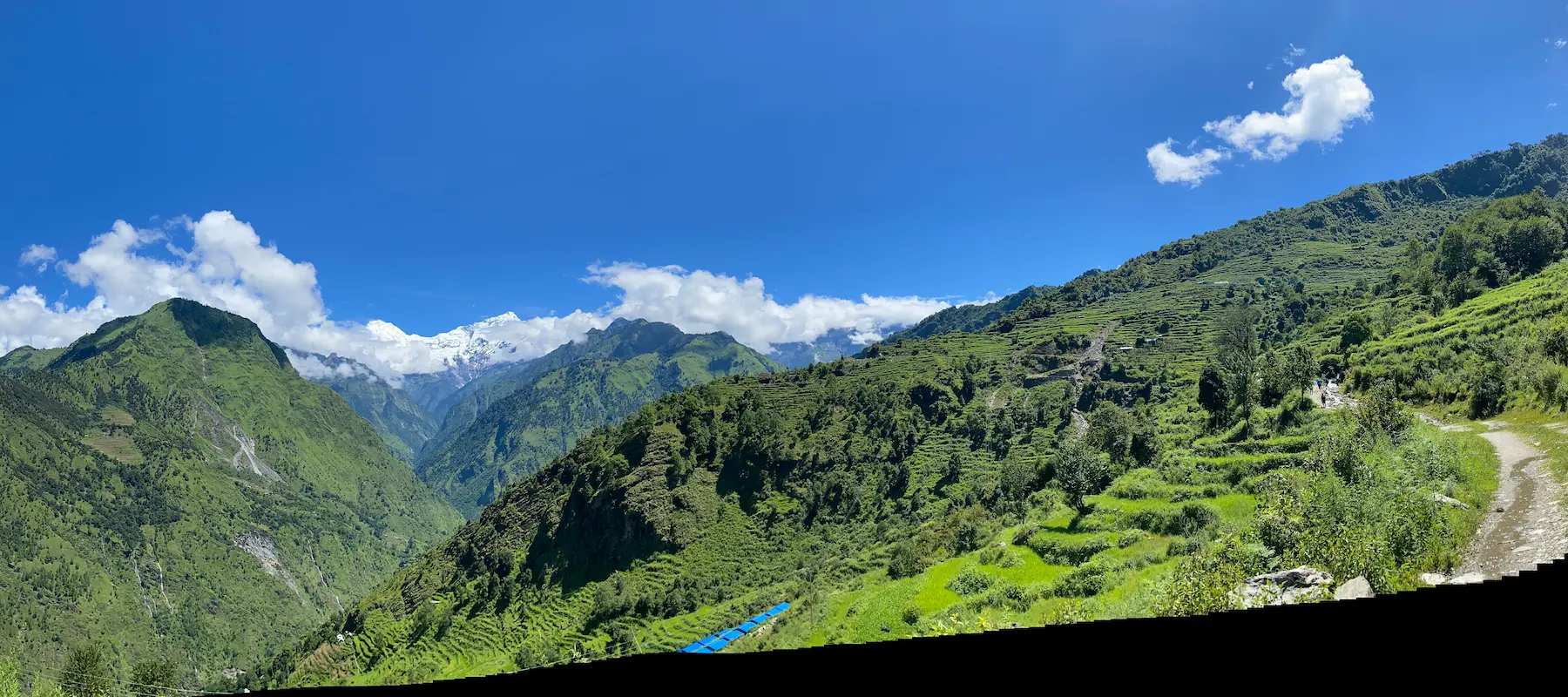
The Ruby Valley Trek Nepal sits in the Ganesh Himal region, northwest of Kathmandu — a landscape of high ridges, deep gorges, traditional Tamang and Gurung villages, and yes, actual ruby mines.
But the rubies are almost a side note to what the Ruby Valley Trek actually delivers: a week of walking through a Nepal that most visitors never see. Not the Nepal of crowded teahouses and well-worn stone steps. The other one. The one where the trail is a real trail, the villages are lived-in rather than tourism-ready, and the mountains — Ganesh Himal, Manaslu, Himalchuli, the Langtang range — appear above the treeline with a suddenness that stops you mid-step.
Our founder Kul Bahadur Gurung was born in Ruby Valley. Several members of our trekking team grew up in the villages you’ll walk through. When we say we know this trail — we mean we know which family in Chalish Village makes the best dal bhat, which ridge gives you the clearest view of Ganesh Himal at sunrise, and which section of the trail floods first in heavy monsoon rain. That’s not research. That’s home.
The standard Ruby Valley Trek itinerary covers 7 days, beginning with a drive from Kathmandu to the Trishuli valley and looping through villages like Borang, Shertung, Tipling, Chalish, and Gatlang before returning to the capital. It reaches a maximum altitude of around 3,800–4,000m — high enough to feel the mountains properly, low enough that acclimatization isn’t the dominant concern of every day.
Every trail has the things that end up in the trip report and the things that actually stay with you. On the Ruby Valley Trek, the ones that stay tend to be smaller and stranger than expected.
Sitting in a Gurung kitchen in Chalish Village while the family prepares dinner and your guide translates fragments of a conversation that’s been going on for generations before you arrived. Standing on the ridge above Tipling Village on a clear morning when the Ganesh Himal peaks are out and the silence is so complete that you can hear your own heartbeat. The butter tea in Gatlang that you didn’t expect to like and ended up wanting a second cup of.
These are not the moments you can put in a highlight reel. They’re the ones you find yourself describing at dinner six months later when someone asks about your best trip.
The Ruby Valley Trek difficulty is moderate — and unlike many trek descriptions that use “moderate” as a polite way of saying “harder than you think,” this one is genuinely accurate for the right traveler.
You’ll walk 5–7 hours on most days. Some ascents are steep and sustained. The trail surface is uneven, unpaved, and during monsoon season, slippery in places. In some routes there are no stone staircases, no railings, no teahouse every forty minutes.
What there isn’t: technical climbing, ropes, glaciers, or altitude above 4,000m on the standard route. A trekker who walks regularly, has reasonable fitness, and is comfortable with full days on their feet will manage the Ruby Valley Trek without significant difficulty.
First-time Nepal trekkers do this trail successfully every season — with the right guide and the right preparation. Experienced trekkers find it appropriately challenging without being exhausting.
If you’re unsure whether this is the right level for you, that’s exactly the kind of question worth asking before you book. Alliance Treks has been assessing trekker fitness and matching people to the right Nepal routes for 34 years — it’s a free conversation and it’s worth having.
The Ruby Valley Trek works across multiple seasons, each with a distinct character.
October to November is the classic window — stable weather, clear mountain views, comfortable daytime temperatures, cold but manageable nights above 3,000m. If you want the best chance of seeing the Ganesh Himal at its most dramatic, this is your season.
March to May brings the rhododendron bloom through the forested lower sections of the Ruby Valley trekking route — a genuinely spectacular effect that the autumn season doesn’t offer. Spring weather is more variable, but the trail rewards the gamble.
Monsoon (June–September) is the Ruby Valley Trek’s most underrated season. The landscape is saturated green in a way that photographs can’t fully capture. The trail is yours almost completely. The cultural encounters — particularly in villages like Tipling and Gatlang — feel more authentic when you’re not part of a trekking season crowd. Alliance Treks runs monsoon-specific Ruby Valley itineraries for travellers who specifically want this experience — it requires the right guide and the right preparation, but it delivers something genuinely different.
Winter (December–February) is cold and some higher sections may carry snow, but possible for experienced trekkers with appropriate gear.
Nepal is not short of trekking options. So the question worth asking before committing to any route is: what does this one give me that the others don’t?
For the Ruby Valley Trek, the answer has three parts.
Genuine remoteness that’s still accessible. The trail is a 5–6-hour drive from Kathmandu — no domestic flights, no complicated logistics, no two-day approach. But once you’re on it, the remoteness is real. This isn’t manufactured solitude. It’s the actual thing.
Cultural depth that goes beyond observation. The Tamang communities along the Ruby Valley Trek Nepal route are not tourism-dependent in the way that villages on the major circuits have become. When a family in Tipling invites you into their kitchen, it’s because that’s what they do — not because there’s a sign outside offering “authentic cultural experience.” The difference is palpable and it matters.
The ruby mine visit. There is nowhere else in Nepal’s trekking network where you can visit an active artisanal gemstone mine, handle raw rubies, and purchase stones directly from the people who dug them out of the mountain. It’s unusual in a way that isn’t manufactured for tourism, and it makes the Ruby Valley Trek itinerary immediately distinct from every other Nepal trek on the market.
The Ruby Valley Trek requires a TIMS card and a Ganesh Himal area trekking permit. No restricted area permit is needed for the standard route.
Alliance Treks handles all permit arrangements as part of every package — you won’t need to navigate permit offices or paperwork independently.
For the full day-by-day Ruby Valley Trek itinerary, accommodation details, what’s included, and current pricing — everything lives on the Alliance Treks website where it’s kept up to date as routes and conditions change.
View the Full Ruby Valley Trek Itinerary and Package Details → Alliance Treks
The standard 8-day Ruby Valley Trek itinerary works for most trekkers. But most trekkers are not identical, and the best Nepal trek is the one built around the person taking it.
Maybe you have 9 or 10 days and want to add the Tamang Heritage Trail. Maybe you want a homestay in every village rather than guesthouses. Maybe you’re travelling with someone whose fitness level is different from yours and you need a pacing strategy that works for both. Maybe you want to combine the Ruby Valley Trek with Chitwan or a few days in Pokhara. Maybe you’ve never trekked before and you want to know, honestly, whether this is the right first trek or whether something gentler makes more sense.
These are exactly the conversations the team at Alliance Treks has every day. They’re free. They’re without obligation. And 34 years of sending people into Nepal’s mountains means the advice you get is grounded in real experience rather than a sales script.
We’ll send you a personalized Ruby Valley Trek itinerary within 24 hours — completely free, completely tailored, and with no pressure to book.
Request Your Free Ruby Valley Trek Consultation → Alliance Treks
The trail is still quiet. The villages are still the way they are. The rubies are still there.
The question is whether you’ll go before everyone else figures out this is the best trek in Nepal most people haven’t done yet.
You won’t be talking to a sales team. You’ll be talking to people who grew up on this trail — led by a founder, Kul Bahadur Gurung, who calls Ruby Valley home. That’s 34 years of agency experience on top of a lifetime of knowing this place from the inside. Contact the experts today.
The standard Ruby Valley Trek itinerary is 8 days, including the drive to and from Kathmandu. Extended 10–12 day versions that combine the trek with the Tamang Heritage Trail or additional villages are also available. Contact Alliance Treks for a customized itinerary.
Yes. The Ruby Valley Trek is considered moderately difficult and is suitable for beginners with a good level of fitness. No technical climbing experience is required. Alliance Treks can assess your fitness level and recommend whether this trek is the right choice for you.
October and November offer clear skies and the best mountain views, while March to May is ideal for rhododendron blooms. The monsoon season from June to September is quieter and exceptionally green, making it a rewarding time to visit with an experienced guide.
The complete day-by-day itinerary, package inclusions, and pricing are available at www.alliancetreks.com. You can also contact the Alliance Treks team to request a free customized itinerary based on your travel dates and preferences.
Alliance Treks & Expedition Pvt. Ltd. Once is not enough for naturally and culturally Himalayas