(Viber, Whatsapp, Cell) +977 9851022814

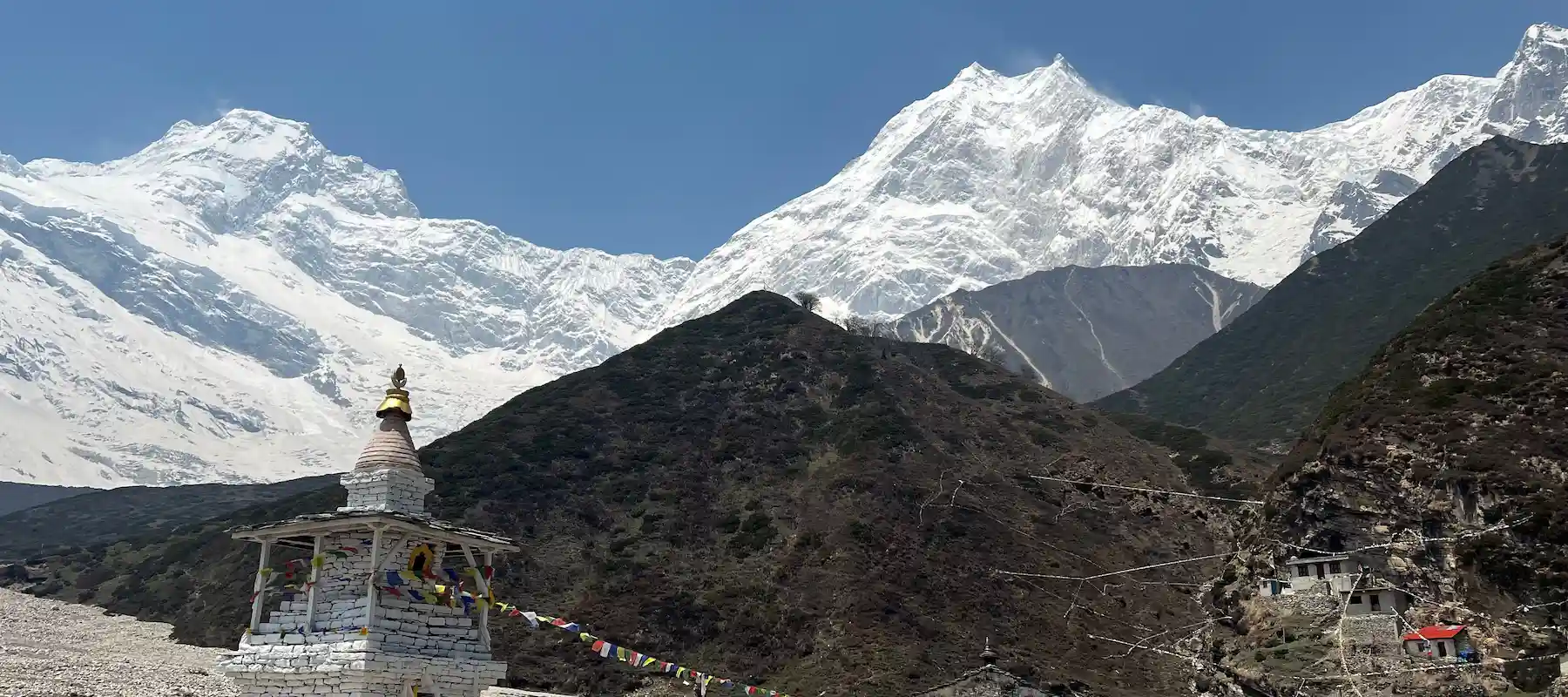
Manaslu Circuit Trek is already one of the country’s best-kept secrets but tucked inside it lies a hidden gem that even seasoned trekkers often miss. Most travelers who fly into Kathmandu dreaming of the Himalayas head straight for Everest Base Camp Trek or the Annapurna Circuit Trek. Both are spectacular, and both are crowded. Tea houses get booked out weeks in advance, the trails can feel like a procession, and the silence you came for gets drowned out by the chatter of hundreds of fellow trekkers.
Manaslu, the world’s eighth-highest mountain at 8,163 meters, sits quietly to the east of Annapurna, largely overlooked simply because it requires a special restricted-area permit and a licensed guide. That single bureaucratic hurdle keeps the trail wonderfully uncrowded. You won’t find big airports nearby, long lines at checkpoints, or sprawling trekking hubs full of gear shops and bakeries advertising apple pie to every passing foreigner. Most days on the Manaslu Circuit Trek Nepal, the only sounds are rivers tumbling over stones, wind moving through prayer flags, and the rhythm of your own boots on the trail.
But even within this already-quiet circuit, there’s a valley that almost nobody talks about — a place so secluded it was sealed off to outsiders until 2008. This is Tsum Valley, and it might be the truest hidden gem left along the entire Manaslu Circuit Trek Nepal.
If you trace the standard Manaslu Circuit on a map, the trail follows the Budhi Gandaki River north from Soti Khola, climbing steadily through the village of Philim. Most trekkers walk straight through Philim without a second glance, continuing on toward Deng, Namrung, and eventually Samagaun beneath Manaslu’s icy flanks. But at Philim, a quieter trail breaks away to the northeast, following the Siyar Khola upstream into a valley that very few people have ever heard of.
This is the turn into Tsum Valley. It isn’t marked with fanfare. There’s no signpost shouting “hidden gem this way.” It simply branches off, narrower and rockier than the main trail, climbing into a gorge that the rest of the trekking world has largely forgotten exists.
Tsum Valley remained closed to foreign trekkers until 2008, decades after most of Nepal had already opened its doors to international visitors. The valley sits hard against the Tibetan border, and its isolation wasn’t just geographic. For generations, this was considered a sacred, hidden valley by Tibetan Buddhists — the word “Tsum” itself is believed to derive from the Tibetan word for “vivid” or “pristine.”
Local legend holds that the valley was once home to wandering Buddhist saints and hermits seeking solitude for meditation. Some stories even claim the elusive yeti roamed these slopes. Whether or not you believe the folklore, the feeling holds up once you’re actually standing there: time seems to move differently in Tsum, slower and quieter, the way it must have moved everywhere in the Himalayas before trekking became an industry.
Because the valley only opened relatively recently, and because it requires its own separate restricted-area permit on top of the standard Manaslu permit, the number of visitors each year remains remarkably small. You can walk for hours here without crossing paths with another trekking group — a kind of solitude that has all but vanished from Everest and Annapurna.
The people of Tsum Valley are known as Tsumbas, and their way of life has been shaped almost entirely by isolation from the rest of Nepal. Their language, customs, and Buddhist practices draw heavily from Tibet, filtered through centuries of near-total separation from the lowlands — a cultural depth that makes the Manaslu Circuit Trek Nepal feel less like a hike and more like a journey through living history.
One tradition found in Tsum Valley is particularly striking: the valley has long practiced a local ban on animal slaughter and hunting, rooted in Buddhist principles of non-violence. Walking through the valley, you’ll notice how this reverence for life shapes daily rhythms — prayer wheels turning by the trail, mani walls stacked with carved stones, and an unhurried respect for the mountains that surround every village.
Religious life in Tsum Valley centers around its monasteries (gompas), many of which are centuries old and still active. Monks and nuns continue to live and practice within these walls much as their predecessors did hundreds of years ago, largely undisturbed by the modern world creeping in elsewhere in Nepal.
Daily life in the villages follows patterns shaped by altitude and season rather than tourist demand. Families tend small terraced fields of barley and potatoes, herd yaks and goats along high pastures, and weave their own wool into the heavy garments needed for winter. Houses are built from stone and timber, low-roofed against the wind, with prayer flags strung between rooftops and chortens marking the entrance to nearly every settlement. Visitors are welcomed, but not catered to in the way they might be along busier trails — meals are simple, lodging is basic, and conversations happen on the Tsumbas’ own terms, often through a guide acting as translator. That lack of polish is part of what makes the place feel real.
The walk into Tsum Valley begins gently, branching off the main Manaslu Circuit Trek Nepal route. After leaving the main trail at Philim, the path follows the Siyar Khola through a lush, narrow gorge thick with pine and rhododendron forest. Waterfalls drop from cliffs overhead, and the trail occasionally squeezes between rock walls so close you could touch both sides.
The first major stop is Chumling, a small village where stone houses cling to the hillside and life proceeds at the pace it always has. From there, the trail continues to Chhokangparo, a pair of linked villages perched on a sun-drenched shelf of land with sweeping views back down the valley. By this point, the landscape has begun to open up, the forest thinning into terraced fields and wide mountain vistas.
Further along sits Mu Gompa, one of the valley’s most significant monasteries, set against a dramatic backdrop near the head of the valley close to the Tibetan border. Many trekkers consider the walk up to Mu Gompa the spiritual high point of the journey — not because of altitude, though it does sit well above 3,700 meters, but because of the profound stillness up there. Wind moves prayer flags. Monks go about their routines. The rest of the world feels impossibly far away.
Nearby, the Milarepa Cave holds particular significance for Buddhist pilgrims. According to tradition, the revered Tibetan yogi and poet Milarepa meditated in this very cave centuries ago, and it remains a place of pilgrimage and quiet reflection today.
Adding Tsum Valley to a Manaslu Circuit Trek Nepal itinerary typically requires five to seven additional days, plus a separate restricted-area permit beyond the standard Manaslu permit. For trekkers already committing to a multi-week journey, that extra time can feel like a big ask. But this is precisely why Tsum Valley remains hidden. The additional cost, paperwork, and time act as a natural filter, keeping the crowds away from a place that, frankly, doesn’t need to be discovered by everyone.
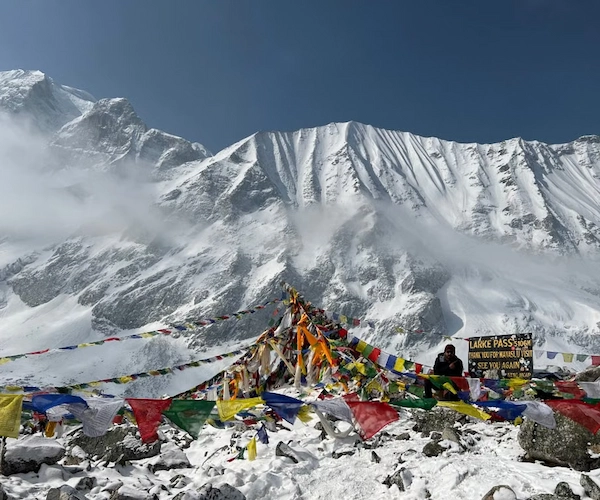
Trekkers who do make the detour consistently describe it as the most memorable part of their entire Manaslu Circuit Trek Nepal experience — more memorable, in many cases, than the famous Larkya La Pass crossing at 5,106 meters that caps off the main circuit. There’s something different about a place that wasn’t built for tourism, that doesn’t have a teahouse menu translated into six languages, where the monasteries function as living religious institutions rather than photo stops.
Tsum Valley isn’t the only overlooked spot tucked into the wider Manaslu Circuit Trek Nepal. If your itinerary doesn’t stretch to the extra week that Tsum requires, a few smaller detours along the main circuit offer their own quiet rewards.
Near Samagaun, the high-altitude village where most trekkers pause to acclimatize before tackling Larkya La, a short side trip leads to Birendra Lake. Fed by glacial meltwater and framed by the icy slopes above, this turquoise lake sits just a short walk from the main trail, yet a surprising number of trekkers skip it entirely in their rush toward the pass. It’s a peaceful, often-empty spot to sit with the silence and let the altitude settle in, the kind of place where you can watch light shift across the glacier above and not see another soul for an hour.
Also near Samagaun, a steep but manageable hike climbs to Pungyen Gompa, a remote monastery with a close-up view of Manaslu’s summit. The name “Pungyen” is said to relate to a local guardian deity associated with the mountain, and the gompa itself has a wind-scoured, end-of-the-earth quality that few photographs of Manaslu ever capture. Both of these detours can be folded into a standard Manaslu Circuit itinerary without adding extra trekking days, since they’re built into the acclimatization schedule around Samagaun — making them an easy way to taste the region’s quieter side even if a full week-long Tsum detour isn’t in the cards.
The best window for trekking Tsum Valley mirrors the rest of the Manaslu Circuit Trek Nepal: spring (March to May) and autumn (September to November), when skies are generally clear and temperatures are manageable. Monsoon season (June through August) brings landslide risk and obscured mountain views, while winter brings serious cold and snow at higher elevations like Mu Gompa.
A licensed guide is mandatory for the Manaslu restricted area, and solo trekking isn’t permitted — you’ll need to be part of a group of at least two, arranged through a registered trekking agency. The Tsum Valley permit is separate from the standard Manaslu Restricted Area Permit, so make sure your trekking agency arranges both well in advance.
Accommodation along the Tsum route is simple teahouse lodging — basic rooms, shared bathrooms in most villages, and meals built around dal bhat, noodle soups, and momos. Pack layers for big temperature swings between sunny daytime walking and cold nights, and budget extra cash for the Tsum-specific permit fees and the additional days of guide and porter wages. None of it is expensive by Western standards, but it does add up over a longer itinerary, and it’s worth confirming costs with your agency before you commit to the detour.
There’s a particular kind of magic in walking somewhere that hasn’t yet been smoothed over for mass tourism. Tsum Valley still has that quality. The monasteries are functioning religious sites, not museum pieces. The villages run on their own rhythm, largely unbothered by the trekking season’s comings and goings. The silence between footsteps is real silence, not the kind interrupted every few minutes by another group passing through.
As word slowly spreads about this hidden gem in Manaslu Circuit Trek Nepal, that quiet won’t last forever. More blogs are mentioning it, more trekking agencies are adding it to their brochures, and the permit numbers tick up a little each season. For now, though, Tsum Valley remains one of the few places in Nepal where you can genuinely feel like a guest arriving somewhere ancient and largely untouched, rather than a tourist checking off a bucket-list trail.
If solitude, living culture, and a slower pace of discovery sound more appealing than crowded viewpoints and packed teahouses, the turn-off at Philim is waiting. It doesn’t ask for your attention, and it won’t be on most people’s itineraries — but for those willing to add the extra days, the Manaslu Circuit Trek Nepal offers something increasingly rare in the Himalayas: a place that still feels entirely its own.
The most memorable moments aren’t always marked on the map. They might be a hidden monastery perched above a remote village, a quiet trail where you won’t meet another trekker for hours, or an unexpected conversation with a local family over a cup of tea.
These hidden gems are what transform a great trek into a once-in-a-lifetime experience.
Ready to go beyond the guidebook and discover the authentic side of the Manaslu Circuit Trek? Let our local experts take you off the beaten path and show you the places most trekkers never get to see.
Start planning your Manaslu adventure today and uncover the secrets hidden between the mountains.
Contact Alliance Treks for personalized itineraries, permit arrangements, and expert local guidance from a team that knows Manaslu like home.
Alliance Treks & Expedition Pvt. Ltd. Once is not enough for naturally and culturally Himalayas