(Viber, Whatsapp, Cell) +977 9851022814

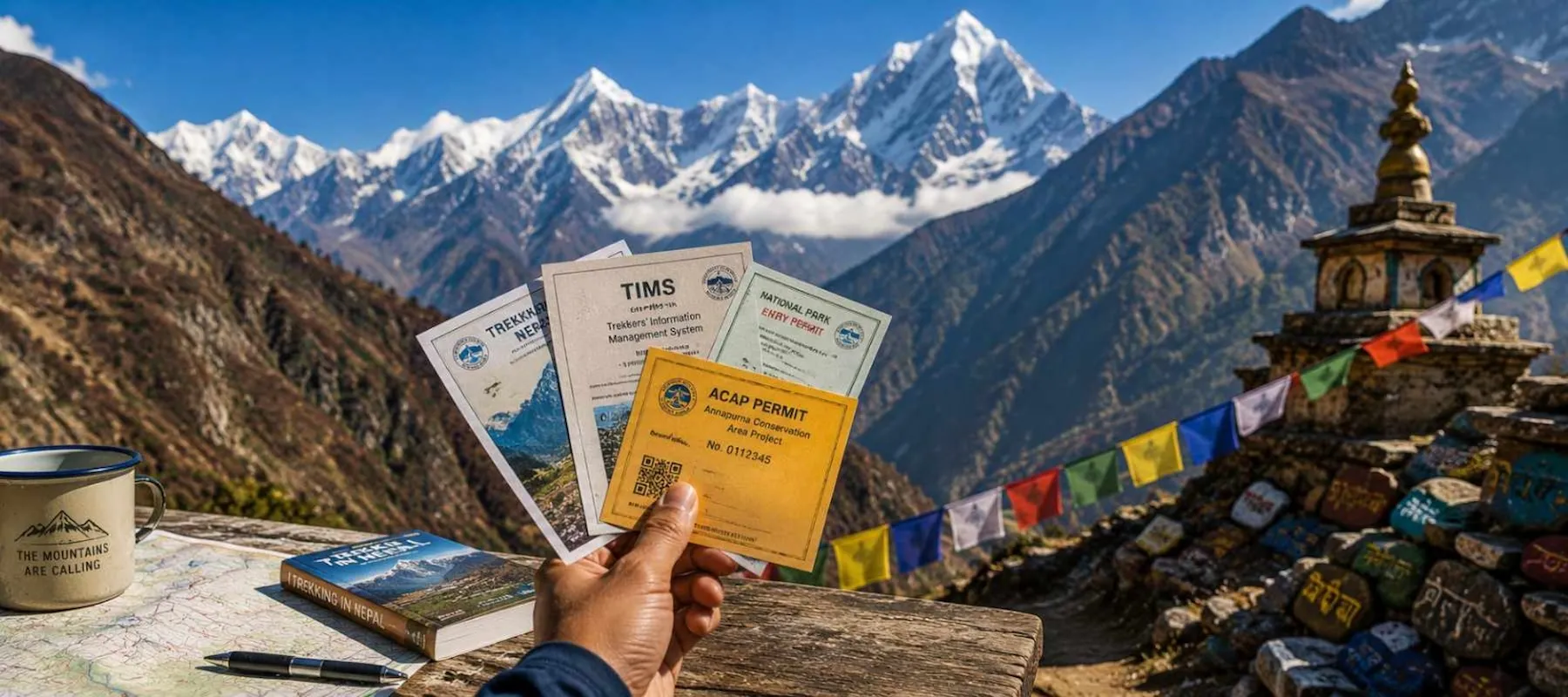
Nepal trekking permits 2026 are not what they were even two years ago. The system has changed significantly since April 2023, and trekkers arriving with information from older blogs are being turned back at checkpoints before their trek has properly begun. This is not a minor update. The rules around mandatory guides, TIMS cards, digital permits, and restricted area access have all shifted in ways that directly affect how you plan and book your trip.
Alliance Treks has been managing permits for trekkers across Nepal for over 34 years. Every season, we handle the paperwork so our clients can focus on the mountains. This guide gives you the current picture as of June 2026 — what permits you need, what they cost, where to get them, and what the permit system in Nepal is trying to do. All information has been verified with Nepal Tourism Board records and confirmed at active checkpoints.
Note: This guide reflects permit rules as of June 2026. Nepal’s permit system is actively evolving. Some regulations are still being rolled out in phases. Always confirm current requirements with Alliance Treks before your trip — we update our information in real time.
Between 2023 and 2026, Nepal’s trekking permit system went through the biggest overhaul in its history. The government introduced a mandatory licensed guide requirement, overhauled the TIMS card system, launched electronic e-permits for conservation areas, and replaced the TIMS card entirely in the Everest region with a local fee structure.
The reason behind these changes is well documented. Search and rescue operations for unguided foreign trekkers increased by nearly 40 percent between 2015 and 2025. Altitude sickness cases, disappearances on remote routes, and costly helicopter evacuations placed an unsustainable burden on Nepal’s emergency services. The government responded with stricter regulation. Some trekkers resent it. Others, once they understand what a licensed guide actually adds to the experience, wonder why they were worried.
The practical result for you is straightforward: if you are trekking in any national park, conservation area, or restricted area in Nepal in 2026, you need permits and you need a licensed guide from a registered agency. Neither is optional. Both are actively checked at trail checkpoints.
The single most significant change to Nepal trekking permits 2026 is the mandatory guide rule. Introduced on April 1, 2023 and now strictly enforced at every major checkpoint, this regulation requires all non-Nepali citizens to trek with a licensed guide from a TAAN-registered trekking agency when entering any national park, conservation area, or restricted area.
This covers virtually every popular trekking route in Nepal — the Everest Base Camp trail, the Annapurna Circuit, Langtang Valley, Manaslu Circuit, and all restricted areas. Short day hikes near Kathmandu or Pokhara that fall outside protected areas — Nagarkot, Sarangkot, Dhulikhel — do not require a guide.
Checkpoint staff on all major routes now verify guide credentials before allowing trekkers through. The consequence of being found without a licensed guide ranges from fines to permit confiscation to being turned back entirely. Any cost estimate that does not include a guide fee is describing an approach that is no longer legal in Nepal.
When you book with Alliance Treks, your guide is licensed, TAAN-registered, and verified. The mandatory guide requirement is handled as part of every package we run. You do not need to worry about compliance — we manage it from the first checkpoint to the last.
Looking for a guided trek on a specific route? Browse Alliance Treks trekking packages to find itineraries across every major region.
The TIMS card — Trekkers’ Information Management System — has had a complicated 2026. Depending on which region you are trekking, it is either abolished, phased out, still required, or transitioning to a digital format. Here is the honest breakdown.
In the Everest and Khumbu region, the TIMS card has been formally discontinued. It has been replaced with the Khumbu Pasang Lhamu Rural Municipality local fee — paid at Lukla or Monjo gate. Trekkers in the Khumbu region now receive a digital Trek Card with a QR code, which is scanned at checkpoints instead of the old paper TIMS card.
In the Annapurna region, TIMS is technically still on the books but is not being enforced at checkpoints as of mid-2026. Most operators do not arrange it for Annapurna-region treks because the ACAP permit and guide credential are what checkpoints are actually checking.
In Langtang, Manaslu, Kanchenjunga, and far-western regions including Rara Lake, TIMS remains required. Your trekking agency handles this as part of the permit package. Since the 2023 mandatory guide rule eliminated the independent trekker category, all remaining TIMS cards are now issued through registered agencies — the old individual Green Card no longer exists.
Nepal is actively transitioning to an electronic e-TIMS system. Some checkpoints now accept digital formats. Others still want the paper card. The safest approach is to let your registered agency handle TIMS entirely — they know which format each checkpoint on each route is currently accepting.
Note: Do not rely on information from blogs older than six months for TIMS card status. The rules differ by region and are changing in real time as the e-TIMS rollout continues. If in doubt, ask Alliance Treks directly before you travel.
Here is every major permit in the Nepal trekking system for 2026, with costs and where to obtain each one:
| Permit | Region | Cost | Where to Get It |
|---|---|---|---|
| TIMS Card | Most Regions | NPR 1,000 (with agency) | Via registered trekking agency only |
| Sagarmatha National Park Permit | Everest / Khumbu | NPR 3,390 (including 13% VAT) | NTB office or park entrance gate |
| Khumbu Local Fee | Everest / Khumbu | NPR 2,000–3,000 | Paid at Lukla or Monjo checkpoint |
| ACAP Permit | Annapurna Region | NPR 3,000 (foreigners) | NTB, NTNC, or online e-permit |
| MCAP Permit | Manaslu Region | NPR 3,000 (foreigners) | NTB office in Kathmandu or Pokhara |
| LCAP Permit | Langtang Region | NPR 3,000 (foreigners) | NTB office in Kathmandu or Pokhara |
| KCAP Permit | Kanchenjunga | NPR 3,000 (foreigners) | NTB office Kathmandu |
| Manaslu RAP (Sep–Nov) | Manaslu Circuit | USD 100 (first 7 days) + USD 15/day thereafter | Department of Immigration via agency |
| Manaslu RAP (Dec–Aug) | Manaslu Circuit | USD 75 (first 7 days) + USD 10/day thereafter | Department of Immigration via agency |
| Upper Mustang RAP | Upper Mustang | USD 500 (first 10 days) + USD 50/day thereafter | Department of Immigration via agency |
| Tsum Valley RAP (Sep–Nov) | Tsum Valley | USD 40 (first 7 days) + USD 7/day thereafter | Department of Immigration via agency |
| Dolpo RAP | Upper Dolpo | USD 500 (first 10 days) + USD 50/day thereafter | Department of Immigration via agency |
| Lower Dolpo RAP | Lower Dolpo | USD 20 per week | Department of Immigration via agency |
| Nar Phu RAP | Nar Phu Valley | USD 90 (first 7 days) + USD 15/day thereafter | Department of Immigration via agency |
| Humla RAP | Simikot–Hilsa | By application | Department of Immigration via agency |
All conservation area permit fees (ACAP, MCAP, LCAP, KCAP) include 13 percent VAT, so the effective cost is NPR 3,390 rather than NPR 3,000. National park permits carry the same VAT structure. Pay in Nepali Rupees — most permit offices do not accept card payments, and some gates accept cash only.
The Everest Base Camp trek requires two permits in 2026: the Sagarmatha National Park entry permit and the Khumbu Pasang Lhamu Rural Municipality local fee. The TIMS card is no longer required in this region.
The Sagarmatha National Park permit costs NPR 3,000 plus 13 percent VAT, bringing the total to approximately NPR 3,390. It is available at the Nepal Tourism Board office in Kathmandu or at the park entrance gate at Monjo. The Khumbu local fee of NPR 2,000 to NPR 3,000 is paid separately at Lukla or Monjo. Carry cash for the local fee — card payment is not accepted.
On top of the permits, all trekkers on the EBC route need a licensed guide from a TAAN-registered agency. This is checked at the Sagarmatha National Park gate at Monjo. Trekkers without a verifiable guide credential are turned back at this point.
Planning the Everest Base Camp trek? See the full itinerary and permit-inclusive packages on the Everest Base Camp trek page.
Every trek in the Annapurna region — Annapurna Base Camp, Annapurna Circuit, Poon Hill, Mardi Himal, Mohare Danda — requires an Annapurna Conservation Area Permit (ACAP). There are no exceptions. The permit costs NPR 3,000 for foreign nationals, plus 13 percent VAT. SAARC nationals pay NPR 1,000.
ACAP is available at the Nepal Tourism Board offices in Kathmandu (Bhrikutimandap) and Pokhara (Lakeside Road), through registered trekking agencies, and via the NTNC online e-permit portal. The online option is available and works well for most nationalities — your agency can handle it on your behalf.
TIMS is technically still listed as a requirement for the Annapurna region but as of mid-2026, most checkpoints are not actively checking for it. The ACAP permit and guide credential are the documents that matter at Birethanti and subsequent gates. Your agency will advise on whether TIMS is worth arranging for your specific departure date and route.
For the Annapurna Base Camp trek or Annapurna Circuit trek, Alliance Treks arranges all ACAP and TIMS permits as part of the package.
The Poon Hill trek also requires an ACAP permit. It is Nepal’s most accessible introduction to Annapurna region trekking.
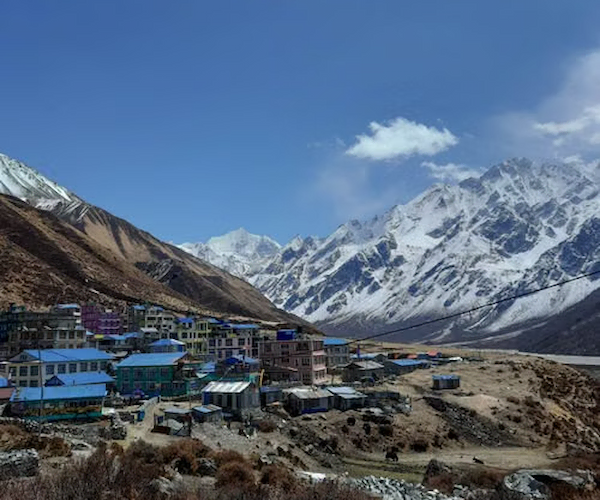
The Langtang Valley trek requires a Langtang Conservation Area Permit (LCAP) and, unlike Everest and Annapurna, a TIMS card is still required and enforced in this region as of mid-2026. Both are available at NTB offices in Kathmandu.
The LCAP costs NPR 3,000 plus VAT for foreign nationals. The TIMS card for agency-booked trekkers costs NPR 1,000. Checkpoints at Dhunche and Syabrubesi verify both documents. A licensed guide is mandatory, as it is on all protected area routes in Nepal.
Langtang is one of the more off-the-beaten-path major treks in Nepal. It saw significant damage in the 2015 earthquake and has been extensively rebuilt since. Infrastructure has improved markedly and the permit situation is well established. It is a reliable, straightforward permit process — your agency handles both documents before departure.
See the Langtang Valley trek for a full itinerary and current package pricing.
The Manaslu Circuit is a restricted area trek. It requires two separate permits: the Manaslu Conservation Area Permit (MCAP) and a Restricted Area Permit (RAP). The MCAP costs NPR 3,000 plus VAT. The RAP cost varies by season.
During the peak season of September to November, the Manaslu RAP costs USD 100 per person for the first seven days, then USD 15 per day after that. During the off-season of December to August, the cost drops to USD 75 for the first seven days, then USD 10 per day. The Manaslu region also charges a Chumnubri Rural Municipality entry fee of approximately NPR 2,000 per person, collected at checkpoints near Jagat or Philim. Carry cash — card payments are not accepted.
TIMS is required on the Manaslu Circuit. Restricted area permits must be arranged through a registered agency — they cannot be purchased independently. A licensed guide is mandatory throughout the route. Minimum group size rules have been relaxed in some periods, but confirm current requirements with your agency before booking.
The Manaslu Circuit Trek is one of the finest trekking routes in Nepal. Alliance Treks handles all three permits — MCAP, RAP, and TIMS — as part of every Manaslu package.
Nepal’s restricted areas are regions that require a special Restricted Area Permit (RAP) in addition to any conservation area or national park permits. They are located near the Tibetan border, contain culturally sensitive communities, and require that trekkers book through a registered agency with a licensed guide. Independent trekking in these areas is not permitted under any circumstances.
Upper Mustang is one of Nepal’s most spectacular and culturally preserved regions. The RAP costs USD 500 per person for the first ten days, then USD 50 per day after that. An ACAP permit is also required for the lower section of the route. Given the permit cost, Upper Mustang attracts serious trekkers who want the most remote cultural experience available in Nepal. The ancient walled capital of Lo Manthang justifies every rupee.
See the Upper Mustang trek from Alliance Treks for current package pricing including all permits.
Upper Dolpo carries the same RAP cost as Upper Mustang — USD 500 for the first ten days, then USD 50 per day. Shey Phoksundo National Park entry is also required. Lower Dolpo has a more accessible RAP at USD 20 per week. Dolpo is genuinely remote, rarely visited, and one of the most extraordinary landscapes in Asia.
The Tsum Valley RAP costs USD 40 per person for the first seven days in peak season (September to November), then USD 7 per day. During the off-season, the cost drops to USD 30 for the first seven days plus USD 7 per day. An MCAP permit is also required as the route passes through the Manaslu Conservation Area.
The Nar Phu Valley RAP costs USD 90 per person for the first seven days in peak season, then USD 15 per day. Nar Phu is accessed via the Annapurna Circuit and offers a remote high-altitude experience well off the main tourist circuit. The Nar Phu Valley Trek is one of the must visit trekking route of Nepal.
Kanchenjunga requires a Kanchenjunga Conservation Area Permit (KCAP) and a TIMS card. It does not carry the same RAP structure as Mustang or Dolpo, but it is a remote and logistically complex trek that requires careful advance planning. KCAP costs NPR 3,000 plus VAT.
Here is the full region-by-region summary of permits, TIMS status, and guide requirements for Nepal trekking in 2026:
| Trek / Route | Permits Needed | TIMS Required? | Guide Required? |
|---|---|---|---|
| Everest Base Camp | Sagarmatha National Park Permit + Khumbu Local Fee | No (region abolished it) | Yes — mandatory |
| Annapurna Base Camp | ACAP Permit | Not enforced in 2026 | Yes — mandatory |
| Annapurna Circuit | ACAP Permit | Not enforced in 2026 | Yes — mandatory |
| Poon Hill | ACAP Permit | Not enforced in 2026 | Yes — mandatory |
| Langtang Valley | LCAP Permit + TIMS Card | Yes — required | Yes — mandatory |
| Manaslu Circuit | MCAP Permit + Restricted Area Permit (RAP) | Yes — required | Yes — mandatory |
| Upper Mustang | ACAP Permit + Restricted Area Permit (USD 500) | Required | Yes — mandatory |
| Tsum Valley | MCAP Permit + Restricted Area Permit (RAP) | Required | Yes — mandatory |
| Kanchenjunga | KCAP Permit + TIMS Card | Required | Yes — mandatory |
| Upper Dolpo | Shey Phoksundo National Park Permit + Restricted Area Permit (RAP) | Required | Yes — mandatory |
There are three ways to get Nepal trekking permits: in person at NTB offices, at park or conservation area entry gates, or through a registered trekking agency. For most trekkers, the agency route is the most practical.
The Nepal Tourism Board offices in Kathmandu (Bhrikutimandap) and Pokhara (Lakeside Road) issue TIMS cards, national park permits, and conservation area permits. Kathmandu office hours are Sunday to Thursday 10am to 4pm, Friday 10am to 3pm. The Pokhara office is open Sunday to Friday 10am to 5pm, closed Saturdays.
Conservation area permits (ACAP, MCAP, LCAP, KCAP) are also available online via the NTNC e-permit portal. This option is increasingly reliable and saves time if you are arriving with limited lead time in Kathmandu.
Restricted Area Permits must go through the Department of Immigration in Kathmandu — these cannot be obtained at gates or online. They must be arranged through your registered trekking agency. This is one of the clearest practical reasons why using a registered agency for restricted area treks is not just recommended but legally required.
Note: Bring two passport-size photos and a clear photocopy of your passport data page for every permit application. Pay in Nepali Rupees — most offices do not accept foreign currency or card. If you forget photos, there are photo shops within walking distance of both the Kathmandu and Pokhara NTB offices.
When you trek with Alliance Treks, every permit in your itinerary is arranged before your departure briefing in Kathmandu. You arrive at Base Camp orientation with your permits already in hand and your guide credentials already verified. You do not fill out forms. You do not queue at NTB offices. You do not carry a folder of photocopies to checkpoints.
Our team tracks permit fee changes, checkpoint enforcement updates, and TIMS card status for every route we operate. When a rule changes mid-season — as happened with the TIMS card in the Everest region — we update our process immediately. Our guides know what each checkpoint is checking for on the day you are there, not what it was checking for six months ago.
For restricted area treks like Manaslu, Upper Mustang, or Dolpo, Alliance Treks handles the RAP application, the conservation area permit, TIMS, and any local municipality fees. For standard routes, we arrange the national park or conservation area permit and TIMS where required. The guide fee and agency registration are included in every package as standard.
To discuss permits for a specific trek, contact Alliance Treks and we will confirm exactly what is required for your route and travel dates.
It depends on your route. The TIMS card has been abolished in the Everest and Khumbu region, replaced by the Khumbu local fee and a digital Trek Card. In the Annapurna region, TIMS is technically still required but not being actively enforced at checkpoints as of mid-2026. In Langtang, Manaslu, Kanchenjunga, and far-western regions including Rara Lake, TIMS is still required and enforced. Alliance Treks will arrange TIMS for every route that currently requires it as part of your permit package.
No — not on any route that passes through a national park, conservation area, or restricted area. The mandatory licensed guide rule introduced April 1, 2023 and now fully enforced, requires all non-Nepali trekkers to use a licensed guide from a TAAN-registered agency on these routes. This covers every major Himalayan trekking route in Nepal. Short day hikes near Kathmandu and Pokhara that do not enter protected areas are unaffected.
It depends on the route. For the Everest Base Camp trek, expect approximately NPR 3,390 for the Sagarmatha National Park permit plus NPR 2,000 to NPR 3,000 for the Khumbu local fee. For Annapurna routes, the ACAP permit costs approximately NPR 3,390. Restricted area treks carry much higher costs — Upper Mustang starts at USD 500 for ten days. See the master cost table in Section 4 of this guide for the complete breakdown.
Yes — and this is the simplest and most reliable approach for all routes. Alliance Treks arranges every permit required for your specific itinerary as part of our service. For standard routes this means the national park or conservation area permit and TIMS where required. For restricted area treks, we handle the RAP application through the Department of Immigration, which cannot be done independently. You receive all permits before your trek begins.
The consequences range from being required to purchase the missing permit on the spot at a penalty rate — often double the standard fee — to having your existing permits confiscated and being turned back from the trail entirely. In practice, enforcement is consistent and serious on the Everest, Annapurna, Langtang, and Manaslu routes. The era of loose checkpoint enforcement is over in Nepal. Get your permits sorted before you start.
Nepal trekking permits 2026 are more straightforward than they look when you see the full list. The system is designed around two things: keeping trekkers safe through registered guide support, and funding the conservation areas that make Nepal’s mountain environment worth trekking in. When you understand the purpose, the permits feel less like bureaucracy and more like a reasonable arrangement. Alliance Treks has been handling this paperwork for over 30 years so that our clients can focus on what they came to Nepal for.
Get your Nepal trekking permits sorted with Alliance Treks — Alliance Treks & Expedition (P.) Ltd..
Alliance Treks & Expedition Pvt. Ltd. Once is not enough for naturally and culturally Himalayas