(Viber, Whatsapp, Cell) +977 9851022814

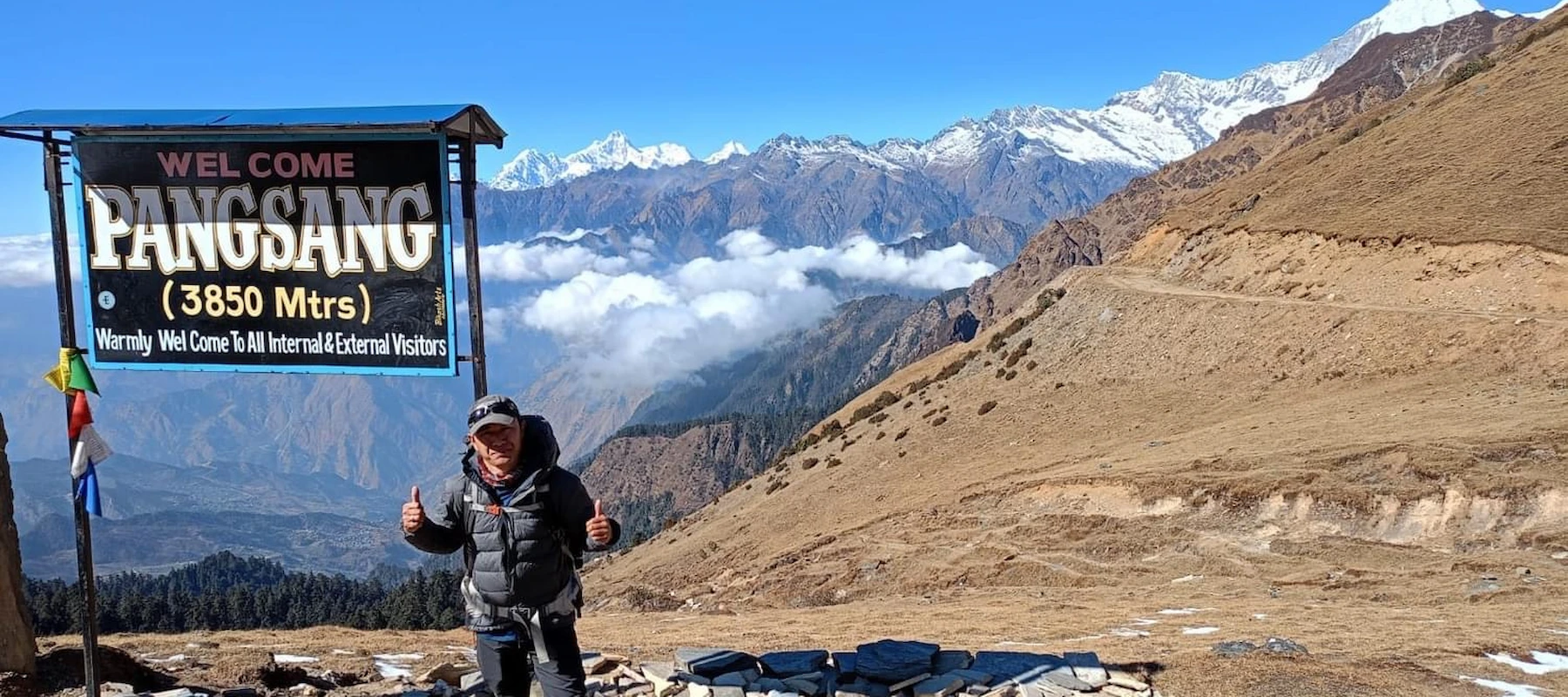
Pangsang Pass trek is not the kind of experience that gets written about in broad, sweeping terms. It is the kind of experience that gets described at a dinner table, months after the trip, when someone asks what the best thing was and you pause, because you’re not sure how to explain what standing on a high ridge in the Ganesh Himal at dawn actually felt like, with four peaks of the same mountain range spread in front of you and almost nobody else alive nearby.
That is Pangsang Pass. That is why it sits at the centre of the Ruby Valley Trek — not as a backdrop, but as the point the entire trail builds toward.
At Alliance Treks, our founder Kul Gurung was born in Ruby Valley. Our guides have crossed Pangsang Pass in every season, in every kind of weather, more times than they count. This blog is everything they know about the pass — its altitude, its views, its cultural weight, how to reach it, and how it connects to its higher sibling, Singla Pass, which takes the experience a full 200 metres higher and several degrees more remote.
Pangsang Pass (also written as Pangsang La, Pang Sang Pass, or Pangsang Danda) sits at an altitude of 3,800 metres (12,467 feet) above sea level in the Ganesh Himal region of central Nepal — a high ridge between the Rasuwa and Dhading districts that forms the most dramatic single point on the Ruby Valley Trek.
Pangsang pass trek is the highest point of the Ruby Valley Trek Nepal, lying at an elevation of 3,800 metres above sea level. At the top, it rewards trekkers with magnificent mountain views — Ganesh Himal I, II, III, and IV, and the Langtang and Manaslu ranges.
The pass sits between the village of Somdang to the north and the Tipling valley to the south — a high crossing point that connects two of the most culturally significant Tamang communities on the entire route. The approach from either side involves sustained climbing through rhododendron forest, alpine meadow and open ridge — a full day’s work that earns the arrival.
Pangsang Danda is a beautiful high point between Somdang and Tipling village. From the pass itself, the ground drops steeply on both sides — north toward the forested slopes above Somdang, south toward the wide terraced valley around Tipling. Standing at the top with the Ganesh Himal laid out in front of you, the sense of being at a genuine watershed between two worlds — two valleys, two communities, two completely different landscapes — is one of the more powerful geographical feelings available on any Nepal trek.
3,800 metres is not trivial altitude. It sits firmly in the zone where most trekkers first notice that breathing requires more conscious effort, that the pace naturally slows, and that the cold on a still morning has a specific quality that lower elevations don’t produce.
For reference: Pangsang Pass sits higher than the Thorong La base camp on the Annapurna Circuit, higher than the famous viewpoint at Poon Hill (3,210m), and considerably higher than the Everest Base Camp trek‘s Namche Bazaar acclimatization stop (3,440m). It is the kind of altitude that demands respect without requiring the technical preparation of a 5,000m crossing.
The Ruby Valley Trek is a low-elevated hiking destination compared to other trekking destinations in Nepal. The chances of altitude sickness are very low compared to other hiking destinations, but awareness remains important.
For the Pangsang Pass trek, the practical altitude advice is straightforward:
The mountain panorama from Pangsang Pass is the view that most trekkers on the Ruby Valley Trek describe first when they talk about the experience. And it delivers something specific that the more famous vantage points of Nepal — Poon Hill, Kala Patthar, Renjo La — don’t offer in the same way: near-total solitude alongside it.
From Pangsang Danda, trekkers can enjoy magnificent views of Ganesh Himal, Langtang Himal, Paldor Peak, and Manaslu Himal.
The four peaks of Ganesh Himal — named after the elephant-headed Hindu deity of good fortune — dominate the northern horizon from the pass. Ganesh I (7,422m), the highest of the group, is visible as a dramatic pyramid of ice and rock above the lower ridge. Ganesh II, III, and IV extend along the range in a sequence that rewards patient study from the pass.
To the east, the stunning mountain ranges of Manaslu and Langtang are also visible from the pass, along with just a touch of the Annapurna.
Paldor Peak — a distinct, pyramid-shaped peak at 5,928m that is popular as a trekking peak for acclimatization — appears sharply defined above the ridge to the north. Its clean profile makes it one of the most photogenic elements of the Pangasang Pass panorama.
The view of sunrise and sunset from Pangasang Pass is especially spectacular. As the pass can be cold and windy, trekkers are advised to put on warm clothes.
The physical crossing of Pangsang Pass on the Ruby Valley Trek is only part of what the pass represents. In the Tamang cultural framework of the Ganesh Himal communities, high mountain passes are not simply geographical features — they are boundaries between worlds, places of spiritual transition, marked with prayer flags and stone cairns that accumulate the intentions of everyone who has crossed before.
Pangsang Pass holds cultural importance in Buddhist practices and is therefore decorated with prayer flags and stone cairns.
The prayer flags at the top of Pangsang Pass are renewed by Tamang villagers as part of their seasonal movements between lower and upper pastures. The colour sequence — blue, white, red, green, yellow — represents sky, wind, fire, water, and earth in Tibetan Buddhist cosmology. Standing at the pass surrounded by these flags, with the wind moving through them and the Ganesh Himal visible above — it is a moment that sits differently from the rest of the trek, and most trekkers feel that without being told why.
| Detail | Information |
| Altitude | 3,842 m |
| District | Rasuwa / Dhading Border |
| Trek Type | Teahouse / Homestay |
| Trek Duration | 7–12 Days from Kathmandu |
| Approach | Via Gatlang and Somdang |
| Views | Ganesh Himal I–IV, Langtang Himal, Manaslu, and Paldor Peak |
| Cultural Significance | Buddhist prayer flags, traditional Tamang seasonal pasture crossing, and local spiritual importance |
The Pangsang Pass trek accommodates several itinerary lengths depending on which passes you include and how much time you have.
7 Days — Pangsang Pass Only (Teahouse Trek) The standard Ruby Valley itinerary crossing Pangasang Pass on a teahouse route. Suited for moderate trekkers with a week available. Starts from Syabrubesi or Dhading Besi.
9–10 Days — Pangsang Pass + Cultural Extension The standard pass crossing combined with additional days in Tipling, the ruby mine visit at Chumar (on the extended variant), and deeper time in Tamang village communities. Suits trekkers equally interested in culture and mountain scenery.
12 Days — Pangsang Pass + Singla Pass + Three Kunda Lakes The full Ruby Valley experience — both passes, all three sacred lakes, and the twin waterfalls of Ganga and Jamuna. Requires camping capability for the Singla Pass sections. Suited for experienced trekkers comfortable with remote conditions and a mix of teahouse and camping nights.
Custom variants combining the Ruby Valley passes with the Tamang Heritage Trail, Gosaikunda Trek, or the Manaslu Circuit approach are possible — contact Alliance Treks to discuss options based on your available time.
Starting points:
Standard north approach via Syabrubesi: Syabrubesi → Gatlang → Somdang → Pangasang Pass → Tipling → trail continues depending on variant
Standard south approach via Dhading Besi: Dhading Besi → Sertung → Tipling → Somdang → Pangsang Pass → Gatlang → Syabrubesi
Both approaches are valid — the direction depends on your itinerary design and preferred entry/exit logistics. Alliance Treks arranges private transport from Kathmandu to whichever starting point your itinerary uses.
| Season | Conditions | Recommended? |
|---|---|---|
| October–November (Autumn) | Clear skies, stable weather, and the best mountain views. | ⭐⭐⭐⭐⭐ Best season |
| March–May (Spring) | Blooming rhododendrons, pleasant temperatures, and variable weather. | ⭐⭐⭐⭐ Excellent |
| June–September (Monsoon) | Heavy rain, lush landscapes, and leeches on lower trails. | ⭐⭐⭐ Possible with an experienced guide |
| December–February (Winter) | Cold temperatures, possible snowfall at the pass, and fewer trekkers. | ⭐⭐ Experienced trekkers only |
The Pangsang Pass crossing is most reliable in October–November when trail conditions are stable, mountain visibility is at its annual peak, and the pass itself is free of snow. The Spring window brings the rhododendron forests of the lower Ruby Valley into bloom — a completely different aesthetic reward from the autumn clarity.
The Pangsang Pass trek is rated moderate. The pass crossing day itself is the most demanding single day of the standard Ruby Valley itinerary — a long ascent from the teahouse camp to the ridge, followed by a sustained descent on the other side.
The Ruby Valley Trek is generally rated as moderate, suitable for individuals with a reasonable level of physical fitness and some hiking or trekking experience. The trek reaches a maximum altitude of around 3,850m at Pangsang Pass, with daily hikes of 4 to 6 hours over trails that include gradual ascents and descents, uneven paths, and occasional rocky sections.
The Singla Pass variant steps this up to moderate-strenuous, adding altitude, camping logistics, and trail sections with less infrastructure support. Prior trekking experience is strongly recommended for the Singla extension.
Pangsang Pass is the geographic and emotional centre of the Ruby Valley Trek — the point the approach days build toward and the reference point every trekker carries home.
Getting there well means having a team who knows the trail from the inside. We know the pass in clear October light and in monsoon mist. We know which side of the ridge gives the first unobstructed view of Ganesh Himal and how early you need to start to reach the top before the clouds build.
Whether you want the standard 7-day Pangsang Pass trek, the extended three-pass variant, or a customized itinerary combining Ruby Valley with Gosaikunda or the Tamang Heritage Trail — we build it around you.
Get a Free Custom Ruby Valley Itinerary — Free Consultation →
Pangsang Pass (Pangsang La) sits at 3,842 metres (12,604 feet) above sea level and is the highest point of the standard Ruby Valley Trek teahouse itinerary.
Pangsang Pass (3,842m) is accessible on a teahouse trek, while Singla Pass (4,020–4,045m) is higher, more remote, requires camping, and holds deep Tamang cultural and religious significance. Both are located in the Ruby Valley region but follow different trekking routes.
From Pangsang Pass, trekkers can enjoy panoramic views of Ganesh Himal I–IV, Langtang Himal, Manaslu, Paldor Peak, and, on exceptionally clear days, parts of the Annapurna range.
The standard teahouse itinerary crossing Pangsang Pass takes 7 days from Kathmandu. Extended routes including Singla Pass and the three sacred lakes (Kalo Kunda, Seto Kunda, and Ganesh Kunda) typically take 10–12 days.
Yes. Trekkers with a reasonable level of fitness can complete the trek. The pass crossing is physically demanding but not technical, and no climbing equipment or mountaineering experience is required. A licensed guide is recommended for a safe and enjoyable journey.
Singla Pass is a sacred site in Tamang Bon tradition. Its name means “village deity” in the local language. During Janai Purnima, the pass hosts an important cultural gathering where Tamang shamans (Jhakris) perform traditional rituals and pass spiritual knowledge to their disciples.
No. The standard Pangsang Pass route is fully supported by teahouses and homestays. Camping is only required if you continue to the Singla Pass extension, where accommodation is unavailable beyond Sertung village.
Yes. The Ruby Valley route can be combined with the Tamang Heritage Trail, the Gosaikunda Trek, or the Manaslu Circuit approach. Many trekking agencies also offer customized itineraries based on your available time and interests.
Alliance Treks & Expedition Pvt. Ltd. Once is not enough for naturally and culturally Himalayas