(Viber, Whatsapp, Cell) +977 9851022814

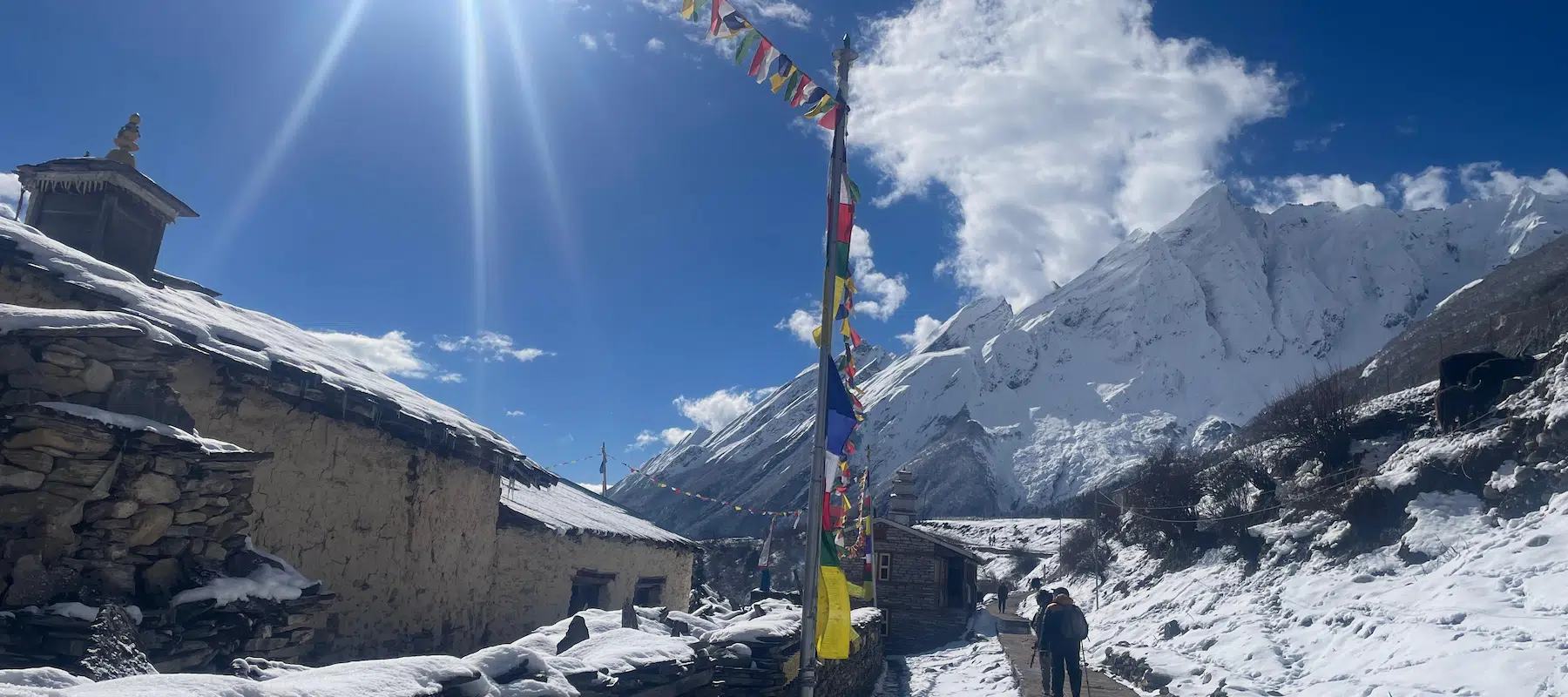
Manaslu Circuit Trek guide 2026 — this is the search that brings most people here, and for good reason. The Manaslu Circuit is one of Nepal’s most rewarding long treks, but it’s also one that comes with genuine complexity: restricted area permits, high-altitude passes, remote terrain, and an infrastructure that’s far less developed than the Annapurna or Everest regions.
People have questions. Good, specific questions. And most of them deserve a straight answer rather than a vague “it depends.”
At Alliance Treks, we’ve been guiding trekkers through the Manaslu region for 34 years. These are the 20 questions we get asked most — answered without the brochure language.
The Manaslu Circuit Trek is a high-altitude trekking route that circles Manaslu, the world’s eighth-highest mountain at 8,163 metres, in Nepal’s Gorkha District. The trail follows the Budhi Gandaki River valley before crossing the spectacular Larkya La Pass (5,106m) and descending into the Annapurna region. It is widely regarded as one of the finest trekking circuits in the Himalayas, offering exceptional mountain scenery, rich Tibetan-influenced culture, and a remote wilderness experience.
The standard Manaslu Circuit Trek itinerary takes 14–18 days, depending on your pace, starting point, and whether you include the Tsum Valley side trip. Most guided itineraries last 14–16 days from Kathmandu and back, including transportation. Shorter itineraries that skip acclimatization days are available but are generally not recommended due to the demands of high altitude.
The Manaslu Circuit Trek is rated as strenuous and is not considered a beginner trek. Trekkers typically walk 5–8 hours per day, cross the 5,106-metre Larkya La Pass, and travel through remote areas with limited rescue infrastructure. While no technical climbing is required, good cardiovascular fitness, previous multi-day trekking experience, and proper acclimatization greatly improve your chances of completing the trek comfortably.
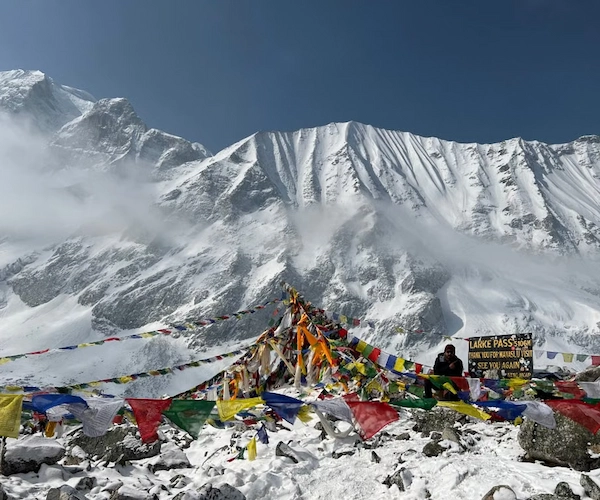
The highest point is Larkya La Pass at 5,106 metres. Usually crossed on Day 12 or 13 of the itinerary, it is the most physically demanding day of the trek, involving a pre-dawn start, a sustained climb to the pass, and a long descent into the Annapurna region. For many trekkers, it is also the highlight of the entire journey.
The Manaslu Circuit Trek covers approximately 177–200 kilometres, depending on the route variation and any optional side trips. Daily trekking distances average 12–18 kilometres with significant elevation gain and loss. Including the drive to and from Kathmandu, the total journey distance is considerably greater.
The Manaslu Circuit Trek requires four permits: the Manaslu Restricted Area Permit (RAP), the Manaslu Conservation Area Permit (MCAP), the Annapurna Conservation Area Permit (ACAP), and a TIMS Card. Because Manaslu is a restricted area bordering Tibet, the RAP is mandatory and can only be obtained through a registered trekking agency. Alliance Treks arranges all required permits as part of every Manaslu Circuit Trek package.
No. Independent trekking is not permitted on the Manaslu Circuit. Nepal’s restricted area regulations require all trekkers to be accompanied by a licensed, government-registered guide. Besides being a legal requirement, an experienced guide greatly improves safety, navigation, and your cultural experience throughout this remote Himalayan region.
The Manaslu Restricted Area Permit (RAP) costs USD 100 per person for the first seven days during the peak season (September–November) and USD 75 during the off-season (December–August), with additional daily fees for longer stays. The Manaslu Conservation Area Permit (MCAP) and Annapurna Conservation Area Permit (ACAP) each cost approximately USD 30 for foreign trekkers. Permit fees are subject to change, so it is best to confirm the latest rates with Alliance Treks or the Nepal Tourism Board before booking.
A fully guided Manaslu Circuit Trek package from Kathmandu — including permits, a licensed guide, porter, accommodation on the trail, all meals during the trek, and transport — typically costs between USD 1,200 and USD 2,000+ per person, depending on group size, itinerary length, and accommodation standard. Furthermore, solo travelers generally pay more because guide and porter costs are shared among fewer people. Moreover, international flights, Kathmandu accommodation, travel insurance, personal trekking gear, guide and porter tips, and personal expenses are not usually included. Consequently, Alliance Treks can provide a personalized quotation based on your travel dates, group size, and preferred itinerary.
Yes. The Manaslu Circuit Trek is generally more expensive than popular routes such as the Annapurna Circuit or Langtang Valley Trek because of its restricted area permit fees and the mandatory licensed guide requirement. Furthermore, organizing logistics for a remote trekking region also increases the overall cost. Moreover, many trekkers believe the additional expense is justified by the quieter trails, spectacular mountain scenery, and authentic cultural experiences found in villages that receive far fewer visitors than Nepal’s busier trekking routes. Consequently, the Manaslu Circuit is widely regarded as one of Nepal’s best-value premium trekking experiences.
October and November are widely considered the best months for the Manaslu Circuit Trek, offering stable weather, crystal-clear mountain views, comfortable daytime temperatures, and the highest chance of crossing Larkya La Pass in good conditions. Furthermore, March to May is an excellent alternative, with blooming rhododendron forests and pleasant trekking temperatures. Moreover, winter (December to February) brings heavy snowfall and the possibility of Larkya La becoming impassable, while the monsoon season (June to September) increases landslide risk and makes lower trail sections muddy and slippery. Consequently, autumn remains the top choice, with spring a close second.
The weather changes significantly as you gain altitude. Lower sections around Arughat and Soti Khola are warm and subtropical, while villages above 3,500 metres such as Samagaon and Samdo experience much colder temperatures, especially at night. Furthermore, conditions at Larkya La Pass (5,106m) can drop well below freezing even during the peak trekking season, with strong winds making it feel even colder. Moreover, weather in the Himalayas can change quickly regardless of the forecast. Consequently, dressing in layers and carrying a warm down jacket, thermal clothing, and waterproof outer shell is essential throughout the trek.
Accommodation on the Manaslu Circuit Trek is provided mainly in traditional teahouses. Furthermore, facilities are more basic than those found on the Everest or Annapurna routes, with simple twin rooms, shared toilets, and limited hot showers above 3,000 metres. Moreover, the route’s relatively undeveloped infrastructure is part of what makes it feel remote and authentic. Consequently, trekkers should expect clean, functional lodging rather than luxury, and carrying a warm sleeping bag is strongly recommended for higher-altitude nights.
Dal bhat is the most common and dependable meal throughout the Manaslu Circuit Trek, providing the carbohydrates and energy needed for long days on the trail. Furthermore, lower-altitude teahouses also serve dishes such as pasta, fried noodles, potato meals, eggs, and simple breakfasts. Moreover, menu choices become more limited above Samagaon, where dal bhat and noodle soups dominate. Consequently, bringing your own energy bars, nuts, dried fruit, or chocolate is recommended, particularly for the demanding day crossing Larkya La Pass.
Mobile coverage is available in the lower sections of the Manaslu Circuit and in some larger villages, but it becomes increasingly unreliable above 3,000 metres. Furthermore, a number of teahouses in places such as Jagat, Deng, Namrung, and Samagaon offer Wi-Fi, although connections are often slow and inconsistent. Moreover, long stretches of the trek have little or no internet access. Consequently, trekkers should be prepared to spend much of the journey offline and inform family or friends before beginning the trek.
Yes. Altitude sickness is one of the main challenges of the Manaslu Circuit Trek because the route reaches 5,106 metres at Larkya La Pass and includes several nights above 3,500 metres. Furthermore, symptoms such as headache, nausea, dizziness, fatigue, and loss of appetite can affect trekkers regardless of age or fitness level. Moreover, standard itineraries include an acclimatisation day at Samagaon to help reduce the risk, and many trekkers consult their doctor about using Diamox before travelling. Consequently, following your guide’s advice, ascending gradually, and carrying travel insurance with helicopter evacuation cover are essential for a safe trek.
If you become seriously ill during the Manaslu Circuit Trek, your guide will assess your condition and decide whether immediate descent or emergency evacuation is necessary. Furthermore, helicopter rescue is available from most parts of the route, making comprehensive travel insurance with evacuation coverage essential. Moreover, Alliance Treks guides are trained in wilderness first aid and altitude illness management and carry basic medical supplies throughout the trek. Consequently, you should never continue ascending with symptoms of altitude sickness, as descending remains the safest and most effective treatment.
Most Manaslu Circuit Trek itineraries begin at Soti Khola or Arughat, both reached by a scenic 6–8-hour drive from Kathmandu via the Gorkha Highway. Furthermore, some longer itineraries start from Gorkha town, adding an extra day of travel before trekking begins. Moreover, arranging private transport is the easiest and most comfortable option, especially for first-time visitors to Nepal. Consequently, Alliance Treks includes private transport from Kathmandu as part of every Manaslu Circuit Trek package.
Yes. The two most popular combinations are the Manaslu Circuit with Tsum Valley and the Manaslu Circuit with the Annapurna Circuit. Furthermore, adding Tsum Valley extends the trek by around 7–10 days and offers access to one of Nepal’s most culturally preserved Buddhist valleys. Moreover, continuing from Dharapani onto the Annapurna Circuit creates a spectacular 25–30 day journey through two of Nepal’s finest trekking regions. Consequently, these combined itineraries are ideal for trekkers with additional time who want a more immersive Himalayan adventure.
Booking begins by discussing your travel dates, group size, fitness level, and trekking goals. Furthermore, Alliance Treks prepares a personalised itinerary and transparent cost breakdown based on your specific requirements rather than offering a one-size-fits-all package. Moreover, all permits, transport, guide services, and trekking logistics can be arranged before your arrival in Nepal. Consequently, you can begin your Manaslu Circuit Trek knowing every detail has been organised in advance for a safe and enjoyable experience.
The Manaslu Circuit is one of those treks that changes how you think about what trekking can be. Remote, dramatic, culturally rich, and still quiet enough that you can hear the mountains.
If you’ve read this far, you’re already most of the way to a decision.
Book the Manaslu Circuit Trek with Alliance Treks →
Share your dates and group size and we’ll handle everything from there — permits, guide, porter, accommodation, transport, and a day-by-day itinerary built around you.
Alliance Treks & Expedition Pvt. Ltd. Once is not enough for naturally and culturally Himalayas