(Viber, Whatsapp, Cell) +977 9851022814

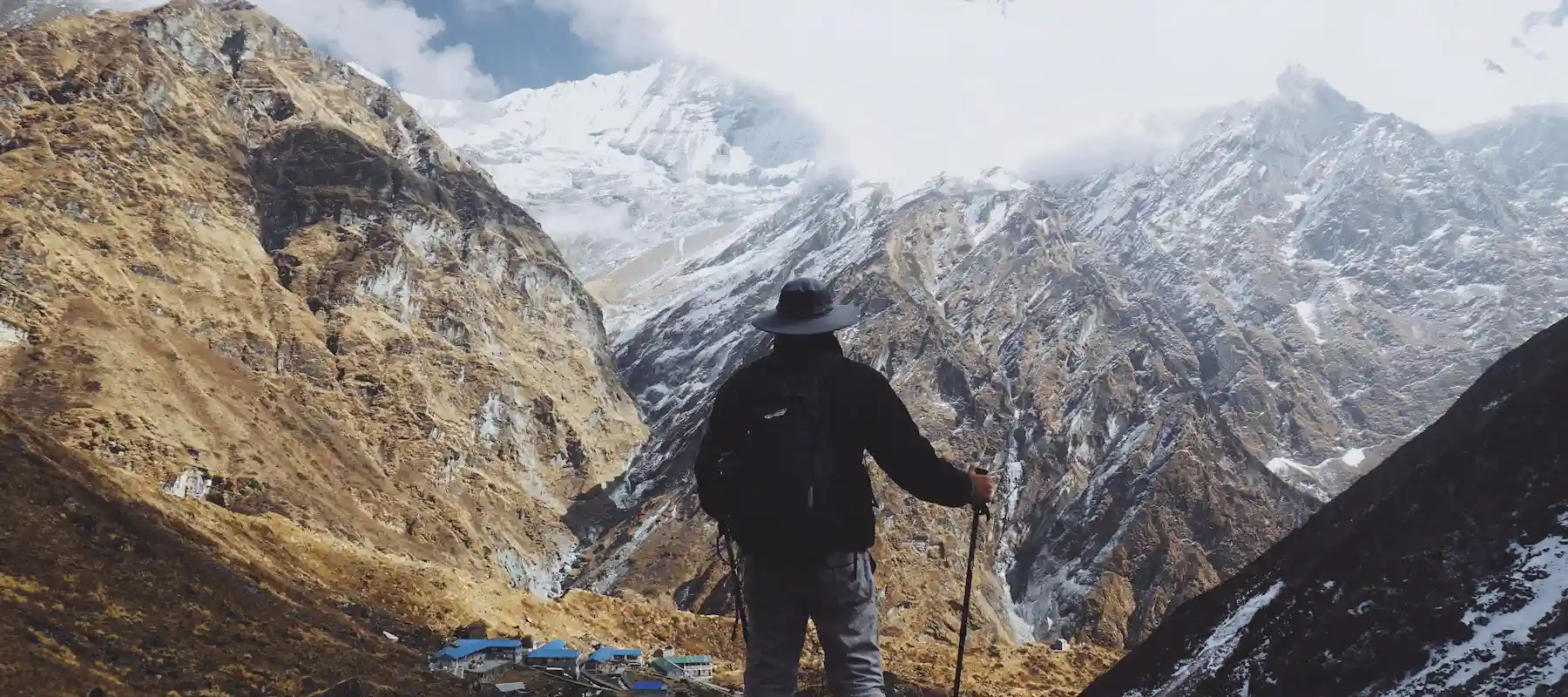
First time trekking in Nepal is one of those experiences you cannot fully prepare for, no matter how many blogs you read. And yet most of the preparation advice out there misses the things that actually catch people off guard. Not the altitude sickness — everyone mentions that. The smaller, stranger things. The fact that your knees will hurt more than your lungs. That the Lukla flight might delay your trip by two days. That four in the morning is a completely normal time to start walking. That dal bhat with unlimited refills is the most useful discovery you will make in the Himalayas.
Alliance Treks has been taking first-time trekkers through Nepal for over 34 years. We have seen what surprises people, what stops them, and what makes them come back for a second trip the following year. This is that list. Fifteen honest things. No padding, no selling, just what you genuinely need to know.
Most Nepal trekking guides tell you the same things. Best season: October or April. Altitude: go slow. Food: try dal bhat. Permits: get them. All true. None of it wrong. But first time trekking in Nepal throws up a different set of questions once you are actually on the trail — questions that generic guides don’t address because they are written for people who have not left yet, not for people who are already three days in and wondering why nobody mentioned the stone steps.
This guide is written for the person who has already decided to go. You know Nepal is extraordinary. You know it involves mountains. What you want is the unglamorous, genuinely useful stuff. Here it is.
Most first-timers pick a date and then ask which trek fits it. That is backwards. The route determines everything else — how many days you need, what permits are required, what fitness level is realistic, and what season actually suits. Pick the route first. The dates follow from there.
The route table below gives you a clear comparison of every major Nepal trek for first-time visitors. If you have ten days, you cannot do the Everest Base Camp trek properly. If you have four days, you can do Poon Hill and it will still be one of the finest things you have ever seen. Know your time before you know your destination.
Not sure which route suits you? Browse Alliance Treks trekking packages and filter by duration and difficulty. We run fixed departures on all major routes year-round.
Solo trekking on Nepal’s major routes is no longer legal for foreign nationals. Since April 2023, every trekker entering a national park, conservation area, or restricted area must be accompanied by a licensed guide from a TAAN-registered agency. This rule is actively enforced at checkpoints and the consequence of being caught without one is being turned back from the trail entirely.
This is not a minor administrative change. It affects how you book, what you budget, and what your experience looks like. A good licensed guide is also, it turns out, the best thing that can happen to your first Nepal trek. They handle permits, checkpoints, teahouse bookings, medical situations, weather calls, and cultural context. They know the trail in every season. The rule that felt like a restriction is also the reason most first-timers come back from Nepal saying it was the best trip of their lives.
Alliance Treks provides licensed, TAAN-registered guides on every trek we operate. Contact Alliance Treks to discuss your route and we will match you with the right guide.
This is the one that surprises people most during first time trekking in Nepal. Altitude sickness does not care how fit you are. The marathon runner and the person who sits at a desk all week face essentially the same risk at the same elevation with the same ascent rate. Fitness affects how hard trekking feels. Acclimatisation is a separate physiological process that requires time, not aerobic capacity.
Above 3,000 metres, the standard rule is to gain no more than 300 to 500 metres of sleeping altitude per day. Most responsible Nepal trekking itineraries build acclimatisation days at key points — Namche Bazaar on the Everest route, Manang on the Annapurna Circuit, Samagaon on the Manaslu Circuit. Do not skip them to save time. The people who skip acclimatisation days are the people who get evacuated by helicopter.
The symptoms to know: headache that does not go away, nausea, dizziness, difficulty sleeping at a new altitude, and confusion. The last one is serious. If a member of your group cannot walk in a straight line or seems confused at altitude, descend immediately. Not in the morning. Not after one more night. Now.
Read the full Alliance Treks guide to altitude sickness in Nepal before your trip. It covers every type of AMS, the Lake Louise Score, and exactly what your guide watches for every morning above 4,000m.
If your route starts with a flight to Lukla — the gateway to the Everest region — build contingency days into your schedule. Lukla’s Tenzing-Hillary Airport operates only in visual flight conditions. Fog, low cloud, wind, or rain can ground all flights for a day or more. In peak season, backlogs of stranded trekkers build quickly.
This is not a rare or unlucky event. It is a standard feature of the Everest Base Camp trek experience. Many first-timers who were told their trek was 12 days end up spending 14 or 15 days because of Lukla delays. Build at least two buffer days into your schedule at both ends. Do not book a flight home from Kathmandu the morning after your planned Lukla return date.
The Everest Base Camp trek from Alliance Treks includes contingency days in the itinerary and helicopter alternatives for genuine schedule emergencies. Ask about the helicopter backup option when booking.
Most first-timers arrive at a teahouse expecting something between a hostel and a guesthouse. The reality varies enormously by altitude. In Namche Bazaar at 3,440 metres, you will find teahouses with private rooms, hot showers, proper menus, and WiFi. At Gorak Shep at 5,140 metres, two days higher, you will find thin walls, thin mattresses, thin blankets, no hot water, and a dining room heated by a single yak-dung stove that everyone crowds around after dark.
The rule is simple: the higher you go, the more basic the accommodation. This is not a failure of the teahouse system. It is a consequence of the logistics of getting supplies to very high altitude. Manage your expectations accordingly. Bring a sleeping bag rated to at least minus ten degrees Celsius regardless of what the teahouse says it provides. Bring a thin inflatable pillow. Bring earplugs.
The food, on the other hand, is better than most people expect at almost every altitude. Dal bhat is the national trekking dish and it comes with unlimited refills. Order it and eat as much as you need. It is the most effective high-altitude calorie delivery system available in the Himalayas and it costs roughly three to four US dollars.
Ask anyone who has done first time trekking in Nepal what they wish they had trained more and the answer is almost always knees. Not cardiovascular fitness, not lung capacity. Knees. Specifically the ability to descend stone steps for three to five consecutive hours at the end of a long day when you are already tired.
Nepal’s trails are not gentle paths. Approximately 60 percent of major routes involve stone steps — hand-cut, uneven, sometimes steep, sometimes slippery. The Ulleri staircase on the Poon Hill route has over 3,000 steps. The descent from Tengboche on the Everest route drops 600 metres on stone. The descent from Annapurna Base Camp is a long, sustained downhill that taxes the knee joint repetitively for hours.
The preparation: stair training with a loaded pack, three to four times per week, for six weeks before your trip. Go up and come down. The descents specifically. Do this and day two of your trek will feel manageable. Skip it and your knees will be the limiting factor, not the altitude.
Trekking poles are not optional. They reduce knee stress on descents by up to 25 percent and dramatically improve your balance on wet or uneven stone. Get them before you go. They are available in Kathmandu and Pokhara but the quality varies.
For the full difficulty breakdown and preparation guide, read Poon Hill trek difficulty — it covers what moderate trekking in Nepal actually means on the ground.
Dal bhat is Nepal’s national dish. Rice, lentil soup, vegetable curry, pickled vegetables, and sometimes leafy greens. It comes with unlimited refills. It costs three to four US dollars at most teahouses. It is the single best trekking food on the planet.
Every trekker who arrives in Nepal planning to order pasta and soup for variety ends up eating dal bhat twice a day by day three. The carbohydrate and protein combination is almost perfectly calibrated for sustained mountain activity. The unlimited refill policy means you eat exactly as much as your body needs, which at high altitude and sustained output is considerably more than you think. There is a reason the trail mantra is “Dal bhat power, 24 hour.” Say it once on the trail and watch your guide grin.
Vegetarian and vegan trekkers: dal bhat is naturally meat-free. Ask for no ghee if you are vegan — the vegetable curry is sometimes finished with clarified butter. Everything else is plant-based. Nepal is an excellent country to trek in on a plant-based diet.
For the complete food guide for vegetarian and vegan trekkers, read Nepal trekking for vegetarians and vegans.
The number one packing mistake on a first Nepal trek is overpacking. A porter can carry your main bag. Your daypack should never exceed eight to ten kilograms. Anything heavier becomes a genuine physical burden on long ascent days. The items below are the ones that matter. Everything else is optional.
| Item | Specification | Why It Matters |
|---|---|---|
| Trekking Boots | Waterproof, ankle support, worn in | Non-negotiable. New boots on day one often mean blisters by day two. |
| Trekking Poles | Two collapsible poles | Your knees will thank you on every descent. |
| Down Jacket | 600+ fill, packable | Essential for evenings above 3,000 metres. |
| Rain Jacket | Waterproof, breathable | Even in autumn, afternoon showers are common. |
| Sleeping Bag | Rated to at least -10°C | Teahouses provide blankets, but they become inadequate at higher elevations. |
| Headlamp | With spare batteries | Needed for early-morning summit hikes and power outages. |
| Water Bottles | Two 1-litre bottles, wide-mouth preferred | Carry at least 2 litres. Water purification is recommended. |
| Sun Protection | SPF 50+ sunscreen, lip balm, UV sunglasses | High-altitude UV exposure can cause rapid sunburn. |
| First Aid Kit | Altitude medication, blister plasters, rehydration salts | Preparedness for common trekking issues is essential. |
| Power Bank | 20,000mAh minimum | Charging devices at teahouses can be expensive. |
| Dry Bags | 2–3 lightweight bags | Protects electronics and clothing from moisture. |
| Snacks | Personal favourites, high calorie | Ideal for filling gaps between meals and maintaining energy. |
One important note on boots: wear them before you arrive. New boots on day one of a Nepal trek produce blisters by day two. They need to be broken in with at least fifteen to twenty hours of hiking before the trail. If you buy boots specifically for this trip, start wearing them on walks immediately.
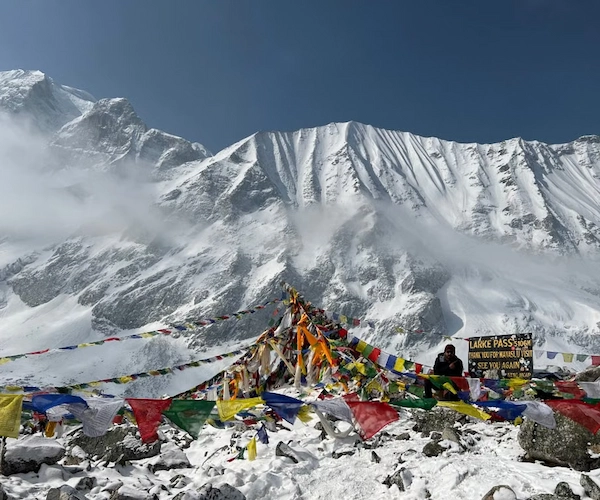
On any trek that involves a viewpoint summit — Poon Hill, Kala Patthar, the Larke La Pass, Island Peak — the alarm goes off between 3:30 and 5:00am. This is not negotiable and it is not your guide being sadistic. It is the mountain’s schedule.
Mountain weather follows a pattern: mornings are clear and calm. By midday, clouds build from the valleys. By afternoon, visibility at altitude is often poor and conditions can deteriorate quickly. The window for views, photography, and pass crossings is the early morning. Miss it and you may stand on Kala Patthar staring into cloud where Everest was supposed to be.
The psychological benefit is real too. Watching the sun rise over the Himalaya — the slow burn from grey to gold to vivid orange across the snow faces of 8,000-metre peaks — is the moment that most trekkers describe as the best of their lives. It happens at 5:45am. You will not regret the alarm.
Nepal’s trekking permit system changed significantly in 2026. The TIMS card has been replaced in some regions, remains in force in others, and is being phased out everywhere as electronic versions roll in. The mandatory guide rule means independent permits no longer apply — everything is now agency-arranged.
What you need depends on where you are going. Everest region: Sagarmatha National Park permit plus Khumbu local fee. Annapurna region: ACAP permit. Langtang: LCAP plus TIMS. Manaslu: MCAP plus restricted area permit. Each region has different costs, different checkpoint enforcement, and different application processes.
The practical takeaway: do not try to arrange permits yourself the day before your trek. Use your trekking agency. Alliance Treks arranges every permit as part of every package, confirmed before your departure briefing in Kathmandu. You arrive at the trailhead with everything in order.
Read the full breakdown in the Nepal trekking permits 2026 guide — every permit, every cost, every region.
Nepal has two prime trekking seasons: autumn from September to November and spring from March to May. Both are excellent. Both have trade-offs. October gives the clearest skies of the year. April gives rhododendrons in full bloom. November gets colder and sometimes sees early snow at altitude. May brings the first hints of monsoon in the final weeks.
The monsoon runs from June through August. Most standard routes become challenging — heavy rain, leeches on forest sections, poor visibility, and trail damage. It is not impossible to trek in monsoon but it requires experience and reduced expectations. A small number of routes in rain-shadow zones — Upper Mustang, Upper Dolpo — are excellent during monsoon precisely because the rain does not reach them.
Winter from December to February brings cold and snow at altitude. The main routes remain open but teahouses above 4,000 metres may be closed, and passes can be snow-covered. Experienced winter trekkers find genuine solitude and exceptional mountain clarity. For first time trekking in Nepal, stick to October or April.
Nepal has better trail connectivity than most people expect — and worse than they hope for. On the Everest Base Camp route, NTC 4G covers most of the main corridor. Everest Link prepaid WiFi cards provide broadband from Lukla to Gorak Shep. On the Annapurna routes, Ncell and NTC provide good 4G on lower sections, fading above 3,500 metres. On Manaslu and remote western routes, plan for largely offline days.
Teahouse WiFi exists on most major routes for a fee of USD 3 to USD 5 per session. Speeds handle messaging and email. Video calls are marginal. Upload anything large in the morning before other guests are awake and sharing the bandwidth.
NTC (Nepal Telecom) is the better SIM card for high altitude. Ncell is faster in Kathmandu and Pokhara but fades above Namche on the Everest route and above Manang on the Annapurna Circuit. Get both at Kathmandu airport. It costs under USD 5 total.
Nomads combining work and trekking should read the full guide to digital nomad trekking Nepal — route-by-route connectivity, coworking spaces in Pokhara and Kathmandu, and SIM card advice.
Nepal trekking is genuinely affordable. It is not free. First-time trekkers consistently underbudget in three specific areas: teahouse costs at altitude, permit fees, and the buffer for unexpected expenses.
Teahouse costs increase with altitude. A room that costs NPR 500 in a lower village costs NPR 800 to NPR 1,200 at Namche and NPR 1,500 or more at Gorak Shep. Meals follow the same pattern. WiFi charging, hot showers where available, and basic supplies all carry a premium above 4,000 metres. A realistic daily spend on the EBC route is USD 40 to USD 60 per person for accommodation and food, not including guide and porter costs.
The buffer is for the Lukla flight delay accommodation, the unexpected medical expense, the extra night in Kathmandu when you arrive exhausted and need one more day before the trail. Budget at least 15 percent above your main estimate for the unexpected. Nepal is not expensive by global standards. But being under-resourced in the mountains is a specific kind of stressful that is easy to avoid with a little financial planning.
Leave your full itinerary — route, overnight stops, expected dates — with someone at home before you leave. Share your guide’s name and your trekking agency’s contact details. Check in when you have signal. This is not paranoia. It is basic mountain safety and it costs nothing.
Alliance Treks maintains daily contact with all guides on remote routes via satellite phone. Our Kathmandu office tracks group positions and is reachable 24 hours a day for emergency situations. For your own peace of mind and your family’s, register your trek with your country’s embassy in Kathmandu if the option is available. Most major western embassies have a traveller registration service.
Everyone talks about the destination. Everest Base Camp. Poon Hill. Annapurna Base Camp. The view from the top. What nobody prepares you for is how good the walking itself is. The trail through the Dudh Koshi valley below Namche. The rhododendron forest between Ulleri and Ghorepani in April. The suspension bridges on the Manaslu Circuit swaying above the Budhi Gandaki. The moment a Gurung family invites you in for tea in a village that does not appear on any tourist map.
These are the things trekkers talk about years later. Not the summit photo. The in-between moments. First time trekking in Nepal teaches you, quickly, that the journey really is the destination. It is not a cliché on a Himalayan trail. It is what the trail actually delivers, consistently, every day.
Go slowly. Look up. Ask your guide about the village you are passing through. Eat at the teahouse where the family seems warmest. Let the day end naturally rather than pushing for extra distance. The mountains are not going anywhere. The moments between them pass faster than you expect.
Here is a clear comparison of the most popular Nepal trekking routes for first-time visitors. Duration, max altitude, difficulty grade, and what each trek is best for:
| Trek | Duration | Max Altitude | Grade | Best For |
|---|---|---|---|---|
| Poon Hill | 4–5 days | 2,874m | Beginner | Spring rhododendron blooms and Annapurna sunrise views |
| Annapurna Base Camp | 7–10 days | 4,130m | Moderate | Mountain sanctuary, glacier amphitheatre, and varied terrain |
| Langtang Valley | 5–7 days | 3,870m | Moderate | Quiet trails, rich culture, and easy access from Kathmandu |
| Everest Base Camp | 12–14 days | 5,364m | Strenuous | Khumbu region, Sherpa culture, and iconic Everest views |
| Annapurna Circuit | 14–18 days | 5,416m | Strenuous | Diverse landscapes, Thorong La Pass, and full Himalayan immersion |
| Manaslu Circuit | 14–17 days | 5,160m | Challenging | Remote wilderness, restricted region, and authentic mountain culture |
| Upper Mustang | 10–14 days | 3,800m | Moderate | Desert landscapes, ancient kingdom, and unique Tibetan culture |
| Mardi Himal | 5–6 days | 4,500m | Moderate | Peaceful trail with close-up Machhapuchhre views |
For a detailed difficulty breakdown of the most popular beginner route, read Poon Hill trek difficulty. For the full Everest versus Annapurna comparison, read EBC vs ABC trek.
Yes. Nepal is consistently rated one of the safest trekking destinations in Asia. The 2026 mandatory guide requirement adds a further layer of safety — a licensed guide handles emergencies, medical situations, and route decisions. The main risks on the trail are altitude sickness, falls on uneven terrain, and weather-related delays. All three are manageable with the right preparation, the right guide, and realistic expectations about mountain conditions.
It depends on your route. Poon Hill requires a moderate level of fitness — the ability to walk four to six hours per day on uneven terrain. Everest Base Camp requires solid cardiovascular fitness and specific knee conditioning for the long descents. No technical mountaineering skills are required on any standard Nepal trekking route. The most effective preparation is consistent walking or hiking three to four times per week for six to eight weeks before your trip, including stairs with a loaded pack.
Solo trekking without a licensed guide is no longer permitted in national parks, conservation areas, or restricted areas. This covers every major Himalayan trekking route. Day hikes near Kathmandu and Pokhara that do not enter protected areas are unaffected. For multi-day routes, all foreign nationals must book through a TAAN-registered agency with a licensed guide. Alliance Treks offers solo traveller options — joining a small group or booking a private guided departure — on all routes.
October is the single best month for a first Nepal trek. Skies are clear, trails are dry, temperatures are manageable at all altitudes, and the mountain views are at their sharpest after the monsoon has washed the atmosphere clean. April is the best spring option, particularly on Annapurna routes where the rhododendron forests in full bloom add a spectacular visual layer to the trail. Both months book up early. Three months advance planning is the minimum for a well-organised October departure.
Total costs vary significantly by route, duration, and service level. A realistic budget for the Poon Hill trek runs from USD 600 to USD 900 per person for a guided five-day trip including permits, guide, accommodation, and meals. The Everest Base Camp trek ranges from USD 1,400 to USD 2,500 depending on agency quality, group size, and the Lukla flight. Alliance Treks provides full transparent cost breakdowns with every package quote. Contact us with your preferred route and dates for a personalised estimate.
First time trekking in Nepal is one of the most rewarding things you can do with two weeks and a reasonable level of fitness. The mountains are extraordinary. The teahouses are warm. The food is better than it has any right to be at 4,000 metres. The guides are exceptional. The permit system is manageable when you use a proper agency. The alarm at 4am is worth it every single time.
Alliance Treks has been helping first-time trekkers navigate all of this for over 30 years. We know the routes, the checkpoints, the teahouses, and the moments that make people come back. If you have questions the guide did not answer, ask us directly.
Plan your first Nepal trek with Alliance Treks — www.alliancetreks.com
Alliance Treks & Expedition Pvt. Ltd. Once is not enough for naturally and culturally Himalayas