(Viber, Whatsapp, Cell) +977 9851022814

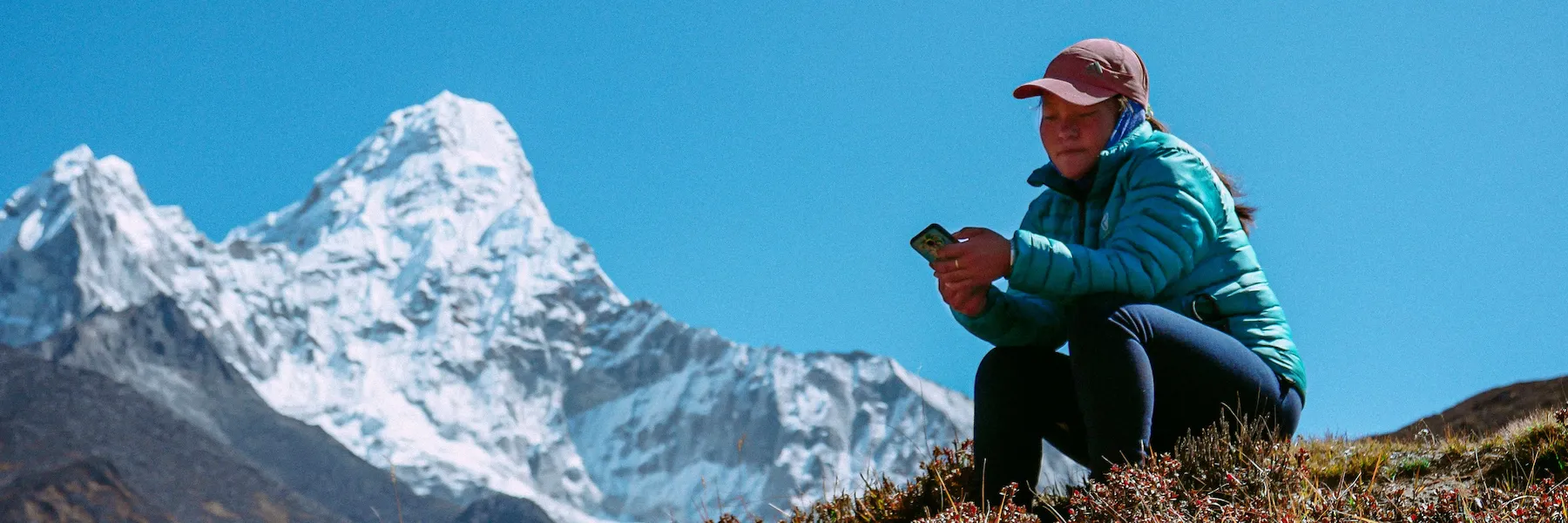
Digital nomad trekking in Nepal is no longer a contradiction in terms. It was, once. Ten years ago, getting online above Namche Bazaar meant finding a satellite phone and managing expectations. Now, in 2026, you can send client emails from a teahouse at 3,440 metres while Ama Dablam fills the window behind your laptop screen. Furthermore, the Khumbu Valley has 4G coverage across most of its main trekking corridor. Moreover, Pokhara has dedicated coworking spaces with reliable fibre internet. Additionally, Nepal is actively developing a digital nomad visa to formalise what many remote workers have already been doing for years. Consequently, the combination of extraordinary trekking terrain and surprisingly functional mountain connectivity makes Nepal one of the most interesting digital nomad destinations on Earth right now.
That said, it pays to be honest. Furthermore, Nepal’s mountain internet is not your city’s fibre connection. Moreover, speeds are shared across teahouses full of trekkers, weather disrupts satellite signals, and power cuts happen. Additionally, some of the best trails in Nepal are still gloriously offline. Consequently, this guide is written for nomads who want to understand the reality — which routes work, which coworking spaces to use in the city, what SIM cards to buy, and how to structure a trip that combines actual productive work days with actual Himalayan trekking. Alliance Treks has been helping trekkers plan Nepal trips for over 30 years. We know both the trails and the connectivity realities on the ground.
Whether you are planning a short trek between work sprints or a longer expedition, the Alliance Treks trekking packages can be tailored around your schedule and connectivity needs.
Nepal’s internet infrastructure has improved dramatically in the last five years. Furthermore, by 2025, internet penetration had reached approximately 79 percent nationally. Moreover, Nepal’s government “IT Decade” initiative, running from 2024 to 2034, specifically targets the expansion of connectivity into remote and rural areas. Additionally, mobile connectivity in Nepal already exceeds 124 percent — meaning more active SIM cards than people, because many carry two. Consequently, what was once a connectivity desert has become, in the most-visited corridors, a surprisingly workable digital environment.
Kathmandu and Pokhara are genuine digital nomad cities in 2026. Both have coworking spaces, reliable city WiFi, and affordable accommodation. Furthermore, Pokhara in particular has become a hub for remote workers who want mountain views without being on the trail. Moreover, the lake city’s laid-back pace and easy access to day hikes and short treks make it ideal for work-life balance in the most literal sense. Additionally, Kathmandu suits nomads who need faster internet, more urban amenities, and proximity to the country’s main travel hub. Consequently, most digital nomads use one of these cities as a base and take treks as extended breaks rather than trying to work from the mountains full-time.
Teahouse WiFi on Nepal’s main trekking routes ranges from functional to frustrating. Furthermore, most teahouses and lodges along the Everest, Annapurna, Poon Hill, and Langtang routes offer WiFi for a small fee. Moreover, the typical cost is between USD 3 and USD 5 per session. Additionally, speeds range from roughly 512 Kbps to 2 Mbps on a good day. Consequently, video calls are mostly off the table. Emails, messaging, document uploads, and light browsing work fine.
The evening bandwidth crunch is real. Furthermore, when twenty trekkers in the same lodge all try to upload photos after dinner, the shared connection slows to almost nothing. Moreover, the smart move for working trekkers is to do anything internet-dependent early in the morning, before most guests are awake. Additionally, cloudy or stormy weather degrades satellite-based connections significantly. Consequently, planning deadlines around trek days is genuinely important — do not promise a client a deliverable on your Larke La Pass crossing day.
Note: Do not rely on teahouse WiFi for video conferencing above 3,000 metres. Bandwidth is shared. Speeds are unpredictable. Weather disrupts signals without warning. Plan your video call days to coincide with your rest days in larger villages like Namche Bazaar, Chhomrong, or Kyanjin Gompa where connectivity is most stable.
Two mobile networks dominate Nepal: NTC (Nepal Telecom) and Ncell. Furthermore, both sell SIM cards at Tribhuvan International Airport arrivals hall in Kathmandu for roughly NPR 100 to NPR 200 — about USD 1.50. Moreover, data plans are affordable and easy to top up at any mobile shop or via USSD codes on your phone. Additionally, the general rule for trekking above 4,000 metres is simple: NTC wins. Consequently, if you have a dual-SIM phone, carry both. Use Ncell for fast 4G in Kathmandu and Pokhara, switch to NTC above Namche or above Dingboche.
NTC is government-owned and slower in cities but significantly better at high altitude. Furthermore, it has been actively expanding 4G towers across the Khumbu region, with a December 2025 government announcement targeting further coverage expansion toward Everest Base Camp. Moreover, NTC coverage has been confirmed at Lukla, Phakding, Namche Bazaar, Tengboche, Dingboche, Lobuche, Gorak Shep, and Kala Patthar. Additionally, NTC activate data code is *1415#. Consequently, for serious digital nomad trekking Nepal trips in the Khumbu, NTC is non-negotiable.
Everest Link is a dedicated high-altitude WiFi network covering the Everest Base Camp corridor. Furthermore, it provides prepaid scratch card access at teahouses from Lukla to Gorak Shep. Moreover, cards are sold in 10GB or 20GB volumes and valid for 30 days, so one card works across multiple lodges as you ascend. Additionally, speeds on Everest Link are noticeably faster than standard teahouse WiFi. Consequently, for any digital nomad trekking Nepal on the EBC route, buying an Everest Link card in Namche Bazaar is the single best connectivity decision you will make.
Note: Buy your SIM cards at Kathmandu airport arrivals, not in Thamel. Airport prices are fixed and fair. Thamel vendors sometimes charge inflated rates for tourists. Both NTC and Ncell have official desks in the arrivals hall. Get both if you have a dual-SIM phone — total cost is under USD 5 for both cards including starter data.
Here is the complete connectivity comparison across Nepal’s seven main trekking routes for 2026:
| Route | Trail Section | WiFi Type | Coverage Quality | Best SIM | Nomad Verdict |
|---|---|---|---|---|---|
| Everest Base Camp | Lukla to Gorak Shep | Everest Link WiFi and NTC 4G | Strong coverage through much of the route | 4G coverage from Lukla to Namche; NTC performs best at higher elevations | Excellent choice for remote workers and digital nomads seeking reliable mountain connectivity |
| Annapurna Base Camp | Nayapul to ABC | Teahouse WiFi plus Ncell and NTC networks | Moderate coverage up to approximately 3,000m | Ncell and NTC work well on lower sections but weaken near Base Camp | Good option for combining trekking with remote work, particularly around Chhomrong |
| Poon Hill | Nayapul to Ghorepani | Widely available teahouse WiFi | Generally good throughout the route | Strong 4G coverage across most of the trek | One of the best trekking routes in Nepal for working travelers |
| Annapurna Circuit | Besisahar to Nayapul | Teahouse WiFi and mobile networks on lower sections | Reliable below 3,500m with interruptions higher up | Ncell performs well to Manang; NTC is generally stronger beyond | Connectivity becomes less predictable above 4,000m, so offline preparation is recommended |
| Langtang Valley | Syabrubesi to Kyanjin Gompa | Teahouse WiFi and NTC network | Moderate and steadily improving | NTC remains the most reliable option | Connectivity has improved significantly since reconstruction efforts after 2015 |
| Manaslu Circuit | Sotikhola to Dharapani | Limited connectivity above Samagaon | Low to nonexistent above 3,500m | Occasional NTC coverage only | A remote trekking route where travelers should expect extended offline periods |
| Upper Mustang | Kagbeni to Lo Manthang | Very limited connectivity, often satellite-dependent | Minimal coverage throughout most of the route | NTC offers limited service in Lo Manthang | Best approached as an offline-first trekking experience |
The Everest Base Camp route is the most connected high-altitude trekking corridor in Nepal. Furthermore, Everest Link provides reliable prepaid broadband from Lukla all the way to Gorak Shep. Moreover, NTC 4G covers most major stops from Lukla to Namche, with coverage continuing up to Dingboche and fading gradually above 4,500 metres. Additionally, Ncell offers faster speeds in Lukla and Namche but becomes unreliable above Tengboche. Consequently, the EBC corridor is the best option for nomads who want to combine serious altitude trekking with functional internet access.
The practical nomad setup for EBC: buy an Everest Link card in Namche Bazaar. Use it for emails and work tasks each morning in the teahouse before the day’s walk. Furthermore, use NTC mobile data as a backup for messages and navigation. Moreover, plan your heaviest work days to coincide with the two acclimatisation rest days — at Namche and Dingboche. Additionally, Namche Bazaar has the most reliable and fastest connection on the route. Consequently, if you need to do a video call at any point on this trek, Namche is your best chance.
Plan your EBC trek around your work schedule with Alliance Treks Everest Base Camp packages.
Poon Hill is the single best route for digital nomad trekking in Nepal if you want to stay genuinely productive. Furthermore, it is short enough to plan around a client schedule — typically four to five days. Moreover, the entire lower section of the route has strong 4G coverage on both Ncell and NTC. Additionally, Ghorepani at 2,874 metres — the main overnight stop — has teahouse WiFi that is functional for emails and messaging. Consequently, a trekker with a laptop can realistically complete a five-day Poon Hill trip with three or four offline trekking days and still deliver on client commitments.
The Pokhara base adds to the appeal. Furthermore, Pokhara is a 90-minute drive from the Poon Hill trailhead. Moreover, the city has a dedicated coworking space and several cafes with reliable fibre WiFi. Additionally, nomads often do Poon Hill as a mid-week trek and return to Pokhara for the weekend to catch up on work. Consequently, this rhythmic alternation between trail and workstation is one of the most sustainable patterns for long-term digital nomad trekking in Nepal.
Explore the Poon Hill trek with Alliance Treks — packages from four days, departures year-round.
The Annapurna Base Camp route has decent connectivity up to around 3,000 metres. Furthermore, the village of Chhomrong at 2,170 metres is arguably the best single work base on the entire route. Moreover, it has reliable teahouse WiFi, good mobile data coverage, and is positioned at the last genuinely connected point before the trail enters the Sanctuary. Additionally, spending an extra rest day in Chhomrong before or after the base camp section gives nomads a practical window to catch up on work. Consequently, ABC works well for nomads who accept the plan upfront: connected below 3,000 metres, largely offline above it.
Ghorepani at 2,840 metres has functional teahouse WiFi that handles messaging and email adequately. Furthermore, at Annapurna Base Camp itself at 4,130 metres, some lodge WiFi exists but is limited and unreliable. Moreover, mobile data via NTC or Ncell fades significantly above Bamboo at around 2,310 metres. Additionally, the ABC approach through the Modi Khola valley has excellent coverage in Jhinu Danda, Chhomrong, and Sinuwa. Consequently, ABC is a workable route for nomads with a clear-eyed plan and a deadline-free schedule above 3,000 metres.
See the full Annapurna Base Camp trek itinerary from Alliance Treks.
🔗 Internal link — “Annapurna Base Camp trek” → www.alliancetreks.com/annapurna-base-camp-trek/
Langtang is the most underrated route for digital nomad trekking Nepal in 2026. Furthermore, the valley has seen significant infrastructure improvements since the 2015 earthquake. Moreover, most teahouses now offer WiFi, and NTC is the most reliable network throughout the valley. Additionally, Kyanjin Gompa at 3,870 metres has teahouse WiFi that functions adequately for emails and light tasks. Consequently, Langtang offers a quieter, greener, less-crowded alternative to EBC with connectivity that is improving each season.
The drive from Kathmandu to Syabrubesi takes seven to eight hours. Furthermore, this makes Langtang less convenient than Poon Hill or ABC as a quick mid-week trip. Moreover, the full route to Kyanjin Gompa takes five to six days return. Additionally, trekkers who want more time in the valley can acclimatise and hike higher ridges from Kyanjin. Consequently, Langtang is best suited for nomads who have ten days or more and want a genuinely less-trafficked trail with decent connectivity at the main stops.
📶 Langtang Valley: WiFi — Teahouse WiFi most villages, Kyanjin included | SIM — NTC throughout; improving coverage 2025–2026 | Verdict: Good value connectivity, off the main crowd
Book the Langtang Valley trek with Alliance Treks.
🔗 Internal link — “Langtang Valley trek” → www.alliancetreks.com/langtang-trek/
The Annapurna Circuit is a magnificent route with very mixed connectivity. Furthermore, the lower sections through the Marsyangdi Valley have good mobile coverage. Moreover, Besisahar, Chame, and Manang all have teahouse WiFi and reasonable NTC signal. Additionally, Ncell coverage fades significantly above Manang at 3,500 metres. Consequently, the full circuit requires a nomad to plan for approximately five to seven days of limited connectivity on the high sections between Manang and Dharapani.
The Thorong La Pass crossing at 5,416 metres is a genuinely offline day. Furthermore, most connectivity above 4,000 metres on this route is unreliable. Moreover, Lower Mustang sections near Jomsom have some NTC signal. Additionally, the drive-accessible sections at both ends of the circuit have strong coverage. Consequently, the Annapurna Circuit is a great choice for nomads who want a proper digital detox for the middle section of a longer Nepal stay, bookended by connected city time in Kathmandu or Pokhara.
📶 Annapurna Circuit: WiFi — WiFi + mobile lower half; limited above Manang | SIM — Ncell to Manang; NTC patches above | Verdict: Plan for 5–7 offline days on high section
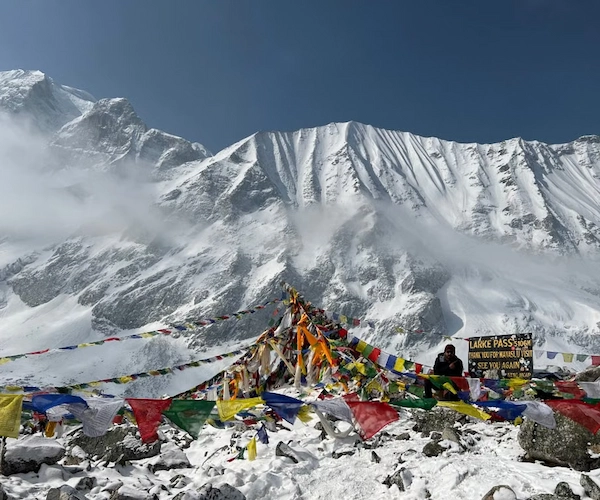
The Manaslu Circuit is a restricted area trek. Furthermore, it is one of the most spectacular routes in Nepal. Moreover, it is also, for most of the high section, genuinely offline. Additionally, NTC signal exists in patches in lower villages and in Samagaon at 3,530 metres. Consequently, above Samagaon and across the Larke La Pass, plan for almost no connectivity.
For digital nomads, Manaslu Circuit makes the most sense as a proper two-week expedition during a planned break from work. Furthermore, the route requires a restricted area permit and a licensed guide from a registered operator. Moreover, Alliance Treks has been guiding the Manaslu Circuit for decades. Additionally, the cultural richness and the extraordinary wilderness of this route more than compensate for the absence of WiFi. Consequently, go offline deliberately, go fully, and go with the right operator.
📶 Manaslu Circuit: WiFi — Limited WiFi in lower teahouses; none above 3,500m | SIM — NTC patches in lower villages only | Verdict: Offline-first — plan work-free windows for this route
See the Manaslu Circuit Trek 17-day itinerary from Alliance Treks.
🔗 Internal link — “Manaslu Circuit Trek” → www.alliancetreks.com/manaslu-circuit-trek/
Upper Mustang is the most offline trek in Nepal. Furthermore, it is also one of the most extraordinary. Moreover, Lo Manthang at 3,800 metres has some NTC signal — intermittent, not reliable. Additionally, satellite-based WiFi exists in a small number of lodges but it is expensive and slow. Consequently, Upper Mustang is not a working trek. It is the route you choose when you want to step away from everything.
The landscape is unlike anything else in Nepal. Furthermore, it is Tibetan plateau country — desert canyons, cave monasteries, ancient walled kingdoms, and a sky so big and so clear that being offline feels entirely appropriate. Moreover, the restricted area permit limits visitor numbers. Additionally, the cultural preservation here is extraordinary. Consequently, if your digital nomad trekking Nepal plan includes one route where the phone stays in the bag and the laptop stays in Pokhara, make it this one.
📶 Upper Mustang: WiFi — Satellite WiFi in select lodges only | SIM — NTC in Lo Manthang only, intermittent | Verdict: Full digital detox — best offline trek in Nepal
Most digital nomads use either Kathmandu or Pokhara as their working base. Furthermore, both cities have everything a remote worker needs. Moreover, choosing between them depends on your working style and what kind of city environment you want. Here are the coworking spaces currently operating in both cities:
| City | Area | Space | What It Offers | Cost |
|---|---|---|---|---|
| Kathmandu | Thamel | Rem.Work HQ | High-speed fiber internet, 24-hour access, private offices, and flexible workspaces for remote professionals. | From ~NPR 600/day |
| Kathmandu | Thamel | Work Around | Hot desks, reliable high-speed WiFi, networking opportunities, and regular community events. | From ~NPR 500/day |
| Kathmandu | Kamalpokhari | Gyan Hub | Standing desks, air conditioning, kitchen facilities, and a vibrant startup-focused community. | From ~NPR 500/day |
| Pokhara | Lakeside | Pokhara Coworking | Dedicated coworking environment with lake views, professional facilities, and a productive atmosphere. | From ~NPR 700/day |
| Pokhara | Bishal Marga | BROWNDESK | Outdoor terrace, printing facilities, comfortable lounge areas, and complimentary drinking water. | From ~NPR 400/day |
| Kathmandu | Thapathali | Regus | Corporate-grade offices, meeting rooms, virtual office services, and international business facilities. | Premium pricing |
Kathmandu suits nomads who want fast internet, more urban energy, and proximity to temples, markets, and cultural sites. Furthermore, coworking spaces like Rem.Work HQ and Work Around in Thamel offer high-speed fibre, 24-hour access, and a growing community of remote workers. Moreover, the Sanepa and Thamel areas are where most long-stay nomads cluster. Additionally, Kathmandu is the gateway for EBC and Langtang treks. Consequently, nomads using EBC as their main trek will usually base in Kathmandu.
Pokhara suits nomads who want a slower pace and mountain views with less urban noise. Furthermore, the lakeside setting is genuinely calming after weeks on a laptop. Moreover, Pokhara Coworking Space near Lakeside is the only dedicated coworking space in Pokhara and it is excellent. Additionally, Pokhara is the gateway for Poon Hill, ABC, and the Annapurna Circuit. Consequently, nomads planning multiple Annapurna region treks will find Pokhara the better long-term base.
✅ Living costs in Nepal are significantly lower than most Western countries. A realistic monthly budget in Pokhara covering private accommodation, food, coworking, and data is approximately USD 450 to USD 530 per month. Kathmandu runs slightly higher due to accommodation costs near coworking areas. Both are exceptional value for a remote work base with Himalayan trekking on your doorstep.
Nepal’s government has confirmed a digital nomad visa is in development. Furthermore, the Kathmandu Post reported that the visa is expected to allow remote workers to legally live and work in Nepal for up to five years. Moreover, it represents a significant upgrade from the current tourist visa, which allows stays of 15, 30, or 90 days. Additionally, financial requirements for the visa are expected to be notably lower than comparable nomad visa programmes in other countries. Consequently, Nepal is positioning itself as one of the most accessible and affordable long-term bases for digital nomads globally.
As of mid-2026, the visa has not yet officially launched. Furthermore, most remote workers currently use a standard tourist visa, which is extendable up to 150 days per year. Moreover, working remotely for a foreign employer while on a tourist visa is a legal grey area. Additionally, enforcement for short-term visitors is minimal. Consequently, the most current and accurate visa information should be checked directly with the Nepal Immigration Department or through your trekking operator. Alliance Treks can advise on the current entry requirements as part of our pre-departure briefing for all guests.
For up-to-date visa and permit information, contact Alliance Treks directly before booking your trip.
🔗 Internal link — “contact Alliance Treks” → www.alliancetreks.com/contact/
Yes, with the right route and realistic expectations. Furthermore, the Everest Base Camp corridor and the Poon Hill route both have functional WiFi at most major teahouse stops. Moreover, NTC and Ncell provide 4G mobile data along the lower sections of most main trails. Additionally, speeds are not suitable for video calls or large file transfers but handle emails, messaging, and document work adequately. Consequently, digital nomad trekking in Nepal is viable for most remote work setups as long as video-heavy work is scheduled around rest days in larger villages.
For high-altitude trekking, NTC (Nepal Telecom) is generally the better choice. Furthermore, NTC has significantly better coverage above 4,000 metres than Ncell, which often fades above Tengboche on the Everest Base Camp route and above Manang on the Annapurna Circuit. Moreover, if you have a dual-SIM phone, carrying both cards is ideal: use Ncell for faster 4G in Kathmandu and Pokhara, then switch to NTC at higher elevations. Additionally, both SIM cards are inexpensive and widely available upon arrival. Consequently, purchasing both cards is one of the smartest connectivity decisions for digital nomads visiting Nepal.
Everest Link is a dedicated prepaid broadband WiFi network that serves the Everest Base Camp trekking corridor from Lukla to Gorak Shep. Furthermore, it is typically faster and more reliable than standard teahouse WiFi along the route. Moreover, data packages are available in multiple sizes and remain valid for use across participating lodges during your trek. Additionally, cards can be purchased in Lukla, Namche Bazaar, and many major teahouses. Consequently, if you need dependable internet access while trekking to Everest Base Camp, Everest Link is one of the most valuable connectivity tools available.
Yes. Nepal is widely regarded as one of the safer destinations in Asia for travellers and remote workers. Furthermore, both Kathmandu and Pokhara have established communities of expats, freelancers, and digital nomads. Moreover, while petty theft can occur as it does in most tourist destinations, violent crime against visitors is relatively uncommon. Additionally, major trekking routes have well-established tourism infrastructure and support systems. Consequently, many solo travellers, including solo female digital nomads, report positive and comfortable experiences throughout Nepal.
The most effective strategy is to communicate with clients and colleagues before your trek begins and organize your workload around expected connectivity windows. Furthermore, identify reliable internet locations in advance, such as Namche Bazaar on the Everest Base Camp Trek, Chhomrong on the Annapurna Base Camp Trek, Ghorepani on the Poon Hill Trek, and Kyanjin Gompa in Langtang Valley. Moreover, use offline days for writing, planning, editing, and other deep-focus tasks that do not require internet access. Additionally, download essential files and resources before leaving major towns. Consequently, successful digital nomads treat connected teahouse stops as delivery points and offline trekking days as productive deep-work sessions.
Digital nomad trekking Nepal in 2026 is a genuine lifestyle choice, not a fantasy. Furthermore, the connectivity infrastructure has improved to the point where the main Himalayan routes support functional remote work at the primary stops. Moreover, the cities of Kathmandu and Pokhara offer everything a nomad base needs at a fraction of Western living costs. Additionally, the trekking access from both cities is unmatched anywhere in the world — you can be standing in front of an 8,000-metre peak within a few days of landing. Consequently, Alliance Treks has spent 30 years helping people reach these mountains. We know the trails, we know the teahouses, and we know exactly where the WiFi works well enough to hit send.
Plan your digital nomad trek with Alliance Treks — www.alliancetreks.com
Alliance Treks & Expedition Pvt. Ltd. Once is not enough for naturally and culturally Himalayas