(Viber, Whatsapp, Cell) +977 9851022814

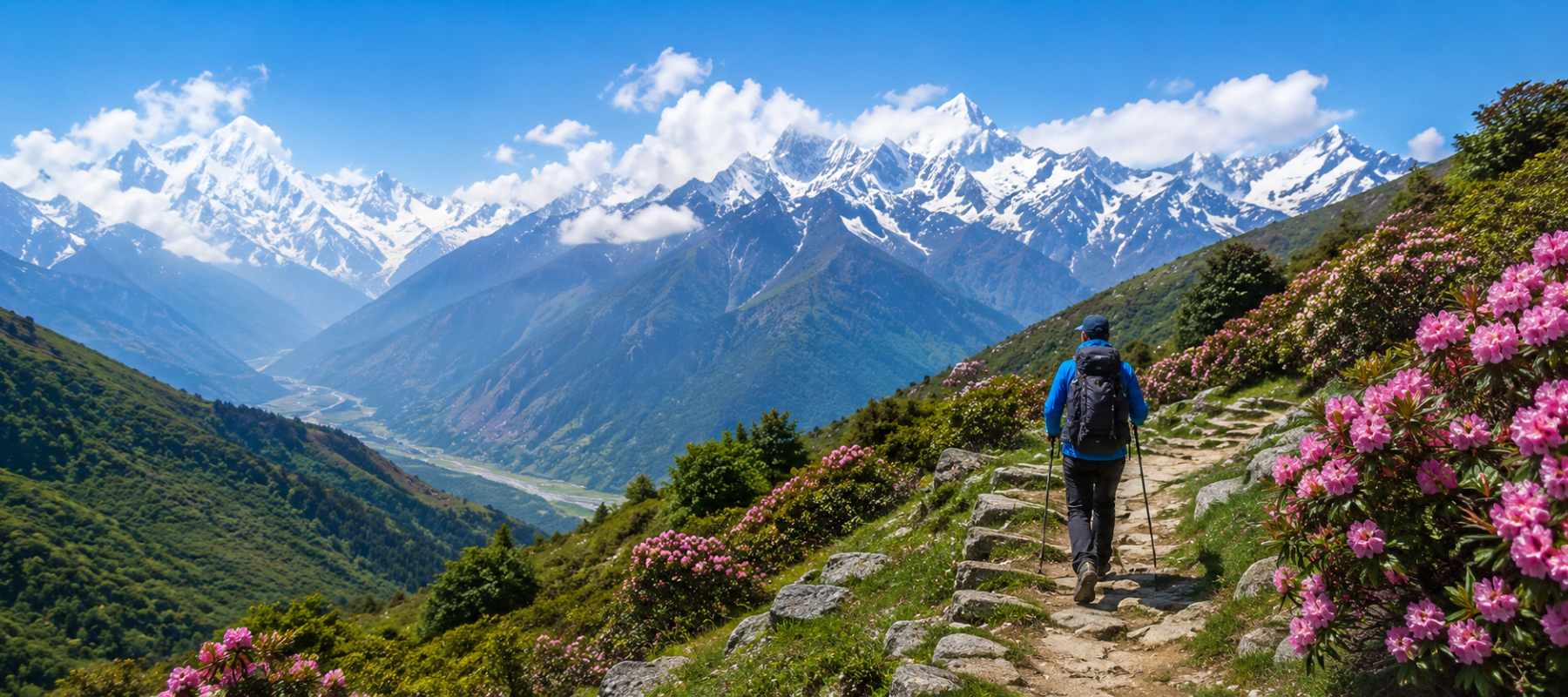
Trekking in Nepal in June requires serious preparation. The monsoon season creates challenging conditions: heavy rainfall, slippery trails, leeches, and altitude acclimatization risks. However, fewer crowds, lush landscapes, and the experience of weathering genuine mountain challenges reward the prepared trekker. Master essential Nepali phrases, invest in quality monsoon gear (waterproof layers, drainage systems, proper footwear), and follow strict acclimatization protocols. Alliance Treks’ 34-year legacy in Nepal monsoon guidance ensures your safety and success even when weather turns difficult.
Trekking in Nepal in June sits squarely within monsoon season. The southwest monsoon brings intense rainfall from June through September, transforming Nepal’s landscape and creating the most demanding conditions any trekker will face. Moreover, understanding these weather patterns is essential-they directly influence trail safety, visibility, and physical demands on your body.
Nepal’s June weather pattern unfolds predictably. Daytime temperatures on popular high-altitude routes typically range between 5°C and 15°C (40–60°F), with nights dropping well below freezing at elevations above 4,000 meters. Meanwhile, rainfall intensifies dramatically, with some regions receiving 500mm (20 inches) in June alone. Consequently, the combination of persistent moisture, temperature fluctuations, and limited visibility creates conditions unlike any other trekking season.
These weather conditions directly shape trail conditions June presents. Furthermore, rockfalls increase significantly when moisture saturates slope faces. Trails become slippery within minutes of rain, requiring constant attention to footing. Additionally, reduced visibility from cloud cover eliminates the panoramic mountain vistas many trekkers anticipate. Yet prepared trekkers report these challenges as deeply rewarding-overcoming genuine mountain difficulty builds confidence and resilience unlike any other season.
Alliance Treks guides monitor June weather patterns continuously throughout trekking expeditions. Their experience reading monsoon conditions has kept countless trekkers safe on difficult days. Moreover, they adjust daily itineraries based on real-time weather observations rather than rigidly following predetermined schedules.
June weather Nepal represents the most challenging mountain environment most recreational trekkers encounter. Heavy rainfall doesn’t fall continuously but arrives in intense afternoon downpours, typically between noon and 5pm. Therefore, experienced trekkers start early and reach their destination before afternoon weather systems develop.
The altitude acclimatization challenge intensifies during monsoon trekking. Cold temperatures combined with persistent moisture stress your body more severely than dry-season trekking at identical elevations. As a result, altitude sickness symptoms develop more frequently and progress more rapidly. Your body’s oxygen absorption decreases when respiratory passages remain constantly damp, creating additional acclimatization burden.
However, the monsoon season offers unexpected advantages. First, the lush green landscape is spectacular-waterfalls cascade everywhere, wildflowers bloom profusely, and rhododendrons create dramatic color contrasts. Second, trekking in Nepal in June means dramatically fewer trekkers on popular routes. Third, lodges offer substantial discounts during monsoon season, reducing trip costs significantly. Nevertheless, these benefits require accepting the challenging weather reality.
Gear selection determines comfort and safety during monsoon trekking. Standard three-season trekking equipment proves inadequate; you need specialized monsoon-season gear designed specifically for persistent moisture and challenging weather. Therefore, every item in your pack serves a critical function when trekking in Nepal in June.
Your primary defense against heavy rainfall involves layered waterproofing. A high-quality Gore-Tex rain jacket with sealed seams serves as your outer barrier. Moreover, pack a lightweight backup poncho that extends below your pack-this system ensures your backpack contents stay dry when rain intensifies.
Pants require equal attention. Waterproof trekking pants are essential, but here’s a practical detail: ensure they have exterior vents to release moisture buildup. Furthermore, pack lightweight gaiters that prevent water running down your boots. Additionally, consider a rain skirt design that extends below the knee-this prevents water channeling from pack to feet.
| Gear Item | Primary Function | Monsoon-Specific Feature |
|---|---|---|
| Gore-Tex Rain Jacket | Provides a waterproof barrier against rain | Sealed seams and pit zips for moisture release |
| Waterproof Pants | Protects the lower body from rain and mud | Exterior vents and ankle zippers for ventilation |
| Gaiters | Prevents water and debris from entering boots | Waterproof fabric with secure fastening straps |
| Pack Rain Cover | Protects the backpack from heavy rain | Extended coverage below the pack bottom |
| Dry Bags (3 Sizes) | Keeps critical gear and clothing dry | Roll-top waterproof sealing system |
Choosing trekking boots for monsoon season requires specific criteria. Standard hiking boots deteriorate rapidly when constantly wet; you need boots designed explicitly for moisture management. Gore-Tex linings provide essential waterproofing, but equally important are drainage systems that shed water before saturation occurs.
Boot sole design matters critically during monsoon trekking. Deep tread patterns prevent mud accumulation and maintain traction on slippery surfaces. Moreover, vibram soles specifically engineered for wet rock and clay perform far better than standard hiking soles. Furthermore, choose boots with aggressive ankle support-muddy trails demand extra stability that loose-fitting boots cannot provide.
Socks require equal consideration. Merino wool socks maintain warmth even when wet, unlike cotton which loses insulation completely when saturated. Additionally, pack at least five pairs of merino hiking socks. Therefore, you can rotate pairs while others dry at evening lodges. Consequently, your feet remain warm throughout your trekking journey.
June weather Nepal demands sophisticated layering strategies. Your base layer should be synthetic or merino wool-never cotton, which absorbs moisture and loses insulation. Furthermore, pack multiple base layers so you can change when damp develops.
Your mid-layer provides crucial insulation while remaining moisture- resistant. Fleece works well because it sheds water and dries relatively quickly compared to down. Additionally, pile-based synthetic jackets maintain warmth even when partially wet. However, avoid down entirely; once saturated, down loses nearly all insulating capacity and requires days to dry completely.
Your outer shell layer (the rain jacket) completes the system. Therefore, this three-layer approach addresses monsoon trekking’s core challenge: managing moisture while maintaining body heat when temperatures drop at elevation.
Altitude acclimatization presents heightened challenges during monsoon trekking. The persistent moisture reduces your body’s oxygen absorption efficiency compared to dry seasons at identical elevations. Therefore, ascending too quickly during monsoon trekking in Nepal creates serious altitude sickness risk that develops faster and progresses more severely than dry-season acclimatization problems.
The fundamental principle remains unchanged: ascend slowly, allow your body time at each elevation, and descend immediately if serious symptoms develop. However, monsoon-specific factors intensify each aspect. Your body temperature regulation works harder to maintain warmth when constantly wet. Consequently, your overall energy expenditure increases 15-20% during monsoon trekking compared to equivalent dry-season routes.
On your first two days above 3,000 meters, limit elevation gain to 300 meters daily. This conservative approach feels sluggish to eager trekkers, but it substantially reduces altitude sickness risk during trekking in Nepal in June. Furthermore, many experienced guides recommend completely flat rest days every 1,000 meters of elevation gain-days where you trek horizontally without ascending further.
Hydration becomes critical. The persistent rainfall and high humidity mask dehydration-you don’t feel thirsty because moisture surrounds you constantly. Therefore, drink more water than you think you need. Additionally, electrolyte tablets help your body retain fluids better than plain water alone. Consequently, your altitude acclimatization process proceeds more smoothly.
Medication strategies vary. Some trekkers take Diamox (acetazolamide) as a preventative from their first day at elevation. However, this remains a decision for your physician-consult your doctor 4-6 weeks before your trek.
Red Warning: Altitude sickness during trekking in Nepal requires immediate response
High altitude cerebral edema (HACE) and high altitude pulmonary edema (HAPE) present life-threatening emergencies. Symptoms include severe headache, vomiting, confusion, and difficulty breathing. Furthermore, monsoon conditions complicate rescue operations because cloud cover reduces helicopter access. Therefore, descend immediately if these symptoms develop. Never attempt to push through serious altitude sickness-your life depends on rapid descent and medical evacuation. Alliance Treks maintains relationships with helicopter rescue services and bases medical staff at critical elevation zones specifically to address altitude emergencies.
Language barriers dissolve when you make genuine effort to speak Nepali. Most professional guides on trekking expeditions speak fluent English; however, learning trekking-specific phrases dramatically improves communication and builds respectful relationships. Furthermore, your guide appreciates your effort immensely, and team cohesion strengthens when everyone communicates clearly.
Certain phrases damage relationships or misrepresent your intentions. Therefore, understand what to avoid:
Never question your guide’s judgment about weather or route safety. Instead of saying “I don’t trust this trail,” ask “Is this trail safe in current conditions?” The distinction preserves respect while getting identical information.
Avoid phrases implying your guide is lazy or slow. Rather than “Can’t you move faster?”, say “What’s our estimated arrival time?” This phrasing acknowledges their expertise instead of criticizing their pace.
Never make assumptions about guide ethnicity or regional background. Sherpa is a distinct ethnic group and profession, not a synonym for “guide” or “porter.” Many guides are Nepali, Gurung, Magar, or other ethnic groups. Therefore, ask “What’s your ethnic background?” respectfully rather than assuming.
Religious phrases require caution. While Nepali Buddhism is generally tolerant, using religious terms casually offends practitioners. Furthermore, avoid discussions of your own religious beliefs unless asked directly-trekking in Nepal in June succeeds through shared mountain respect, not theological debate.
Finally, never use English obscenities around guides. Many understand far more English than they acknowledge, and profanity damages professional relationships. Therefore, keep language professional and respectful throughout your trekking adventure.
Trekking in Nepal in June presents trail conditions that fundamentally differ from other seasons. Understanding these specific challenges prepares you mentally and physically for what awaits. Furthermore, most route descriptions written for spring (April-May) require significant adjustment when trekking in June.
Heavy rainfall transforms trails daily. A cleared path on June 1st becomes treacherous mud on June 15th as additional rainfall cuts new channels. Therefore, daily condition reports matter far more than pre-trip guidebooks published months earlier.
Mud depth varies dramatically based on underlying geology. Rocky terrain sheds water relatively quickly and becomes manageable within hours after rain. Conversely, clay-based terrain (common in lower elevations) retains moisture for days, creating conditions where every step sinks 10-15cm. Additionally, certain regions develop marsh-like sections where water stands 20cm deep across entire trail sections.
Your boot selection directly determines trekking success during these conditions. Therefore, aggressive tread design and ankle support prevent twisted ankles and dangerous slips. Furthermore, gaiters prevent mud from running directly into boots, a seemingly minor detail that prevents blisters and foot deterioration during extended trekking journeys.
Leech activity peaks during monsoon trekking. These parasites remain dormant when soil is dry but emerge aggressively once moisture arrives. Therefore, expect 5-15 leech encounters daily on lower-elevation trails during trekking in Nepal in June. While leeches rarely pose serious danger, they create discomfort and blood loss if numerous. Salt packets, insect repellent, and tobacco provide defense strategies. However, Alliance Treks guides carry leech-removal kits and experience managing these encounters through calm, effective techniques that minimize bleeding and infection risk.
Green Tip: Leech management during monsoon trekking
Tuck your pants into your boots and seal the junction with duct tape. Furthermore, apply insect repellent with DEET concentration above 30% to exposed skin. Additionally, wear light-colored clothing so leeches (which are dark) appear immediately. Consequently, you can remove them before they attach. When leeches do attach, resist the urge to pull them off directly-this triggers defensive bleeding. Instead, apply salt or strong-smelling substances that cause them to release naturally. Therefore, post-removal, the wound bleeds less and infection risk decreases.
Popular routes require route modifications during monsoon trekking. The Everest Base Camp trek, Nepal’s most famous route, typically includes side excursions to viewpoints requiring exposed scrambling. However, during trekking in Nepal in June, these sections present excessive rockfall danger and reduced visibility makes route-finding treacherous. Therefore, experienced guides eliminate these excursions during monsoon season, substituting alternative experiences that match the monsoon reality rather than fighting it.
The Annapurna Base Camp trek presents similar challenges. Suspension bridges, normally straightforward crossings, become hazardous when water rises dramatically and wind intensifies from monsoon convection systems. Furthermore, certain high passes remain snow-covered longer during monsoon due to precipitation, requiring technical climbing equipment that recreational trekkers typically don’t possess.
Therefore, your route selection during trekking in Nepal in June should prioritize stability and experience-matched difficulty over prestige or famous summits. Alliance Treks offers specifically designed monsoon-season itineraries that emphasize beautiful trekking through manageable terrain rather than fighting seasonal extremes.
Monsoon trekking demands superior physical conditioning compared to dry-season routes. The additional energy required for moisture management, temperature regulation, and mental focus creates 25-30% higher cardiovascular demand. Therefore, your pre-trek training should reflect this reality rather than following generic altitude-trekking advice.
Begin training 8-10 weeks before your trek. Furthermore, your training should emphasize hill work with elevation gain, not flat running. A 30-minute hike with 300 meters elevation gain three times weekly builds the specific muscles trekking demands. Moreover, gradually increase duration-by week 8, you should comfortably complete 90-minute hill hikes.
Practice in challenging conditions when possible. Trekking in light rain with full pack weight builds confidence for actual monsoon conditions. Furthermore, doing a challenging practice hike while mildly fatigued better replicates trekking day 8-9 reality than training fresh and rested.
Ankle strengthening receives insufficient attention in standard trekking training. Monsoon trails demand exceptional ankle stability to prevent twists on slippery mud. Therefore, incorporate single-leg balance exercises, calf raises, and lateral ankle movements. Additionally, practice walking on uneven terrain with hiking boots to develop proprioceptive awareness.
Green Tip: Monsoon-specific training protocol
During the final 4 weeks before trekking in Nepal in June, wear your actual trekking boots during all training hikes. Furthermore, carry 60-70% of your actual pack weight to develop muscle memory. Consequently, your body acclimates to both the equipment and the load before departure. Additionally, identify any gear issues (boots rubbing, pack straps misaligned) before they become problems on your actual trek.
Trekking in Nepal in June creates psychological challenges exceeding physical demands. Persistent rain, limited views, and constant mud can trigger discouragement. Therefore, mental preparation matters equally to physical conditioning.
Establish realistic expectations. You will be wet frequently. Your feet will develop blisters despite excellent care. You will encounter days where visibility reduces mountains to faint shadows. Therefore, accepting these realities before departure prevents disappointment from undermining your experience.
Develop coping strategies for difficult hours. Many trekkers find meditation, journaling, or photography provides psychological anchors during challenging stretches. Furthermore, breaking long trekking days into smaller psychological segments (focusing on reaching the next food stop rather than the final destination) makes distances feel manageable.
Alliance Treks brings three decades of experience to trekking in Nepal in June. Their evolution from a small family operation to Nepal’s premier monsoon-season specialist informs every aspect of their service model. Therefore, understanding their expertise demonstrates why they’re the preferred choice for challenging trekking expeditions.
Their guide network includes individuals who have conducted trekking expeditions through every monsoon season since the 1990s. Furthermore, this institutional knowledge about seasonal weather patterns, trail conditions changes, and emergency protocols remains unmatched in the industry. Alliance Treks guides don’t rely on generic guidebooks-they navigate from experiential understanding of monsoon realities that evolve yearly.
Pre-trek support from Alliance Treks sets them apart. Their consultation process covers realistic expectation-setting, detailed gear recommendations, acclimatization protocol customization based on individual medical history, and extensive briefing about Nepali culture and etiquette. Moreover, they provide detailed daily itineraries weeks before departure so trekkers can complete meaningful training preparation.
During your trek, professional guides monitor weather continuously. Their ability to read monsoon cloud formations, wind patterns, and temperature trends allows early decision-making about route modifications. Furthermore, they know alternative routes that provide equivalent experiences when primary routes become too hazardous. Consequently, safety concerns never force abrupt trip cancellations-instead, adaptive routing preserves the trekking experience while protecting trekker wellbeing.
Post-trek support includes detailed debriefing, guidance for any injuries requiring continued medical attention, and information about future opportunities with Alliance Treks. Furthermore, they maintain relationships with trekkers years after expeditions conclude, creating a community of mountaineers who share experiences and recommendations.
Visit www.alliancetreks.com to explore their full portfolio of monsoon-season expeditions. Consequently, you can begin trekking in Nepal in June fully prepared, confident in both your personal preparation and your guide team’s expertise.
Alliance Treks & Expedition Pvt. Ltd. Once is not enough for naturally and culturally Himalayas