(Viber, Whatsapp, Cell) +977 9851022814

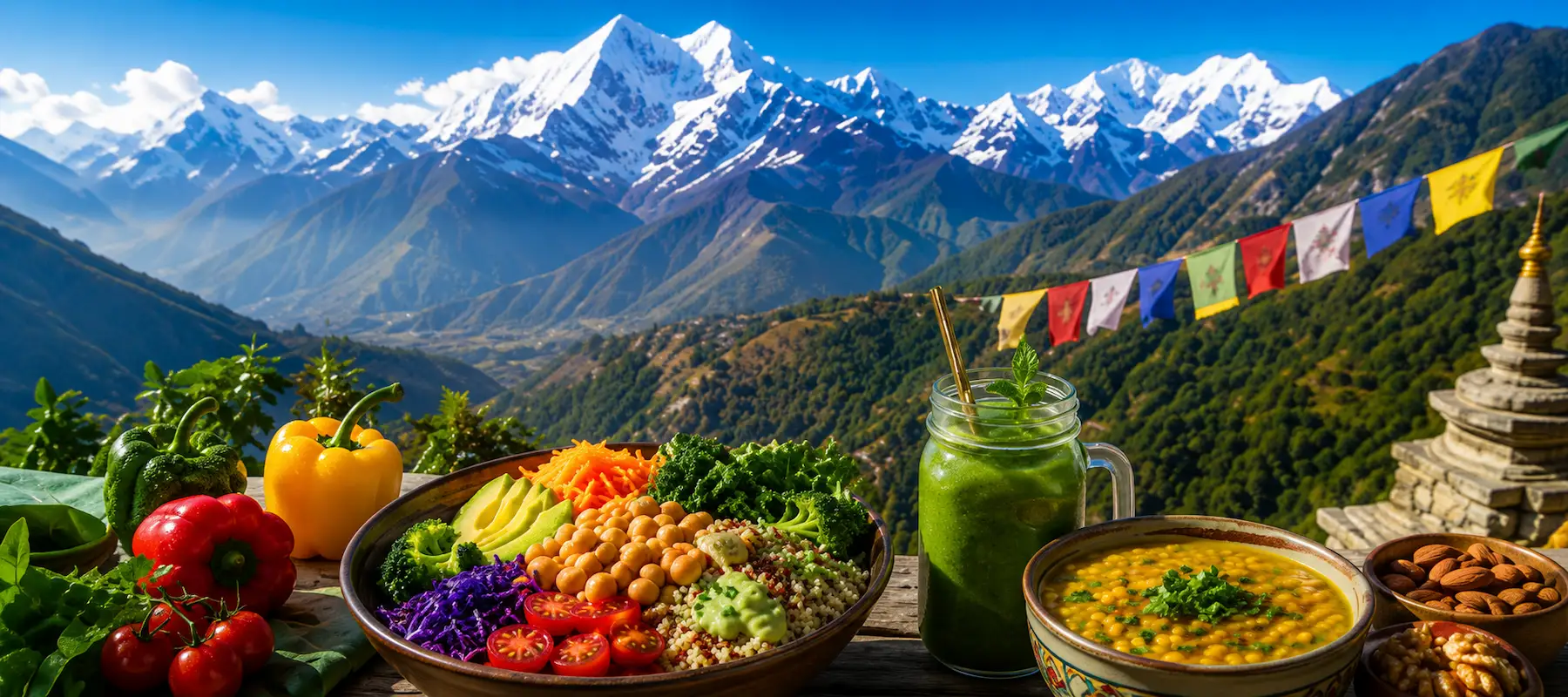
Nepal trekking for vegetarians and vegans is easier than most people expect. Nepal’s food culture is built on rice, lentils, and vegetables — not meat. Meat has historically been expensive, hard to transport to altitude, and difficult to store in mountain teahouses. The national dish, dal bhat, is naturally vegetarian and easily made vegan with one small request. Most vegetarian and vegan trekkers in Nepal eat better on the trail than they anticipated.
Vegans have a slightly more nuanced experience. Dairy is considered vegetarian in Nepali culture, so ghee, milk powder, and butter appear in dishes without being listed on menus. Knowing what to ask for — and how to ask for it in Nepali — makes a real difference. Alliance Treks has been taking vegetarian and vegan trekkers through the Himalayas for over 30 years. This guide covers everything you need to eat well, stay energised, and never go hungry on the trail.
Nepal trekking for vegetarians and vegans is genuinely easy on all major routes. Vegetarian dishes form the backbone of every teahouse menu. Cooks understand dietary requirements and accommodate them without drama or confusion.
Vegan trekking in Nepal requires a little more communication. Furthermore, the main issue is not meat — it is dairy. Moreover, ghee, milk powder, and butter are used as finishing ingredients in many dishes. Additionally, they are rarely listed on menus. Consequently, asking directly before ordering is the most effective habit a vegan trekker can build.
The good news is that Nepal’s mountain food is naturally plant-forward. Furthermore, at high altitude, meat is a luxury. It is expensive to transport, difficult to keep fresh, and not always available. Additionally, at very high elevations on routes like Manaslu and Everest, most teahouses serve almost entirely vegetarian food by default. Consequently, the higher you go, the more naturally vegan-friendly the menu becomes.
Nepal’s cuisine is not vegetarian out of trend. It is vegetarian out of geography, tradition, and economics. Moreover, rice, lentils, potatoes, seasonal vegetables, and leafy greens have sustained mountain communities for centuries.
Many Nepali communities follow Hindu or Buddhist dietary traditions that limit or prohibit meat consumption. Furthermore, high-altitude Sherpa communities in the Khumbu region are predominantly Buddhist and often eat little to no meat. Moreover, this cultural orientation has shaped teahouse menus in a way that naturally benefits vegetarian and vegan trekkers. Additionally, the absence of reliable refrigeration above 3,000 metres means most teahouses do not stock large quantities of meat anyway. Consequently, vegetarian food on Nepal’s trails is fresh, locally sourced, and genuinely good.
This is not a compromise situation. The food is not ‘good considering the circumstances.’ It is genuinely delicious, nutritionally complete for trekking, and served with warmth that makes every meal feel like a welcome. Nepal trekking for vegetarians and vegans means eating what the locals eat. You are not getting a modified tourist menu. You are eating the real thing.
Dal bhat is Nepal’s national dish and the best food for Nepal trekking for vegetarians and vegans. It consists of steamed rice (bhat), lentil soup (dal), a vegetable curry (tarkari), pickled vegetables (achar), and often leafy greens (saag). This combination delivers complex carbohydrates, protein from lentils, vitamins from vegetables, and natural electrolytes from the pickle. It comes with unlimited refills at most teahouses. Eat as much as you need.
For vegetarians, dal bhat is perfect as-is. The standard preparation contains no meat. It is filling, warm, and freshly cooked for each sitting. Most teahouses serve it for both lunch and dinner. Nepal trekking for vegetarians and vegans often means eating dal bhat twice a day — and feeling genuinely well fuelled for it.
For vegans, one small adjustment is needed. The vegetable curry is often finished with a spoonful of ghee — clarified butter — just before serving. This is a flavour habit rather than a recipe requirement. Simply saying ‘no ghee’ — or in Nepali, ‘Ghee naraakhnus’ — is understood and respected. Dal bhat becomes fully vegan with one polite request. For more on Nepal’s food culture and trekking safety, the Nepal Tourism Board’s official guide at ntb.gov.np is a useful resource before any trip.
Every major teahouse on Nepal’s trekking routes offers a standard menu. Furthermore, the items below appear across the Everest, Annapurna, Langtang, and Manaslu routes with minor regional variations. Moreover, the vegetarian and vegan status of each dish is listed honestly, including where modifications are needed.
| Dish | What It Is | Vegetarian? | Vegan? | Where Available |
|---|---|---|---|---|
| Dal Bhat | Rice, lentil soup, vegetable curry, and pickle | Yes | Yes (ask for no ghee) | All routes and all altitudes |
| Vegetable Momos | Steamed or fried dumplings with vegetable filling | Yes | Check wrapper ingredients | Everest, Annapurna, and Langtang |
| Fried Rice | Wok-fried rice with vegetables | Yes | Yes (ask for no egg) | All teahouses |
| Vegetable Noodles | Stir-fried noodles with garlic and vegetables | Yes | Yes | All routes |
| Tsampa Porridge | Roasted barley flour porridge | Yes | Usually, but check for milk | High altitude areas in Khumbu and Manaslu |
| Aloo Tarkari | Spiced potato curry | Yes | Yes | All routes |
| Chapati | Unleavened flatbread | Yes | Usually, ask for no butter | All routes |
| Garlic Soup | Broth with garlic and vegetables | Yes | Yes | All routes, especially popular at altitude |
| Tibetan Bread | Traditional fried dough bread | Yes | Check for egg or milk | Khumbu, Manaslu, and Mustang |
| Boiled Potatoes | Simple salted boiled potatoes | Yes | Yes | Common high-altitude staple |
| Pumpkin Soup | Seasonal vegetable soup | Yes | Usually vegan | Lower-altitude teahouses |
| Sag (Spinach Curry) | Cooked leafy greens | Yes | Yes | All routes; excellent source of iron |
Vegan trekking Nepal has one consistent challenge: dairy. Furthermore, in Nepali cooking culture, dairy is not considered an animal product in the way vegans define it. Moreover, ghee, milk, butter, and curd are regarded as vegetarian ingredients and used freely. Additionally, teahouse cooks do not flag them unprompted because they are simply part of how the food is made. Consequently, vegans need to ask specifically rather than assuming that vegetarian means dairy-free.
The table below shows where dairy hides in common teahouse dishes and exactly what to say to avoid it. Furthermore, most teahouse owners are genuinely happy to accommodate. Moreover, the key is specificity. Additionally, saying ‘I am vegan’ is often less effective than saying ‘no milk, no butter, no ghee’ — because the word ‘vegan’ is not universally understood at altitude. Consequently, specific requests work better than labels.
| Hidden Dairy | What It Is | Where It Hides | What To Say |
|---|---|---|---|
| Ghee | Clarified butter | Used to finish dal bhat curry, chapati, and Tibetan bread | Ask: “No ghee please” or “Ghee naraakhnus” |
| Milk Powder | Reconstituted milk | Added to tsampa, porridge, and tea by default | Specify black tea: “Kalo Chiya” |
| Egg | Chicken egg | Added to fried rice, Tibetan bread, and sometimes noodles | Always ask: “No egg” or “Firo naraakhnus” |
| Butter | Dairy butter | Brushed on chapati and Tibetan bread after cooking | Ask for no butter before ordering |
| Cheese | Local yak cheese | Added to some pasta dishes and pizza on the EBC route | Check before ordering pasta or pizza |
| Curd / Yoghurt | Plain yoghurt | Sometimes served as a side dish with dal bhat | Easy to identify and decline when served |
Learning a few key Nepali phrases makes vegetarian and vegan trekking Nepal dramatically easier. Furthermore, teahouse owners respond warmly when guests make the effort to communicate in Nepali. Moreover, even approximate pronunciation is appreciated. Additionally, your Alliance Treks guide will always help translate — but knowing these phrases yourself gives you confidence at every meal.
| What to Say | Pronunciation | When to Use It |
|---|---|---|
| Ma Shakahari Ho | mah sha-KAH-hari ho | I am vegetarian |
| Ghee Naraakhnus | ghee nah-RAAK-nus | Please no ghee |
| Dudh Naraakhnus | doodh nah-RAAK-nus | Please no milk |
| Phiro Naraakhnus | fee-RO nah-RAAK-nus | Please no egg |
| Masu Nakhane | mah-SOO nah-khaa-nee | I don’t eat meat |
| Kalo Chiya | KAH-lo chee-YA | Black tea (no milk) |
| Yo Vegan Ho? | yo VEE-gan ho | Is this vegan? |
| Dhanyabad | dhan-YAH-bad | Thank you |
Protein is the most common nutritional concern for vegans doing Nepal trekking. Furthermore, the concern is real but manageable. Moreover, dal bhat itself contains significant protein from lentils. Additionally, a large serving of dal with rice provides roughly 15 to 20 grams of plant protein — and with unlimited refills, this number goes up easily.
Beyond dal bhat, sag (spinach), aloo tarkari (potato curry), vegetable momos, and garlic soup all contribute to a plant-based protein intake. Furthermore, the challenge is that teahouse menus do not offer the protein diversity of a city restaurant. Moreover, higher up the mountain, menus get simpler. Consequently, smart snack packing before you leave Kathmandu or Pokhara is the most effective way to ensure adequate protein on a vegan Nepal trek.
Garlic soup deserves a special mention. Furthermore, it is cheap, widely available, and rich in antioxidants. Moreover, local tradition holds that it helps with altitude acclimatisation — and while the science on this is anecdotal, the soup itself is genuinely warming and nourishing at the end of a long day. Additionally, most teahouses offer it from Namche Bazaar upward on the EBC route. Consequently, garlic soup is a vegan trekker’s best evening friend above 3,500 metres.
Smart snack packing is one of the most effective things a vegan trekker can do before a Nepal trip. Snacks fill the protein and calorie gaps between teahouse meals. They also provide energy during long ascent days when the next stop is hours away. The best snacks for Nepal trekking for vegetarians and vegans are dense, light, non-perishable, and genuinely edible after three hours of walking uphill.
| Snack | Why It Works | Protein Value |
|---|---|---|
| Roasted Soybeans | High protein, lightweight, and widely available in Kathmandu before trekking | High |
| Peanut Butter Sachets | Single-serve packs, calorie-dense, and excellent emergency trail food | High |
| Chiura (Beaten Rice) | Dry, filling, traditional Nepali snack available almost everywhere | Medium |
| Dried Fruits | Apricots, raisins, and figs are easy to carry and widely available in Kathmandu markets | High |
| Mixed Nuts | Almonds, cashews, and walnuts provide protein, healthy fats, and long-lasting energy | High |
| Energy Bars | Convenient trekking snack available in Thamel and Pokhara tourist shops | Medium |
| Dark Chocolate | Check labels, as many brands are dairy-free, lightweight, and calorie-dense | High |
| Protein Powder Sachets | Easy to pack individually and mix with hot water or tea at teahouses | Medium |
| Seeds (Hemp, Chia) | Can be added to porridge or rice for extra protein and omega-3 fats | Medium |
| Instant Oats | Easy to buy in Kathmandu and prepare at any teahouse with hot water | Medium |
EBC is one of the best routes for vegetarian trekking Nepal. Furthermore, Namche Bazaar has a thriving food scene with bakeries, coffee shops, and well-stocked teahouses. Moreover, the Everest region’s Sherpa culture means many teahouse owners eat little meat themselves. Additionally, above Dingboche, menus simplify but remain solidly vegetarian. Consequently, vegan trekkers do well on EBC if they communicate clearly and pack good snacks.
See the full itinerary on the Everest Base Camp trek page.
ABC is excellent for Nepal trekking for vegetarians and vegans. The lower sections through Chhomrong and Sinuwa have varied menus with good vegetable options. Garlic soup is available from mid-route upward. Chhomrong village has some of the best-stocked teahouses on any Nepal trek. It is a comfortable, well-fed experience from start to finish.
Explore the Annapurna Base Camp trek from Alliance Treks.
Poon Hill is perfect for vegan trekking Nepal beginners. Furthermore, it is short enough to supplement with snacks from Pokhara without running out. Moreover, teahouses between Nayapul and Ghorepani serve good vegetable options at every stop. Additionally, the lower altitude means food variety is higher than on EBC or high Annapurna sections. Consequently, Poon Hill is an ideal first vegetarian or vegan trekking experience in Nepal.
See the Poon Hill trek from Alliance Treks.
Langtang is the cheese region of Nepal. Furthermore, local yak cheese is produced in Kyanjin Gompa and sold throughout the valley. Moreover, for vegetarians this is a genuine highlight — fresh yak cheese is a treat after days of dal bhat. Additionally, vegans should note that dairy is particularly present here and should ask carefully. Consequently, Langtang is excellent for vegetarians and manageable for vegans with clear communication.
Explore the Langtang Valley Trek from Alliance Treks.
Manaslu is the most naturally vegan-friendly high route in Nepal. Furthermore, the remote location means meat is rarely available above Samagaon. Moreover, teahouses serve dal bhat, potatoes, noodles, and soups as their standard menu. Additionally, the Tibetan cultural influence means tsampa (roasted barley porridge) appears frequently. Consequently, vegan trekking Nepal on the Manaslu Circuit is arguably the easiest high-altitude route to eat plant-based.
See the Manaslu Circuit Trek from Alliance Treks.
Kathmandu and Pokhara both have excellent vegetarian and vegan restaurant scenes. Furthermore, Thamel in Kathmandu has dedicated vegan cafes, health food shops, and restaurants serving everything from Nepali plant-based dishes to international options. Moreover, Lakeside in Pokhara is similarly well-stocked with vegetarian-friendly restaurants. Additionally, these pre-trek days are the best opportunity to stock up on snacks, protein powder, nut butters, and anything else you want to carry on the trail. Consequently, spending one evening exploring Thamel’s food options before your trek starts is both enjoyable and practically useful.
In Kathmandu, the Garden of Dreams area and Jyatha Street have several well-reviewed vegetarian and vegan options. Furthermore, the local thali (a set-plate meal similar to dal bhat) at any Nepali restaurant in the city gives you a genuine taste of what trail food will look and taste like. Moreover, many restaurants in Thamel now clearly label vegan options on their menus. In the heart of Thamel, Atithi Hotel & Apartment serves what many of our guests and staff consider one of the best local dal bhat meals in the area. Their traditional Thakali set is flavorful, filling, and offered at a very reasonable price, making it an excellent choice for trekkers looking to enjoy an authentic Nepali meal before heading into the mountains. Consequently, eat well, eat generously, and stock your pack before you leave for the mountains.
Alliance Treks takes dietary requirements seriously. Furthermore, when you book a trek with us, your guide is briefed on your dietary needs before departure. Moreover, we communicate those requirements to teahouse owners along the route in advance wherever possible. Additionally, our guides carry a small amount of supplementary food on longer remote routes for trekkers with specific needs. Consequently, you are never left to navigate your diet alone on an Alliance Treks trip.
For Nepal trekking for vegetarians and vegans specifically, our guides communicate dietary requests clearly in Nepali. They know which teahouses have the best plant-based options on every route. On the Manaslu Circuit and other restricted area treks, our guides pre-arrange meals with homestay families to ensure vegan-appropriate food is prepared. We have been doing this for over 30 years on the same trails. The teahouse relationships we have built make a real difference to what gets served on your plate.
Mention your dietary requirements when you contact Alliance Treks to book. We plan around them from day one.
Yes. Nepal trekking for vegetarians is genuinely easy on every major route. Furthermore, the teahouse menu is overwhelmingly plant-based by default. Moreover, no special planning is required — simply inform your guide and teahouse hosts of your preference. Additionally, vegetarian food in Nepal is fresh, filling, and well-suited to the calorie demands of long trekking days. Consequently, vegetarian trekkers consistently report eating better on Nepal’s trails than they expected.
Vegan trekking Nepal is very manageable with the right preparation. Furthermore, the main challenge is hidden dairy — ghee, milk powder, and butter used in cooking without being listed on menus. Moreover, learning a few key phrases in Nepali and asking specifically about ingredients before ordering removes most of the challenge. Additionally, at high altitude above 4,000 metres, teahouse menus naturally simplify to mostly plant-based options. Consequently, vegans who communicate clearly and pack good snacks eat well on the trail.
Dal bhat is vegan with one modification. Furthermore, the standard preparation includes a spoonful of ghee (clarified butter) added to the vegetable curry just before serving. Moreover, asking for “no ghee” or saying “Ghee naraakhnus” in Nepali removes the only non-vegan element. Additionally, the lentil soup (dal) is almost always prepared without dairy. Consequently, dal bhat with no ghee is a fully vegan, nutritionally complete, and entirely delicious meal.
Thamel in Kathmandu and Lakeside in Pokhara both have health food shops stocking vegan-appropriate snacks. Furthermore, roasted soybeans, dried fruits, mixed nuts, peanut butter sachets, dark chocolate, and instant oats are all widely available. Moreover, protein powder is available in some specialist health shops in Thamel. Additionally, energy bars from international brands are sold in tourist shops throughout both cities. Consequently, spend time in Thamel or Lakeside before your trek specifically to stock up on trail snacks.
Alliance Treks accommodates vegetarian and vegan trekkers on all routes. Furthermore, dietary requirements are communicated to guides and teahouse owners before the trek begins. Moreover, our guides know how to request vegan-appropriate meals in Nepali at every stop. Additionally, on remote routes like Manaslu where teahouses are family homestays, we pre-arrange meals with clear dietary specifications. Consequently, vegan trekkers with Alliance Treks are never left to manage their diet alone — we handle it as part of the service.
Nepal trekking for vegetarians and vegans is one of the most naturally accommodating trekking experiences in the world. Furthermore, the food culture is already plant-forward. Moreover, the mountains above 4,000 metres are practically meat-free by default. Additionally, the teahouse system rewards trekkers who communicate clearly and eat what the mountains provide. Consequently, if you have been putting off Nepal because of food concerns, stop. Pack your snacks, learn three Nepali phrases, and let the dal bhat do what it has done for centuries: fuel people through the most extraordinary landscape on Earth.
Plan your vegetarian or vegan Nepal trek with Alliance Treks.
Alliance Treks & Expedition Pvt. Ltd. Once is not enough for naturally and culturally Himalayas