(Viber, Whatsapp, Cell) +977 9851022814

Pilgrimage tourism in Nepal is one of the oldest and most deeply rooted forms of travel in Asia. Every year, hundreds of thousands of Hindu and Buddhist pilgrims from Nepal, India, Tibet, and across the world make their way to Nepal’s most sacred sites. Some come to pray. Some come to seek healing. Some come simply to stand somewhere their ancestors stood for a thousand years before them.
Nepal is not just a trekking destination. Long before the first mountaineer set foot on Everest Base Camp, long before the word “adventure tourism” existed, people were walking to Nepal on foot — crossing mountain passes, fording rivers, and climbing through forest and snow — for one reason: to reach a sacred place.
At Alliance Treks, we have been organising Nepal pilgrimage tours for years — customised spiritual journeys that take our clients to the heart of Nepal’s sacred geography, from the ghats of Pashupatinath to the high-altitude shrine at Muktinath, from the birthplace of the Buddha at Lumbini to the glacial lakes of Gosaikunda. We know these routes, these rituals, and these places in a way that goes far beyond a map.
This guide covers the most important pilgrimage sites in Nepal, what makes each one spiritually significant, and how Alliance Treks plans a pilgrimage tour in Nepal that honours both the journey and the destination.
Pilgrimage tourism in Nepal refers to travel centred on visits to spiritually significant sites — temples, shrines, lakes, caves, and sacred landscapes — for religious devotion, spiritual practice, or cultural exploration. Nepal is one of the world’s most concentrated pilgrimage destinations, holding sacred sites for Hinduism, Buddhism, and the ancient Bon tradition within a remarkably small geography.
What makes Nepal pilgrimage tourism distinct from standard religious tourism is the journey itself. Many of Nepal’s most important sacred sites sit at altitude — some above 4,000 metres — and reaching them requires trekking through mountain terrain. The walk to a sacred site is not incidental to the pilgrimage. In Hindu and Buddhist tradition, the effort of the journey is itself a form of devotion. Hardship on the path is not a problem to be solved. It is part of the offering.
Alliance Treks designs Nepal pilgrimage tour packages that respect this tradition while ensuring our clients travel safely, comfortably, and with full cultural understanding of every site they visit. We assign knowledgeable local guides who can explain the rituals, the iconography, and the history of each sacred place in depth — because arriving at a sacred site without context is like reading a book in a language you do not speak.
Here is a summary of the key sacred sites included in Alliance Treks’ Nepal pilgrimage tour packages:
| Sacred Site | Religion | Altitude | Best Season | Trek Difficulty |
| Pashupatinath Temple | Hinduism | 1,400m (Kathmandu) | Oct–Apr | Easy — city walk |
| Muktinath Temple | Hinduism / Buddhism | 3,710m (Mustang) | Mar–Nov | Moderate–Hard |
| Gosaikunda Lake | Hinduism | 4,380m | Mar–Jun / Sep–Nov | Moderate |
| Lumbini | Buddhism | Terai Plains | Oct–Mar | Easy |
| Swayambhunath Stupa | Buddhism | 1,400m (Kathmandu) | Year-round | Easy |
| Boudhanath Stupa | Buddhism / Tibetan | 1,400m (Kathmandu) | Year-round | Easy |
| Manakamana Temple | Hinduism | 1,302m | Oct–Apr | Easy (cable car) |
| Halesi Mahadev | Hinduism / Buddhism | 1,500m | Oct–Apr | Easy–Moderate |
| Dolpo & Shey Phoksundo | Bon / Buddhism | 3,600m+ | Jun–Sep | Hard–Very Hard |
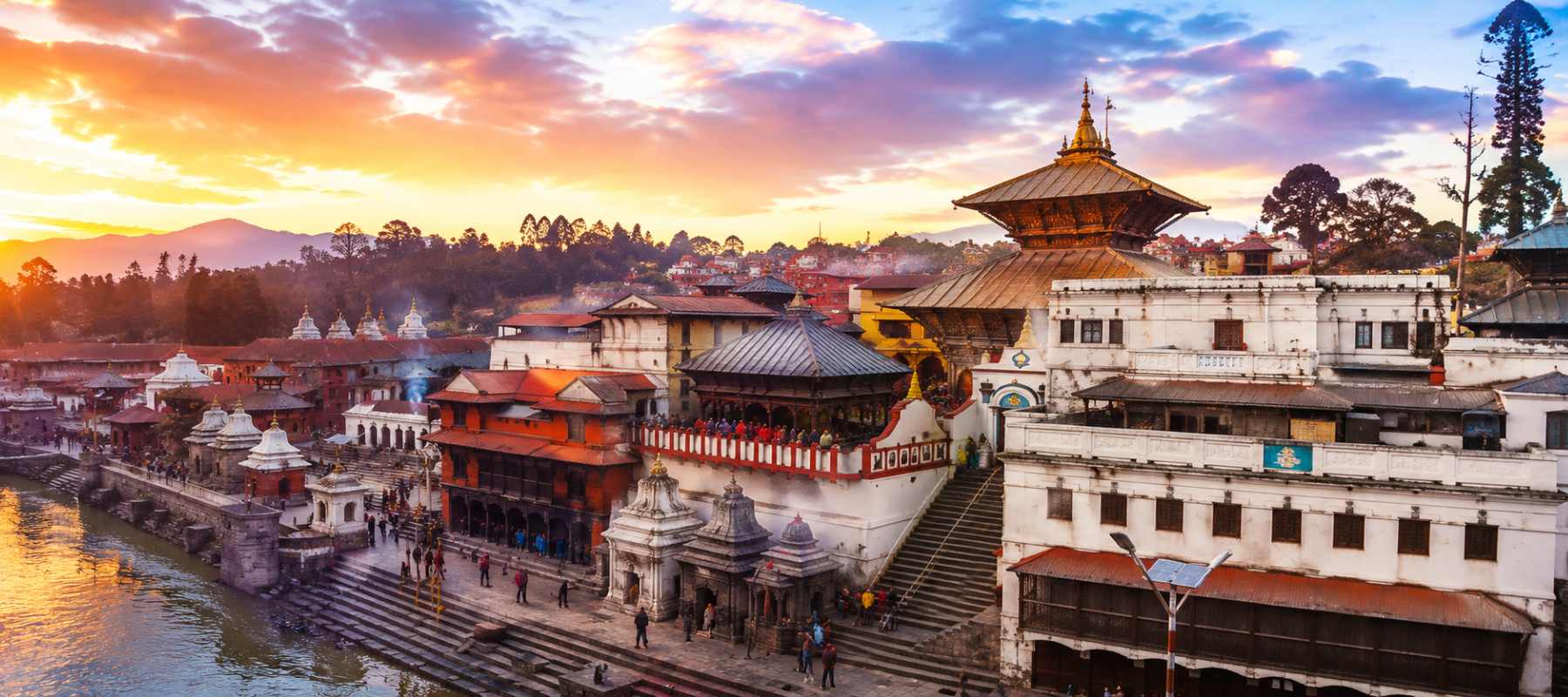
Pashupatinath Temple in Kathmandu is the starting point for most Alliance Treks Nepal pilgrimage tours, and with good reason. It is the most important Hindu temple in Nepal, one of the holiest Shiva shrines in all of Asia, and a UNESCO World Heritage Site that has stood on the banks of the Bagmati River since at least the 5th century.
Every day at Pashupatinath, sadhus — Hindu holy men with ash-covered faces and matted hair — sit along the ghats. Cremation ceremonies take place openly on the riverbanks, a visible, unapologetic reminder of the Hindu understanding of death as transition rather than end. Morning and evening aarti rituals light the air with incense and flame. The inner sanctum of the main temple is accessible only to Hindus, but the surrounding complex, the ghats, the smaller shrines, and the sadhu enclosures are open to all visitors.
Pashupatinath is not a museum. It is a living, breathing sacred site where ritual life continues around the clock, every day of the year. Alliance Treks guides our pilgrimage groups through Pashupatinath with deep respect for the ongoing religious activity, explaining the significance of what is visible without intruding on what is private.
Best Time to Visit Pashupatinath — Maha Shivaratri (February/March) draws hundreds of thousands of pilgrims and sadhus to Pashupatinath — the most extraordinary day in the Hindu pilgrimage calendar in Nepal. Alliance Treks can plan your Nepal pilgrimage tour around this date for a truly unforgettable experience.
At 3,710 metres in the Mustang district of northern Nepal, Muktinath is one of the most remarkable pilgrimage destinations in Asia. It is simultaneously one of the 108 Divya Desams — the most sacred Vishnu shrines in Hindu tradition — and a revered Buddhist site associated with the Tibetan Buddhist deity Avalokitesvara. Hindus and Buddhists have worshipped here side by side for centuries.
The temple complex at Muktinath contains 108 water spouts in the shape of bull heads, fed by a sacred spring. Pilgrims bathe under all 108 spouts as an act of purification — a ritual that is, by any measure, a serious act of devotion at 3,710 metres in mountain air. There is also an eternal flame here, fed by natural gas seeping through rock, which burns in the presence of water — a phenomenon considered divinely miraculous in both Hindu and Buddhist belief.
Alliance Treks runs Muktinath pilgrimage tours as part of our Upper Mustang trek packages. The approach to Muktinath passes through Jomsom, the Kali Gandaki gorge (the deepest valley on earth), and the ancient walled villages of Kagbeni and Jharkot. The landscape is otherworldly — Tibetan plateau terrain, prayer flags, ancient monasteries, and the jagged peaks of the Annapurna and Dhaulagiri ranges flanking either side.
Gosaikunda is a high-altitude glacial lake at 4,380 metres in the Langtang National Park, and it is one of the most spiritually charged landscapes in Nepal. In Hindu tradition, Gosaikunda was created by Lord Shiva himself, who is said to have plunged his trident into the mountain to create a lake of healing water after drinking poison to save the world. The lake is considered one of the holiest Hindu pilgrimage sites in Nepal, and every year during the full moon of Janai Purnima (July/August), an estimated 10,000 to 15,000 pilgrims make the trek to its shores.
The Gosaikunda pilgrimage trek passes through Dhunche, Sing Gompa, and the sacred lakes of Saraswati and Bhairab Kunda before reaching Gosaikunda itself. The trail is demanding but deeply beautiful — rhododendron forest giving way to rocky high-altitude terrain, with views of Langtang Lirung and the surrounding range growing closer with every hour.
Alliance Treks runs Gosaikunda pilgrimage tours as both standalone Nepal spiritual trekking packages and as part of a combined Langtang Valley and Gosaikunda itinerary. We strongly recommend this trek to pilgrimage tourism clients who want a Nepal sacred site experience that is also a genuine high-altitude trekking journey.
Alliance Treks Tip — The Gosaikunda trek can be combined with the Helambu circuit for a longer Nepal pilgrimage tour that covers multiple sacred lakes and Buddhist monasteries. Ask us about our combined itinerary options.
Lumbini, in the Terai lowlands of southern Nepal near the Indian border, is the birthplace of Siddhartha Gautama — the historical Buddha — and one of the four most sacred pilgrimage sites in Buddhism. For Buddhist pilgrims from around the world, visiting Lumbini is as significant as the Hajj is for Muslims or the Vatican is for Catholics. This is the ground where the light of the dharma first entered the world.
The sacred garden at Lumbini contains the Maya Devi Temple, built around the precise spot traditionally identified as the Buddha’s birthplace, and the Ashoka Pillar — erected by the Mauryan emperor Ashoka in 249 BCE and inscribed to confirm the site’s sanctity. Surrounding the sacred garden, the Lumbini Development Zone contains monasteries built by Buddhist nations from across the world: Thailand, Japan, China, Korea, Sri Lanka, Germany, France. Each reflects its national Buddhist tradition in architecture and practice.
Alliance Treks includes Lumbini as a key component of our Nepal Buddhist pilgrimage tour packages and our combined Hindu-Buddhist Nepal pilgrimage tours. We design Lumbini visits with sufficient time to explore both the sacred garden and the international monastery zone, and we pair Lumbini with nearby Tilaurakot — the ancient Shakya capital where the young Siddhartha Gautama lived before renouncing his princely life.
No Nepal pilgrimage tour is complete without time at Kathmandu’s two great Buddhist stupas — Swayambhunath and Boudhanath — and Alliance Treks includes both in every spiritual tour of Nepal that passes through the capital.
Swayambhunath sits atop a hill west of Kathmandu, its white dome and golden spire visible from across the valley. It is one of the oldest religious sites in Nepal, with origins dating back at least 2,500 years. The all-seeing eyes of the Buddha painted on the four sides of the stupa’s tower watch over the Kathmandu Valley in all directions — an image that has become Nepal’s most iconic symbol. The surrounding complex contains shrines, prayer wheels, Tibetan monasteries, and enough resident monkeys to earn the site its popular name.
Boudhanath is the largest stupa in Nepal and one of the largest in the world. Since the 1960s, it has been the spiritual centre of Tibetan Buddhist exile culture in Nepal, surrounded by more than fifty monasteries, thangka painting workshops, and a community of Tibetan monks and nuns who have made Boudhanath one of the most active centres of Tibetan Buddhist practice outside Tibet itself. Walking the kora — the circumambulation path — around Boudhanath at dusk, as butter lamps are lit and monks begin their evening prayers, is one of the most peaceful and profound experiences available anywhere in Kathmandu.
Less known internationally but deeply significant in Nepal’s pilgrimage tradition, Halesi Mahadev in the Khotang district of eastern Nepal is one of the holiest Shiva cave shrines in the country. The site contains a series of natural limestone caves that are sacred in both Hindu and Buddhist traditions — Hindu pilgrims revere the caves as an abode of Shiva, while Tibetan Buddhists associate Halesi with Guru Rinpoche (Padmasambhava), who is said to have meditated here.
Alliance Treks includes Halesi Mahadev in our off-the-beaten-path Nepal pilgrimage tour packages for clients who want to experience Nepal’s sacred sites beyond the standard Kathmandu circuit. The journey to Halesi takes you through rural eastern Nepal — terraced hillsides, Rai and Limbu villages, and landscapes that most foreign pilgrimage tourists never see. It is the kind of Nepal that reminds you why pilgrimage, in its original form, was always as much about the journey as the destination.
There are many Nepal trekking companies that will take you to a sacred site. Alliance Treks is the company that will take you there with genuine knowledge, cultural sensitivity, and a level of preparation that transforms a sightseeing visit into a real pilgrimage experience.
Here is what sets our Nepal pilgrimage tourism packages apart:
Alliance Treks Promise — We have guided pilgrims from India, Japan, South Korea, the United States, the UK, and across Europe through Nepal’s sacred sites. We approach every Nepal pilgrimage tour with the same care we would want for our own family making this journey. That is the standard we hold ourselves to, every time.
Here is what you need to know before booking a Nepal pilgrimage tour with Alliance Treks.
October to November and March to May are the best months for pilgrimage tourism in Nepal. The weather is clear, the trails are accessible, and the mountain views that frame so many of Nepal’s sacred sites are at their most dramatic. The monsoon season (June to August) closes some high-altitude routes but is also the season for the Gosaikunda Janai Purnima pilgrimage — one of the most extraordinary religious gatherings in Nepal.
Some of Nepal’s pilgrimage sites — particularly those in restricted areas like Upper Mustang (Muktinath) and Dolpo — require special permits that must be arranged in advance. Alliance Treks handles all permit applications for our Nepal pilgrimage tour clients. We also assist with TIMS cards, national park entry permits, and any other documentation required for your specific itinerary.
The physical demands of a Nepal pilgrimage tour vary enormously depending on the sites you visit. Lumbini and the Kathmandu Valley temples are accessible to almost any level of fitness. Gosaikunda and Muktinath require reasonable fitness and altitude awareness. Alliance Treks provides honest advice on preparation and designs itineraries with appropriate acclimatisation for any high-altitude sacred sites.
Contact Alliance Treks at [email protected] or visit alliancetreks.com to start planning your Nepal pilgrimage tour. Tell us your faith tradition, the sacred sites that are most important to you, your travel dates, and your physical condition — and we will come back to you with a custom pilgrimage itinerary that fits your journey.
Pilgrimage tourism in Nepal is not a new trend. It is an ancient practice that has been drawing people to these mountains for thousands of years. What is new is having a Nepal trekking company that understands both the spiritual dimension and the practical reality of making these journeys — and can handle both with equal care.
Alliance Treks has walked the ghats of Pashupatinath at dawn, stood at the 108 waterspouts of Muktinath in October wind, sat beside the sacred fire at Gosaikunda, and circled the great white dome of Boudhanath at dusk more times than we can count. We do not take these places for granted. And we will not take your pilgrimage to them for granted either.
Whatever brings you to Nepal — faith, curiosity, a family tradition of pilgrimage, or simply the sense that some places in this world carry a weight of meaning that deserves to be experienced in person — Contact Alliance Treks and we will help you get there. Properly. Respectfully. Unforgettably.
Alliance Treks & Expedition Pvt. Ltd. Once is not enough for naturally and culturally Himalayas