(Viber, Whatsapp, Cell) +977 9851022814

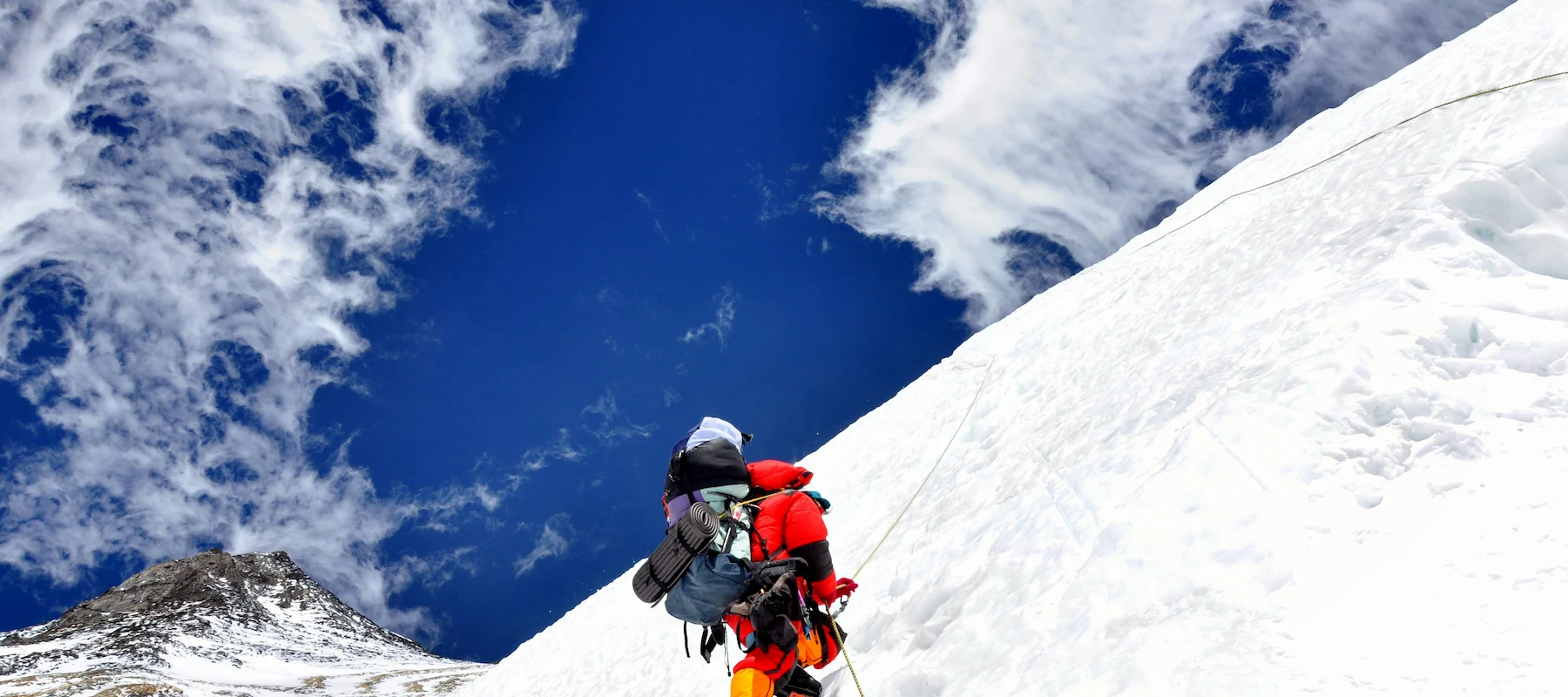
Everest spring 2026 season will be remembered as the year the mountain broke its own records while simultaneously delivering a reminder that records do not mean very much above 8,000 metres. Furthermore, by the time the Icefall Doctors removed the final ladders from the Khumbu Icefall at the end of May, Everest had produced its highest-ever permit count, its highest-ever single-season summit total from the Nepal side, its highest-ever single-day summit count from Nepal, and its highest-ever permit revenue. Moreover, it had also produced a serac blockage that delayed the season by nearly three weeks, compressed hundreds of summit bids into a dangerously narrow weather window and taken five lives on the mountain itself. Consequently, the Everest spring 2026 season is not a simple success story. It is a more complicated and more interesting one than that.
Alliance Treks has been operating in the Khumbu region for over 34 years. Furthermore, every spring season adds something to our understanding of what this mountain is and what it asks of the people who come to climb it. Moreover, the 2026 season asked more questions than most — about crowd management, about climate change in the icefall, about the relationship between record revenue and consistent safety.
If you are considering Everest Base Camp trekking or high-altitude mountaineering in Nepal, understanding the Everest spring 2026 season in detail is genuinely useful preparation for what the mountain looks like right now.
When Nepal announced in late 2025 that Everest permit fees would rise from USD 11,000 to USD 15,000 for the 2026 spring season after the first increase since 2015, the received wisdom in mountaineering circles was that demand would drop. Furthermore, a 36 percent price jump on top of the USD 40,000 to USD 100,000 in additional expedition costs that climbers already carry seemed like the kind of number that would thin the queues. Moreover, several expedition operators predicted a quieter season. Additionally, there had been public discussion in Nepal about limiting permit numbers following the notorious 2019 death zone traffic jams. Consequently, most observers went into spring 2026 expecting a leaner, perhaps more manageable season than recent years.
What happened instead was that Nepal issued 494 Everest permits which is the highest number ever recorded, surpassing the previous record of 478 set in 2023. Furthermore, climbers from more than 55 countries turned up at Base Camp. Moreover, the Department of Tourism (DoT) collected over USD 6 million from Everest permits alone, part of a broader total of Rs 1.24 billion in royalty revenue from permits across 30 peaks. Consequently, the fee increase did not reduce demand. It simply meant Nepal earned significantly more from the demand that arrived anyway.
Before going into the narrative of what actually happened, here is the full statistical picture of the 2026 season from official sources:
| Metric | 2026 Data |
|---|---|
| Permits issued | 494 (highest ever, surpassing 2023’s record of 478) |
| Total summits | 950+ (highest single-season total in Everest history) |
| Single-day summit record | 274 climbers on May 20 from Nepal side — all-time Nepal side record |
| Permit fee | USD 15,000 (up from USD 11,000 — first increase since 2015) |
| Revenue generated | Over USD 6 million in Everest permit fees alone |
| 30-peak total permits | 1,157 permits across 30 peaks, Rs 1.24 billion in royalties |
| Season opening | April 28, 2026 — approximately 2.5 weeks behind schedule |
| Delay cause | Massive unstable serac blocking Khumbu Icefall route |
| Confirmed fatalities | 5 on Everest; additional deaths on Makalu and Makalu II |
| Countries represented | Climbers from more than 55 countries |
Source: Nepal Dept of Tourism official permit data, cited by Kathmandu Post (May 2026)
And here is how this season sits in the context of the last several years:
| Year | Permits | Permit Fee | Summits | Deaths |
|---|---|---|---|---|
| 2019 | 381 | USD 11,000 | ~900 (both sides) | 12 |
| 2021 | 408 | USD 11,000 | ~360 | 2 |
| 2022 | 416 | USD 11,000 | ~682 | 5 |
| 2023 | 478 | USD 11,000 | ~697 | 12 |
| 2024 | 419 | USD 11,000 | ~600 | 8 |
| 2026 | 494 | USD 15,000 | ~950+ (Nepal side) | 5+ |
Source: Historical permit data — Nepal DoT via Kathmandu Post and Outside Online (2019–2026)
The permit record was set before a single climber had passed through the Khumbu Icefall. Furthermore, by the time Nepal’s Department of Tourism closed its spring permit window, 494 individuals held official authorisation to attempt the world’s highest peak. Moreover, this number includes foreign climbers paying the full USD 15,000 rate — the new fee introduced this season after a decade without adjustment. Additionally, Nepali climbers pay a significantly lower rate, and high-altitude workers and guides operate under separate licensing arrangements. Consequently, the USD 6 million in permit revenue is drawn almost entirely from the foreign climbing community.
The economics of climbing Everest extend far beyond the permit fee itself. Furthermore, the total cost for a fully supported guided ascent ranges from approximately USD 40,000 on the lower end to well over USD 100,000 for a premium package with a private Sherpa, supplemental oxygen at every stage, and helicopter access. Moreover, that money flows through a complex chain of Nepali businesses — expedition companies, equipment suppliers, teahouse operators, porters, and the Icefall Doctor teams themselves. Additionally, in the Khumbu region alone, the spring climbing season sustains the livelihoods of thousands of families in Namche Bazaar, Phakding, Tengboche, and the villages along the approach trail. Consequently, the economic significance of the Everest spring 2026 season extends far beyond the summit count.
For trekkers interested in the Khumbu region without the climbing permit — the Everest Base Camp trek with Alliance Treks offers access to this extraordinary landscape, the culture of the Sherpa communities, and views of the mountain itself, without requiring mountaineering experience or the associated permit costs.
The story of the Everest spring 2026 season really begins not with the summit counts but with a serac. Furthermore, in early April, as Icefall Doctors began their annual work of establishing the route through the Khumbu Icefall, they encountered a massive unstable block of glacial ice sitting directly above the standard passage between Base Camp and Camp I. Moreover, the Sagarmatha Pollution Control Committee described the situation plainly: the serac had multiple cracks and could collapse at any time. Additionally, two alternative routes were assessed. One would have required ten vertical ladders and ran climbers close to an active rockfall zone. The other sat beneath the serac itself. Consequently, after several days of scouting, the Icefall Doctors concluded that the route passing beneath the serac — the more dangerous of the two options — was paradoxically the safest available passage, and that no better alternative existed.
This is the kind of sentence that deserves a pause. Furthermore, the safest way through one of the most dangerous climbing routes in the world ran directly beneath an unstable ice tower that could collapse without warning. Moreover, a renowned mountain guide quoted by Outside Online captured the atmosphere at Base Camp during the delay: anyone claiming not to be concerned, he said, was either inexperienced or not paying attention. Additionally, Reuters reported that the obstacle was approximately a 100-foot ice tower, and that hundreds of climbers sat at Base Camp for weeks unable to move upward. Consequently, the route did not open until April 28, 2026 — roughly two and a half weeks behind the normal schedule.
Source: Icefall opens April 28, serac warning — Outside Online (April 2026)
Source: Serac delays Everest route, Reuters cited by Outside Online (April 2026)
The 2026 serac situation was not simply bad luck. Furthermore, expedition planners and route specialists have been noting for several years that the Khumbu Icefall behaves less predictably than records from a decade ago suggest it should. Moreover, crevasses open faster, ice formations shift more frequently, and seracs that once remained stable through the season now show instability earlier. Additionally, Nepal’s Department of Tourism confirmed on April 29 that the climbing route from Base Camp through Camp I to Camp II had been successfully established following the serac issue, and that the Expedition Operators Association Nepal was proceeding with rope fixing from Camp II to the summit. Consequently, the season did proceed, but the delay left its mark on everything that followed.
The compression effect of a late icefall opening is straightforward and serious. Furthermore, the viable summit window on Everest’s south side typically runs from mid-May to around May 25, before the jet stream returns and the pre-monsoon winds build to dangerous levels. Moreover, with the icefall opening on April 28 instead of the usual mid-April timing, teams had significantly less time for their acclimatisation rotations — the process of ascending to Camp II and returning to Base Camp repeatedly to prepare the body for extreme altitude. Additionally, this compression meant that a very large number of climbers would be attempting to reach the summit within the same narrow window. Consequently, the crowding risks that Everest management had been trying to reduce were, if anything, amplified by the delayed start.
Despite the compressed schedule, the weather cooperated in ways that mattered most. Furthermore, the jet stream — the high-altitude wind system that determines when summit windows open and close on Everest — produced stable conditions over the mountain in the latter half of May, allowing teams to push for the summit in concentrated waves. Moreover, the first ascent of the season came on May 13, when a team of twelve Sherpas reached the summit at 10:25am local time while fixing the final ropes. Additionally, the significance of that moment was not lost on anyone at Base Camp: the season was open, the fixed lines were in place, and the queue of 400-plus permit holders was ready to move.
The primary summit wave arrived on May 20 and the days surrounding it. Furthermore, weather forecasting services predicted a four to five day stable window and teams moved quickly to take advantage of it. Moreover, the coordination required to manage hundreds of climbers through a single fixed rope system above 8,000 metres is genuinely extraordinary — expedition leaders and government liaison officers work in concert to sequence teams, manage pace, and prevent the traffic jams that made 2019 so dangerous and so deadly. Additionally, the government official at Base Camp told Gripped Magazine that the success rate had been high, defying speculation that the record permit numbers would inevitably lead to chaos. Consequently, the weather window of 2026 was narrow but workable, and teams moved through it with remarkable discipline.
Source: First ascent May 13, weather conditions, summit wave — Gripped Magazine (May 2026)
The numbers from May 20, 2026 require a moment to process. Furthermore, according to Nepal’s Department of Tourism representative stationed at Everest Base Camp and reported by the Kathmandu Post and Outside Online, 274 climbers reached the summit of Everest from the Nepal side in a single day — a new record for ascents from Everest’s southern face. Moreover, this surpassed the previous Nepal-side single-day record of 223, set on May 22, 2019. Additionally, it is worth noting the distinction: the all-time combined single-day record from both the Nepal and Tibet sides remains May 23, 2019, when 354 people reached the summit using both routes. Consequently, the May 20, 2026 figure is the Nepal-side record — a significant distinction that is important to understand correctly.
Source: 274 climbers on May 20, Nepal-side single-day record — Kathmandu Post (May 2026)
The logistics of 274 people moving up and down the same fixed rope system in the same day are difficult to overstate. Furthermore, climbers must share narrow ridgelines, ladder crossings, and oxygen stations in conditions where physical and cognitive function are already severely compromised by altitude. Moreover, the fact that no major accidents or fatalities were reported on May 20 itself — despite the scale of the movement — reflects both the professionalism of the Sherpa guide teams and the improved coordination between expedition operators and government officials. Additionally, the Kathmandu Post reported that 18 expedition companies operating from Everest’s southern route managed the ascent, a figure that illustrates the scale of the industry involved. Consequently, May 20, 2026 was remarkable for its numbers but also for what did not go wrong.
Source: Live updates, summit count confirmed 270–274 — Outside Online (May 2026)
Every report on the Everest spring 2026 season that leads with records and summit counts owes equal space to the people who did not come back. Furthermore, five people died on Everest during the 2026 spring season, and the circumstances of each death carry information that is more useful than any summit statistic. Moreover, the details below come directly from Outside Online’s reporting, sourced from Nepal’s Department of Tourism liaison officer at Base Camp and confirmed by expedition operators. Additionally, the deaths span guides, workers, and client climbers — a reminder that the risk on this mountain is distributed across every role, not just the permit holders.
| Date | Name | Role | Circumstances |
|---|---|---|---|
| May 3, 2026 | Lakpa Dende Sherpa, 52 | Climbing guide | Died trekking to Base Camp before the season began. |
| May 10, 2026 | Bijaya Ghimire Bishwakarma, 35 | High-altitude worker (TAG Nepal) | First Nepali Dalit climber to summit Everest. Died ascending through the Khumbu Icefall. |
| May 11, 2026 | Phura Gyaljen Sherpa, 20 | High-altitude worker | Slipped and fell on the Lhotse Face at approximately 7,000m, just below Camp 3. |
| May 21, 2026 | Arun Kumar Tiwari | Client climber (Pioneer Adventures) | Died near Hillary Step on descent after summiting. Illness, not a fall. |
| May 21, 2026 | Sandeep Are | Client climber (Pioneer Adventures) | Died after summiting. Illness confirmed by expedition managing director. |
Source: Everest fatalities 2026 — Outside Online (May 2026, Nepal DoT source)
Several things stand out from this table. Furthermore, Bijaya Ghimire Bishwakarma deserves particular acknowledgement. He was 35 years old, a member of Nepal’s Dalit community, and on his way to becoming the first Nepali Dalit climber to summit Everest. Moreover, he died in the Khumbu Icefall on May 10 before reaching that milestone. Additionally, the deaths of Arun Kumar Tiwari and Sandeep Are on May 21, both from illness after successfully summiting — illustrate a pattern that wilderness medicine specialists have documented repeatedly: the descent, not the ascent, is when most Everest deaths occur. Consequently, the summit is not the finish line. Getting back down is.
The total of five Everest deaths in spring 2026 compares favourably to recent seasons — 2023 saw twelve deaths, 2019 also twelve. Furthermore, the 2026 number is the lowest in several years for a season of this permit scale. Moreover, it is still five people who left families behind. Consequently, no season on Everest should be evaluated purely by its summit count without this accounting.
Source: Historical Everest death toll context — Kathmandu Post (Jan 2025)
The permit fee increase from USD 11,000 to USD 15,000 was the first adjustment since 2015 and came alongside other regulatory changes. Furthermore, new rules introduced for 2026 include requirements around garbage management, mandatory social security provisions for high-altitude workers, and stricter documentation for equipment carried above Base Camp. Moreover, Nepal’s government had also signalled — though not yet formally enacted — a proposal requiring future Everest permit applicants to demonstrate prior experience summiting a 7,000-metre peak in Nepal. Additionally, mandatory employment of Nepali expedition leaders for all commercial teams was also under consideration. Consequently, the fee increase was the visible part of a broader regulatory shift in how Nepal manages its most valuable mountain asset.
What the 2026 season demonstrated is that USD 15,000 did not suppress demand. Furthermore, the record permit count suggests the global pool of Everest-aspiring climbers is deeper and wealthier than the previous fee structure assumed. Moreover, the USD 6 million in Everest permit revenue — combined with the broader Rs 1.24 billion generated across 30 peaks — represents a significant contribution to Nepal’s treasury. Additionally, how that revenue is allocated — toward route safety infrastructure, Icefall Doctor compensation, environmental remediation, and the social welfare of high-altitude workers — is a conversation that the 2026 season has given Nepal significantly more resource to have. Consequently, the economic story of the Everest spring 2026 season is not simply one of record receipts. It is one of what those receipts can now fund.
Alliance Treks operates Everest Base Camp trekking packages that allow visitors to experience the Khumbu region and reach Base Camp at 5,364 metres without a climbing permit. For those interested in the full mountaineering context of what they are walking through, our guides have been in this region for 30 years.
The Everest spring 2026 season revealed several things about the mountain’s direction that deserve honest examination. Furthermore, the first is that higher fees do not reduce permit demand — the record 494 permits issued despite the 36 percent price increase makes this clear. Moreover, if Nepal genuinely wants to manage crowd numbers on the mountain, experience requirements and permit caps are the only tools with documented effect. The fee is a revenue instrument, not a crowd management instrument. Additionally, the serac crisis in the Khumbu Icefall is not a one-off event but part of an accelerating pattern of glacial instability that will require increasingly sophisticated route management in coming years. Consequently, the Icefall Doctors face a more technically demanding and more dangerous job each season than they did a decade ago.
The success story of 2026 is real. Furthermore, nearly 950 people reached the highest point on Earth this spring, the majority safely, with a fatality rate that was lower than several recent comparable seasons. Moreover, the coordination between expedition operators, government officials, and Sherpa guide teams produced a season that defied the pessimistic predictions made when the permit numbers were first published. Additionally, a government official at Base Camp told Gripped Magazine that the season had entered Everest history in more ways than one. Consequently, 2026 was a year the mountain’s records fell. But records fall every few years on Everest. The more interesting question is what the mountain is trying to say through the delays, the seracs, the compressed windows, and the five people who did not make it home.
Nepal’s Department of Tourism issued 494 climbing permits for Everest in the spring 2026 season — the highest number ever issued for a single season, surpassing the previous record of 478 set in 2023. Furthermore, this came despite the permit fee rising from USD 11,000 to USD 15,000, the first increase since 2015. The Kathmandu Post reported these figures directly from the Department of Tourism in May 2026.
A massive unstable serac — a block of glacial ice approximately 100 feet tall, according to Reuters — blocked the standard route through the Khumbu Icefall above Base Camp. Furthermore, the Icefall Doctors spent several weeks assessing alternative passages. Moreover, two alternatives were evaluated but neither was deemed safer than the route passing beneath the serac itself. Consequently, the icefall did not open until April 28, roughly two and a half weeks behind the normal mid-April schedule.
On May 20, 2026, 274 climbers reached the summit of Everest from the Nepal side in a single day — a new record for Nepal-side daily ascents, surpassing the previous record of 223 set on May 22, 2019. Furthermore, the Kathmandu Post confirmed this figure using data from Nepal’s Department of Tourism. Moreover, it is important to note that the all-time combined record from both the Nepal and Tibet sides remains 354 climbers, set on May 23, 2019.
Five people died on Everest during the spring 2026 season. Furthermore, the deaths included a climbing guide, two high-altitude workers, and two client climbers. Moreover, Outside Online reported all five fatalities using information sourced directly from Nepal’s Department of Tourism liaison officer at Base Camp and confirmed by expedition operators. Additionally, additional deaths occurred on other peaks including Makalu during the same season. The five Everest deaths represent one of the lower fatality counts for a season of this scale in recent years.
Yes. The Everest Base Camp trek reaches the Everest Base Camp at 5,364 metres and requires a Sagarmatha National Park entry permit and a TIMS card, but not a climbing permit. Furthermore, the trekking route passes through Namche Bazaar, Tengboche, Dingboche, and Lobuche, offering views of Everest and the surrounding peaks without requiring mountaineering experience. Moreover, Alliance Treks has been running guided Everest Base Camp treks for over 30 years and can arrange every element of the journey from Kathmandu.
The Everest spring 2026 season was a record-breaking season on most measurable dimensions and a sobering one on others. Furthermore, it revealed a mountain that is more in demand than ever, a glacial environment that is more unpredictable than it was a generation ago, and a Sherpa community whose skill and courage make everything that happens above Base Camp possible. Moreover, it raised questions about permit management, crowd control, and the ethics of commercial high-altitude climbing that Nepal will be working through for years. Additionally, it produced nearly 950 summits and five deaths. Consequently, it was a very Everest kind of season — extraordinary and humbling in exactly equal measure.
Plan your Everest region journey with Alliance Treks.
Alliance Treks & Expedition Pvt. Ltd. Once is not enough for naturally and culturally Himalayas