(Viber, Whatsapp, Cell) +977 9851022814

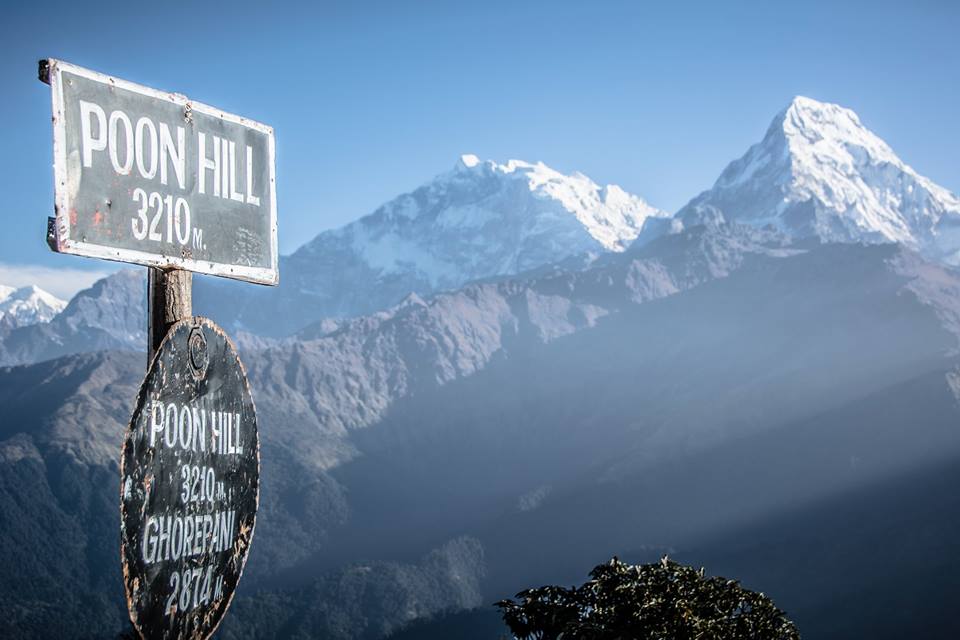
Most trekkers arrive at the summit of Poon Hill at 5:30 AM, gasping for air and staring at the Annapurna massif, only to realize they’ve missed the real show. They spent the entire climb looking at their boots, unaware that they were walking through a prehistoric botanical miracle that exists nowhere else on Earth in this magnitude.
If you are planning a trip to Nepal, you have likely seen the photos of the “Red Forest.” However, the truth that generic travel blogs won’t tell you is that the rhododendron bloom is a moving target. It is a vertical wave of color that migrates up the mountainside over six weeks; consequently, if you arrive ten days too early or 500 meters too low, you see nothing but green.
Since 1993, we have watched these seasons shift from our base in Kathmandu. In addition to tracking weather patterns, we have led three decades of international explorers through the Ghorepani circuit, learning the exact rhythm of the Lali Gurans. We know which hidden ridgelines hold the pale pink Rhododendron wallichii (specific species of rhododendron named after Nathanael Wallich (1786–1854), a famous Danish surgeon and botanist) and which ancient groves turn a deep, waxy crimson.
In this guide, we are stripping away the “tourist-trap” fluff. Furthermore, we will show you how to time your trek to the specific week of the bloom, the tactical gear you actually need for a Himalayan spring, and why a legacy-backed expedition is the difference between a crowded walk and a profound mountain experience.
The Lali Gurans does not bloom in a single day; rather, it performs a “Vertical Wave” that travels upward as the sun warms the Himalayan slopes. Understanding this thermal migration is essential; otherwise, you may find yourself surrounded by bare branches instead of vibrant color.
In late March, the spectacle begins at lower elevations around 2,000 meters, where the air is thick and warm. At this stage, the Rhododendron arboreum presents a deep, waxy scarlet that contrasts sharply against the emerald terraced fields. As the season progresses, the bloom climbs higher, reaching the Ghorepani ridgelines at 2,800 meters by early April.
By mid-April, the forest transforms into a multi-layered canopy of soft pinks, mauves and pure whites. If, however, you arrive in early May, you must look to the highest alpine reaches near 3,200 meters. By then, the lower forests have already shed their petals, leaving the high ridges as the final sanctuary for the hardy white blossoms.
Poon Hill offers a visual juxtaposition found nowhere else on the planet. Specifically, it pairs the world’s most vibrant floral display with the world’s most formidable mountains. While other regions of Nepal host rhododendrons, the Annapurna Conservation Area features the highest density of these ancient trees.
From the summit, the 8,000-meter giants of Dhaulagiri and Annapurna I serve as a jagged, ivory backdrop. Moreover, the sheer scale of the trees here is staggering, with some specimens reaching heights of 20 meters. Walking beneath these massive canopies feels like navigating a prehistoric garden; indeed, it is a masterclass in natural design.
Popularity is the double-edged sword of the Poon Hill trek. Nevertheless, our 33 years of operation have taught us that the secret to peace lies in the “Counter-Flow” strategy. We utilize local relationships built over three decades to secure teahouses with unobstructed views away from the loudest hubs.
In contrast to budget agencies that follow the standard crowd, our guides know the secondary ridgelines. Furthermore, choosing a legacy-backed company means you aren’t just a number. We prioritize the “Quiet Hours,” timing our departures to avoid the massive groups that often clog the stone steps between Ulleri and Ghorepani. Consequently, your experience remains intimate and contemplative.
For the international traveler, a balanced 5-day itinerary ensures you hit the “Sweet Spot” of the bloom. We begin with a drive to Hile followed by a steady ascent to Ulleri. Following this, day two leads us into the heart of the ancient groves toward Ghorepani, where the canopy thickens and the air cools significantly.
Subsequently, the third day features the pre-dawn ascent of Poon Hill followed by a traverse to Tadapani. Many trekkers skip the Tadapani forest; on the contrary, our veterans know this stretch offers the most dramatic, moss-draped “Cloud Forest” experience. Finally, day four and five focus on the descent through Ghandruk, allowing you to see the bloom integrated into local life.
The Lali Gurans is more than a flower; rather, it is a sacred symbol of Nepal’s resilience. Local Magar and Gurung communities have used these petals for generations to create traditional medicines. In addition to the cultural history, the forest is a sanctuary for rare wildlife.
As you walk, listen for the rustle of the Himalayan Monal. Similarly, you may spot Langur monkeys leaping through the flowering branches. The scent of the forest in spring is intoxicating—a mix of damp earth and blooming flora. Ultimately, our guides share these sensory stories to turn a simple hike into a deep immersion into Himalayan ecology.
Spring weather in the Annapurna region is a study in extremes. Therefore, you must utilize a highly technical layering system. You will likely trek in a t-shirt during the sun-drenched afternoons; conversely, temperatures often drop below freezing by dawn.
We recommend high-quality, polarized sunglasses to protect your eyes from intense UV rays. Additionally, ensure your hiking boots are well-broken-in before arriving in Kathmandu. As a result of proper preparation, you can focus on the scenery instead of physical discomfort.
A journey to the Himalayas is a significant investment of your heart and time. For this reason, you deserve a partner who views your trek as a continuation of a 33-year mission. The rhododendrons of Poon Hill are preparing for their next great performance in the spring of 2026.
Do not leave your experience to chance. Instead, join the experts who know these trails better than anyone. Are you ready to walk through the fire and ice of the Annapurna range? Contact us today.
Alliance Treks & Expedition Pvt. Ltd. Once is not enough for naturally and culturally Himalayas