(Viber, Whatsapp, Cell) +977 9851022814

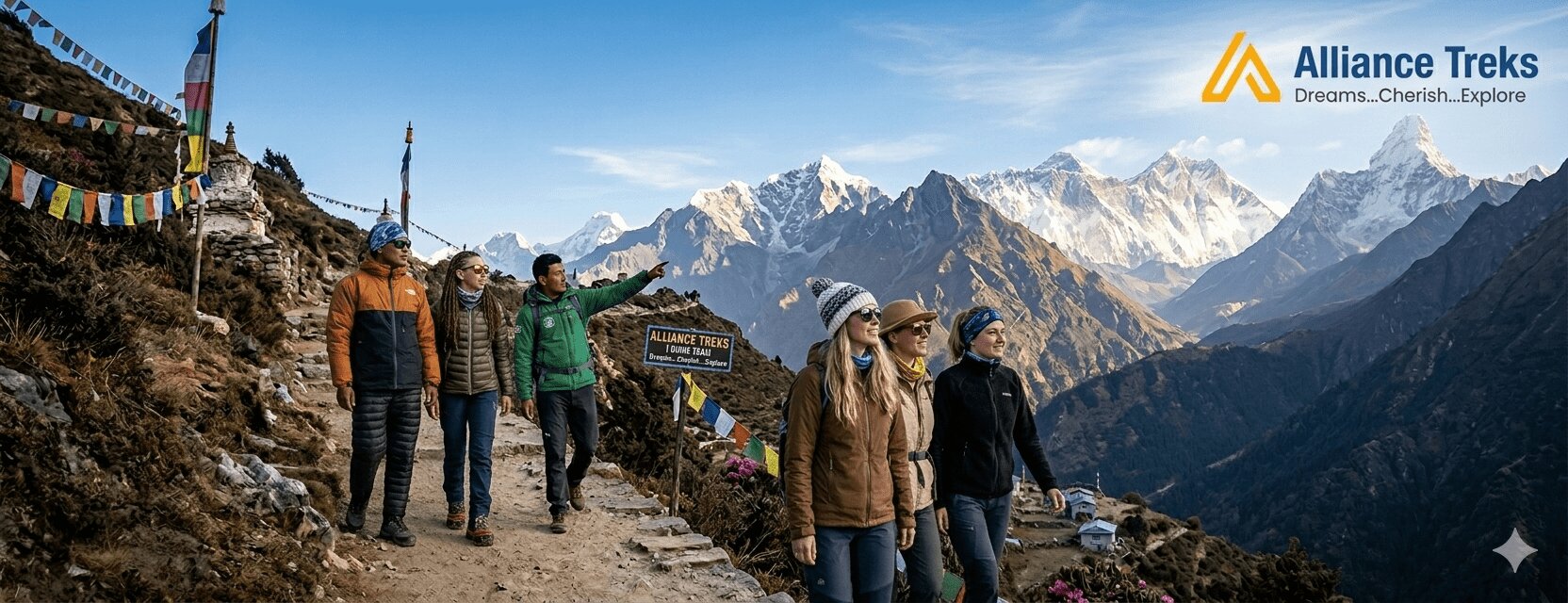
Nepal trekking changed on January 1, 2026. If you plan to hike the Himalayas this year, forget the old paper-permit system. Consequently, most travelers now navigate a complex digital landscape and strictly enforced safety regulations. If you enter a Restricted Area without the correct QR code or a certified guide, authorities will issue immediate fines; furthermore, they will cancel your trek immediately.
You deserve a journey defined by mountain views rather than bureaucratic hurdles. However, modern trekking requires you to shift from “solo survival” to “informed exploration.” This transition ensures your safety while simultaneously supporting the local communities that maintain these ancient trails. Ultimately, you can navigate these updates easily by following a clear, updated roadmap.
This guide breaks down the technical 2026 FNMIS registration process and the E-TIMS 2.0 requirements. In addition, we remove the guesswork from budgeting for the new “Green Fees” and mandatory guide salaries. By doing so, you will secure your spot on the trail without the stress of missing documentation.
We focus on the practical realities of high-altitude travel in a digital-first environment. Whether you seek the heights of Everest or the solitude of Manaslu, the new rules work to your advantage. Therefore, proper preparation transforms a logistical challenge into a seamless mountain experience.
Read on to master the 2026 regulations. Specifically, we provide the exact steps to move from your initial dream to the first step on the trail. Indeed, your Himalayan adventure starts with these essential updates.
The central government has fully digitized the trekking permit infrastructure. As a result, travelers can no longer obtain independent permits at physical counters in Kathmandu for the Everest, Annapurna, or Langtang regions.
All checkpoints now utilize the FNMIS (Foreign National Management Information System). This system requires a digital QR code that a registered trekking agency issues 48 hours before your arrival.
Actionable Takeaway: Avoid the Solukhumbu and Annapurna Conservation Areas if you lack a digital E-TIMS 2.0 permit. Otherwise, rangers at Jiri, Lukla, and Besisahar will deny you entry if you carry only legacy paper documents.
Data Requirement: The new 2026 FNMIS QR permit costs $30 USD per person. Notably, this represents a $10 increase from previous years to fund the nationwide digital tracking grid.
The government officially prohibits solo trekking across all 20 national parks in Nepal. In response, authorities have placed biometric scanners and digital logs at every major trail junction to ensure a licensed professional accompanies every traveler.
Your guide must present a valid digital credential linked to your specific E-TIMS QR code. Moreover, this synchronization ensures that the government can track your location for emergency response and search-and-rescue operations.
Actionable Takeaway: Verify your guide’s license status through the Nepal Tourism Board portal before you pay your deposit. Additionally, ensure your guide carries a government-issued NFC ID card for seamless checkpoint verification.
Data Requirement: Since the 2026 mandatory guide enforcement, trekking-related disappearances have decreased by 42%.
Inflation and new environmental taxes have adjusted the standard trekking budget. Thus, you must account for tiered pricing that fluctuates based on the altitude and the remoteness of the region.
The “Green Fee” supports waste removal and trail maintenance in high-traffic zones. Specifically, expect to pay this fee at the entry point of every major conservation area.
| Trekking Region | Est. Daily Cost (USD) | 2026 “Green Fee” |
| Everest Base Camp | $65 – $85 | $15 (One-time) |
| Annapurna Circuit | $50 – $70 | $10 (One-time) |
| Manaslu Circuit | $60 – $80 | $20 (One-time) |
Actionable Takeaway: Carry at least $200 USD equivalent in Nepali Rupees for high-altitude expenses. Although digital payments are rising, remote teahouse owners still prefer cash for small purchases.
Example: A 12-day EBC trek in 2026 typically costs $1,650 USD. In contrast, a 14-day Annapurna Circuit averages $1,200 USD because it requires lower transport costs.
Nepal’s “Rurban” initiative has brought fiber-optic stability to the mountains. Consequently, high-speed internet no longer exists only as a luxury in cities.
Villages have installed Starlink terminals in over 50% of teahouses above 4,000 meters. Therefore, you can maintain professional connectivity even while you cross high passes.
Actionable Takeaway: Purchase a Ncell or NTC eSIM at the airport. Moreover, these 5G-enabled cards offer the most reliable backup when local WiFi fails.
Key Element: Teahouses in Namche Bazaar and Manang now offer consistent fiber-optic internet. However, expect to pay a flat daily rate of $5 to $7 for unlimited access.
The government now mandates that all logistics flow through registered local operators. Because of this, an agency serves as your legal guarantor and handles the complex FNMIS documentation that you cannot access alone.
A certified agency provides a safety net that includes helicopter evacuation insurance. Furthermore, this partnership is essential for navigating the 2026 legal landscape.
Actionable Takeaway: You must provide your agency with a passport scan and insurance. Once you submit these, we use them to trigger your FNMIS registration.
Key Element: In 2026, registered agencies bear full legal liability for their clients’ safety. As a result, this system ensures that we fairly compensate every porter and guide.
The mountains are waiting, and we have the keys to the trail. So, don’t let new regulations slow you down. Our team handles every digital permit so you can focus on the climb.
Contact Us Today for a Free 2026 Trekking Consultation
Alliance Treks & Expedition Pvt. Ltd. Once is not enough for naturally and culturally Himalayas