
(Viber, Whatsapp, Cell) +977 9851022814

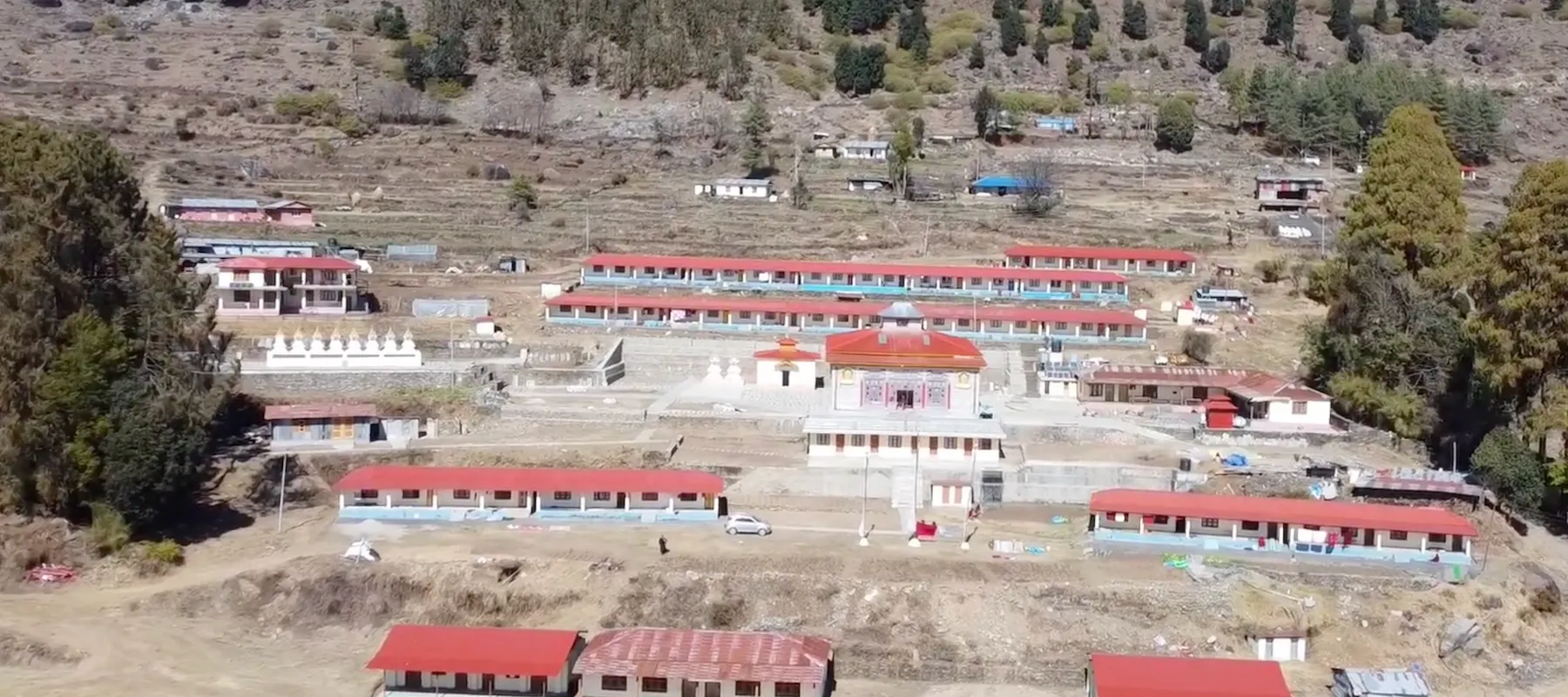
This is a hidden gem trek in Dolakha district to one of the most beautiful place in the Nepalese Himalaya, Bigu Gompa. This 13-day trek offers a cultural program of ancient heritage sites in the Kathmandu Valley, as well as a true off-the-beaten-path experience with Newar and Sherpa villages, terraced farmland and forested ridgelines with far fewer trekkers than the more popular routes in Nepal.
The journey starts with a day of sightseeing around Kathmandu’s UNESCO World Heritage Sites – Pashupatinath, Boudhanath and Patan Durbar Square – followed by a road trip to the east to Charikot and Dolakha, a historic Newar trading town that was once on the salt-trade route to Tibet. From here, the true trek starts, winding down and up through the interspersed forests and terraced hillsides to Bigu Gompa at 2450m, which is regarded as one of the most important religious sites in this region of Nepal.
From Bigu Gompa the trail crosses the Tinsang La ridge (the highest point on the trek) then heads down through little-visited villages to the Kathmandu Valley rim, through Panauti, one of the most conserved medieval Newar towns in Nepal, and Namo Buddha, one of the most important Buddhist pilgrimage sites in the country. As the days draw to a close, the green hills rise higher above Godawari, before a short drive brings you back to Kathmandu, and a journey of cultural depth, monastic tradition, and quiet rural Nepal is complete.
The route is well-suited for those looking to experience a more authentic and immersive experience of Nepal, with its relative isolation making it a great choice for those who prefer a more quiet and private trip than what is found on the more popular trekking trails.
Day 1 Arrival in Kathmandu (1,400m/4,593ft) & Hotel Transfer
Day 2 Full Day Sightseeing in Pashupatinath, Boudhanath & Patan Durbar Square
Day 3 Drive to Charikot (1,950m/6,398ft) & Dolakha (1,900m/6,234ft)
Day 4 Dolakha to Piguti (1,020m/3,346ft)
Day 5 Piguti to Sarang Khola (1,300m/4,265ft)
Day 6 Sarang Khola to Bigu Gompa (2,450m/8,038ft)
Day 7 Bigu Gompa to Tinsang La (3,300m/10,827ft)
Day 8 TInsang La to Karthali (1,900m/6,234ft)
Day 9 Karthali to Arniko Highway via Arigal Danda & Drive to Panauti (1,700m/5,577ft)
Day 10 Panauti to Namo Buddha & Return, via Dhulikhel (1,750m/5,741ft)
Day 11 Panauti to Lakuri Bhanjyang (2,000m/6,562ft)
Day 12 Lakuri Bhanjyang to Godawari, Drive to Kathmandu (1,400m/4,593ft)
Day 13 Final Departure
There’s no need to choose a high pass or a glacier viewpoint trek to make a memorable trip in Nepal — sometimes the best part of an adventure is in the quiet, scarcely visited corners that are overlooked by most trips. The Bigu Gumba Trek is a trek of this nature– a 13 day hike through the hills of Dolakha district, offering a mix of the cultural treasures of Kathmandu Valley and a trip through one of the most important Buddhist nunneries in Nepal.
The trail starts slowly by visiting three of Kathmandu’s UNESCO World Heritage Sites: Pashupatinath, the nation’s holiest Hindu temple complex, Boudhanath with one of the world’s largest Buddhist stupas, and Patan Durbar Square, renowned for its incredible Newar craftsmanship. This is not just about sightseeing for the sake of sightseeing, but also the cultural foundation for the entire journey, as the route to be taken will be across the Newar, Sherpa and Buddhist communities, whose traditions were directly derived from what you will witness on this first day.
From Kathmandu, the road takes a turn east to Charikot and then on to Dolakha, a century-old Newar trading town which used to be located on the salt route to Tibet. The trickle-down walking starts here — and the character of the trek changes significantly. Getting down through forest and terraced farmland to Piguti, then on through Sarang Khola, the trail passes through villages that experience a fraction of the foot traffic of Nepal’s classic trails. No teahouses here that are filled to capacity, no lines for rooms — simply quiet hill trails, terraced fields and a more observational sort of trekking.
Highlights of the trip are the cultural and spiritual highlight on Day 6, at Bigu Gompa, (2,450m) a working Buddhist nunnery, with a resident community of nuns. It is one of the most significant religious sites in this region of Nepal but little known outside specialist trekking circles. An overnight stay here provides the opportunity to observe monastic life in action, not for tourists, but for tourists.
The route from Bigu Gompa ascends to Tinsang La (3,300m) which offers a quiet, uncluttered summit with a commanding view and a wealth of forest. The descent to follow gradually brings you back towards the rim of the Kathmandu Valley, through Karthali en route to over Arigal Danda, before the tour again heads towards two of the most famous medieval pilgrimage and heritage towns of the valley: the very well-preserved medieval Newar settlement of Panauti, which sits on the banks of two sacred rivers; and the one of Nepal’s most revered Buddhist pilgrimage sites, Namo Buddha, linked to a key legend of self-sacrifice in Buddhist teaching.
The last leg of the walk is an easy one, passing through forest and then down to Godawari where the National Botanical Garden of Nepal is located, and then a brief drive back to Kathmandu, where you can spend the rest of the afternoon shopping, resting, or walking through Thamel before you depart.
The Bigu Gumba Trek is not so much a dramatic ascent as it is extreme difficulty: the trek peaks at a manageable 3,300m and rarely requires more than 6 hours of walking per day. Its true beauty lies in the diversity and authenticity: a route from UNESCO heritage sites to a remote nunnery, through the un-spoiled Newar and Sherpa villages, past two of the Kathmandu Valley most sacred pilgrimage towns without the crowds which have become synonymous with better-known trails in Nepal. This trek offers a lot more than you’d expect for only 1,300 to 1,700 meters, for those that seek cultural depth, monastic history and true rural Nepal in one well-rounded trip.
Alliance Treks & Expedition Pvt. Ltd. Once is not enough for naturally and culturally Himalayas