(Viber, Whatsapp, Cell) +977 9851022814

Trekking in Nepal differs from other major trekking destinations because its teahouse infrastructure lets trekkers walk for weeks without carrying a tent or cooking setup. It’s the extreme altitude range, spanning from subtropical valleys to over 5,000 meters within a single trek, and its village culture, where trails pass directly through inhabited communities rather than protected wilderness—combined with a permit system that funds conservation and a guide & porter economy that supports entire communities in the mountain region. Nepal offers a style of trekking that few other regions in the world can replicate.
This isn’t about a “top destinations” list or a gear guide; this blog will elaborate on what makes trekking in Nepal different from other destinations.
| Feature | Nepal | European Alps | South American Andes | North American Rockies |
|---|---|---|---|---|
| Accommodation style | Teahouse lodges, no camping required in major trek destinations | Mountain huts, some village lodging | Mostly camping, limited refugios | Mostly camping, backcountry permits |
| Typical trek length | 5–22 days | 3–10 days | 5–12 days | 3–8 days |
| Maximum altitude reached | Up to 5,545 m (Kala Patthar) | Up to ~4,800 m (rare on standard treks) | Up to ~4,600 m (Inca Trail) | Up to ~4,300 m (Rocky Mountain peaks) |
| Guide requirement | Often mandatory on major routes | Optional on most marked trails | Often required in restricted zones | Optional, self-guided common |
| Village/cultural contact | Constant — trails run through inhabited villages | Occasional, mostly at trailheads | Limited to specific cultural routes | Minimal — wilderness-focused |
| Relative cost (per trekking day) | Lower | Higher | Moderate | Moderate to high (gear-dependent) |
This comparison isn’t meant to rank one region above another — the Alps and Andes offer their own extraordinary trekking. The point is that Nepal’s specific combination of features doesn’t really exist as a package anywhere else.
The biggest structural difference in Nepal trekking is the teahouse network. On nearly every major route like Everest Base Camp, Annapurna Base Camp, Poon Hill, and even much of the Manaslu Circuit, trekkers sleep in family-run lodges and eat hot food prepared with local ingredients without ever pitching a tent and eat junk food. This removes an entire category of gear (tents, fuel, sleeping pads) that trekkers in most other mountain regions have to carry themselves.
The teahouse system is also a character of the trek itself. Instead of isolated wilderness camps, evenings become communal – trekkers, guides, porters, and lodge owners often share the shame roof, the same dining, and the same wooden stove. It turns trekking from a purely physical activity into something more of a cultural exchange and meeting new people with different traditions. This is what the new trekkers in Nepal feel and share with us after completing the trek.
Nepal is home to eight 8000 meters peaks, and you will walk from a subtropical river valley to a viewpoint near 5,500 meters within the same one-to-two-week trip. On the way to Everest Base Camp, for example, trekkers pass through forests, terraced farmland, alpine scrubland, and finally barren high-altitude terrain — a transition that would normally require traveling across several different countries or climate zones to experience.
This compressed altitude range is part of why acclimatization days in the trek are such an important part of trekking in Nepal; in a way, it often isn’t elsewhere. It’s also part of the reward: very few trekking regions let you stand in a lush rhododendron forest one day and an 8,000-meter mountain’s direct shadow a few days later.
Nepal’s teahouse and guide system is not just a coincidence; it is the result of the country’s mountain openings relatively late (1950s onwards), and in a manner that integrated mountain tourism into, not in isolation from, the existing village economy. As there was no established wilderness-recreation industry to adapt to, local communities themselves became the infrastructure: Families opened rooms to house guests, farmers started providing trekking routes, and guiding became a formalized profession with a regional and ethnic base—from the Sherpas of the Khumbu to the Gurungs of the foothills of the Annapurna.
This history is also one of the reasons why the trekking culture is not seen as an industry that has been added to Nepal’s mountains, but rather an integral part of the mountain way of life as a whole, as opposed to areas where the trekking industry was established with the primary goal of serving outside visitors and having little local value.
The majority of the major trekking areas in Nepal will require conservation area permits, restricted area permits, or a trekker registration (like TIMS), and the money will go towards the upkeep of the trails, the protection of the environment, and local development projects. In most other trekking areas, hiring a licensed guide is not a formal requirement, but it is in many of the routes where it is a requirement.
That is, it is a system whereby the cost of the trekker’s permit and guide is directly and clearly linked with the region in which they are hiking—a practice not as prevalent on other self-guided wilderness trails.
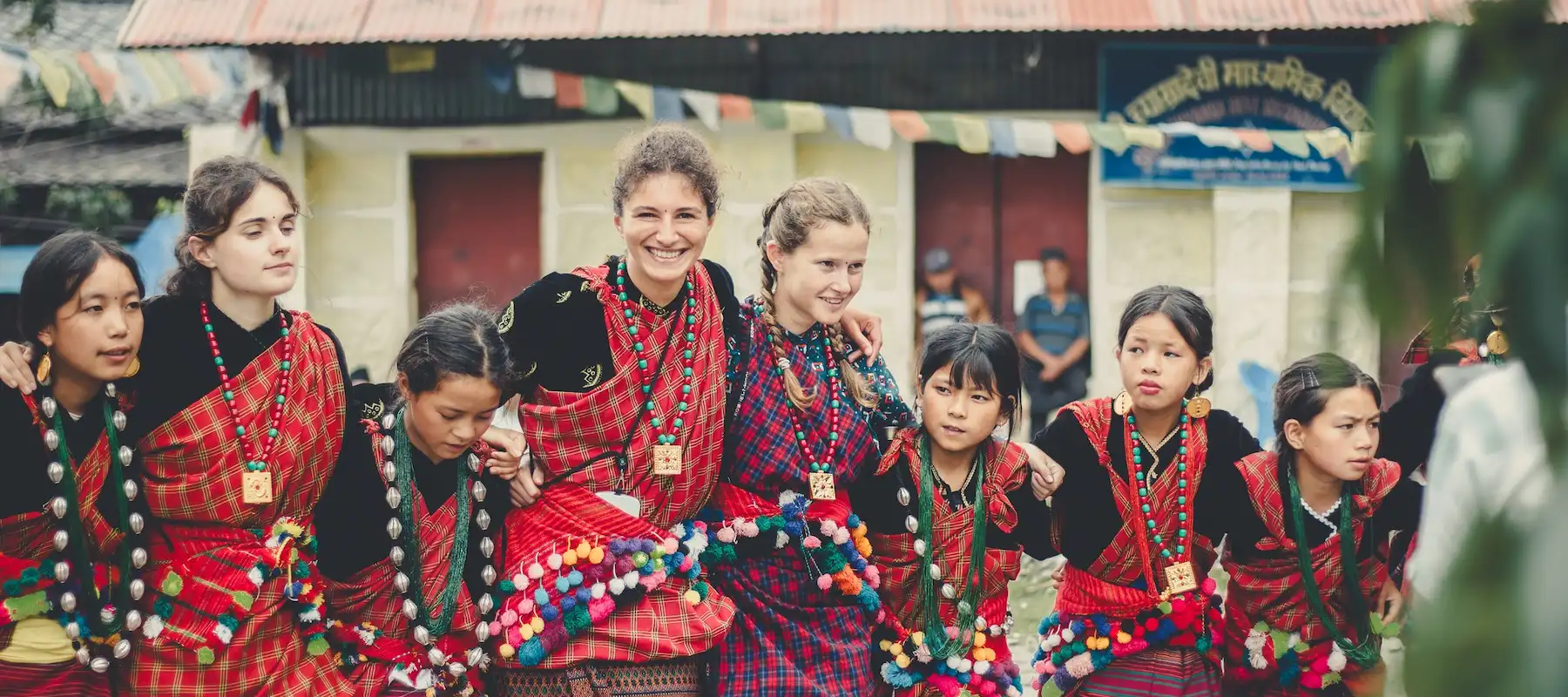
Trekking in Nepal rarely feels like passing through empty wilderness, because it usually isn’t. Routes wind directly through villages where daily life continues around you: farmers working terraced fields, children walking to school along the same trail, monasteries and mani walls integrated into the path itself rather than set aside as separate attractions. This is fundamentally different from trekking regions built around protected, uninhabited wilderness, where cultural contact is largely confined to trailhead towns.
| Trek Region | Cultural Element Along the Route |
|---|---|
| Annapurna foothills (Ghandruk, Poon Hill) | Gurung and Magar villages, traditional stone architecture |
| Everest (Khumbu) region | Sherpa villages, Buddhist monasteries, mountaineering heritage |
| Langtang Valley | Tamang cultural communities and heritage trail sites |
| Manaslu Circuit | Tibetan-influenced villages, less-commercialized daily life |
| Upper Mustang | Trans-Himalayan Buddhist culture, walled monastery towns |
Because these communities are living, working places rather than preserved heritage sites, the cultural experience changes naturally with the seasons, the harvest, and local festivals — something a fixed museum or heritage trail can’t replicate.
Nepal relies on a teahouse lodging system with no camping required, reaches significantly higher altitudes, and routes trekkers directly through inhabited villages, while Alpine trekking typically involves shorter routes, mountain huts, and less sustained village contact.
On most major routes, yes — licensed guides are formally required by regulation, partly for safety and partly to support the local guide economy that trekking permits and fees help fund.
The teahouse system provides lodging and hot meals at village stops along nearly every major route, removing the need for tents, stoves, and cooking equipment that trekkers in most other regions carry themselves.
Nepal treks can move from subtropical valleys to over 5,000 meters within a single one-to-two-week trip, a climate and elevation range that would typically require traveling across multiple countries elsewhere.
Yes. Permit fees fund conservation and local infrastructure, while guiding, portering, and teahouse ownership form a direct, structured economy rooted in the regions trekkers walk through.
Alliance Treks & Expedition Pvt. Ltd. can help you choose a route that highlights the teahouse culture, altitude diversity, and community connection that set trekking in Nepal apart:
Alliance Treks & Expedition Pvt. Ltd. Once is not enough for naturally and culturally Himalayas