(Viber, Whatsapp, Cell) +977 9851022814

There are exactly 14 mountains on Earth that rise above 8,000 meters, known collectively as the “eight-thousanders.” Nine are fully or partially located in Nepal, five in Pakistan (three shared with China), and one entirely within Tibet, China. Mount Everest (8,849 m) is the tallest, and Shishapangma (8,027 m) is the shortest of the fourteen. Most can be viewed up close via a dedicated trek or base camp trail, without needing any technical climbing experience.
This guide covers every one of the 14 highest peaks in the world in detail — their exact location, height, mountain range, and the specific trek or base camp route that lets ordinary trekkers get close to each one.
| Rank | Peak | Height | Location | Mountain Range |
|---|---|---|---|---|
| 1 | Mount Everest | 8,849 m | Nepal / China (Tibet) | Mahalangur Himal |
| 2 | K2 | 8,611 m | Pakistan / China | Karakoram |
| 3 | Kangchenjunga | 8,586 m | Nepal / India | Kangchenjunga Himal |
| 4 | Lhotse | 8,516 m | Nepal / China (Tibet) | Mahalangur Himal |
| 5 | Makalu | 8,485 m | Nepal / China (Tibet) | Mahalangur Himal |
| 6 | Cho Oyu | 8,188 m | Nepal / China (Tibet) | Mahalangur Himal |
| 7 | Dhaulagiri I | 8,167 m | Nepal | Dhaulagiri Himal |
| 8 | Manaslu | 8,163 m | Nepal | Mansiri Himal |
| 9 | Nanga Parbat | 8,126 m | Pakistan | Himalaya (western edge) |
| 10 | Annapurna I | 8,091 m | Nepal | Annapurna Himal |
| 11 | Gasherbrum I | 8,080 m | Pakistan / China | Karakoram |
| 12 | Broad Peak | 8,051 m | Pakistan / China | Karakoram |
| 13 | Gasherbrum II | 8,035 m | Pakistan / China | Karakoram |
| 14 | Shishapangma | 8,027 m | China (Tibet) | Jugal Himal |
Only fourteen mountains on the entire planet cross the 8,000-meter threshold, and reaching every one of their summits without supplemental oxygen — a feat first completed by Reinhold Messner in 1986 which remains one of mountaineering’s most exclusive achievements. But you don’t need to be an elite climber to experience these giants. Most of the 14 highest peaks in the world are directly accessible via a base camp trek or trekking route that brings ordinary, fit trekkers within a few kilometers of their summits, no technical climbing skill required.
Nine of the fourteen sit in Nepal, either fully within its borders or straddling the frontier with Tibet, making the country the undisputed global center of eight-thousander trekking. Five more rise in Pakistan’s Karakoram range, with three of those shared with China, and one — Shishapangma — is the only eight-thousander to lie entirely within a single country, Tibet.
This guide walks through each of the fourteen peaks individually: where it sits, which country or countries claim it, which trekking route lets you see it up close, when it was first climbed, and what makes each one geologically and historically distinct.
All fourteen eight-thousanders owe their extreme height to the same geological event: the ongoing collision between the Indian tectonic plate and the Eurasian plate, which began roughly 50 million years ago and continues today. As the Indian plate pushes northward beneath Eurasia, it forces the crust upward, and the Himalayas and Karakoram — the only two ranges on Earth containing 8,000-meter peaks — continue to rise by a few millimeters each year as a direct result. This is also why the region remains seismically active, and why earthquakes and glacial events continue to reshape the terrain trekkers walk through today.
Climbing all fourteen eight-thousanders took the mountaineering world just over three decades, starting with Annapurna I in 1950 and ending with Shishapangma in 1964:
| Peak | First Ascent Year | First Ascent Team/Climbers |
|---|---|---|
| Annapurna I | 1950 | Maurice Herzog and Louis Lachenal (France) |
| Everest | 1953 | Edmund Hillary (New Zealand) and Tenzing Norgay (Nepal) |
| Nanga Parbat | 1953 | Hermann Buhl (Austria), solo final push |
| K2 | 1954 | Achille Compagnoni and Lino Lacedelli (Italy) |
| Cho Oyu | 1954 | Herbert Tichy, Joseph Jöchler (Austria), Pasang Dawa Lama (Nepal) |
| Kangchenjunga | 1955 | Joe Brown and George Band (United Kingdom) |
| Makalu | 1955 | Jean Franco’s French expedition team |
| Lhotse | 1956 | Fritz Luchsinger and Ernst Reiss (Switzerland) |
| Manaslu | 1956 | Toshio Imanishi (Japan) and Gyalzen Norbu (Nepal) |
| Gasherbrum II | 1956 | Fritz Moravec, Josef Larch, Hans Willenpart (Austria) |
| Broad Peak | 1957 | Hermann Buhl, Kurt Diemberger, Marcus Schmuck, Fritz Wintersteller (Austria) |
| Gasherbrum I | 1958 | Andrew Kauffman and Pete Schoening (USA) |
| Dhaulagiri I | 1960 | Kurt Diemberger and Swiss-Austrian expedition team |
| Shishapangma | 1964 | Chinese expedition team led by Xu Jing |
Annapurna I holds a particularly notable distinction: it was not only the first eight-thousander ever climbed, in 1950, three years before Everest, but it also remains statistically the most dangerous of the fourteen relative to the number of successful summits, due to frequent avalanches on its main climbing routes.
1. Mount Everest (8,849 m) — The World’s Highest Peak
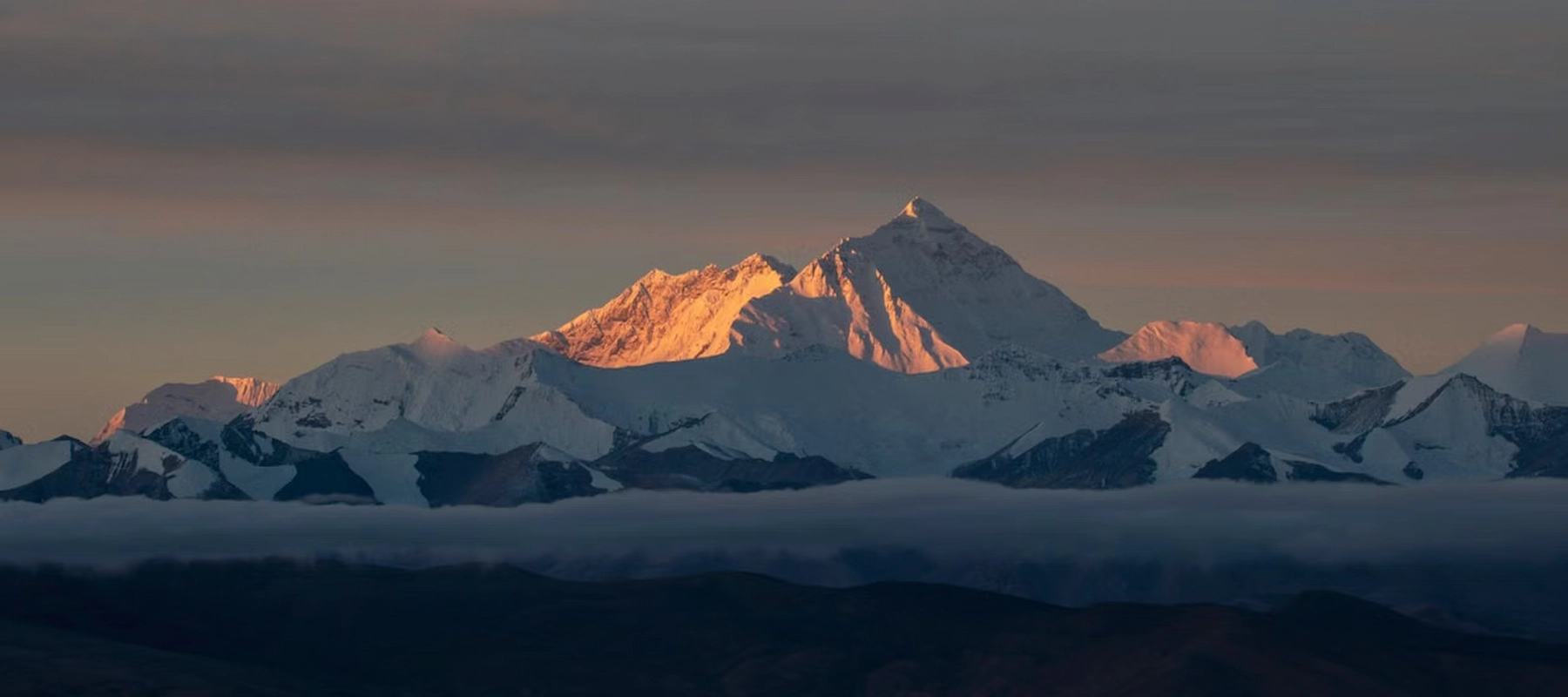
Sharing the border between Nepal’s Khumbu region and Tibet, Everest is the undisputed highest point on Earth and the single most recognized mountain in the world. Known locally as Sagarmatha in Nepali and Chomolungma (“Goddess Mother of the World”) in Tibetan, it was first summited on May 29, 1953, by Edmund Hillary and Tenzing Norgay. Its height was most recently remeasured jointly by Nepal and China in 2020, revising the previously accepted figure of 8,848 m upward by one meter. On the Nepal side, the classic Everest Base Camp Trek brings trekkers to 5,364 meters at the mountain’s southern base, with most itineraries also including a climb to Kala Patthar (5,545 m) for a full, unobstructed view of the summit. The Gokyo Lakes Trek offers an alternative angle on Everest from the west, crossing the Ngozumpa Glacier and Cho La Pass.
2. K2 (8,611 m) — The Savage Mountain
Sitting on the Pakistan-China border in the Karakoram range, K2 is widely considered the most technically demanding and dangerous of all fourteen eight-thousanders, earning its nickname “the Savage Mountain” from a historical fatality rate of roughly one death for every four successful summits — a ratio far steeper than Everest’s. Unlike most of the fourteen, K2 has no accepted local name in a native language, since its “K2” designation (from a 19th-century Great Trigonometrical Survey of India) simply stuck. It was first climbed in 1954 by an Italian expedition, and remained the last eight-thousander to be summited in winter, not achieved until 2021. The K2 Base Camp Trek, accessed via Skardu in northern Pakistan and the dramatic Baltoro Glacier, is one of the most physically demanding trekking routes in the world, though it requires no technical climbing to reach base camp itself.
3. Kangchenjunga (8,586 m) — The Five Treasures of Snow
Located on the Nepal-India border in the far eastern Himalayas, Kangchenjunga’s name translates roughly to “five treasures of the snow,” a reference to its five distinct summits, each said locally to represent a repository of gold, silver, gems, grain, and holy scriptures. It was first climbed in 1955 by a British expedition, whose members famously stopped just short of the true summit out of respect for local Sikkimese beliefs that hold the peak sacred — a tradition many climbing teams have continued to honor since. The Kangchenjunga Circuit Trek is one of Nepal’s most remote and restricted routes, offering the rare distinction of visiting both the mountain’s North Base Camp (Pang Pema) and South Base Camp (Oktang) within a single 21-day trek.
4. Lhotse (8,516 m) — Everest’s Neighbor
Directly adjoining Everest and sharing much of its lower approach, Lhotse’s name means “South Peak” in Tibetan, reflecting its position just south of the world’s highest mountain in Nepal’s Khumbu region. First climbed in 1956 by a Swiss expedition, Lhotse is connected to Everest by the South Col, meaning the two mountains share the same base camp and much of the same climbing route up to that saddle before diverging toward their separate summits. Because the standard Everest Base Camp Trek route runs directly alongside Lhotse’s massive south face, particularly visible from Dingboche and the Everest Base Camp area itself, most trekkers see Lhotse up close without any dedicated separate trek required.
5. Makalu (8,485 m) — The Isolated Pyramid
Sitting in a remote corner of eastern Nepal near the Tibet border, Makalu’s distinctive four-sided pyramid shape makes it instantly recognizable, and its name is believed to derive from the Sanskrit “Maha Kala,” a reference to Shiva in his fierce, dark form. First summited in 1955 by a French expedition, Makalu is generally regarded as one of the more technically demanding eight-thousanders to climb, despite being one of the more geographically isolated and less crowded on the trekking side. The Makalu Base Camp Trek, a demanding 18–21 day route through the Makalu Barun National Park, brings trekkers to around 4,870 meters directly beneath the mountain’s dramatic southwest face — a view considered by many to be more visually dominant than Everest’s own base camp panorama.
6. Cho Oyu (8,188 m) — The Turquoise Goddess
Located close to Everest in the Mahalangur range, straddling the Nepal-Tibet border, Cho Oyu’s name translates to “Turquoise Goddess” in Tibetan. First climbed in 1954 by an Austrian-led expedition, it’s often described by climbers as the most approachable of the eight-thousanders from a technical standpoint, making it a common choice for climbers attempting their first 8,000-meter summit. Trekkers typically view Cho Oyu from the Gokyo Lakes Trek, which passes close to its base on the western side of the Everest region.
7. Dhaulagiri I (8,167 m) — The White Mountain
Rising in west-central Nepal, Dhaulagiri’s name translates to “white mountain,” reflecting its massive, snow-covered bulk and the fact that it held the title of world’s highest known mountain in Western geographic circles for a brief period in the early 19th century, before more accurate Himalayan surveys identified Everest’s greater height. First climbed in 1960 by a Swiss-Austrian expedition, the Dhaulagiri Circuit Trek is one of Nepal’s most physically demanding routes, crossing the high French Pass and Dhampus Pass to reach a base camp area around 4,750 meters, seeing far fewer trekkers annually than more established circuits.
8. Manaslu (8,163 m) — The Mountain of the Spirit
Located in Nepal’s Gorkha district, Manaslu’s name derives from the Sanskrit word “manasa,” meaning “mountain of the spirit” or “mountain of the soul,” reflecting its deep local reverence among the Nubri and Tsum communities in its shadow. First summited in 1956 by a Japanese expedition, the mountain has become closely associated with Japanese mountaineering history as a result. The Manaslu Circuit Trek, a restricted-area route requiring a special permit, circles the mountain over 14–18 days and crosses the dramatic Larke La Pass at 5,160 meters, with a base camp side trip reaching approximately 4,800 meters.
9. Nanga Parbat (8,126 m) — The Killer Mountain
Standing somewhat apart from the main Himalayan chain in northern Pakistan, Nanga Parbat earned its nickname “Killer Mountain” from a notoriously difficult early climbing history that claimed 31 lives across several failed German expeditions before its first successful ascent. It was finally summited in 1953 by Hermann Buhl, climbing the final stretch entirely alone and without supplemental oxygen after his teammates turned back — one of the most celebrated solo feats in mountaineering history. The Nanga Parbat Base Camp Trek (also known as the Diamir Face or Fairy Meadows trek) is one of Pakistan’s most accessible eight-thousander treks, reaching lush alpine meadows directly beneath the mountain’s massive Rupal Face, the tallest mountain face on Earth at over 4,600 meters of vertical relief.
10. Annapurna I (8,091 m) — The Deadliest Eight-Thousander
Located in central Nepal, Annapurna I holds the distinction of being the very first eight-thousander ever climbed, summited in 1950 by French climbers Maurice Herzog and Louis Lachenal — three years before Everest. Despite that historic first, it has historically carried one of the highest fatality-to-summit ratios of any eight-thousander, largely due to frequent avalanches on its main climbing routes, even as it remains one of the most visited in trekking terms. The Annapurna Base Camp Trek, a relatively accessible 7–12 day route, brings trekkers into a dramatic natural amphitheater at 4,130 meters ringed by Annapurna I, Annapurna South, Hiunchuli, and Machhapuchhre. The longer Annapurna Circuit Trek offers a different perspective, crossing Thorong La Pass at 5,416 meters on the range’s northern side.
11. Gasherbrum I (8,080 m) — Hidden Peak
Located in Pakistan’s Karakoram range on the border with China, Gasherbrum I is also known as “Hidden Peak” due to its position tucked behind other peaks, making it invisible from the Baltoro Glacier approach until climbers are relatively close. It’s typically visited as part of the broader K2 and Gasherbrum Base Camp trekking routes through the Baltoro Glacier region.
12. Broad Peak (8,051 m) — The Wide Summit
Named for its unusually wide summit ridge, Broad Peak sits immediately adjacent to K2 in the Karakoram, sharing much of the same approach via the Baltoro Glacier. Trekkers typically view Broad Peak as part of the same K2 Base Camp Trek itinerary, since the two mountains’ base camps sit within a short distance of each other.
13. Gasherbrum II (8,035 m) — The Approachable Giant
Also in the Karakoram on the Pakistan-China border, Gasherbrum II is generally regarded as the most approachable eight-thousander in the entire Karakoram range from a technical climbing standpoint. Like Gasherbrum I and Broad Peak, it’s accessible via the same Baltoro Glacier trekking corridor that serves the K2 Base Camp Trek.
14. Shishapangma (8,027 m) — Tibet’s Own Giant
Shishapangma holds a unique distinction among the fourteen: it’s the only eight-thousander that lies entirely within a single country, Tibet (China), rather than straddling an international border. It was also the last of the fourteen to be officially climbed, in 1964, due to its remote location and historical access restrictions. The Shishapangma Base Camp Trek, accessed via Tibet’s high plateau, offers a considerably less crowded alternative to Nepal’s more visited eight-thousander base camps.
| Country | Number of Eight-Thousanders | Peaks |
|---|---|---|
| Nepal (fully or partly) | 8 | Everest, Kangchenjunga, Lhotse, Makalu, Cho Oyu, Dhaulagiri, Manaslu, Annapurna I |
| Pakistan (fully or partly) | 5 | K2, Nanga Parbat, Gasherbrum I, Broad Peak, Gasherbrum II |
| China/Tibet (fully or partly) | 6 | Everest, Lhotse, Makalu, Cho Oyu, Shishapangma, plus shared K2/Gasherbrum/Broad Peak border peaks |
| India (partly) | 1 | Kangchenjunga |
Nepal is the clear global leader for eight-thousander access specifically because so many of its peaks — Everest, Kangchenjunga, Lhotse, Makalu, Cho Oyu, Dhaulagiri, Manaslu, and Annapurna I — sit within or partly within its borders, and because Nepal’s teahouse trekking infrastructure makes reaching their base camps dramatically more accessible than the Karakoram’s more remote, tent-camping-dependent approach treks.
Beyond individual first ascents, a separate and even more demanding challenge has captured the mountaineering world’s attention since the 1980s: climbing all fourteen eight-thousanders in a single career, and later, doing it as fast as humanly possible. Edmund Hillary, despite his historic 1953 Everest first ascent alongside Tenzing Norgay, never attempted all fourteen — that pursuit began with a different generation of climbers roughly two decades later.
| Milestone | Climber(s) | Achievement | Year Completed |
|---|---|---|---|
| First person to climb all 14 | Reinhold Messner (Italy) | Completed all 14 without supplemental oxygen | 1986 |
| Second person to climb all 14 | Jerzy Kukuczka (Poland) | Completed in under 8 years, mostly via new routes | 1987 |
| First woman to climb all 14 without oxygen | Gerlinde Kaltenbrunner (Austria) | Completed without supplemental oxygen | 2011 |
| Fastest (pre-2019 era) | Kim Chang-ho (South Korea) | 7 years, 310 days, without supplemental oxygen | 2013 |
| Fastest with supplemental oxygen (at the time) | Nirmal “Nims” Purja (Nepal/UK) | 6 months, 6 days (“Project Possible”) | 2019 |
| First to summit all 14 twice | Sanu Sherpa (Nepal) | Completed the full set a second time | 2022 |
| Fastest ever (current record) | Kristin Harila (Norway) and Tenjen Sherpa (Nepal) | 92 days, using helicopter transfers and supplemental oxygen | 2023 |
| Fastest without supplemental oxygen | Nirmal Purja (Nepal/UK) | 2 years, 150 days | 2024 |
| Most cumulative 8,000m summits | Kami Rita Sherpa (Nepal) | 41 total ascents across all fourteen peaks, including a record 30th Everest summit | 2024 |
No climber reshaped public understanding of the 14 highest peaks more than Nirmal Purja. A former British Special Boat Service operator of Nepali Gurkha background, Purja set out in April 2019 on what he called Project Possible, aiming to climb all fourteen eight-thousanders in seven months — a target many in the climbing world considered close to impossible. He finished in just six months and six days, more than seven years faster than the previous record. His achievement, later documented in the film 14 Peaks: Nothing Is Impossible, became one of the most widely recognized mountaineering stories of the past decade and helped bring international attention to the role Nepali and Sherpa climbers play in high-altitude mountaineering, often with far less individual recognition than their foreign clients. Purja went on to lead the first winter ascent of K2 in January 2021 — the last of the fourteen peaks to be climbed in winter — and later set a separate record for completing all fourteen without supplemental oxygen, finishing in October 2024.
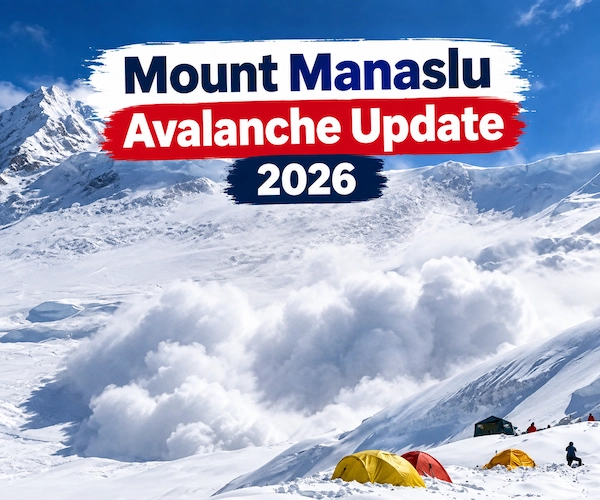
In a sobering reminder of how genuinely dangerous these mountains remain regardless of experience or record, Purja died on July 30, 2026, in an avalanche while leading an expedition on Broad Peak in Pakistan. His death was met with tributes from across the global climbing community and in Nepal, where he was widely regarded as a figure who had changed how the world saw Nepali mountaineers.
The record Purja set in 2019 stood for four years before being broken by Norwegian climber Kristin Harila and her Nepali climbing partner, Tenjen Sherpa, who completed all fourteen peaks in just 92 days in July 2023 — using helicopter transfers between base camps and a coordinated Sherpa support team, a style of ascent that drew both admiration and criticism within the mountaineering community for how it approached the challenge. As of September 2026, their 92-day record remains unbroken and stands as the fastest confirmed ascent of all fourteen 8,000-meter peaks. Tenjen Sherpa died later that same year in an avalanche on Shishapangma, unrelated to the speed-record climb itself.
No, and this is one of the most common points of confusion in mountaineering. The Seven Summits are the highest peak on each of the seven continents — a completely different list based on geography rather than absolute height. Only one mountain appears on both lists: Mount Everest, which is both the world’s highest peak and Asia’s Seven Summit.
| List | Basis | Example Peaks |
|---|---|---|
| 14 Highest Peaks (Eight-Thousanders) | Absolute height above 8,000 m | Everest, K2, Kangchenjunga, Manaslu |
| Seven Summits | Highest peak per continent | Everest (Asia), Aconcagua (South America), Denali (North America), Kilimanjaro (Africa) |
This distinction matters practically for climbers: completing the Seven Summits is achievable within a year or two by a well-funded, moderately experienced climber, while completing all fourteen eight-thousanders has been achieved by only a small number of people in mountaineering history, given the extreme altitude, remoteness, and technical demands involved in every single one of them.
Climbing risk varies dramatically across the fourteen, based on historical summit-to-fatality data:
| Peak | Relative Danger Level | Primary Hazard |
|---|---|---|
| Annapurna I | Highest historical fatality rate | Frequent avalanches on main routes |
| K2 | Very high | Technical difficulty, extreme weather exposure |
| Nanga Parbat | High (historically) | Early expeditions faced extreme technical and weather challenges |
| Kangchenjunga | Moderate-high | Remoteness, avalanche risk |
| Everest | Moderate (high traffic increases absolute numbers) | Overcrowding on summit day, altitude, weather windows |
| Cho Oyu | Lowest among the fourteen | Considered the most technically approachable 8,000m climb |
Everest’s total fatality count is high in absolute numbers largely because of the sheer volume of climbers who attempt it each year — over 800 people summited in a single recent season — while its fatality rate per summit attempt is actually lower than several less-visited peaks on this list.
Mount Everest, K2, Kangchenjunga, Lhotse, Makalu, Cho Oyu, Dhaulagiri I, Manaslu, Nanga Parbat, Annapurna I, Gasherbrum I, Broad Peak, Gasherbrum II, and Shishapangma — all the mountains on Earth that exceed 8,000 meters in height.
Eight of the fourteen eight-thousanders sit fully or partly within Nepal: Everest, Kangchenjunga, Lhotse, Makalu, Cho Oyu, Dhaulagiri I, Manaslu, and Annapurna I.
Mount Everest, at 8,849 meters, is the tallest, straddling the border between Nepal and Tibet, China.
Shishapangma, at 8,027 meters, is the shortest of the fourteen, and the only one located entirely within a single country, Tibet.
Yes. Most of the fourteen have a dedicated base camp trek or trekking route — such as the Everest Base Camp Trek, Annapurna Base Camp Trek, or K2 Base Camp Trek — that brings trekkers close to the mountain without requiring any technical climbing skill.
K2 is widely regarded as the most technically dangerous, while Annapurna I has historically carried one of the highest fatality-to-summit ratios among all fourteen peaks.
Reinhold Messner became the first person to summit all fourteen eight-thousanders, completing the feat in 1986, and the first to do so without supplemental oxygen.
As of September 2026, Kristin Harila and Tenjen Sherpa hold the fastest confirmed record, completing all fourteen in 92 days in July 2023, using helicopter transfers and supplemental oxygen.
Nirmal Purja, who set the previous speed record of 6 months and 6 days in 2019 and later completed all 14 peaks without supplemental oxygen in 2024, died on July 30, 2026, in an avalanche while leading an expedition on Broad Peak in Pakistan.
No. The Seven Summits are the highest peak on each continent, while the 14 highest peaks are simply every mountain above 8,000 meters. Only Mount Everest appears on both lists.
All fourteen eight-thousanders sit in either the Himalayas or the Karakoram range, both formed by the ongoing collision between the Indian and Eurasian tectonic plates, which is why no other range on Earth reaches comparable heights.
The 14 highest peaks in the world represent a genuinely finite, well-documented list — a rare case where “highest” isn’t up for debate. What makes them so compelling isn’t just their extreme altitude, but how differently accessible each one is: Everest and Annapurna welcome tens of thousands of trekkers a year through well-developed teahouse routes, while K2 and Shishapangma remain the preserve of a small, hardy few willing to camp their way through remote glacial terrain. Whether the goal is summiting, trekking to a base camp, or simply understanding where these giants sit on the map, this list remains one of the most fundamental reference points in all of mountaineering and Himalayan travel.
Reading about the 14 highest peaks in the world is one thing — standing at the base of one is another. Alliance Treks & Expedition Pvt. Ltd. runs guided treks to the base camps of eight of these giants, including Everest, Annapurna I, Manaslu, Kanchenjunga, Makalu, and Dhaulagiri, with government-licensed guides, all required permits handled, and small group sizes for a genuine, personal experience.
Alliance Treks & Expedition Pvt. Ltd. Once is not enough for naturally and culturally Himalayas