(Viber, Whatsapp, Cell) +977 9851022814

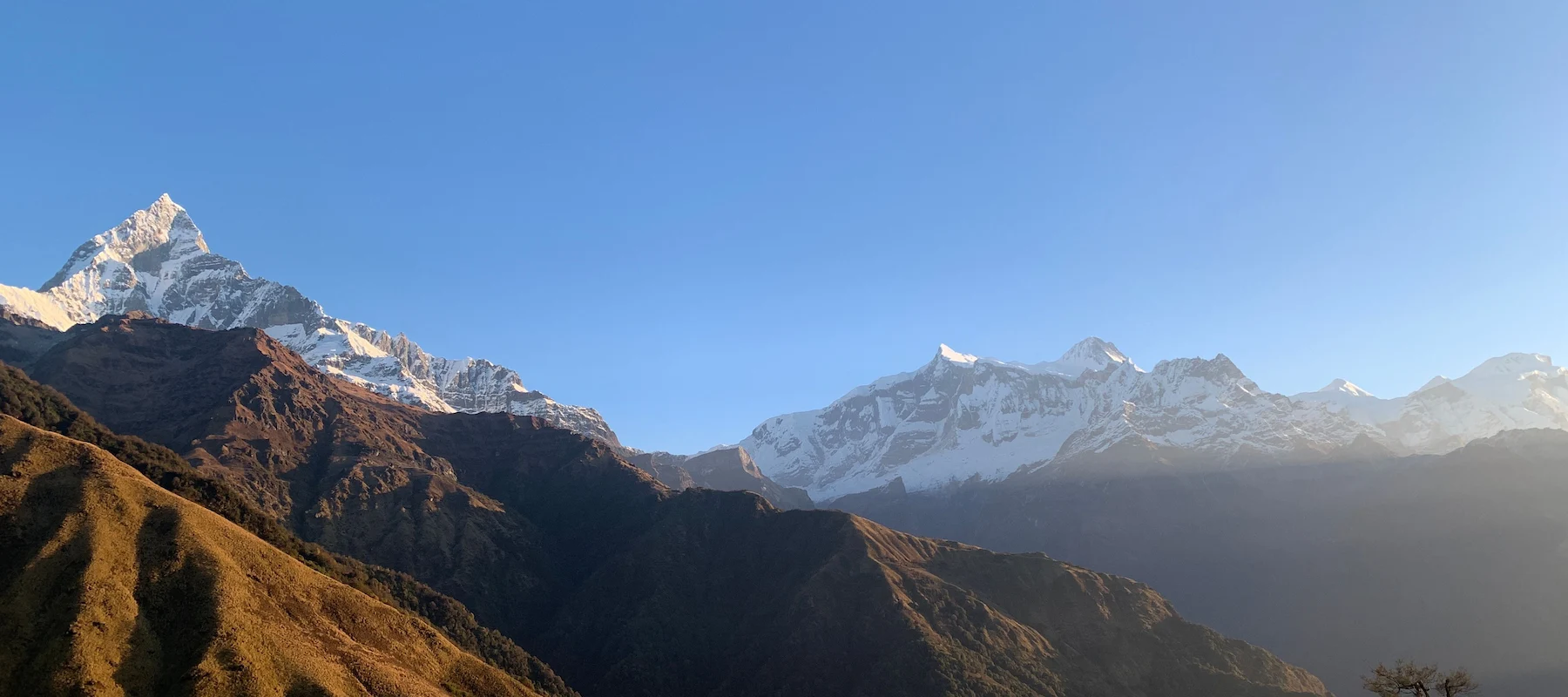
The Mardi Himal Trek is a short teahouse trek in Nepal’s Annapurna Conservation Area, starting about an hour’s drive from Pokhara. Most people walk it in 4 to 7 days, reach Mardi Himal Base Camp at roughly 4,500 m, and pay about USD 350 to 750 for a guided package. The best months are October, November, March, and April. You need an ACAP permit and, under current rules, a licensed guide. The Mardi Himal Trek Hacks mentioned below are most important for travelers traveling to Mardi Himal.
| Detail | What to know |
|---|---|
| Region | Annapurna Conservation Area, Gandaki Province, Nepal |
| Start / finish | Kande or Phedi (near Pokhara) / Siding (then drive back to Pokhara) |
| Typical duration | 4 to 7 days of trekking (5 to 6 is the sweet spot) |
| Highest point | Mardi Himal Base Camp, about 4,500 m (Upper Viewpoint is about 4,200 m) |
| Highest sleeping point | High Camp, about 3,550 to 3,700 m depending on the lodge |
| Difficulty | Moderate: steep, with fast altitude gain and no dedicated rest day |
| Accommodation | Simple teahouses, twin-sharing, shared toilets |
| Permits | ACAP (NPR 3,000 foreigners, NPR 1,000 SAARC); TIMS and guide rules explained below |
| Typical cost | About USD 350 to 750 for a standard guided package (budget to mid-range) |
| Best months | October to November and March to April |
| Peak you are looking at | Mardi Himal, 5,587 m, with Machhapuchhre (6,993 m) right beside it |
Mardi Himal is a ridge trek. Instead of dropping into a valley and looking up, you spend your last two days walking along an open grassy spine with the Annapurna range on one side and a deep green valley on the other. Machhapuchhre, the “Fishtail” peak, looks close enough to touch, and Annapurna South (7,219 m), Hiunchuli (6,441 m) and Annapurna I (8,091 m) fill the skyline at the top.
It also fits real-life schedules. You can start from Pokhara, be back within a week, and still see high-Himalayan scenery. The trail was opened to trekkers much later than Annapurna Base Camp or Poon Hill, which is why the lower forest sections still feel quiet outside peak weeks.
That said, “short” does not mean “easy.” You climb from around 800 m in Pokhara to over 4,000 m in about four days. The five hacks below are what we tell trekkers to get right before they arrive.
October and November give the clearest mountain views, March and April give rhododendron forests and warmer days. Avoid June to August unless you accept rain, leeches, and cloud.
| Season | Months | What to expect on the Mardi Himal Trek |
|---|---|---|
| Autumn | Oct to Nov | Washed-clean air after the monsoon, the best views of the year, stable trail. Busiest period; book High Camp lodges early. October is the favourite. Late November nights are noticeably colder. |
| Spring | Mar to May | Rhododendrons bloom in the lower forests (peak around late March to April). Warm days, some haze later in May, fresh snow possible up high. |
| Winter | Dec to Feb | Crisp, often clear mornings but freezing nights at High Camp, possible snow and ice on the upper ridge. Quietest season; requires proper cold-weather gear. |
| Monsoon | Jun to Aug (rain can linger into Sept) | Heavy rain, slippery steps, leeches on wet forest sections, mountains often hidden. Greenest and emptiest, but not recommended for first-timers. |
Insider tip: On the ridge, clouds usually roll in by late morning. Whatever the month, plan your viewpoint hike for pre-dawn and finish before the mist arrives. You will get your best photographs at sunrise, not at lunch.
The same trail can be walked in four days or seven. The difference is not distance but how much time your body gets to adjust. Here is how we usually build it.
Recommended 6-Day Mardi Himal Trek Itinerary (Best for First-Timers)
| Day | Route | Approx. walking time | Sleep altitude |
|---|---|---|---|
| 1 | Pokhara → Kande/Phedi (drive), trek to Pitam Deurali | 4 to 5 hrs | ~2,100 m |
| 2 | Pitam Deurali → Forest Camp → Low Camp | 5 to 6 hrs | ~3,000 m |
| 3 | Low Camp → Badal Danda → High Camp | 4 to 5 hrs | ~3,550 to 3,700 m |
| 4 | High Camp → Upper Viewpoint (4,200 m) / Mardi Himal Base Camp (~4,500 m) → return to High Camp or Low Camp | 6 to 9 hrs | ~3,000 to 3,600 m |
| 5 | Low Camp/High Camp → Siding | 5 to 6 hrs | ~1,700 m |
| 6 | Siding → Pokhara (drive) | 1.5 to 2.5 hrs by road | ~822 m |
Faster and Slower Versions
Sleeping Low After the Viewpoint
Many itineraries return to Low Camp after the viewpoint hike instead of sleeping again at High Camp. You gain easier breathing, warmer nights and a slightly shorter final day. If you feel good, you can stay at High Camp for the sunrise instead; just make the call with your guide that morning.
Variants Worth Knowing
How Hard Is the Mardi Himal Trek?
The route is usually rated moderate. You do not need technical skills, ropes or crampons in the main seasons. What makes it demanding is:
You should be comfortable walking uphill for five to seven hours with a light daypack. Six to eight weeks of preparation helps: stair climbing, hill walks with a loaded pack, and a few long walking days back to back.
Altitude Sickness (AMS): Know the Signs
Acute mountain sickness can occur from around 3,000 m. High Camp and the viewpoint are the zones where it most often shows up on this trek.
Mild warning signs: headache, poor sleep, nausea, loss of appetite, unusual tiredness. Danger signs (descend immediately): worsening headache, vomiting, confusion, loss of balance, breathlessness at rest, a wet cough.
Basic rules that work:
Remember: travel insurance that covers trekking up to at least 4,500 m, including emergency evacuation, is not optional.
Which Permits Does the Mardi Himal Trek Need?
The whole trail sits inside the Annapurna Conservation Area, so the key permit is the ACAP (Annapurna Conservation Area Permit).
| Item | Foreign trekkers | SAARC nationals |
|---|---|---|
| ACAP | NPR 3,000 (about USD 22 to 25) | NPR 1,000 |
| Children | Free under age 10 (carry documents) | Free under age 10 |
| TIMS card | See note below | See note below |
| Local entry fees | May be collected by rural municipalities; ask your agency | Same |
TIMS and the guide rule: please read. Operators currently describe TIMS and the guide requirement in different ways. Many licensed agencies state that a licensed guide is required for foreign trekkers in the Annapurna Conservation Area (the rule is commonly dated to April 2023), and that agency-issued TIMS is part of the package. A few sources say TIMS is no longer checked on standard Annapurna routes. Rules in Nepal change, so the safest approach is simple: book through a registered agency, let them confirm the current permit setup for your travel dates, and keep printed copies of everything. Permits are checked at the trailhead checkpoints.
You can get the ACAP through the NTNC e-permit system or at the NTNC/Nepal Tourism Board counters in Kathmandu and Pokhara. Carry your passport and passport-sized photos.
How Much Does the Mardi Himal Trek Cost in 2026/27?
Prices depend heavily on trek length, group size, and comfort level. Published guided packages for 2026/27 from different operators broadly fall into these bands:
| Style | Typical price per person | Usually includes |
|---|---|---|
| Budget group package (4 to 5 days) | About USD 350 to 450 | Permits, guide, teahouse stays, meals, local transport |
| Mid-range (6 to 7 days, private guide or porter) | About USD 450 to 750 | Above plus more days, porter, private transport |
| Luxury/lodge upgrade | Well above USD 1,000 | Better rooms, private vehicle, extra services |
What is usually not included: international flights, Nepal visa fees, travel insurance, hotels and meals in Pokhara and Kathmandu, hot showers and charging fees, snacks and drinks, and tips.
For independent budgeting, typical figures quoted by operators are USD 25 to 35 per day for a licensed guide, plus teahouse food and lodging that rise slightly with altitude.
Money-Saving Moves That Do Not Hurt Your Trek
Can You Do the Mardi Himal Trek Without a Guide?
Older blog posts say yes, and for years that was true. Today, under the licensed-guide rules that Nepal applies in conservation areas, foreign trekkers are generally expected to walk with a registered guide arranged through a licensed agency. Verify the latest position with your agency or the Nepal Tourism Board before booking, because permit rules are reviewed from time to time.
Even setting rules aside, a guide earns their fee on this particular trek:
Practical Resources
| Feature | Mardi Himal | Annapurna Base Camp (ABC) | Poon Hill |
|---|---|---|---|
| Typical length | 4 to 7 days | 7 to 12 days | 3 to 5 days |
| Highest point | ~4,500 m | ~4,130 m | ~3,210 m |
| Style | Ridge walk, forest and grassland | Deep valley into the sanctuary | Rhododendron forests, sunrise viewpoint |
| Crowds | Quieter, but rising | Busiest of the three | Busy at sunrise |
| Altitude pressure | High for the time spent | Moderate, more gradual | Low |
| Best for | Short, scenic, ridge views | Close-up sanctuary scenery | First-time or time-limited trekkers |
Which should you choose? Pick Mardi Himal if you have under a week, want ridge views, and are comfortable with a steady climb. Pick ABC if you have more time and prefer a longer, more gradual approach. Pick Poon Hill if you are new to trekking or travelling with young children.
Most people trek for 4 to 7 days. A 5 or 6-day itinerary gives the best balance of time and acclimatisation.
It is moderate. The trail is non-technical but steep, with quick altitude gain and a long viewpoint day. Basic fitness and a steady pace are enough for most healthy walkers.
October and November are best for clear views; March and April are best for flowers and warmer weather. Monsoon (June to August) and deep winter are harder.
A standard guided package usually costs about USD 350 to 750 per person. Luxury versions cost more. International flights, insurance, visa and Pokhara hotels are normally extra.
The ACAP is required (NPR 3,000 for foreigners, NPR 1,000 for SAARC nationals). TIMS and licensed-guide requirements are applied through registered agencies, so confirm the current rules for your dates when you book.
Foreign trekkers are generally expected to use a licensed guide in the Annapurna Conservation Area. Check the latest Nepal Tourism Board position with your agency before travelling.
Mardi Himal Base Camp, at about 4,500 m. The Upper Viewpoint at about 4,200 m is the more commonly reached highlight. The summit of Mardi Himal itself is 5,587 m and is not part of the trek.
Yes, with preparation. First-timers should choose a 6 or 7-day itinerary, train for six to eight weeks and trek with a guide.
Yes. Altitude sickness can appear from 3,000 m, and High Camp and the viewpoint are the usual trouble spots. Climb slowly, drink enough water and descend if symptoms worsen.
It depends on your time and taste. Mardi Himal is shorter and ridge-focused; Annapurna Base Camp is longer and more gradual, and it takes you into the sanctuary itself.
The Mardi Himal Trek is one of the most rewarding short walks in the Annapurna region, provided you plan it with care. Choose your season deliberately, give yourself enough days, respect the altitude, sort the permits through a licensed agency, and hire a local guide who knows the ridge. Do those five things, and you swap stress for a sunrise over Machhapuchhre.
Ready to plan yours? Explore the Mardi Himal Trek with Alliance Treks, compare it with the Annapurna Base Camp Trek or the Ghorepani Poon Hill Trek, read our guide to the Annapurna Conservation Area, or contact our local team for a custom itinerary and current permit advice.
Alliance Treks & Expedition Pvt. Ltd. Once is not enough for naturally and culturally Himalayas