(Viber, Whatsapp, Cell) +977 9851022814

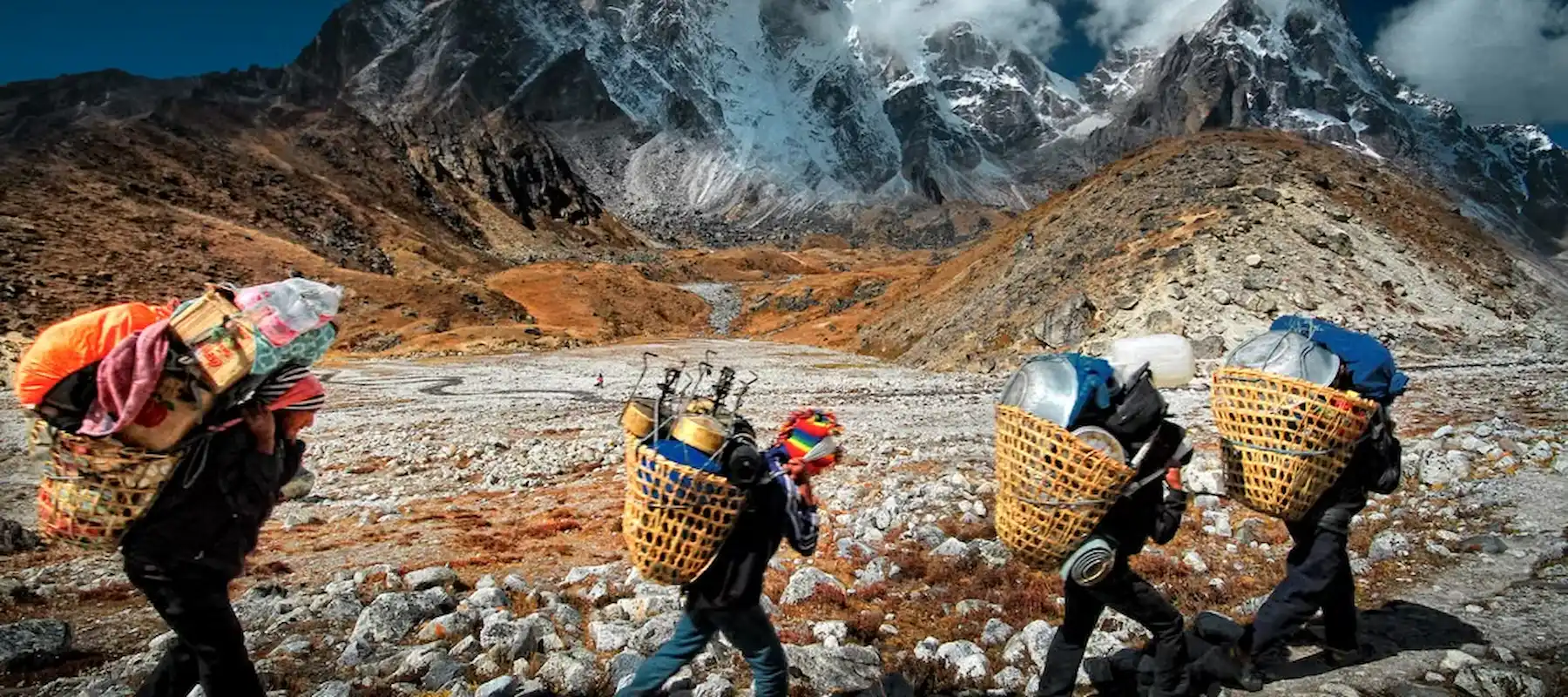
In 2026, most trekkers tip a Nepal trekking guide about USD 10–15 per day, an assistant guide about USD 7–10 per day, and a porter about USD 5–10 per day. Tip in cash at the end of the trek, ideally in a group envelope per crew member, in Nepali rupees or US dollars. Tipping is not legally required, but it is a normal and important part of crew income. In this blog, your question ‘how much to tip guide and porter in Nepal” during trekking will be answered.
Nobody wants to be the trekker who tips too little and leaves a bad impression, or too much and distorts local pay. Tipping norms in Nepal are informal; there is no official rate card, and online advice ranges wildly. This guide gives you a clear number range, a method to calculate your own total, and the etiquette that goes with it, so you can stop worrying and enjoy the trail. The figures below are practical ranges based on common practice across Nepal’s trekking industry in 2026. They are a starting point, not a rule. Your crew, trek length, and service quality all matter.
No. Tipping is not required by law and is not part of your trek contract. In practice, however, it is the norm. Trekking work in Nepal is seasonal: most guides and porters work during two main windows, spring (March–May) and autumn (October–November), and the rest of the year can be quiet. Tips help crew members bridge the gap between trail wages and the cost of supporting a household through the off-season.
Think of the tip as the part of the pay that reflects how the trek felt to you. The company pays the base wage; you reward the effort, care, and judgment that made your trip safe and enjoyable.
Knowing the roles helps you divide your tip fairly.
A quick note on the word “Sherpa.” Sherpa is an ethnic group from the Everest (Khumbu) region, and many Sherpa people do work as guides and climbers. But not every guide is a Sherpa, and not every Sherpa is a guide. Gurung, Tamang, Rai, Magar and many other communities supply trekking crew. Using “Sherpa” as a job title is common among visitors, but locals appreciate it when you use the correct term. In this guide, “guide” and “climbing staff” describe the roles, and tipping advice applies to them regardless of ethnicity. If you would like to meet Sherpa communities on a trek, see our Sherpa Village Trek.
These are typical tip ranges per crew member per day on trail. Count every day the crew member works with you, including acclimatization and rest days when they stay with the group. NPR figures are approximate at about NPR 140 per USD; please check the current exchange rate before you travel.
| Crew member | Tip per day (USD) | Approx. per day (NPR) | Notes |
|---|---|---|---|
| Lead trekking guide | 10–15 | 1,400–2,100 | Go toward the top for passes, bad weather, or exceptional care |
| Assistant guide | 7–10 | 1,000–1,400 | Usually about two-thirds of the lead guide |
| Porter (per porter) | 5–10 | 700–1,400 | Go higher for heavy loads or high-altitude routes |
| Porter-guide | 7–12 | 1,000–1,700 | Between porter and assistant guide |
| Cook / kitchen staff | 5–8 each | 700–1,100 | Camping treks; usually pooled |
| Day-tour guide (city sightseeing) | 5–10 | 700–1,400 | Half-day or full-day tours |
| Private driver (trek transfers) | 5–10 total | 700–1,400 | Per transfer day, not per trekker |
Adjust up when: your trek was cheap and wages are likely low, you were sick and your crew took extra care, the weather was severe, or your porter carried more than expected.
Adjust down (but not to zero) when: service was clearly below standard. See “What if the service was poor?” below.
A common rule of thumb is that total tips for the whole crew come to roughly 8–12% of the trek price for smaller, higher-priced treks. Use it only as a sanity check. On budget treks the percentage can run higher because base prices are lower, and the daily-rate method above is more reliable.
Calculate the total group tip, then divide by the number of trekkers. The totals below use the low and high ends of the daily table.
| Scenario | Crew | Group total (USD) | Per trekker (USD) |
|---|---|---|---|
| Solo trekker, 7-day Annapurna Base Camp trek | 1 guide + 1 porter | 105–175 | 105–175 |
| Couple, 12-day Everest Base Camp trek | 1 guide + 1 shared porter | 180–300 | 90–150 |
| Group of 8, 17-day Manaslu Circuit | 1 lead guide + 1 assistant guide + 4 porters | 629–1,105 | 79–138 |
How the Manaslu example is built: lead guide 17 days × USD 10–15 = 170–255; assistant guide 17 × 7–10 = 119–170; four porters 4 × 17 × 5–10 = 340–680. Total 629–1,105, divided by 8 trekkers.
Notice the pattern: the more people who share the crew, the lower your individual contribution, even though the total goes up.
The daily rates are the same everywhere, but trek length and crew size change your total.
Not sure which trek suits you? Read our comparison of Everest Base Camp vs Annapurna Circuit vs Manaslu Circuit.
Ready to trek with a crew that is fairly paid and well cared for? Browse our Nepal trekking packages or talk to a trip planner on WhatsApp.
Tip at the end, not at the start. Tipping early can feel like payment for service not yet given, and it removes the sense of reward for a job well done.
On group treks, agree on a figure before the last night. One person (usually the group organizer) collects equal contributions, counts out the envelopes, and checks the split with the lead guide or trip leader. If you want to give a personal extra to someone who looked after you, do it separately and quietly.
If your trek is run through a company with a staff pooling policy, ask your trip planner how 2tips are shared. Our team can explain how it works on your itinerary before you book.
Nepali rupees are easier for crew to use immediately, especially for porters who may not have easy access to a bank in Kathmandu. US dollars are accepted by most guides and are worth carrying if rupees are hard to get. Do not mix currencies in one envelope, and avoid foreign coins or unusual currencies that are hard to exchange.
Practical cash tips:
Teahouse and lodge staff: Tipping is not expected. Your room and meal prices already include their pay. If staff went out of their way, such as drying your clothes, cooking a special meal, or helping when you were unwell, a small thank-you of NPR 100–300 left with the owner is a kind gesture. Buying an extra tea or snack is also a quiet way to support the lodge.
Transfer drivers and airport staff: A small tip (see the table) is appreciated for long mountain drives. For hotel porters in Kathmandu, a small amount per bag is customary.
Restaurants in Kathmandu and Pokhara: If a service charge is not already added to the bill, rounding up or leaving around 5–10% is a nice gesture for good service.
Tipping is a reward, so you can tip less if the service did not meet a reasonable standard. But do it fairly:
Useful gear in good condition can be an excellent gift for crew: warm jackets, gloves, hats, headlamps and trekking shoes. Offer it politely and ask your guide to help distribute it fairly. A handwritten note, a good review on Google or TripAdvisor naming your guide and porters, and a photo shared afterward all mean a great deal and help crew members win future work.
Most trekkers tip a trekking guide about USD 10–15 per day (roughly NPR 1,400–2,100). Go toward the higher end for high passes, bad weather or exceptional care.
A typical porter tip is USD 5–10 per day (roughly NPR 700–1,400) per porter, given at the end of the trek.
No. Tipping is not required by law or by your trek contract. It is, however, a strong custom, and many crew members rely on it as part of seasonal income.
On the last evening of the trek or at a farewell moment, not at the start. If you part ways at a trailhead or airport, tip before you separate.
Nepali rupees are the most convenient for crew. US dollars are also accepted. Avoid other currencies, and carry small notes so you can divide amounts easily.
Yes. Prepare one envelope per person, with the lead guide receiving the most and porters receiving an amount that reflects their physical workload.
No. Sherpa is an ethnic group from the Everest region. Guides and porters come from many communities, so use the role (guide, porter, climbing guide) when talking about trek crew.
No. Teahouse staff are not expected to receive tips. A small thank-you for extra help is welcome but optional.
Plan on about USD 15–25 per day for a guide-plus-porter pair, divided among the trekkers who share them. For a 12-day trek, that is about USD 180–300 in total, or USD 90–150 each for a couple.
Our team has guided trekkers through the Himalayas since 1990. Explore popular routes and read our trekker guides:
Related reading: Annapurna Base Camp Packing List (2026) · Annapurna Conservation Area: Complete 2026 Guide · Mardi Himal vs Ghorepani Poon Hill
Questions before you book? Contact our team, check how to book, or message us on WhatsApp +977 9851022814.
Alliance Treks & Expedition Pvt. Ltd. Once is not enough for naturally and culturally Himalayas