(Viber, Whatsapp, Cell) +977 9851022814

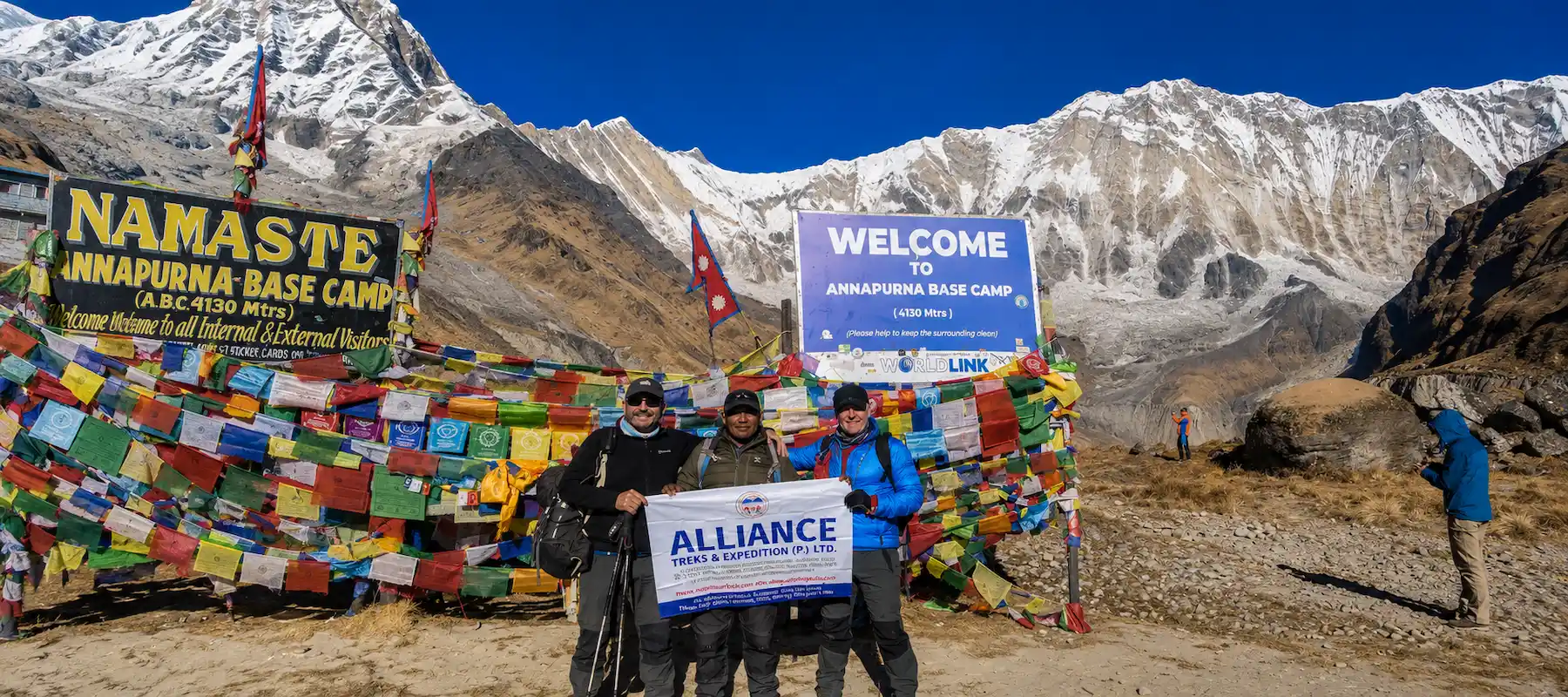
You will wake up in Pokhara in a T-shirt and fall asleep four days later in a down jacket, a beanie, and every sock you own. That swing is the whole story of packing for the Annapurna Base Camp (ABC) trek.
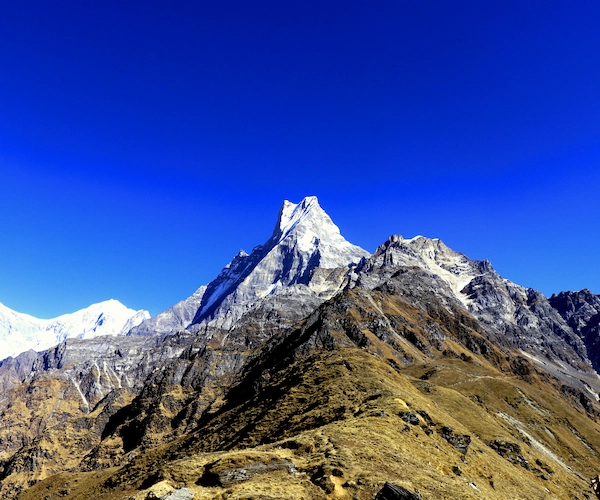
The route climbs from the warm foothills near Pokhara (about 850 m) to a glacier-ringed amphitheatre at 4,130 m (13,550 ft), passing through terraced farmland, bamboo forest, waterfall gorges, and finally an alpine sanctuary where nights sit below freezing. Pack for only one of those worlds and you’ll be either sweating through Day 1 or shivering through Night 4.
This guide gives you a complete Annapurna Base Camp packing list built around the actual route, not a generic “Himalaya” template. You’ll find what to bring for each altitude zone, how much weight to carry, which items are worth renting in Pokhara, how much cash to carry, and a printable checklist at the end.
| Fact | Detail | Packing consequence |
|---|---|---|
| Highest point | Annapurna Base Camp, 4,130 m | Down jacket and a proper sleeping bag are not optional |
| Typical duration | 7 to 12 days | Fewer days means fewer clothes, but the same warm layers |
| Start / finish | Pokhara (via Kimche or Nayapul) | Leave city clothes and valuables in your Pokhara hotel |
| Accommodation | Teahouses and local lodges | Beds and blankets are supplied, insulation is not |
| Trail character | Thousands of stone steps, long ups and downs | Trekking poles and well broken-in boots matter more than fancy gadgets |
| Best seasons | March to May, September to November | Winter and monsoon need extra kit see seasonal adjustments |
If you’re still deciding whether ABC is the right trek, our Annapurna Base Camp trek for beginners guide covers fitness, difficulty and what a typical day feels like. For the full route breakdown, see the Annapurna Base Camp Trek complete details.
Think of ABC as four mini-climates stacked on one trail. This table shows what each zone asks of your kit. Temperatures are indicative and shift with season and weather, so treat them as planning guides rather than guarantees.
| Zone | Approx. altitude | What it feels like | What you’ll mostly wear |
|---|---|---|---|
| Pokhara to Kimche / Ghandruk | 850 to 1,950 m | Warm, humid, sunny | Light shirt, trekking trousers or shorts, sun hat |
| Chhomrong to Bamboo / Dovan | 2,170 to 2,600 m | Mild days, cool nights, damp forest | Base layer, fleece, light rain shell |
| Himalaya to Deurali | About 2,900 to 3,230 m | Cooler, windier, shaded gorge | Fleece plus windproof, beanie in the morning |
| Machapuchare Base Camp (MBC) to ABC | 3,700 to 4,130 m | Cold, thin air, strong sun by day | Down jacket, insulated gloves, warm hat, thermals at night |
Most first-timers pack one bag and regret it. Use three.
Bag 1: Trek duffel (carried by a porter): A 55 to 70 litre waterproof duffel. Most trekkers share a porter between two people, so aim for about 8 to 10 kg of your own gear (confirm the exact limit with your agency before you pack). Pick a lockable zip and line it with a heavy-duty dry bag.
Bag 2: Daypack (you carry it), 20 to 28 litres, with a hip belt and a rain cover. Target 5 to 6 kg on the trail with water included.
Bag 3: Pokhara bag (stays behind). Your hotel will usually store a bag for free or a small fee. Leave there: city clothes, laptop, spare shoes, souvenirs, and anything valuable you don’t need on the trail. This single decision trims 3 to 5 kg from your trek load.
A rule that works: lay everything out on your bed, then remove the 20% you “might need”. You rarely will.
If you’ve trekked in Nepal before, you’ll notice ABC allows a bit more flexibility than flight-based treks, because there are no baggage restrictions from a Lukla-style airstrip. Compare for yourself in our Everest Base Camp trek packing list.
Nepal’s golden rule applies: no cotton. Wet cotton stays wet, and at altitude that becomes a cold problem fast. Choose merino wool or quick-dry synthetics.
Base layer (next to skin)
| Item | Qty | Notes |
|---|---|---|
| Short or long-sleeve trekking tops (merino or synthetic) | 2 to 3 | Long sleeves protect from sun and are warmer than you expect |
| Thermal top and bottom | 1 set to wear, 1 to sleep in | Keep the sleeping set dry and clean, it is your warm refuge |
| Trekking trousers (quick-dry, zip-off if possible) | 2 | Zip-offs handle the hot first day and cold last climb |
| Underwear (quick-dry) | 3 to 4 | Merino or synthetic |
| Hiking socks (merino blend) | 3 to 4 pairs | Rotate pairs, dry damp ones on your pack by day |
| Liner socks (optional) | 2 pairs | Helpful if you blister easily |
| Sports bras (women) | 2 to 3 | Supportive, quick-dry, no underwire |
Mid Layer (warmth you can add or remove)
| Item | Qty | Notes |
|---|---|---|
| Light fleece or grid-fleece | 1 | Your everyday layer from Chhomrong upward |
| Heavier fleece or softshell | 1 | Needed for Deurali, MBC and ABC |
| Insulated vest (optional) | 1 | Great for trading bulk for core warmth |
Insulation layer
A down or synthetic insulated jacket with a hood is your single most important item for the last two days. A good rule is a fill power of 600 to 800 for down jackets, and a warm hood that actually fits over a beanie. If you don’t own one, it’s the best thing to rent or borrow.
Outer shell
| Item | Qty | Notes |
|---|---|---|
| Waterproof, breathable jacket | 1 | Must have a hood and pit zips for steep climbs |
| Waterproof over-trousers | 1 | Light, packable, essential in monsoon and spring showers |
| Rain poncho (optional) | 1 | Covers you and your daypack together |
Head, hands and face
Pro tip: Your hands will feel the cold before ABC sunrise long before the rest of you. A thin liner glove inside a warmer outer glove lets you operate a phone or camera without stripping bare skin.
ABC is a walking-boots trek, not a trail-runner trek, mainly because of the endless stone staircases and wet, muddy forest sections.
Teahouse rooms are basic: a bed, a thin mattress, a pillow and a blanket or duvet. Rooms are not heated.
Your porter will usually be ahead of you or arrive after you, so treat your daypack as your “survival kit” for the day. Pack it every morning with:
Acute mountain sickness (AMS) can start from around 2,500 m, and ABC’s final climb is steep. Pace and hydration help the most, and guides are trained to spot warning signs. Your kit supports that.
Carry:
Know the warning signs: persistent headache, nausea, dizziness, unusual fatigue, loss of coordination, or breathlessness at rest. Tell your guide immediately. Descending is the best treatment; never push through.
Read more in our Trekking Mistakes in Nepal article, where pacing and hydration errors top the list.
Showers at higher villages are cold or paid, and water is limited. Keep it simple.
For women trekkers:
Budget for charging: most teahouses charge a small fee to charge phones and power banks, and fees rise with altitude. Wi-Fi at some lodges is paid too. Plan on carrying a small cash buffer for this.
Cold drains batteries quickly, so keep devices close to your body overnight.
Documents
Permits The ABC trail lies inside the Annapurna Conservation Area, so the Annapurna Conservation Area Permit (ACAP) is required. Fees are paid in Nepalese rupees and have been around NPR 3,000 for foreign nationals, but fees and checkpoint rules change, so confirm current amounts when you book. TIMS card rules have also shifted in recent years, so rely on your agency for the latest requirements.
With Alliance Treks, ACAP and any other required permits are arranged for you. See the “Includes” section on the Annapurna Base Camp trek page. You can read more about the conservation area on the ACAP page of the National Trust for Nature Conservation.
Money Teahouses accept cash only, and ATMs vanish after Pokhara. Carry Nepalese rupees in small notes. As a rough guide from Alliance Treks’ own package notes, lunch averages about USD 11 and dinner about USD 15 per meal on the trail; a dedicated porter is about USD 22 per day, and hot showers, charging, and Wi-Fi are extra. Prices climb with altitude, so build a cushion.
For a full cost picture, see our Annapurna Base Camp trek cost breakdown.
Almost every competitor list forgets this: ABC’s trail ends with a natural hot spring at Jhinu Danda, the best reward for tired legs. Pack:
Other comforts that are worth their weight:
| Season | What to expect | Add to your kit |
|---|---|---|
| Spring (Mar to May) | Rhododendron blooms, warmer days, occasional afternoon rain or snow | Extra rain layer, sun protection, light gaiters |
| Autumn (Sep to Nov) | Clearest skies, stable weather, busiest trail | Warm layers for cold, crisp nights; book lodges early |
| Winter (Dec to Feb) | Very cold nights, snow possible on upper sections, quiet trail | Warmer sleeping bag, heavier gloves, microspikes, extra thermals |
| Monsoon (Jun to Aug) | Heavy rain, leeches in lower forest, cloud-covered views | Full waterproofs, gaiters, leech socks or salt, extra dry bags |
Autumn is usually considered the most reliable window. Our guide to autumn trekking in Nepal explains why September to November is so popular, and what that means for crowding and lodge availability.
Planning for the October–November rush? Check our Dashain Festival 2026 guide for national holiday dates, transport closures, and how they affect travel in and out of Pokhara.
Before you spend money, sort every item into one of three columns.
| Item | Best option | Why |
|---|---|---|
| Boots | Bring your own | Never trust untested boots, and rental fit is a gamble |
| Socks and underwear | Bring | Personal and cheap |
| Base layers | Bring | Merino and synthetics are lightweight to carry |
| Down jacket | Borrow or rent (or use one from your operator) | Expensive, bulky and used for only a few days |
| Sleeping bag | Rent or borrow | Same logic, plus you get a cleaner liner on top |
| Trekking poles | Rent or buy cheap in Pokhara | Easy to find, and often priced reasonably |
| Rain jacket and trousers | Bring | Fit and breathability matter, and it’s your weather barrier |
| Gloves, hat, buff | Bring | Cheap, personal and light |
| Duffel bag | Borrow from your operator | Many agencies provide one |
| Gaiters, microspikes | Rent only if needed | Depends on season |
Pokhara’s Lakeside area has many gear shops, and Kathmandu’s Thamel has even more. Always inspect rental items: check zips, stitching, loft of down, and smell. If the shop won’t let you inspect, walk away.
Planning your first Nepal trek? Our Trekking for Beginners in Nepal: 2026 Safety Guide covers fitness, acclimatisation and everyday habits that make packing decisions easier.
ABC rewards trekkers who respect its simple rule: start light, add layers as you climb, and carry only what earns its place. If you remember nothing else, remember this order of priorities: boots that fit, a warm jacket, a sleeping bag you trust, rain protection, and the habit of drinking water and walking slowly.
Everything else is a bonus, including the hot spring at Jhinu waiting at the end.
You’ve got the list. Now pick your route.
Have questions about gear, dates, or itineraries? Contact our team. We’ll help you plan a safe, comfortable trek.
Alliance Treks & Expedition Pvt. Ltd. Once is not enough for naturally and culturally Himalayas