(Viber, Whatsapp, Cell) +977 9851022814

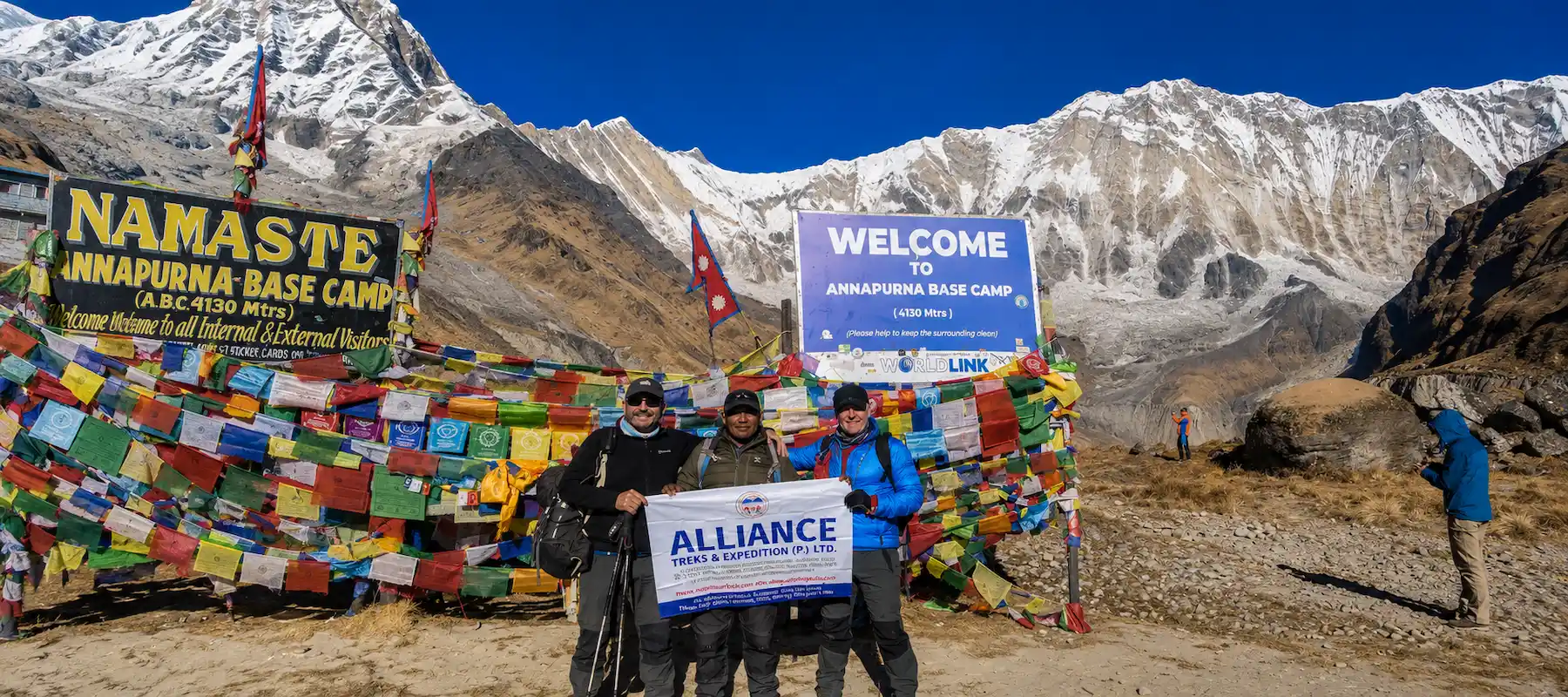
The Annapurna Base Camp Trek for beginners is one of the most achievable high-altitude treks in Nepal — rated moderate difficulty, reaching 4,130 meters over 7 days, with no technical climbing skills required. Gradual daily elevation gain, comfortable teahouse lodging every night, and a well-established trail with regular rest stops make it a genuinely realistic first Himalayan trek for anyone with basic hiking fitness.
This guide is built specifically for first-timers weighing Annapurna Base Camp as their entry point into Himalayan trekking — covering the full day-by-day itinerary, every permit you’ll need, a complete packing list, and honest answers to the questions beginners ask most before booking.
The Annapurna Base Camp Trek climbs into a natural amphitheater at 4,130 meters, ringed by Annapurna I (8,091 m), Annapurna South, Machhapuchhre, and Hiunchuli — one of the few places on Earth where a trekker with no climbing experience can stand at the direct foot of an 8,000-meter peak. Unlike Everest Base Camp or the Manaslu Circuit, this trek requires no domestic flight, no restricted-area permit, and no altitude above 4,200 meters, which is exactly why it’s so consistently recommended as a first serious trek in the Himalayas.
For beginners specifically, the appeal comes down to a rare combination: real high-altitude scenery and genuine cultural immersion through Gurung and Magar villages, delivered over a manageable 7-day itinerary with steady, forgiving elevation gain and a comfortable teahouse waiting at the end of every walking day.
Annapurna Base Camp Trek for Beginners: Full Itinerary Table
| Day | Route | Altitude | Key Highlights |
|---|---|---|---|
| 1 | Kathmandu to Pokhara (drive or flight) | 822 m | Arrival in Nepal’s lakeside city; final gear check |
| 2 | Pokhara to Kimche, trek to Chhomrong | 2,170 m | Drive through terraced hillsides; first close-up mountain views |
| 3 | Chhomrong to Dovan (via Sinuwa, Bamboo, Himalaya) | 2,600 m | Dense rhododendron and bamboo forest corridor |
| 4 | Dovan to Deurali | 3,230 m | Valley narrows; terrain shifts to high-alpine character |
| 5 | Deurali to Machhapuchhre Base Camp to Annapurna Base Camp | 4,130 m | Reaches the natural amphitheater; sunset at ABC |
| 6 | Annapurna Base Camp to Bamboo | 2,310 m | Sunrise at ABC before a long descent day |
| 7 | Bamboo to Jhinu Danda | 1,780 m | Natural hot springs beside the Modi Khola river |
| 8 | Jhinu Danda to Kimche to Pokhara | 850 m | Final descent and drive back to Pokhara |
This is a genuinely beginner-friendly elevation profile — no single day involves more than roughly 900 meters of gain, and the trek’s highest point comes only after five full days of gradual acclimatization, rather than a rushed push to altitude.
Yes, and it’s consistently ranked among the best “first high-altitude trek” options in Nepal for a few specific reasons:
Lower maximum altitude: At 4,130 meters, ABC sits well below the 5,000+ meter thresholds of Everest Base Camp or the Manaslu Circuit, meaningfully reducing altitude sickness risk for first-timers.
No flight dependency: The entire trek is road-accessible from Pokhara, removing the weather-related flight delays that can complicate routes like Everest Base Camp.
Well-developed teahouse infrastructure: Lodges are frequent and comfortable along the entire route, meaning beginners are never more than a few hours from a warm meal and a bed.
Shorter overall duration: At 7–8 days, it demands less vacation time and less cumulative physical strain than longer circuits like Manaslu or Kanchenjunga.
The honest trade-off: daily walking hours still run 4–7 hours on a mix of stone steps and forest trail, so basic fitness genuinely matters, even though no technical skill is required.
Compared to restricted-area treks like Upper Mustang or Manaslu, Annapurna Base Camp has a refreshingly simple permit process for beginners:
| Document/Permit | Cost | Key Detail |
|---|---|---|
| Annapurna Conservation Area Permit (ACAP) | US$20–25 per person | Funds regional conservation; arranged in advance through an agency or the Nepal Tourism Board |
| TIMS Card (Trekkers’ Information Management System) | US$10–15 per person | Trekker registration and safety tracking |
| Valid passport | N/A | Required with at least 6 months’ validity remaining |
| Nepal entry visa | US$30 (15 days) / US$50 (30 days) | Obtained on arrival at Kathmandu airport or in advance online |
| Passport-sized photos | N/A | Typically 2–4 copies needed for permit processing |
Unlike Upper Mustang, Manaslu, or Kanchenjunga, ABC does not require a special restricted-area permit or a legally mandatory guide, though hiring one is still strongly recommended for beginners, both for safety and for the local knowledge a good guide brings to the trail.
Because the route moves from subtropical forest to genuine high-alpine terrain in just a few days, packing needs to cover a wider temperature range than a single-climate trek:
| Category | Key Items |
|---|---|
| Clothing | Moisture-wicking base layers, insulating mid-layer, waterproof outer shell, warm hat, gloves |
| Footwear | Broken-in waterproof hiking boots, camp shoes for evenings, wool trekking socks |
| Sleep and comfort | Sleeping bag rated to at least -5°C, earplugs, quick-dry towel |
| Health and safety | Personal first-aid kit, water purification tablets or filter, blister treatment |
| Practical extras | Headlamp, trekking poles, sunglasses, sunscreen, portable power bank, cash in small denominations |
For beginners specifically, trekking poles are worth prioritizing more than they might expect — the stone-stepped sections between Chhomrong and Sinuwa, and the descent from ABC, are genuinely hard on the knees without them.
ABC is officially graded moderate, meaning no climbing skill is required, but you should be comfortable walking 4–7 hours a day on a mix of forest trail and stone staircases for several consecutive days. A reasonable pre-trip fitness routine — regular walking or light cardio for a few weeks beforehand, plus a couple of practice hikes with a loaded daypack — makes a real difference for first-timers.
Because the trek’s elevation gain is spread gradually across five full days before reaching 4,130 meters, most beginners find the acclimatization curve here noticeably gentler than on faster-ascending routes, even without a dedicated rest day built into the standard 7-day itinerary.
| Season | Months | Why It Suits Beginners |
|---|---|---|
| Spring | March–May | Rhododendron forests in bloom, comfortable temperatures |
| Autumn | September–November | Clearest mountain visibility, most stable weather |
| Winter | December–February | Quieter trails, colder nights but generally manageable at this altitude |
| Monsoon | June–August | Lush scenery but more rain and leeches; less ideal for first-timers |
Autumn and spring are the two seasons most consistently recommended for first-time trekkers, since both offer the combination of good weather and manageable trail conditions that make the whole experience feel less intimidating.
Yes. It’s rated moderate difficulty, requires no technical climbing skill, and its maximum altitude of 4,130 meters is considerably lower than routes like Everest Base Camp, making it one of the more accessible high-altitude treks in Nepal.
The standard itinerary runs 7 to 8 days round trip from Pokhara, depending on the specific route and pace chosen.
It’s not legally mandatory on this route, but strongly recommended for first-timers, both for safety on the trail and for the local knowledge a licensed guide provides.
The Annapurna Conservation Area Permit (ACAP) and a TIMS card — both straightforward to arrange through a registered trekking agency, with no special restricted-area permit required.
Less so than on higher routes, since ABC’s maximum altitude stays below 4,200 meters and elevation gain is spread gradually across five days, though standard precautions like hydration and steady pacing still matter.
Autumn (September–November) and spring (March–May) offer the most stable weather and clearest visibility, making them popular choices for first-timers.
Most days involve 4 to 7 hours of walking on a mix of forest trail and stone staircases, with the longest single day being the final push from Deurali to Base Camp.
No elite fitness is required, but basic cardiovascular fitness and a few weeks of pre-trip walking or hiking practice will make the experience noticeably more comfortable.
Most teahouses offer basic paid Wi-Fi, and phone signal is generally available along much of the route, making it one of the better-connected treks in Nepal for first-timers who want to stay in touch.
Underestimating the knee strain from the stone-stepped sections and the final descent. Trekking poles can provide useful support during multiple consecutive descent days.
Yes. Many first-timers pair ABC with a shorter add-on like Poon Hill or a day hike in Pokhara, since both share similar trailhead access and require no additional permits.
Dal bhat is a practical staple, since most teahouses offer generous portions and refills, providing reliable calories for consecutive days of walking. Bottled or treated water and hot tea are standard hydration options along the route.
For a first Himalayan trek, Annapurna Base Camp offers a rare, well-balanced combination: genuine high-altitude scenery, authentic Gurung and Magar village culture, and a trail structure that’s forgiving enough for a beginner with reasonable fitness to complete confidently. No flight, no restricted-area permit, and no altitude above 4,200 meters make the logistics simple, while the sunrise view over the Annapurna Sanctuary delivers a payoff that rivals treks demanding far more time and experience. For anyone weighing where to start their Himalayan trekking journey, few routes make as strong a case as this one.
Alliance Treks & Expedition Pvt. Ltd. has organized Himalayan treks since 1990 and is registered with the Nepal Tourism Board, TAAN, and the Nepal Mountaineering Association. Their government-licensed guides are trained in altitude awareness and first aid, with itineraries built around proper pacing rather than rushed schedules — a genuinely important consideration for first-time trekkers. The package includes a returnable sleeping bag and down jacket, transparent group-based pricing with no hidden costs, and small group departures that give beginners more individual guidance and attention throughout the trek.
Alliance Treks & Expedition Pvt. Ltd. Once is not enough for naturally and culturally Himalayas