(Viber, Whatsapp, Cell) +977 9851022814

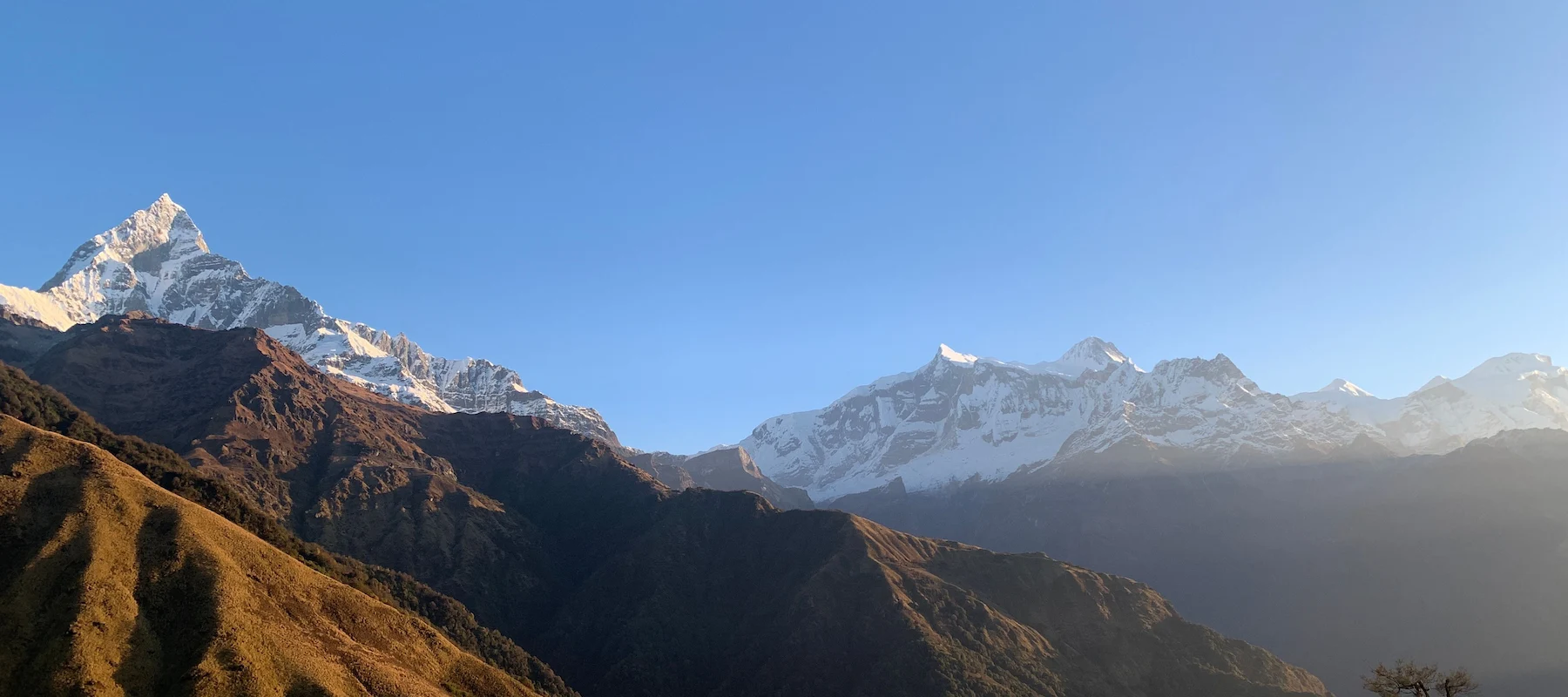
The Mardi Himal Trek is one of the best first Himalayan treks in Nepal for new trekkers. It is a moderate teahouse trek of about 10 days from Kathmandu, with 7 walking days in the Annapurna region. It needs no technical climbing and reaches a maximum of about 4,500 m. The ridge-top trail gives close views of Machhapuchhre (Fishtail), Annapurna South, and Hiunchuli. Most beginners find it manageable with basic fitness, a gentle pace, and a licensed guide.
This Mardi Himal Trek for Beginners Guide covers the day-by-day itinerary, permits, packing list, difficulty, costs, and the questions first-timers ask most.
For many first-time trekkers, Annapurna Base Camp and Everest Base Camp are the default choices. Mardi Himal is the quieter option. It leaves the busy Annapurna trails at Pothana and climbs through a misty forest of oak, maple, and rhododendron. It then follows an open ridge with the Annapurna range on one side and the Seti River valley on the other.
Three things make it good for beginners:
It is also steep. The ridge climbs between Forest Camp and High Camp are tiring, and the final push to the upper viewpoints needs an early start. The sections below explain what to expect so you can decide with confidence.
| Detail | Information |
|---|---|
| Duration | 10 days (7 days trekking) |
| Difficulty | Moderate |
| Maximum altitude | About 4,500 m (Mardi Himal Base Camp) |
| Highest sleeping point | High Camp, 3,580 m |
| Start / end | Kathmandu / Kathmandu (trek starts at Phedi, near Pokhara) |
| Accommodation | Hotels in the cities, teahouses on the trail |
| Best seasons | March–May and September–November |
| Guide required? | Yes, a licensed guide is mandatory (2026 rule) |
| Package price | From US$479 to US$673 per person, depending on group size |
This is a beginner-friendly version of the route. It adds a night at Low Camp, so your body has more time to adjust before High Camp.
| Day | Route | Altitude | Walking / Driving Time | Key Places and Highlights |
|---|---|---|---|---|
| 1 | Arrive in Kathmandu | 1,310 m | Airport transfer | Thamel hotel, trip briefing, gear check |
| 2 | Drive Kathmandu to Pokhara | 822 m | 6–7 hrs (200 km) | Prithvi Highway, Trishuli River, Phewa Lake in the evening |
| 3 | Drive to Phedi, trek to Pothana | 1,890 m | 1 hr drive + 4–5 hrs walk | Stone steps, Dhampus Gurung village, first views of Machhapuchhre |
| 4 | Pothana to Forest Camp | 2,520 m | 4–5 hrs | Leaves the main Annapurna trail, rhododendron cloud forest, langur monkeys |
| 5 | Forest Camp to Low Camp | 3,050 m | 3–4 hrs | Trail climbs onto the ridge, views begin to open |
| 6 | Low Camp to High Camp | 3,580 m | 3–4 hrs | Above the tree line, 360° views, sunset over the Annapurnas |
| 7 | High Camp to Upper Viewpoint and Mardi Himal Base Camp, back to High Camp | 4,500 m | 7–8 hrs round trip | Sunrise at about 4,200 m, closest views of Fishtail and Annapurna South |
| 8 | High Camp to Siding | 1,700 m | 6–7 hrs (descent) | Long descent, traditional Siding village |
| 9 | Siding to Lumre, drive to Pokhara | 822 m | 3 hrs walk + about 2 hrs drive | Terraced fields, hot shower, lakeside dinner |
| 10 | Drive Pokhara to Kathmandu | 1,310 m | 6–7 hrs | Souvenir shopping in Thamel; international departure the next day |
Beginner tip: Day 7 is the hardest day. Start by headlamp at about 4:00 AM. If the altitude or cold bothers you, stopping at the Upper Viewpoint (about 4,200 m) still gives most of the view. Your guide will check how you feel before you continue.
Yes, if you have basic fitness and realistic expectations. These points work in your favor:
Be realistic about these points:
The trek is rated moderate. Most days involve 3 to 5 hours of walking, with 7 to 8 hours on base camp day and on the long descent to Siding. The challenge comes from steady uphill walking and cold mornings, not from technical terrain.
Compared with other popular beginner treks:
| Trek | Duration | Max altitude | Crowds | Beginner suitability |
|---|---|---|---|---|
| Mardi Himal Trek | 10 days from Kathmandu | About 4,500 m | Low to moderate | Good with basic fitness |
| Ghorepani Poon Hill | 4–9 days | About 3,210 m | High | Easiest option |
| Annapurna Base Camp | 7+ days | About 4,130 m | High | Good, longer and busier |
If you want something gentler first, try Poon Hill. If you want fewer people and a ridge walk, choose Mardi Himal.
| Season | Months | What to expect |
|---|---|---|
| Spring | March–May | Blooming rhododendrons, mild weather, good views |
| Autumn | September–November | Clearest skies, stable weather, peak season |
| Winter | December–February | Cold nights, snow near High Camp, quiet trails |
| Monsoon | June–August | Rain, slippery trails and leeches; not recommended |
Beginners do best in autumn (October–November) or spring (March–May). If you’re searching for the Mardi Himal trek in April, spring is the right call for flowers. Book early for October, because guaranteed departures fill quickly.
| Document / Permit | Approx. cost | Key detail |
|---|---|---|
| ACAP (Annapurna Conservation Area Permit) | About US$20–25 | Required to enter the conservation area |
| e-TIMS card | About US$30 (confirm current rate) | Digital trekker registration |
| Valid passport | N/A | At least 6 months’ validity |
| Nepal tourist visa | US$30 (15 days), US$50 (30 days), US$125 (90 days) | On arrival at Kathmandu airport or online |
| Passport-size photos | N/A | Bring 2 copies |
| Travel insurance | Varies | Must cover trekking up to 5,500 m, including helicopter evacuation |
Do you need a guide? Yes. For 2026, foreign trekkers can’t hike solo in the Annapurna Conservation Area. You must go with a licensed guide hired through a registered agency, and checkpoints near the trailhead enforce this. Alliance Treks arranges all permits for you before the trek.
Nights at High Camp can fall well below freezing, even in spring and autumn. Pack in layers.
| Category | Essential items |
|---|---|
| Head | Warm hat, sun cap, UV sunglasses, headlamp with spare batteries |
| Upper body | Thermal base layers, fleece mid-layer, down jacket, waterproof and windproof shell |
| Lower body | Trekking pants, thermal leggings, rain pants |
| Hands | Warm gloves, thin liner gloves |
| Feet | Broken-in waterproof boots, 3–4 pairs of wool socks, sandals for the teahouse, gaiters (optional) |
| Sleep | Sleeping bag rated to about −10°C, silk liner |
| Gear | 30–40 L daypack, trekking poles, reusable water bottle, water purification tablets |
| Health | Personal first-aid kit, blister plasters, altitude medication if prescribed, sunscreen (SPF 50), lip balm |
| Extras | Power bank, cash in Nepali rupees, copies of your documents, quick-dry towel |
Weight tip: Keep your own pack to 10–12 kg if you carry it yourself. Porters carry up to 15–20 kg per person (shared between two trekkers). Your shared porter takes the heavy bag while you carry a daypack.
Train for 4–6 weeks. Do cardio (walking, cycling or stairs) 3–4 times a week.
Practice uphill walking. Hike with a loaded daypack on hills or stairs.
Break in your boots. Wear them for several weeks before the trip.
Learn altitude sickness signs. Headache, nausea, dizziness and poor sleep are early signs. Tell your guide at once.
Walk slowly. The “slow and steady” rule works well on a steep ridge.
Stay hydrated. Drink 3 to 4 litres of water or tea daily.
Carry cash. There are no ATMs after Pokhara.
| Group size | Price per person |
|---|---|
| 1 person | US$673 |
| 2–5 people | US$565 |
| 6–10 people | US$529 |
| 11 or more | US$479 |
The package covers private airport transfers, Kathmandu and Pokhara hotels (3-star, breakfast), 5 nights in teahouses, a licensed English-speaking guide, a porter for every two trekkers, ACAP and e-TIMS permits, and the Kathmandu–Pokhara tourist bus and trailhead transfers.
Not included: lunches and dinners (budget about US$25–35 a day on the trail), travel insurance, hot showers, Wi-Fi and charging fees, personal gear, and tips for your guide and porter.
It is moderate. Most healthy first-timers finish it with basic training. The steep ridge climbs and the early start on base camp day are the toughest parts, but they involve no technical skills.
The complete package takes 10 days from Kathmandu, with 7 days of walking. Faster itineraries exist, but a slower one with a Low Camp night is better for beginners.
Mardi Himal Base Camp is at about 4,500 m. The highest night is at High Camp (3,580 m).
Yes. Foreign trekkers need a licensed guide hired through a registered agency, so a solo trek isn’t allowed in the Annapurna Conservation Area.
You need an ACAP permit and an e-TIMS card. Alliance Treks arranges both, and you only supply your passport details and photos.
Packages run from US$479 to US$673 per person depending on group size. Budget an extra US$25–35 a day for lunches, dinners and extras on the trail.
March to May and September to November. Autumn has the clearest views, and spring has rhododendron blooms.
The risk is lower than on higher treks because you spend only a few hours at 4,500 m. Still, it can affect anyone. Climb slowly, drink plenty of water and report symptoms early.
Mardi Himal is shorter, steeper and quieter, and you walk along a ridge looking across at the peaks. ABC is longer and busier, and it takes you into a mountain amphitheater.
Signal is patchy. NTC and Ncell work in places along the ridge, and most teahouses sell Wi-Fi (about NPR 300–500) that gets weaker with height.
No. The last ATMs are in Pokhara, so carry enough Nepali rupees in cash.
You should be able to walk 4–6 hours a day on hilly ground. Four to six weeks of regular cardio and hill walking beforehand is enough for most beginners.
The Mardi Himal Trek is a strong first Himalayan trek. It has dramatic views, quiet trails and a manageable altitude profile. With a Low Camp night for acclimatization, a licensed guide and sensible preparation, most reasonably fit first-timers can reach the upper viewpoints and enjoy the sunrise over Machhapuchhre. Train in advance, pack warm layers, and go in spring or autumn.
If you want a gentler warm-up first, see our Ghorepani Poon Hill or Annapurna Foothills treks. Ready to book? See the full Mardi Himal Trek package.
Alliance Treks & Expedition Pvt. Ltd. is a Kathmandu-based company that has organized Himalayan treks since 1992. It is registered with the Nepal Tourism Board, TAAN, and the Nepal Mountaineering Association. For beginners, that means:
Alliance Treks & Expedition Pvt. Ltd. Once is not enough for naturally and culturally Himalayas