(Viber, Whatsapp, Cell) +977 9851022814

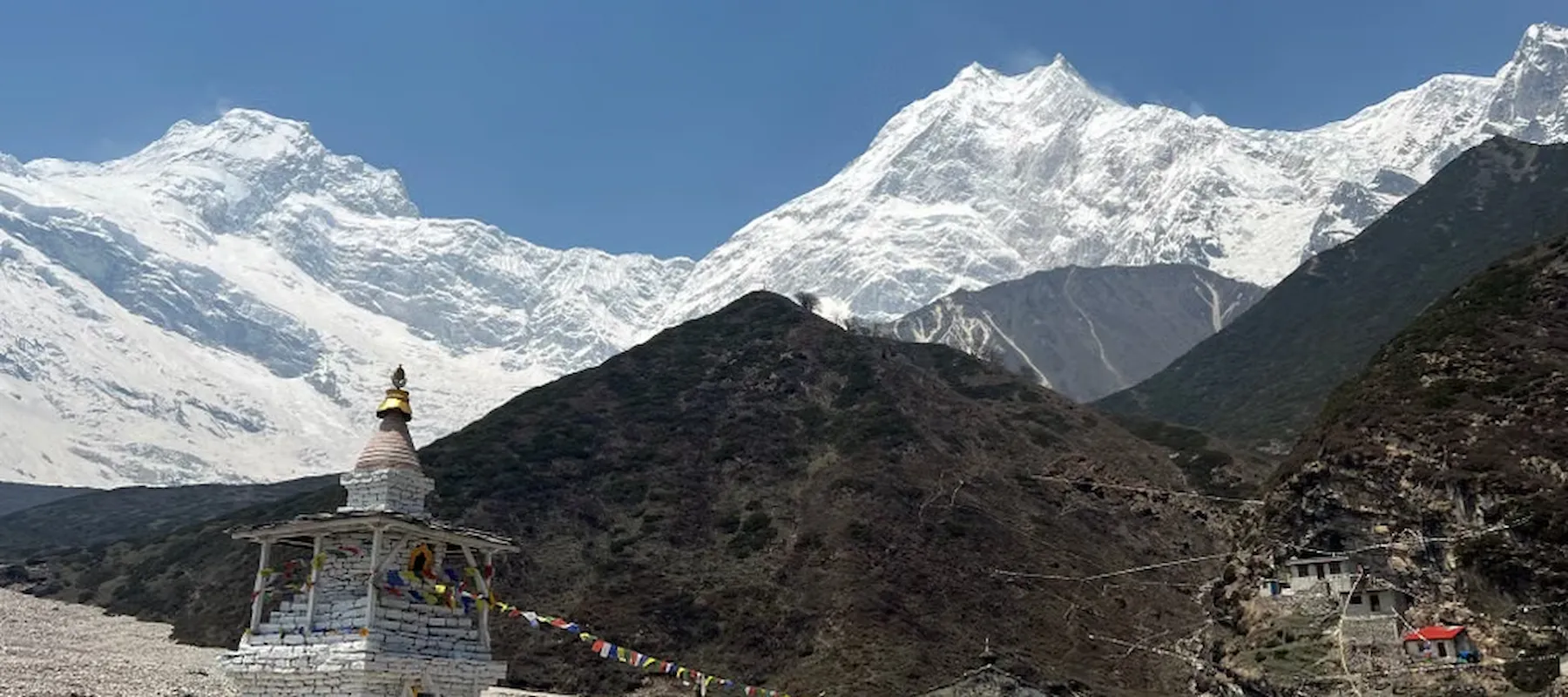
The Manaslu Circuit Trek for beginners is doable, but it’s the most demanding trek in this beginner series. It’s graded as challenging, crosses Larke La Pass at 5,160 m, and requires a licensed guide and restricted-area permits. First-time trekkers with good fitness, a few months of preparation, and a 17-day itinerary with two acclimatization days can complete it. Complete beginners with no hiking background are usually better off starting with Annapurna Base Camp or Poon Hill.
This guide is written for first-timers who are seriously considering Manaslu. It covers the full day-by-day itinerary, permits and documents, a training plan, a packing list, and honest answers to the questions beginners ask before booking.
Manaslu circles the world’s eighth-highest mountain (8,163 m) and follows the Budhi Gandaki River from warm forest into Tibetan-influenced villages like Namrung, Samagaun, and Samdo. Because the region is a restricted area, it sees far fewer trekkers than Everest or Annapurna, so the trails are quiet and the villages feel lived-in rather than built for visitors.
For a beginner, that quiet is both the appeal and the challenge. There are fewer lodges, simpler food, and fewer people around if something goes wrong. What works in a first-timer’s favor is the structure of the 17-day plan: a slow climb from 869 m, two full rest days, and a guide with you the entire way, since one is legally required. For the advanced trekker who wanted to explore more, this Manaslu region naturally and culturally Manaslu Tsum Valley Trek will offer a better
| Day | Route | Altitude | Time | Key Places |
|---|---|---|---|---|
| 1 | Arrive in Kathmandu | 1,325 m | — | Airport pickup, trek briefing |
| 2 | Kathmandu sightseeing and permit day | 1,325 m | Full day | Boudhanath, Pashupatinath, Patan; permits finalized |
| 3 | Drive to Machha Khola | 869 m | 10–11 hrs drive | Long, bumpy road; the lowest sleeping point of the trek |
| 4 | Machha Khola to Jagat | 1,410 m | 6–7 hrs | Waterfalls, suspension bridges, permit checkpoint |
| 5 | Jagat to Deng | 1,860 m | 5–7 hrs | Gorges and bamboo forest |
| 6 | Deng to Namrung | 2,630 m | 8–9 hrs | Longest early day; Tibetan-style houses appear |
| 7 | Namrung to Samagaun | 3,530 m | 6–7 hrs | First big views of Manaslu |
| 8 | Rest day, Samagaun | 3,530 m | Rest day | Optional hike to Manaslu Base Camp or Birendra Lake |
| 9 | Samagaun to Samdo | 3,865 m | Short day | Stark, high landscape near the Tibet border |
| 10 | Rest day, Samdo | 3,865 m | Rest day | Ridge walk toward the border viewpoint |
| 11 | Samdo to Dharamsala | 4,460 m | Short–medium | Basic staging camp below the pass |
| 12 | Over Larke La to Bimthang | 5,160 m / 3,720 m | Very long day | Pre-dawn start; the hardest day of the trek |
| 13 | Bimthang to Tilije | 2,300 m | Long descent | Rhododendron forest |
| 14 | Tilije to Dharapani | 1,860 m | Medium | Trek ends at the Annapurna Circuit junction |
| 15 | Drive to Kathmandu | 1,350 m | Full day | Shared jeep and bus via Besisahar |
| 16 | Free day in Kathmandu | 1,350 m | — | Rest and buffer day |
| 17 | Departure | — | — | Airport transfer |
Beginners should note days 6 and 12 in particular. Day 6 is the longest walk before altitude kicks in, and day 12 is the pass crossing, with a long descent that tests knees and patience more than lungs.
It depends on what “beginner” means to you. Here’s the honest breakdown.
What works in your favor:
What makes it harder than other beginner treks:
Who it suits: fit first-timers with a hiking background, or trekkers who’ve done a shorter Nepal trek first. Who should wait: anyone who has never walked more than a day at a time or who dislikes cold, basic lodging.
| Aspect | Manaslu Circuit | Annapurna Base Camp | Everest Base Camp |
|---|---|---|---|
| Duration | 17 days | 7–8 days | 12 days |
| Highest point | 5,160 m | 4,130 m | 5,364 m (5,545 m at Kala Patthar) |
| Grade | Challenging | Moderate | Moderate to challenging |
| Guide required | Yes, by law | Recommended | Recommended |
| Permits | Restricted-area permit + 3–4 others | ACAP + TIMS | Park permit + municipality fee |
| Lodge comfort | Basic | Good | Good to basic |
| Crowds | Low | High | Very high |
| Permit / Document | Approximate Cost | Notes |
|---|---|---|
| Manaslu Restricted Area Permit (MRAP) | $100 for the first 7 days (Sept–Nov), $75 (Dec–Aug), +$15 per extra day | Only through a registered agency |
| Manaslu Conservation Area Permit (MCAP) | About NPR 3,000 (~$22–30) | Conservation area entry |
| Annapurna Conservation Area Permit (ACAP) | About NPR 3,000 (~$22–30) | Needed near the end of the route |
| Local rural municipality permit (Tsum Nubri / Chumnubri) | About NPR 1,000 (~$8) | Local entry fee |
| TIMS card | As applicable | Often included by agencies |
| Valid passport | — | At least 6 months’ validity |
| Nepal visa | $30 (15 days) / $50 (30 days) | On arrival or online |
| Travel insurance | — | Must cover trekking to 5,500 m and helicopter evacuation |
For beginners, the important rule is that you can’t arrange any of this yourself. The restricted-area permit is issued only through a registered agency, and a licensed guide must go with you. Since March 2026, solo trekkers can also get the permit, as the old two-person minimum was removed. Fees change, so treat these figures as approximate.
| Timeline | Focus | Example |
|---|---|---|
| 12–16 weeks out | Build a base | 3–4 cardio sessions a week (brisk walking, cycling, running), 30–45 minutes |
| 8–12 weeks out | Add hills and load | Weekly hill or stair session with a loaded daypack |
| 4–8 weeks out | Simulate trek days | One long hike (4–6 hours) every weekend, wearing your trek boots |
| 2–4 weeks out | Sharpen and rest | Back-to-back hiking days, then reduce volume in the last week |
| Final week | Recover | Light walking only; check gear and documents |
Downhill practice matters more than most beginners expect. The descent from Larke La drops roughly 1,400 m, so include stair descents or steep downhill walking in your training.
| Category | Key Items |
|---|---|
| Layers | Thermal base layers, fleece mid-layer, down jacket, waterproof and windproof shell |
| Head and hands | Warm hat, buff or balaclava, insulated gloves, sun hat, high-UV sunglasses |
| Footwear | Broken-in waterproof boots, camp shoes, wool socks |
| Pass-specific | Microspikes or light crampons, gaiters, headlamp with spare batteries |
| Sleep | Sleeping bag rated to about -15°C (Alliance lends one on a returnable basis) |
| Health | First-aid kit, water purification, blister care, altitude medication if prescribed |
| Practical | Trekking poles, power bank, sunscreen, cash in small notes |
Beginners often over-pack. Alliance Treks provides a returnable sleeping bag, down jacket, and duffel bag, which removes the heaviest and most expensive items from your own luggage list.
Your sleeping altitude rises gradually: Namrung at 2,630 m, Samagaun at 3,530 m, Samdo at 3,865 m, and Dharamsala at 4,460 m before the pass. Rest days at Samagaun and Samdo are for hiking high and sleeping low, not for staying in bed. Drink plenty of water, avoid alcohol, and report headaches, nausea, or unusual tiredness to your guide immediately. Altitude sickness isn’t related to fitness, so being strong doesn’t exempt you.
| Season | Months | Suitability for First-Timers |
|---|---|---|
| Autumn | September–November | Best choice: clearest skies, stable weather (higher permit fee) |
| Spring | March–May | Very good: mild temperatures, blooming forests |
| Winter | December–February | Not ideal: cold, snow on the pass, risk of closure |
| Monsoon | June–August | Not recommended: rain, landslides, leeches |
A flash flood on September 6, 2026, near Namrung destroyed two bridges and led to a suspension of the trek. Residents built a temporary wooden bridge and an alternate trail, and Nepali media and trekking operators report the route has reopened. The crossing is temporary, so confirm current conditions with your agency before departure, especially if rain is forecast.
A fit first-timer can, with preparation and a 17-day itinerary that includes two acclimatization days. Complete beginners without a hiking background are better off starting with a shorter trek.
It’s graded challenging. The difficulty comes from length, altitude, basic lodges, and the Larke La crossing, not technical skill.
Yes. A licensed guide is legally required for the entire route, and the permit is only issued through a registered agency.
Alliance Treks lists it at 5,160 m. Some sources cite about 5,106 m.
Seventeen days is the recommended plan for first-timers because it includes two rest days. Shorter 14-day versions compress acclimatization.
The Manaslu Restricted Area Permit, MCAP, ACAP, a local municipality permit, and a TIMS card where applicable, all arranged through a registered agency.
With Alliance Treks it’s $1,130 to $1,175 per person for groups of 2 or more and $1,670 for a solo trekker. Lunch, dinner, and a dedicated porter are extra.
Start 3–4 months out with regular cardio, add weekly hill or stair sessions with a loaded pack, and finish with long weekend hikes in your trek boots. Practice downhill walking too.
Autumn (September–November) and spring (March–May) are the most stable and beginner-friendly.
Yes, especially near the pass. The two rest days and a guide who monitors symptoms are your main protections.
It’s comparable or slightly harder, mainly because of the longer duration and more basic lodges, even though its highest point is lower.
Yes. Annapurna Base Camp, Poon Hill, and Mardi Himal are strong first treks, and many people return to Manaslu afterward.
Manaslu isn’t the easiest first trek, and this guide isn’t going to pretend it is. But for a fit, well-prepared first-timer who wants quiet trails and real Himalayan culture, it’s a realistic and rewarding goal. The mandatory guide, the two acclimatization days, and a sensible training plan make the biggest difference. If you’re unsure, a shorter trek first is a smart step, and Manaslu will still be there.
Alliance Treks & Expedition Pvt. Ltd. has organized Himalayan treks since 1990 and handles every restricted-area permit for you, which matters for first-timers who don’t want to navigate the process themselves. Their 17-day package includes a government-certified, NATHM-trained guide, a porter shared between two trekkers, four hotel nights in Kathmandu, public bus and shared jeep transport, and a returnable sleeping bag, down jacket, and duffel bag. Groups are capped at 15, and guaranteed departures run on October 5, November 5, and December 5, 2026.
Alliance Treks & Expedition Pvt. Ltd. Once is not enough for naturally and culturally Himalayas