(Viber, Whatsapp, Cell) +977 9851022814

The Everest Base Camp Trek for beginners is more achievable than its reputation suggests — rated moderate to challenging, it requires no technical climbing skill, just good fitness and patience with altitude. Over 12 days, two dedicated acclimatization days, a comfortable teahouse every night, and a gradual, well-paced ascent to 5,364 meters make it possible for a reasonably fit first-timer to reach Everest Base Camp, provided the trek is approached with proper preparation and a licensed guide.
This guide is built specifically for beginners weighing Everest Base Camp as their first major Himalayan trek — covering the full day-by-day itinerary, every permit you’ll need, a complete packing list, and honest answers to the questions first-timers ask most before booking.
Everest Base Camp is the single most recognized trekking destination on Earth, and every year an estimated 30,000 to 40,000 people — the overwhelming majority of them first-time high-altitude trekkers rather than experienced mountaineers — walk the same trail to reach it. The route climbs from Lukla at 2,860 meters through Sherpa villages, pine and rhododendron forest, and increasingly stark glacial terrain to reach Base Camp itself at 5,364 meters, with most itineraries also including a climb to Kala Patthar (5,545 m) for the trek’s signature sunrise view of Everest.
For beginners specifically, what makes this trek genuinely approachable isn’t a lack of difficulty — it’s the structure. Two full acclimatization days, an established teahouse network every step of the way, and a route walked by tens of thousands of ordinary, moderately fit travelers each year mean that with the right preparation, this isn’t a trek reserved for elite athletes or experienced mountaineers.
| Day | Route | Altitude | Key Highlights |
|---|---|---|---|
| 1 | Fly Kathmandu to Lukla, trek to Phakding | 2,610 m | Dramatic mountain flight; gentle first walking day |
| 2 | Phakding to Namche Bazaar | 3,440 m | Crosses the Hillary Suspension Bridge; enters Sagarmatha National Park |
| 3 | Acclimatization day in Namche Bazaar | 3,440 m | Optional hike to Everest View Hotel and Sherpa Culture Museum |
| 4 | Namche Bazaar to Tengboche | 3,867 m | Visits the largest monastery in the Khumbu, framed by Everest and Ama Dablam |
| 5 | Tengboche to Dingboche | 4,410 m | Passes Pangboche, one of the Khumbu’s oldest Sherpa settlements |
| 6 | Acclimatization day in Dingboche | 4,410 m | Side hike to Nangkartshang viewpoint |
| 7 | Dingboche to Lobuche | 4,949 m | Passes the Everest climbers’ memorial site near Dughla |
| 8 | Lobuche to Gorakshep, trek to Everest Base Camp | 5,364 m | Reaches Base Camp itself; returns to Gorakshep overnight |
| 9 | Gorakshep to Kala Patthar, descend to Pheriche | 5,545 m | Pre-dawn climb for sunrise views of Everest, Nuptse, and Pumori |
| 10 | Pheriche to Namche Bazaar | 3,440 m | Retraces the route through Pangboche and Tengboche |
| 11 | Namche Bazaar to Lukla | 2,860 m | Final trekking day back to the airstrip |
| 12 | Fly Lukla to Kathmandu | 1,400 m | Return flight to the capital |
This itinerary’s two dedicated rest days — at Namche and Dingboche — are the single biggest reason this trek works for beginners at all. Skipping or rushing either one is the most common cause of altitude-related problems on this route.
It can be, with the right expectations. Here’s what genuinely works in a beginner’s favor:
What beginners should be realistic about: this is a genuinely demanding trek in terms of both duration and altitude, involving 12 days of consecutive walking, some days exceeding 6–7 hours, and a maximum altitude that puts real physiological strain on the body regardless of fitness level.
Compared to restricted-area treks like Upper Mustang or Manaslu, Everest Base Camp has a relatively simple permit process:
| Document/Permit | Cost | Key Detail |
|---|---|---|
| Sagarmatha National Park Entry Permit | US$30–35 per person | Checked at the Monjo entry checkpoint |
| Khumbu Pasang Lhamu Rural Municipality Fee | US$20 per person | Local municipal entry fee supporting regional development |
| Valid passport | N/A | Required with at least 6 months’ validity remaining |
| Nepal entry visa | US$30 (15 days) / US$50 (30 days) | Obtained on arrival at Kathmandu airport or in advance online |
| Passport-sized photos | N/A | Typically 2–4 copies needed for permit processing |
Unlike some other Nepal treks, Everest Base Camp currently does not require a separate TIMS card; both required permits are generally arranged directly by a registered trekking agency ahead of time, and a licensed guide is strongly recommended for beginners given the trek’s altitude and remoteness.
Because the trek moves from mild forest terrain to genuinely extreme high-altitude cold over 12 days, packing needs to cover a wide temperature and weather range:
| Category | Key Items |
|---|---|
| Clothing | Moisture-wicking base layers, insulating mid-layer, waterproof/windproof outer shell, warm hat and gloves |
| Footwear | Broken-in waterproof hiking boots, camp shoes, wool trekking socks |
| Sleep and comfort | Sleeping bag rated for sub-zero temperatures, basic toiletries, earplugs |
| Health and safety | Personal first-aid kit, water purification tablets or filter, altitude medication if prescribed |
| Practical extras | Headlamp, trekking poles, high-UV sunglasses, sunscreen, portable power bank, cash in small denominations |
For first-timers, a sleeping bag rated well below freezing is worth emphasizing — teahouse rooms above Dingboche are unheated, and nighttime temperatures near Gorakshep can drop dramatically even outside of winter.
EBC is officially graded moderate to challenging — no technical climbing skill is needed, but beginners should expect long walking days (often 5–7 hours), a genuine physical toll from sustained altitude exposure, and cold conditions once above Dingboche. A structured pre-trip fitness routine, ideally including regular cardio and hill-walking practice for at least a month beforehand, makes a meaningful difference in how comfortably a first-timer handles the trek.
The trek’s two acclimatization days are non-negotiable for beginners specifically — they exist because altitude sickness doesn’t correlate with fitness level, and even strong, experienced hikers can struggle without proper rest days built in.
| Season | Months | Why It Suits Beginners |
|---|---|---|
| Spring | March–May | Blooming rhododendrons, generally clear skies |
| Autumn | September–November | The most stable, clearest weather of the year |
| Winter | December–February | Quieter trails but significantly colder, more demanding for first-timers |
| Monsoon | June–August | Cloud cover and rain reduce visibility; not recommended for beginners |
Autumn is the single most recommended season for first-time trekkers on this route, since it combines the clearest mountain views with the most predictable, stable weather — reducing the flight delays into Lukla that can complicate an already tightly scheduled itinerary.
Yes, with proper preparation. It requires no technical climbing skill, but demands good fitness, patience with altitude, and a commitment to the itinerary’s built-in acclimatization days.
The standard itinerary runs 12 days round trip from Kathmandu, including two dedicated acclimatization days at Namche Bazaar and Dingboche.
It’s strongly recommended, both for safety and altitude monitoring, though not currently a strict legal requirement on this specific route the way it is on restricted-area treks like Manaslu or Upper Mustang.
The Sagarmatha National Park Entry Permit and the Khumbu Pasang Lhamu Rural Municipality Fee — no separate TIMS card is currently required for this route.
Yes, genuinely so, given the 5,364-meter maximum altitude. The itinerary’s two acclimatization days are specifically designed to reduce this risk, but symptoms should never be ignored regardless of fitness level.
Autumn (September–November) offers the most stable weather and clearest visibility, followed closely by spring (March–May).
Most days involve 5 to 7 hours of walking, with the day from Gorakshep to Base Camp and back being one of the longest and most physically demanding of the entire trek.
You don’t need elite athletic fitness, but a solid month of pre-trip cardio and hill-walking preparation makes a substantial difference in how manageable the trek feels.
Most teahouses offer paid Wi-Fi and there is generally mobile signal along much of the route, though connectivity becomes less reliable and more expensive the higher you climb.
Rushing the acclimatization days or trying to push ahead of the group’s pace. Altitude sickness doesn’t respect fitness level, and skipping rest days can increase the risk of having to abandon the trek.
Yes, though this significantly extends the trip to around 15–18 days and adds a high pass crossing (Cho La), which is more demanding than the standard EBC route.
Dal bhat remains the most practical staple, since most teahouses offer generous portions and refills. Boiled or treated water plus hot tea are standard hydration options, while bottled water becomes increasingly expensive at higher elevations.
Everest Base Camp has a reputation for being an extreme, expert-only trek, but the reality for beginners is more encouraging: with two built-in acclimatization days, a mature teahouse network, and a route walked by tens of thousands of ordinary travelers each year, it’s a genuinely achievable first major Himalayan trek for anyone with solid fitness and realistic expectations. The physical and altitude demands are real, but they’re also well understood, well-managed by experienced guides, and don’t require any technical climbing skill to overcome.
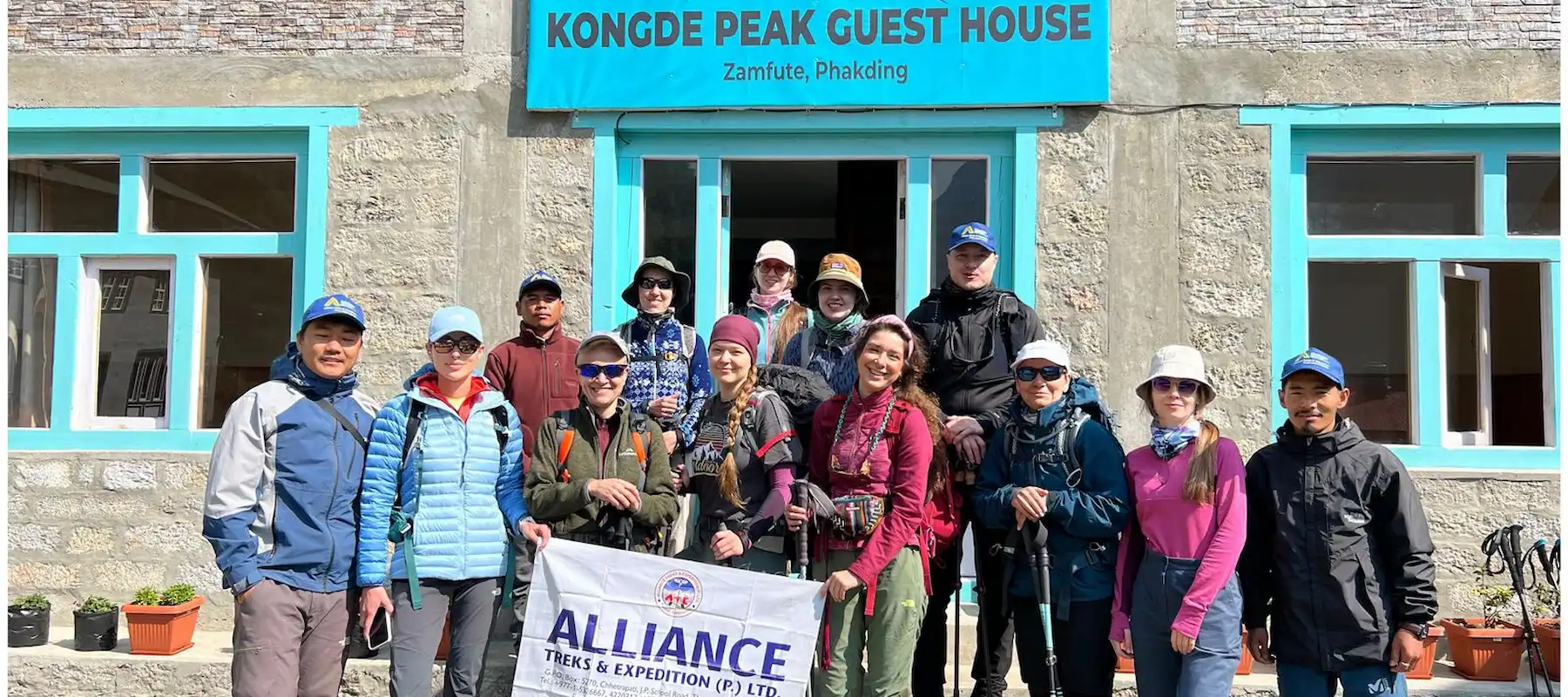
Alliance Treks & Expedition Pvt. Ltd. has organized Himalayan treks and expeditions since 1992, and is registered with the Nepal Tourism Board, TAAN, and the Nepal Mountaineering Association. Their Everest Base Camp itinerary includes the full two acclimatization days rather than a compressed schedule, government-licensed guides trained specifically in altitude monitoring and wilderness first aid, and small group sizes capped at 15 people — a genuinely important factor for beginners who benefit from closer guide attention. The package includes round-trip Lukla flights, all required permits, and a returnable sleeping bag and down jacket kit, with transparent group-based pricing and no hidden costs.
Alliance Treks & Expedition Pvt. Ltd. Once is not enough for naturally and culturally Himalayas