(Viber, Whatsapp, Cell) +977 9851022814

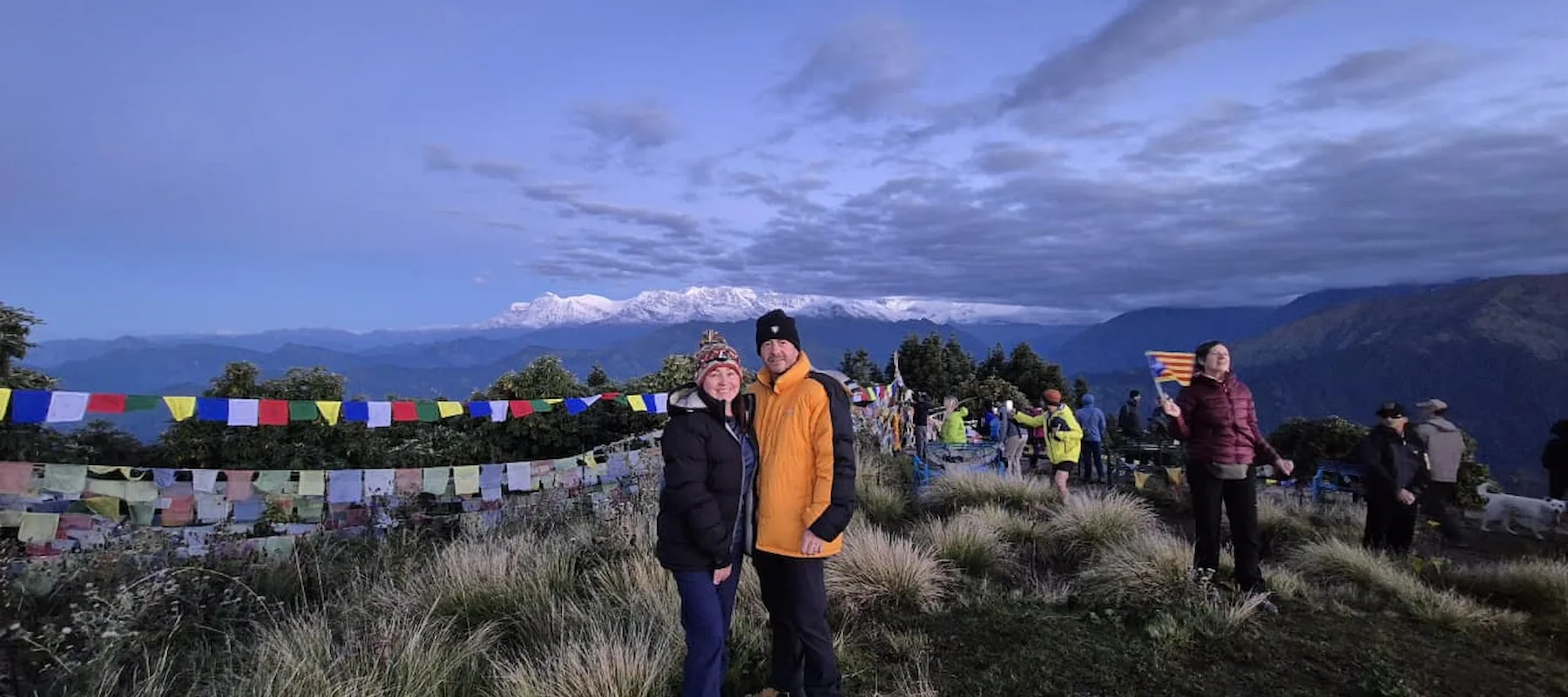
The Ghorepani Poon Hill Trek for beginners is about as approachable as Himalayan trekking gets. It’s graded easy to moderate, tops out at 3,210 m, and needs no prior trekking experience, just the ability to walk 4–8 hours a day on a well-marked, teahouse-lined trail. With one of the most famous sunrise viewpoints in Nepal at the end of a short, well-paced itinerary, it’s consistently recommended as a genuine first Himalayan trek, including for families and children.
This guide covers the full day-by-day itinerary, the permits you need, what to pack, and honest answers to the questions first-timers ask most before booking.
Poon Hill sits at 3,210 m in the Annapurna foothills, and the sunrise from its summit is one of the most photographed moments in Nepal trekking, a wide, uninterrupted sweep across Annapurna I, Dhaulagiri, Machhapuchhre, Annapurna South, Nilgiri, and a dozen other peaks. What makes it a genuine beginner’s trek isn’t just the view; it’s how little the route asks of you to get there. The trail is well-marked with stone steps and forest paths; teahouses appear every few hours, and the highest point sits comfortably below the altitude where serious mountain sickness becomes a real concern.
Unlike Everest Base Camp or Annapurna Base Camp, this isn’t a scaled-down version of a bigger trek. It’s a complete, standalone Himalayan experience built specifically around a short timeframe, which is exactly why it’s one of the most recommended first treks for people who’ve never done one before.
| Day | Route | Altitude | Time | Key Highlights |
|---|---|---|---|---|
| 1 | Arrive in Kathmandu | 1,325 m | — | Airport pickup, hotel check-in, evening trek briefing |
| 2 | Kathmandu sightseeing and trek preparation | 1,325 m | Full day | Swayambhunath, Pashupatinath, Boudhanath; gear check |
| 3 | Drive Kathmandu to Pokhara | 822 m | 6–7 hrs | Tourist bus; free afternoon by Phewa Lake |
| 4 | Drive to Nayapul, trek to Ulleri | 2,070 m | 3–4 hrs | Steady stone-step ascent through Tikhedhunga |
| 5 | Ulleri to Ghorepani | 2,874 m | 5–6 hrs | Rhododendron and oak forest; first big mountain views |
| 6 | Sunrise at Poon Hill, trek to Tadapani | 3,210 m | 8–9 hrs | The trek’s signature moment: sunrise over the Annapurna range |
| 7 | Tadapani to Kimche (via Ghandruk), drive to Pokhara | 822 m | 4–5 hrs | Traditional Gurung village with slate-roof houses |
| 8 | Drive Pokhara to Kathmandu | 1,325 m | 6–7 hrs | Return journey |
| 9 | Departure | — | — | Final morning free, airport transfer |
Only two days (5 and 6) involve serious elevation gain, and even the longest day, the Poon Hill sunrise plus the walk to Tadapani, is manageable at a steady pace with regular rest stops.
Yes, more so than almost any other named trek in Nepal, for a few clear reasons:
The one thing beginners should prepare for honestly: Day 6 is long, up to 8–9 hours combining the pre-dawn Poon Hill climb with the onward walk to Tadapani, so pacing yourself early in the day matters more than raw fitness.
| Document / Permit | Cost | Key Detail |
|---|---|---|
| Annapurna Conservation Area Permit (ACAP) | Included in most package prices | Funds conservation in the Annapurna region |
| TIMS Card (Trekkers’ Information Management System) | Included in most package prices | Trekker registration and safety tracking |
| Valid passport | — | At least 6 months’ validity |
| Nepal entry visa | $30 (15 days) / $50 (30 days) | On arrival at Kathmandu airport or online in advance |
| Passport-sized photos | — | A few copies needed for permit processing |
This is one of the simplest permit processes of any named trek in Nepal, just two documents, both of which a registered agency arranges for you. There’s no restricted-area permit and no government office visit required.
| Category | Key Items |
|---|---|
| Clothing | Comfortable trekking clothes, warm jacket, rain gear, gloves, hat |
| Footwear | Broken-in hiking boots, comfortable socks |
| Sun protection | Sunglasses, sunscreen |
| Sleep and comfort | Alliance Treks provides a returnable down sleeping bag and jacket |
| Practical extras | Headlamp (essential for the pre-dawn Poon Hill climb), reusable water bottle, personal toiletries, cash in small denominations |
Because the trek stays below 3,500 m and every night is spent in a teahouse, the gear list here is noticeably shorter than for Everest, Annapurna Base Camp, or Manaslu. A headlamp is the one item beginners most often forget, and it’s genuinely necessary for the 45-minute to hour-long climb to the Poon Hill viewpoint in the dark.
It’s officially graded easy to moderate. No prior trekking experience, special equipment, or technical skill is needed, just the ability to walk 5–8 hours a day on stone-paved trails and forest paths with reasonable fitness. The trail is consistently described as suitable for families, solo travelers, and complete first-timers alike, which is a genuinely rare thing to say about a Himalayan trek with real mountain views at the end.
| Season | Months | Why It Suits Beginners |
|---|---|---|
| Spring | March–May | Rhododendron forests in full bloom, mild temperatures |
| Autumn | September–November | Clearest skies and most stable mountain views |
| Winter | December–February | Cold but doable; snow-capped peaks add scenery |
| Monsoon | June–August | Not recommended: heavy rain and leeches |
Spring and autumn are the two seasons most recommended, and unlike higher-altitude treks, this route stays open and enjoyable in winter too, since the low maximum altitude means it doesn’t face the same closure risk as passes above 4,500 m.
Yes. It’s specifically considered one of Nepal’s best treks for first-timers, requiring no prior experience, special equipment, or advanced fitness, just the ability to walk several hours a day.
Most itineraries run 9 days from Kathmandu to Kathmandu, including Kathmandu and Pokhara sightseeing, though the trekking portion alone can be completed in 4 to 5 days from Pokhara.
Poon Hill sits at 3,210 meters. The sunrise climb takes 45 minutes to an hour on a steady, well-marked uphill trail, and is not considered a difficult hike.
The Annapurna Conservation Area Permit (ACAP) and a TIMS card, both arranged directly by a registered trekking agency.
It’s uncommon, since the highest point is only 3,210 meters, well below the altitude where serious mountain sickness typically becomes a risk.
Annapurna I, Annapurna South, Dhaulagiri, Machhapuchhre (Fishtail), Nilgiri, Hiunchuli, Tukuche Peak, and several other Himalayan giants are visible on a clear morning.
Yes, it’s widely regarded as one of the most family-friendly treks in Nepal, thanks to its moderate trails, comfortable teahouses, and manageable daily walking distances.
Current Nepal trekking regulations require a licensed guide in many trekking areas, so it’s worth confirming the latest rules with your agency before booking.
Spring (March–May) for blooming rhododendrons or autumn (September–November) for the clearest mountain views are both excellent choices for first-timers.
Comfortable trekking clothes, broken-in hiking boots, a warm jacket, rain gear, a headlamp for the pre-dawn summit climb, and sun protection.
Yes. It’s specifically designed to deliver a complete Himalayan experience, mountain views, forest trails, and village culture, within a timeframe that fits a one-week Nepal visit.
Underestimating Day 6. Combining the pre-dawn Poon Hill climb with the onward trek to Tadapani makes it the longest day of the trip, so pacing early and resting before the sunrise hike matters more than raw fitness.
For a genuine first Himalayan trek, Ghorepani Poon Hill is hard to beat. It delivers real mountain drama, a sunrise view that rivals treks demanding two or three times the commitment, and traditional Gurung and Magar village culture, all within a short, well-marked, low-altitude itinerary that welcomes families and complete first-timers alike. If you’re unsure whether Himalayan trekking is for you, this is the trek that answers that question.
With over 34 years of Himalayan experience since 1992, Alliance Treks & Expedition Pvt. Ltd. provides government-licensed, NATHM-trained guides, carefully selected comfortable teahouse accommodation, and transparent pricing with no hidden costs. The 9-day package includes airport transfers, hotel stays in Kathmandu and Pokhara, all ACAP and TIMS permits, a shared porter, and a returnable sleeping bag, down jacket, and trekking poles, an especially strong setup for beginners who’d rather not source specialized gear themselves. Guaranteed departures run throughout September to December 2026 at $425 per person for groups of 11 or more.
Alliance Treks & Expedition Pvt. Ltd. Once is not enough for naturally and culturally Himalayas