(Viber, Whatsapp, Cell) +977 9851022814

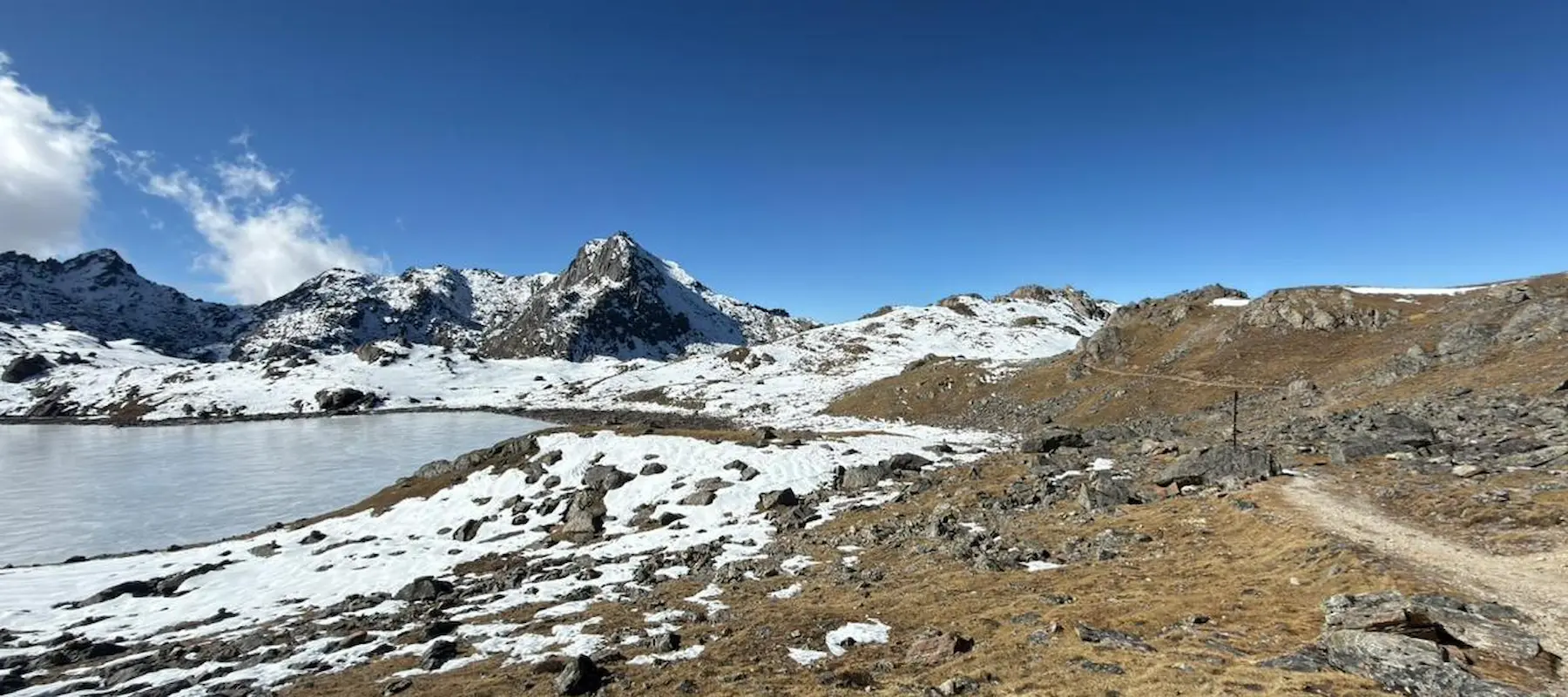
Once every year, on the full moon day of the Nepali month of Shrawan, a quiet but powerful movement begins across Nepal. Thousands of Hindu men, women, and entire families pack their bags, tighten their trekking boots, or simply walk to the nearest river ghat — all headed toward a handful of sacred destinations connected to one festival: Janaipurnima.
Janaipurnima, also known as Gunhi Punhi among the Newar community and closely tied to Raksha Bandhan, is one of the most spiritually significant festivals in the Hindu calendar of Nepal and parts of India. On this day, Brahmin and Chhetri men ritually change their janai (sacred thread). At the same time, priests tie a protective yellow thread called doro or raksha sutra around the wrists of devotees, promising protection for the year ahead.
But Janaipurnima is not only a ritual performed at home. It is, at its heart, a pilgrimage festival. From the icy alpine waters of Gosaikunda Lake at 4,380 meters to the ancient courtyards of Kumbheshwar Temple in Patan, this blog takes you through every major site where Hindu pilgrims gather during Janaipurnima, why these places are considered holy, and what a first-time visitor or pilgrim can expect.
In 2026, Janaipurnima falls on Friday, August 28, with festivities beginning the evening before.
The word “Janaipurnima” combines two terms — janai (the sacred thread worn across the chest by initiated Hindu men) and purnima (full moon). The festival marks the day when men who have undergone the Bartabandha (sacred thread) ceremony are required to replace their old, ritually “impure” thread with a fresh one, chanting Vedic mantras that renew their commitment to dharma, knowledge, and karma.
The festival’s roots run deep into Hindu mythology. There is one popular legend that is linked to Lord Shiva, who swallowed poison during Samudra Manthan (churning of the ocean) and then is said to have quenched the burning in his throat by hitting a mountain with his trident, thus forming this lake, which is now known as Gosaikunda. Another belief is that the doro thread tied on this day should be kept till the festival Tihar, when the thread is tied to a cow’s tail, symbolically assisting the soul to cross the mythical Baitarani River after death.
Janaipurnima is more than a ritual; it’s a cultural celebration of protection, purification and renewal. Sisters tie rakhi on their brothers, the sacred thread is tied by priests on the wrists of devotees, and families gather around to have kwati, a nourishing soup of nine to twelve varieties of sprouted beans, said to give strength and immunity as the monsoon season comes to an end.
For a lot of Hindus, however, the ultimate act of piety on this day is the pilgrimage itself—the physical endeavor of walking for days, perhaps even on foot for a year, to bathe in a sacred lake, river or temple pond that washes away a year’s worth of sin.
Below are the major pilgrimage destinations where Hindu devotees converge during Janai Purnima, ranging from high-Himalayan lakes to valley temples.
Gosaikunda is the only Janaipurnima pilgrimage site in Nepal which is so iconic. It is a glacial lake located at 4,380m in Langtang region and is believed to be formed by the trident wielded by Lord Shiva. As many as several thousand pilgrims, some coming for two or three days from Dhunche or Syabrubesi, arrive at the lakeside on the eve of the full moon. Shamans (jhankris) drum and dance for hours through the night and at dawn devotees take an icy ritual dip to wash away the sin from their souls. The lake is still frozen through until late spring and the window of pilgrimage is only open in August.
For those unable to make the high-altitude trek, Kumbheshwar Temple in Patan is considered spiritually linked to Gosaikunda itself, and its twin ponds are believed to draw water from the same sacred source. This five-storey pagoda temple, dating to 1392, is one of the oldest in the Kathmandu Valley. On Janaipurnima, a richly decorated silver Shiva lingam is placed on a raised platform in the middle of the temple pond, and devotees queue for hours to take a symbolic dip and offer puja.
As Nepal’s most revered Shiva temple and a UNESCO World Heritage Site, Pashupatinath becomes a major gathering point on Janaipurnima. Thousands of devotees visit for mass thread-changing ceremonies, ritual bathing in the Bagmati River, and blessings from resident priests. For many urban Hindu families who cannot travel to Gosaikunda, Pashupatinath serves as the accessible spiritual center of the festival.
In the hills east of Kathmandu, Charikot, the headquarters of Dolakha district, transforms into a cultural hub during Janaipurnima. The nearby Dolakha Bhimsen Temple (Bhimeshwar) houses a stone idol believed to “sweat” before major events, and it draws large crowds during the festival. The blend of mountain tradition and Hindu ritual here offers a quieter, more intimate pilgrimage experience compared to the crowds at Kathmandu’s major sites.
The Newar town of Panauti, located at the confluence of three rivers (a triveni sangam), is another important gathering place during Janaipurnima and the surrounding festival week. Pilgrims bathe at the river confluence, believed to hold the same purifying power as larger sangams in the Hindu tradition, before joining local temple rituals.
Bhaktapur, one of the three ancient royal cities of the Kathmandu Valley, observes Janaipurnima as Gunhi Punhi, with rituals at local ponds and courtyards, including the historic Kwathuni pond area. The Newar community here prepares kwati and performs thread-changing rites, and the festival flows directly into the week-long Gaijatra celebrations.
Janaipurnima pilgrimage is not limited to the Kathmandu Valley. Depending on the region, devotees also travel to:
Badimalika Temple, Bajura (far-western Nepal)
Khaptad Triveni, far-western Nepal
Panch Pokhari and Bhairab Kunda, Sindhupalchowk
Sailung and Kalinchowk, Dolakha
Dudh Kunda, Solukhumbu
These regional sites carry the same core belief — that bathing in sacred, high-altitude waters on the day of the full moon offers purification unmatched at any other time of year.
| Pilgrimage Site | Location | Altitude/Type | Main Draw |
|---|---|---|---|
| Gosaikunda Lake | Rasuwa, Langtang region | 4,380 m alpine lake | Multi-day trek, holy dip, Shiva legend |
| Kumbheshwar Temple | Patan, Lalitpur | Valley temple pond | Silver Shiva lingam ritual, linked to Gosaikunda |
| Pashupatinath Temple | Kathmandu | Valley temple, riverbank | Mass thread-changing, largest urban gathering |
| Dolakha Bhimsen Temple | Charikot, Dolakha | Hill town temple | “Sweating” stone idol, mountain traditions |
| Panauti Triveni | Kavre district | River confluence | Ritual bathing at sangam |
| Bhaktapur (Kwathuni) | Bhaktapur | Valley pond/courtyard | Gunhi Punhi, Newar rituals, kwati feast |
| Badimalika Temple | Bajura | Far-western hill temple | Regional pilgrimage, Shakti worship |
| Dudh Kunda | Solukhumbu | High-altitude lake | Remote Himalayan pilgrimage |
Anyone planning to witness or take part in a Janaipurnima pilgrimage — whether at a Kathmandu Valley temple or a remote Himalayan lake — can expect a mix of deep devotion, physical endurance, and vibrant community celebration.
At high-altitude sites like Gosaikunda: Expect large crowds despite the remoteness, cold nighttime temperatures, and a festive but intense atmosphere as shamans drum through the night before dawn rituals begin. The trek itself, usually starting from Dhunche or Sundarijal, takes two to three days each way, so proper trekking gear, acclimatization stops (commonly at Syabrubesi or Sing Gompa), and monsoon-season rain gear are essential.
At valley temples like Kumbheshwar and Pashupatinath: Expect dense crowds, long queues for darshan and the ritual dip, roadside stalls selling flowers, threads, and festival food, and a strong sense of community as families arrive together to have their sacred threads renewed by priests.
Across all sites: Devotees can expect priests tying yellow protective threads on wrists, chanting of Vedic mantras, the smell and taste of freshly prepared kwati soup, and — in Newar-majority areas — the beginning of a broader festival season that flows into Gaijatra the following day.
For travelers and cultural visitors, Janaipurnima offers a rare, authentic window into living Hindu tradition — not a staged performance, but a genuine, centuries-old act of faith still practiced exactly as it has been for generations.
Answer: The largest gatherings happen at Gosaikunda Lake in Rasuwa, Kumbheshwar Temple in Patan, and Pashupatinath Temple in Kathmandu, though many regional sites across Nepal also draw devotees.
Answer: No. Gosaikunda sits at 4,380 meters and typically requires a two- to three-day trek from Dhunche or Syabrubesi, so most pilgrims plan their journey several days in advance of the full moon.
Answer: Both festivals fall on the same full moon day. Janai Purnima focuses on Hindu men renewing their sacred thread and receiving a protective wrist thread from priests, while Raksha Bandhan centers on sisters tying rakhi threads on their brothers as a symbol of protection and love.
Answer: Janai Purnima falls on Friday, August 28, 2026, with lunar festivities beginning the evening before, on August 27.
Answer: While the sacred thread ritual is specific to men who have undergone the Bartabandha ceremony (traditionally Brahmin and Chhetri), the protective wrist-thread blessing and the pilgrimage traditions are observed much more broadly across Hindu communities in Nepal, including the Newar community, who call the day Gunhi Punhi.
Alliance Treks specializes in Gosaikunda Trekking and festival pilgrimage participation. With 36 years of experience guiding this sacred Langtang region, we can help you plan and execute this extraordinary spiritual journey.
Our Gosaikunda Festival Packages Include:
Gosaikunda Janaipurnima Trek Details:
Contact Alliance Treks:
📧 Email: [email protected] / [email protected]
📞 WhatsApp/Viber: +977 9851022814 / +977 9841451681
📱 Phone: +977 01 5326667, 01-5320317
🌐 Website: https://www.alliancetreks.com
📍 Address: JP Marg, Thamel, Kathmandu, Nepal
Alliance Treks & Expedition Pvt. Ltd. Once is not enough for naturally and culturally Himalayas