(Viber, Whatsapp, Cell) +977 9851022814

| Aspect | Details |
|---|---|
| Festival Name | Mani Rimdu (མ་ཎི་རིམ་བདུ་) |
| Meaning | “Embodiment of Manjushri’s Wisdom” |
| Festival Type | Buddhist religious festival |
| Primary Celebration | Tengboche Monastery (Everest region) |
| Festival Dates 2026 | October 26–28, 2026 (public days) |
| Full Cycle | October 8–28, 2026 (19 days) |
| Monastery Elevation | 3,867 meters (Tengboche) |
| Calendar System | Tibetan lunar calendar (9th month) |
| Main Ceremony Days | 3 days public celebration |
| Opening Ceremony | Wong (Empowerment ritual) |
| Main Event | Cham (Sacred masked dances) |
| Closing Ceremony | Fire Puja (Purification ritual) |
| Attendance | Monks, pilgrims, and international trekkers |
| Accessibility | Public days open to visitors |
| Best Season | Autumn (peak trekking season) |
| Weather | Clear skies and excellent visibility |
| Mountain Views | Ama Dablam and Everest peaks visible |
Mani Rimdu Festival: Known as one of the most sacred and visually breathtaking Buddhist festivals in the Himalayan region, Mani Rimdu has been celebrated for centuries in high mountain monasteries of the Everest region in Nepal, a profound spiritual celebration. The festival’s name means “embodiment of Manjushri’s wisdom”, a Buddhist deity of wisdom and enlightenment.
It is a celebration of the victory of Buddhism over the ancient Bon religion (the religious tradition used on the Tibetan plateau before the introduction of Buddhism) and is observed by Sherpa people, Buddhist monks, and foreign tourists in the Khumbu Valley yearly. The event is not just a cultural diversity show, but it’s a religious celebration that has been passed down through centuries, and it’s not only to entertain, but to impart spiritual blessings to the participants and the other members of the Buddhist religion.
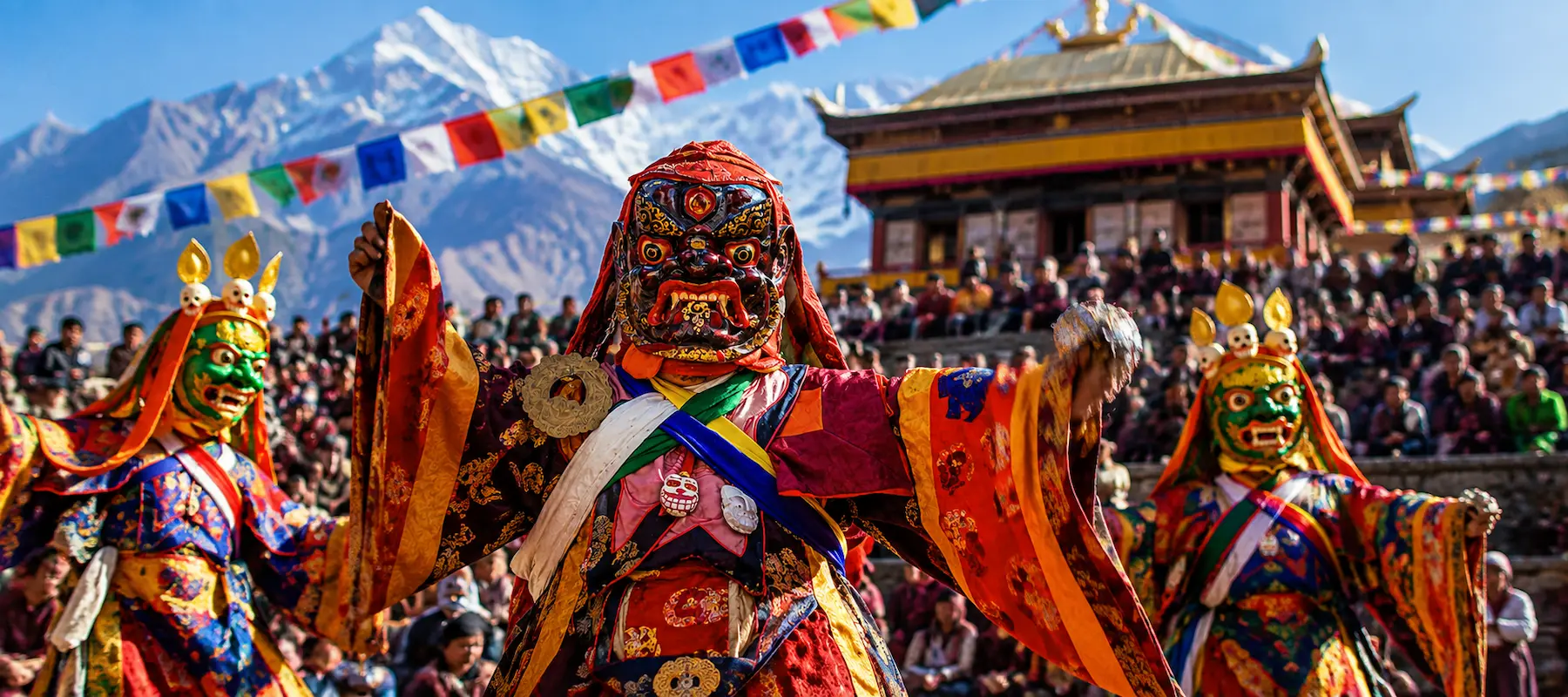
The unique characteristics of the Mani Rimdu are the colorful mask dances (Cham), the construction of the sand mandala, and the sacred fire rituals, which are held at high altitude in dramatic Himalayan landscapes. These elements draw in tourists from globally, and provide spiritual experiences beyond the usual form of travel.
The festival is marked at three main sites in the Solu-Khumbu region: Tengboche Monastery (largest and most popular), Thame Monastery (spring celebration) and Chiwong Monastery (autumn celebration). It is at the epicenter of the festival, in the Khumbu Valley at Tengboche Monastery 3867m and is the most visited spot for pilgrims as well as international visitors.
For those undertaking the Everest Base Camp trek, the timing of the trek to coincide with Mani Rimdu provides a unique chance to immerse oneself in the true Sherpa Buddhist culture, observe sacred ceremonies, and gain insight into the spiritual roots of the Himalayan mountaineering communities.
Mani Rimdu’s exact origins are lost to history, but tradition traces the festival to ancient Tibet and the establishment of Buddhism across the Himalayan region.
According to Buddhist accounts, Mani Rimdu celebrates Buddha Sakyamuni’s teachings in the Himalayan region and the triumph of Buddhist philosophy over the existing religion, Bon. It is believed that the festival’s rituals bring blessings from Manjushri, the god of wisdom in Buddhism, helping followers overcome the mind’s obstacles and fill them with wisdom and knowledge.
During Mani Rimdu, the dances are masked representations of Buddhist deities and spiritual powers. The scenes are not dramatic and are not about acting out of a religious character; instead, they are about religious ceremonies, with monks’ costumes and movements embodying the divinities. The dances represent the cosmological dramas and the spiritual principles that are very important in Tibetan Buddhism.
Evolution Through Modern Era
Pre-tourism era (pre-1950s): Mani Rimdu was celebrated by Sherpa communities with minimal external attention. The festival was primarily for spiritual practice and community blessing.
Early tourism era (1950s-1980s): As mountaineering expeditions and trekking tourism increased, international visitors began witnessing Mani Rimdu. The festival gained awareness among Western mountaineers pursuing Everest expeditions.
Modern era (1990s-present): Mani Rimdu became increasingly recognized internationally as a major cultural event. Tourism infrastructure developed around festival dates, trekking companies organized festival packages, and international attendance increased substantially.
UNESCO Recognition
Mani Rimdu is under consideration for UNESCO Intangible Cultural Heritage status, recognizing its cultural importance and spiritual significance. This potential recognition emphasizes the festival’s value as an authentic cultural practice worthy of preservation and international respect.
Confirmed Mani Rimdu 2026 Festival Dates
Tengboche Monastery Public Celebration:
Festival 2026 Schedule Breakdown:
| Period | Activity | Accessibility |
|---|---|---|
| October 8–23, 2026 | Private monastic ceremonies and rituals | CLOSED to public |
| October 24, 2026 | Sand Mandala construction begins, Wong ceremony | LIMITED access |
| October 26, 2026 | Main Cham (masked dances) – Day 1 | OPEN to public |
| October 27, 2026 | Cham continuation – Day 2 | OPEN to public |
| October 28, 2026 | Fire Puja (closing ceremony) | OPEN to public |
Tengboche Monastery is Mani Rimdu’s most significant celebration venue and the festival’s spiritual heart.
Tengboche Monastery details:
Location:
Monastery significance:
Why Tengboche for Mani Rimdu:
Tengboche’s elevation (3,867m) places it at optimal altitude for Buddhist practice—high enough for profound spiritual atmosphere, low enough for human habitation. The monastery’s location on the classic Everest Base Camp trekking route means it’s accessible to trekkers pursuing mountaineering expeditions.
The monastery’s architectural setting—perched on a ridge overlooking the Khumbu Valley with dramatic Himalayan peaks as backdrop—creates a spiritually powerful environment. The monastery courtyard, where Cham dances occur, offers a spiritual focal point for ceremonies.
Festival courtyard: The central courtyard where Mani Rimdu ceremonies occur can accommodate approximately 500-1,000 people. During the festival, monks occupy central areas, and pilgrims and visitors stand on the periphery. The courtyard is open-air, meaning weather directly affects the festival experience.
Thame Monastery:
Chiwong Monastery:
Why three locations: Different monasteries celebrate Mani Rimdu on different dates to allow monks and pilgrims to attend multiple celebrations within the same lunar month.
| Monastery | Region | Elevation (m) | 2026 Dates | Accessibility | Visitor Volume |
|---|---|---|---|---|---|
| Tengboche | Khumbu Valley | 3,867 | Oct 26–28 | Moderate (4–5 day trek) | High (largest crowd) |
| Thame | Thame Valley (north) | 3,800 | May (spring) | Difficult (5–6 day trek) | Low (fewer visitors) |
| Chiwong | Solu region (south) | 2,500 | Oct 26–28 | Easier (2–3 day trek) | Moderate |
Three-Day Ceremony Structure
Mani Rimdu follows a consistent three-day public celebration structure, with specific ceremonies on each day.
Morning ceremony:
Public ceremony:
Significance: Wong is an empowerment ritual where lamas transmit spiritual teachings and blessings to participants. Receiving Wong is considered spiritually significant for Buddhist practitioners and pilgrims.
Sand Mandala construction:
Peak festival day featuring spectacular masked dances performed by monks.
What is Cham:
Cham performance details:
Timing:
Main dances performed:
Yak Dance: Monks wearing yak costumes perform a humorous dance representing yak herds. This is a lighthearted dance element providing comic relief while representing local animal importance.
Ging Dance: Warriors in armor costumes perform a martial dance representing protector deities. Violent movements symbolize spiritual forces overcoming obstacles and obstacles to enlightenment.
Deer Dance: Graceful dance with monks wearing deer costumes representing gentleness and Buddhist compassion. This contrasts with martial dancing.
Skeleton Dance: Monks in skeleton costumes wearing skull masks dance, representing death and impermanence. This confronts death directly, representing Buddhist teaching that acknowledging death enhances life appreciation.
Other dances: Additional ritual dances performed depicting Buddhist deities, celestial beings, and protective forces.
Costume details:
Cham costumes are elaborate and valuable monastery possessions:
Spectator experience:
Visitors stand in the courtyard watching monks dance in the center. Performance is energetic and visually spectacular. Drums, trumpets, and chanting provide musical accompaniment. The combination of colorful costumes, dramatic masks, rhythmic music, and precise movements creates a powerful spiritual-artistic experience.
Morning ceremony:
Fire Puja (afternoon):
Fire Puja details:
A large ritual fire is constructed in the monastery courtyard. Monks chant prayers and rituals while making offerings into the fire:
Spiritual significance: Fire Puja represents transformation of material elements into spiritual essence. Purification through fire symbolizes burning away spiritual obstacles and negativity. Participants believe the ritual brings blessings and protection.
Sand Mandala destruction:
Festival closure:
Flight delays are common in Nepal’s mountain regions because flights depend heavily on weather conditions. If you cannot reach Tengboche by October 26, you may still continue trekking and attend the remaining festival days if conditions allow. Alternatively, you can consider visiting Chiwong Monastery, depending on its celebration schedule, or plan for a future Mani Rimdu celebration at Thame Monastery. Build extra buffer days into your itinerary because mountain flight delays are always possible.
Altitude sickness is a real concern at Tengboche’s elevation of 3,867 meters. Proper acclimatization, including a rest day in Namche Bazaar and a gradual ascent, can reduce the risk. Common symptoms include headache, nausea, fatigue, and dizziness. If symptoms become severe, immediate descent is essential. Consult a qualified medical professional before using medications such as acetazolamide.
Yes. Previous trekking experience is helpful but not essential. Reasonable fitness, preparation, proper pacing, and a gradual ascent are more important. First-time trekkers can prepare with regular walking, hiking, and cardiovascular training before the trip. Hiring an experienced licensed guide can also make the journey more manageable.
Many solo female travelers trek in the Everest region successfully. Staying on established routes, using reputable accommodation, following local guidance, and considering a licensed guide or organized trek can improve safety and confidence. Respectful clothing and awareness of changing mountain conditions are also recommended.
Do not ignore worsening symptoms, especially those related to altitude sickness. The appropriate response depends on the illness, but descending to a lower elevation is essential when significant altitude symptoms develop. Serious emergencies may require evacuation, so comprehensive travel insurance with high-altitude trekking and emergency helicopter evacuation coverage is strongly recommended.
Families can trek to Tengboche, but parents should carefully consider a child’s fitness, previous hiking experience, health, and ability to acclimatize. A slower itinerary with extra acclimatization time is advisable. Children should never be pushed to continue if they show concerning altitude or illness symptoms.
Tengboche hosts the best-known and largest Mani Rimdu celebration in the Everest region. Thame offers a smaller and more intimate monastic setting, while Chiwong provides a lower-elevation alternative with easier access. The core Buddhist traditions are similar, but the scale, dates, accessibility, and visitor numbers can vary by monastery.
You need a valid Nepal tourist visa and the trekking permits required for the Everest region. Permit requirements can change, so confirm the current rules before traveling. There is generally no separate permit specifically required to attend the public Mani Rimdu celebrations, but entry rules and monastery access should always be respected.
You can extend the journey toward destinations such as Everest Base Camp, Gokyo, or other Everest-region trekking routes. This requires additional time, physical preparation, and acclimatization planning. Decide early if possible because an extended itinerary affects permits, accommodation, insurance, equipment, and overall trip duration.
Connectivity varies throughout the Everest region. Lukla and Namche Bazaar generally offer better communication options, while service can become more limited higher on the trail. Some lodges provide paid Wi-Fi or charging facilities, but reliability depends on weather and local infrastructure. Carry a power bank and inform family and friends that communication may be intermittent.
Yes. Reputable trekking companies can arrange licensed English-speaking guides for the Everest region. A knowledgeable guide can help explain the cultural significance of Mani Rimdu, manage trekking logistics, assist with permits, and support safe acclimatization planning.
Tipping is a common way to show appreciation for guides, porters, and other trekking staff in Nepal. The amount depends on the level and length of service, group size, and the overall trekking arrangement. It is best to confirm your trekking company’s recommended tipping guidelines before departure.
Mani Rimdu follows the Tibetan lunar calendar, so exact dates can vary. Confirm the schedule with Tengboche Monastery, your trekking operator, or other reliable local sources before finalizing flights and accommodation. Adding flexible buffer days to your itinerary is the safest approach.
Yes. Public Mani Rimdu ceremonies welcome respectful visitors from different cultural and religious backgrounds. You do not need to be Buddhist to observe the festival. Dress modestly, follow monastery rules, avoid disrupting rituals, and ask permission before taking photographs or videos.
Prepare physically, allow enough time for acclimatization, remain flexible about weather and flight delays, and approach the festival with cultural respect. Mani Rimdu is both a major religious ceremony and a Himalayan trekking experience, so good planning, suitable gear, adequate insurance, and a respectful attitude are essential.
Mani Rimdu Festival 2026 is a rare chance to see authentic Buddhist culture of the Himalayas in dramatic mountains. The festival is a mix of deep spirituality, amazing theatrical elements, and authentic ritual – all set in a beautiful and challenging location.
It takes a certain level of physical fitness, money, time, and sensitivity to unexpected experiences to attend Mani Rimdu. The reward is transformative: to see monks dance in costume symbolizing the flow of divine energies, to experience the spiritual power of collective prayer in Buddhism, to gain insight into cultures where spiritual life is at the center of life.
The Mani Rimdu is confirmed at Tengboche monastery for 26th – 28th October 2026. The dates are based on the Tibetan lunar calendar, the location is 3,867 meters in the Khumbu Valley, and the ceremonies are in line with those that have been maintained for centuries. Foreign pilgrims accompany the Sherpa pilgrims and Buddhist monks in celebrating the institution of Buddhism in the Himalayan region.
If you’re prepared to make the journey to the backcountry, experience the pull of elevation and try new spiritual traditions, Mani Rimdu is one of the world’s most important cultural and spiritual events to experience. The festival is not just about sacred ritual and cultural authenticity, but also the beauty of the mountain, which leaves a lasting memory and understanding beyond the mountains.
Cultural transmission is key to the future of Mani Rimdu: younger Sherpas learning traditions, visitors from around the world respecting spiritual meaning, and communities retaining cultural practices in the face of pressures of modernization. As a respectful cultural participant, attending Mani Rimdu helps preserve this and continues the tradition of living culture.
Ready to Experience Mani Rimdu Festival 2026?
Alliance Treks specializes in Mani Rimdu Festival trekking with 34+ years of Everest region experience. We arrange complete festival trekking packages including permits, guides, accommodations, and cultural preparation.
Our Mani Rimdu Festival Services Include:
Mani Rimdu Trek Package Options:
Option 1: Festival-Focused Trek (13 days)
Option 2: Festival + EBC Trek (18 days)
Contact Information:
📧 Email: [email protected] / [email protected]
📞 WhatsApp/Viber: +977 9851022814 / +977 9841451681
📱 Phone: +977 01 5326667, 01-5320317
🌐 Website: https://www.alliancetreks.com
📍 Address: JP Marg, Thamel, Kathmandu, Nepal
Alliance Treks & Expedition Pvt. Ltd. Once is not enough for naturally and culturally Himalayas