(Viber, Whatsapp, Cell) +977 9851022814

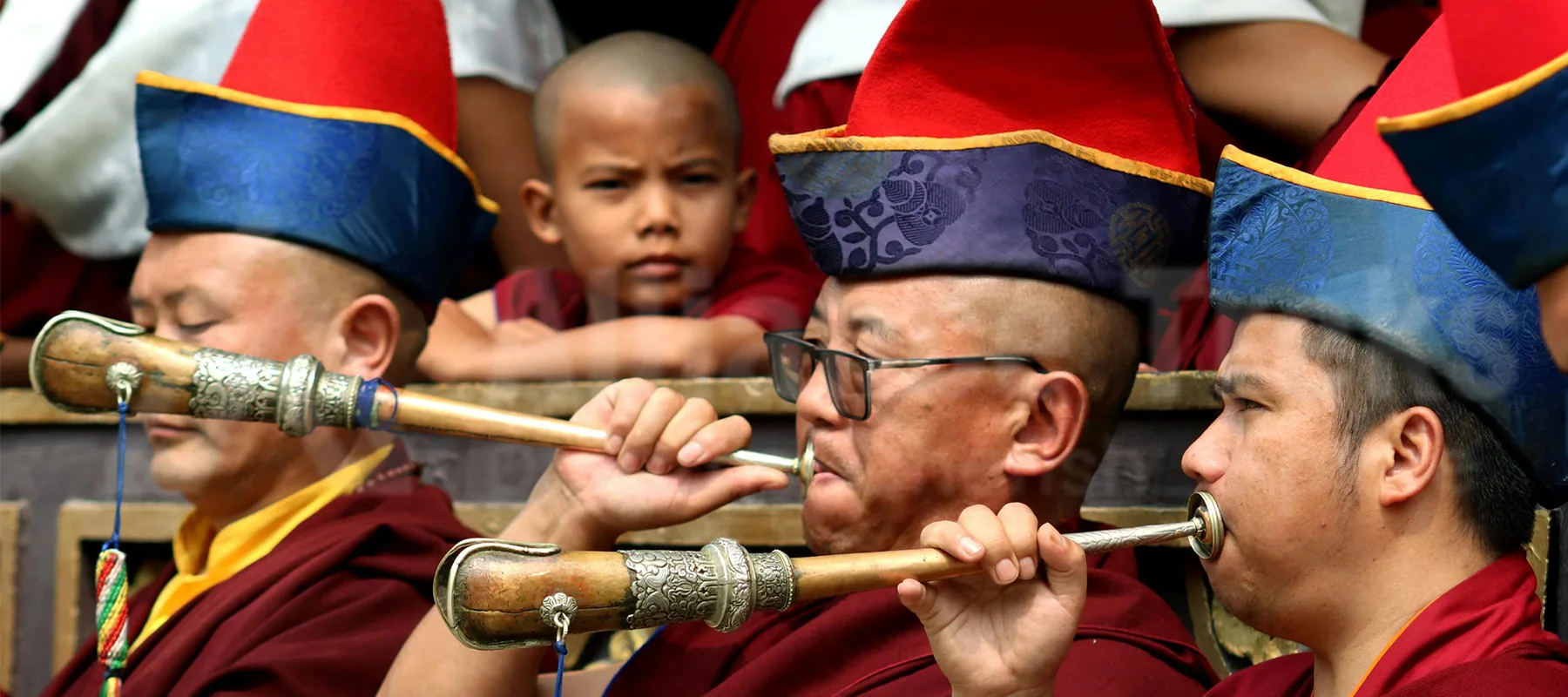
Saka Dawa Festival 2026 is the single most spiritually charged event in the Tibetan calendar, and this year it carries a weight that happens only once every twelve years. On May 31, 2026, the full moon rises over the Himalayas and marks a day that Tibetan Buddhists consider more powerful than almost any other moment in human experience. Moreover, 2026 is the Horse Year in the Tibetan lunar cycle, and according to centuries of Buddhist tradition, performing any act of devotion during Saka Dawa in a Horse Year generates spiritual merit multiplied beyond what any other year can offer. Consequently, pilgrims who have been planning this journey for a decade are already booking their spots.
If you are reading this and wondering whether a Buddhist festival in the Himalayas is something you, personally, should experience — the answer is yes. Furthermore, you do not need to be Buddhist. You do not need to be a pilgrim. You need only be the kind of person who wants to stand somewhere genuinely extraordinary and feel the full weight of human faith, beauty, and devotion at the same time. Additionally, with Alliance Treks, the logistics of getting to one of the most remote sacred landscapes on Earth — Mount Kailash, Lake Mansarovar, and the high plateaus of western Tibet are managed completely so that you can focus entirely on the experience itself.
“Saka Dawa is not a performance. It is not a show for visitors. It is a month of real, living devotion. And witnessing it changes something in you that is very hard to put back.”
Saka Dawa — also written Saga Dawa — is the most sacred month in Tibetan Buddhism. The name itself tells you what it is: in Tibetan, “Saka” means the fourth, and “Dawa” means month. It is the fourth month of the Tibetan lunar calendar, and it is set apart from every other month by a belief that every positive action performed during this period — every prayer, every act of kindness, every offering, every step of a kora — carries karmic merit multiplied many times over. Furthermore, the entire month builds toward one specific day: the full moon day called Saka Dawa Duchen, when the multiplication of merit reaches its absolute peak.
What makes Saka Dawa Duchen so significant is that it commemorates not one but three of the most pivotal events in the life of Shakyamuni Buddha. Tibetan Buddhist tradition holds that the Buddha was born at Lumbini in what is now Nepal, attained enlightenment under the Bodhi tree in Bodhgaya, and passed into parinirvana in Kushinagar — all on the same day of the same lunar month. Moreover, the convergence of those three events on a single calendar date is why Saka Dawa Duchen is treated with a reverence unlike any other day in the Tibetan year. As a result, for devout Tibetan Buddhists, this is not merely a festival. It is the axis of the entire spiritual year.
In 2026, Saka Dawa Duchen falls on May 31. Additionally, the year itself is the Horse Year in the twelve-year Tibetan zodiac cycle — a year that tradition specifically associates with the life of the Buddha and with amplified spiritual benefit for all practices performed at Mount Kailash. Therefore, Saka Dawa Festival 2026 represents a convergence of sacred timing that Himalayan pilgrims and Buddhist communities around the world have been anticipating for years.
The Saka Dawa Festival 2026 date is confirmed as May 31, 2026, for the peak Saka Dawa Duchen celebration. Furthermore, the festival is not a single-day event — it spans the entire fourth lunar month, meaning the period of heightened spiritual observance begins several weeks before May 31 and continues for a short period afterward. Moreover, the timing shifts each year because it follows the Tibetan lunar calendar rather than the fixed Gregorian calendar. Consequently, pilgrims and travellers planning to witness Saka Dawa Festival 2026 should aim to arrive in Tibet or at Mount Kailash by mid-May at the latest to experience the full build-up to the Duchen day.
Here is everything you need to know about the festival at a glance:
| Merit-Making Practice | Significance |
|---|---|
| Kailash Kora (full circuit) | Purifies karma of a full lifetime — multiplied in Horse Year |
| Lighting butter lamps | Dispels ignorance; each lamp carries a prayer outward |
| Offering to monks & pilgrims | Dana (generosity) accumulates merit for giver and receiver |
| Fasting on Saka Dawa Duchen | Deepens devotion; widely observed across Tibet and Nepal |
| Circumambulating stupas | Every step counts; thousands walk Boudhanath at midnight |
| Chanting mantras | Om Mani Padme Hum echoes across every valley and pass |
| Releasing animals | A traditional act of compassion; many pilgrims free fish or birds |
| Giving to those in need | Acts of generosity carry far greater karmic weight this month |
Alliance Treks tip: The days immediately surrounding May 31 are the most spiritually intense and also the most crowded at key sites like Mount Kailash. Book your Saka Dawa Festival 2026 travel well in advance — space in guided groups fills months ahead of the Duchen date, particularly in a Horse Year.
The Tibetan zodiac runs on a twelve-year cycle, and the Horse Year holds a specific and elevated significance in the context of Mount Kailash. Furthermore, Tibetan Buddhist tradition holds that completing the Kailash Kora — the 52-kilometre circumambulation of Mount Kailash — during the Horse Year is equivalent in spiritual merit to completing it thirteen times in any other year. Moreover, when the Horse Year coincides with the Saka Dawa Festival, as it does in 2026, the combination is considered by Tibetan teachers and pilgrims to be among the most spiritually powerful alignments available in any human lifetime. Consequently, the Horse Year Saka Dawa draws pilgrims from every corner of the Buddhist world who plan their participation years in advance.
This is not superstition or marketing. It is a living tradition that shapes how Tibetan communities organise their entire lives around pilgrimage cycles. Additionally, for non-Buddhist visitors and travellers, the Horse Year dimension adds a very human layer of meaning: the people you encounter at Tarboche and on the Kailash Kora in 2026 will have waited years for this specific moment. The devotion you witness will be deeper, the atmosphere more charged, and the experience more profound than at almost any other point in the twelve-year cycle. Therefore, if you are considering making this journey, 2026 is the year to do it.
Saka Dawa is a month of active, visible, living devotion rather than a static ceremony you observe from a distance. Furthermore, across Tibet and in Buddhist communities in Nepal and beyond, the entire month of Saka Dawa shifts the rhythm of daily life. Tibetan people traditionally refrain from eating meat during this period, make extra offerings at monasteries, increase their practice of prayer and meditation, and perform acts of generosity toward monks, pilgrims, and those in need. Moreover, the streets of Lhasa fill with circumambulators walking the Barkhor circuit — the sacred route around the Jokhang Temple — at all hours of the day and night. Additionally, monasteries throughout Tibet host special ceremonies, teachings, and prayer assemblies that are open to respectful visitors.
At Mount Kailash, the Saka Dawa Festival reaches its most dramatic expression. Thousands of pilgrims converge on the Darchen area at the foot of the mountain during the days approaching May 31. Furthermore, the energy in that remote high-altitude landscape during this period is something that people who have experienced it consistently describe as unlike anything else they have encountered anywhere in the world. Consequently, even logistically demanding travel to a region above 4,500 metres becomes worth every effort when you stand in that landscape on Saka Dawa Duchen and feel the sheer weight of collective human faith around you.
The Tarboche flagpole ceremony is the defining ritual of Saka Dawa Festival at Mount Kailash and one of the most extraordinary things you can witness anywhere in the Himalayan world. Furthermore, Tarboche is a flat open ground near the start of the Kailash Kora route, and each year during Saka Dawa, monks and pilgrims gather there to ceremonially lower the previous year’s flagpole, replace the prayer flags with fresh ones in the five sacred colours, and raise the pole again. Moreover, the ceremony is led by a senior lama from a nearby monastery, and the critical moment — the one that draws the breath of every witness — is whether the pole stands perfectly upright when raised. Tibetan tradition holds that if the pole stands straight, the year ahead will be abundant and auspicious. If it leans, the lama adjusts it with great care and prayer.
The atmosphere at Tarboche during the Saka Dawa Festival is genuinely difficult to describe in language. Additionally, hundreds and sometimes thousands of pilgrims crowd around the pole, spinning prayer wheels, chanting mantras, tying their own prayer flags to the ropes, and moving in the great human current of devotion that fills the plain. Moreover, the backdrop is Mount Kailash itself — the perfectly symmetrical black pyramid of rock and snow that rises to 6,638 metres directly above the ceremony, looking like exactly what every tradition says it is: the axis of the world. Consequently, whether you are Buddhist, Hindu, Jain, Bon, or none of the above, standing at Tarboche during Saka Dawa Duchen produces a feeling that is very hard to recover from in the best possible way.
The Kailash Kora is a 52-kilometre circuit around Mount Kailash that takes most walkers three days to complete. Furthermore, it crosses the Dolma La pass at 5,636 metres — the highest and most challenging point of the route — on the second day, in a section that is as physically demanding as it is spiritually significant. Moreover, the Kora is not a tourist trek. It is a pilgrimage that has been walked for centuries by Buddhists, Hindus, Jains, and Bon practitioners who believe that completing it purifies the karma of past wrongdoing and accelerates the path toward liberation. Additionally, during Saka Dawa Festival, the Kora fills with an energy that regular-season trekkers describe as categorically different from any other time of year.
In the Horse Year, as mentioned earlier, completing the Kailash Kora during Saka Dawa carries a spiritual multiplier that Tibetan teachers regard as extraordinary. Consequently, Alliance Treks structures our Saka Dawa Festival 2026 packages specifically to allow participants to complete the full Kora on the days surrounding May 31, arriving at Tarboche on the morning of the Duchen day itself. Furthermore, our guides provide full support throughout the Kora including acclimatisation days, emergency protocols, and cultural context at every significant site along the route. Therefore, the experience of the Kora with Alliance Treks is both physically supported and spiritually enriched from the very first step.
Here is something important the Mount Kailash focus of this blog might have obscured: the vast majority of people who experience Saka Dawa Festival 2026 do not go to Tibet. They go to Kathmandu. Furthermore, most tourists visiting Nepal during the festival month witness Saka Dawa at Boudhanath Stupa or Swayambhunath Stupa — two of the most sacred Buddhist sites in the world — and consistently describe it as one of the most moving experiences of their lives. Moreover, both sites are accessible, free to enter during the festival, and sitting right in or above Kathmandu. Consequently, if the Tibet permit process is not for you, do not for a second think that means missing Saka Dawa. The festival is fully alive and extraordinary in Nepal itself.
Boudhanath Stupa — known locally as Boudha — is one of the largest Buddhist stupas in the world and the beating heart of Tibetan Buddhist life in Nepal. Furthermore, during the Saka Dawa Festival, Boudhanath transforms into something that visitors who have seen it struggle to put into words. The circular kora path around the stupa’s base is walked continuously by thousands of monks in saffron and maroon robes, nuns in grey, laypeople spinning handheld prayer wheels, elderly Tibetan grandmothers counting beads, and children who have clearly been walking this kora since before they could properly walk anything else. Moreover, the kora runs from before sunrise until well past midnight throughout the entire festival month — a continuous, unbroken circuit of human devotion that does not stop for weather, for time, or for anything else.
On Saka Dawa Duchen itself — May 31, 2026 — Boudhanath reaches its absolute peak. Additionally, the entire base of the stupa is lined with thousands of lit butter lamps whose golden light reflects off the whitewashed dome in a way that is genuinely breathtaking after dark. The sound of Om Mani Padme Hum being chanted by hundreds of people simultaneously becomes a physical sensation rather than just a sound — you feel it in your chest. Moreover, rooftop restaurants and teahouses surrounding the stupa fill with travellers and pilgrims watching the scene from above, and the view of the kora from that height — a slow river of people moving clockwise around the great dome with butter lamps burning at every point — is one of the iconic images of Nepal. Consequently, Alliance Treks recommends that every visitor to Nepal during Saka Dawa Festival 2026 spends at least one full evening at Boudhanath, ideally arriving at dusk and staying through the lamp lighting.
Practical tip for Boudhanath on Saka Dawa Duchen: Arrive by 4:30pm at the latest. The butter lamps are lit at dusk and the atmosphere builds quickly. Wear comfortable shoes — you will want to join the kora yourself. Dress modestly (shoulders and knees covered), walk clockwise at all times, and keep your voice low. You are welcome to walk as many circuits as you like. There is no fee to join the kora.
Swayambhunath — the ancient hilltop stupa that most tourists call the Monkey Temple, though that nickname does not remotely capture what the place actually is — sits on a forested hill above western Kathmandu and offers a completely different Saka Dawa experience from Boudhanath. Furthermore, while Boudhanath is an immersive, ground-level, crowd-and-lamp experience, Swayambhunath is the one you climb to. The famous 365 stone steps lead up through a canopy of prayer flags to a stupa complex that is over 2,500 years old and commands a panoramic view across the entire Kathmandu Valley. Moreover, during Saka Dawa Festival 2026, the monastery complex at the top holds special prayer ceremonies, monks perform rituals in the open courtyards, and the kora path around the stupa itself fills with circumambulators walking quietly in the early morning mist.
The atmosphere at Swayambhunath during Saka Dawa is quieter and more contemplative than Boudhanath. Additionally, arriving at dawn on Saka Dawa Duchen is one of the genuinely underrated experiences in all of Nepal — the valley below is still in early light, the prayer flags are catching the first wind of the morning, and the monks are already chanting in the main hall with the doors open so the sound carries outward across the hilltop. Moreover, the famous painted eyes of the Swayambhunath stupa — which look out in all four cardinal directions with the Buddha’s all-seeing gaze — carry a particular weight on Saka Dawa morning that even the most secular visitor tends to feel. Consequently, Alliance Treks recommends combining both sites across the Saka Dawa Duchen day: Swayambhunath at dawn, Boudhanath at dusk. Between them, you get the full spectrum of how Nepal observes this sacred festival.
Practical tip for Swayambhunath on Saka Dawa Duchen: Arrive before 6:30am to beat both the crowds and the heat of climbing 365 steps in the sun. Entry fee applies for foreign visitors (currently around USD 2). The kora path circles clockwise around the main stupa — follow the flow. On Saka Dawa morning the monastery’s main hall is open and respectful visitors may observe (not photograph) the morning puja from the doorway.
Lumbini, in Nepal’s Terai lowlands near the Indian border, is the confirmed birthplace of Shakyamuni Buddha and one of the four most sacred pilgrimage sites in all of Buddhism. Furthermore, during Saka Dawa Festival 2026, Lumbini takes on a special significance because the festival specifically commemorates the Buddha’s birth among its three defining events. Moreover, the Maya Devi Temple — built directly over the spot where the Buddha is said to have been born — holds ceremonial observances throughout the Saka Dawa month, and the sacred garden surrounding it is walked by pilgrims who have travelled from across Asia specifically for this period. Additionally, the dozens of international monasteries that different Buddhist nations have built within the Lumbini complex — from Thailand, Japan, Myanmar, Sri Lanka, Korea, China, and beyond — all hold their own Saka Dawa ceremonies, creating a genuinely global expression of Buddhist devotion in one extraordinary place. Alliance Treks can arrange Lumbini as part of a dedicated Saka Dawa Nepal pilgrimage itinerary that also includes Boudhanath and Swayambhunath in Kathmandu.
One of the things that makes Saka Dawa Festival distinctive as a travel and cultural experience is that it is a month of active practice rather than passive observation. Furthermore, every person you encounter during Saka Dawa — whether at Boudhanath in Kathmandu, on the Kailash Kora, or in a village monastery in the hills of Nepal — is engaged in something intentional and meaningful. Moreover, the acts of merit-making during Saka Dawa are accessible to anyone regardless of faith background, and many travellers find themselves genuinely moved to participate rather than merely observe. Here is a guide to what you will see and what you are welcome to join in:
| Merit-Making Practice | Significance |
|---|---|
| Kailash Kora (full circuit) | Purifies karma of a full lifetime — multiplied in Horse Year |
| Lighting butter lamps | Dispels ignorance; each lamp carries a prayer outward |
| Offering to monks & pilgrims | Dana (generosity) accumulates merit for giver and receiver |
| Fasting on Saka Dawa Duchen | Deepens devotion; widely observed across Tibet and Nepal |
| Circumambulating stupas | Every step counts; thousands walk Boudhanath at midnight |
| Chanting mantras | Om Mani Padme Hum echoes across every valley and pass |
| Releasing animals | A traditional act of compassion; many pilgrims free fish or birds |
| Giving to those in need | Acts of generosity carry far greater karmic weight this month |
A note on the practice of releasing animals — this is one of the most visually striking Saka Dawa customs and one of the most poignant. Furthermore, Tibetan and Nepali Buddhist communities purchase fish, birds, and other animals from markets specifically to release them during the festival month, performing a prayer before each release. Moreover, the practice is a direct expression of the Buddhist principle of ahimsa — non-harm — and of compassion toward all sentient beings. Additionally, as a visitor witnessing this practice, the appropriate response is respectful silence and, if invited by a local participant, a willingness to join in the prayer with genuine humility.
Alliance Treks has been organising Himalayan travel for over 30 years and brings deep experience and genuine logistical expertise to the specific demands of the Saka Dawa Festival 2026 pilgrimage season. Furthermore, reaching Mount Kailash is not a casual undertaking — it requires careful permit management, high-altitude acclimatisation planning, experienced local guides, and a logistics chain that runs through Kathmandu, Lhasa, Shigatse, and across the remote Ngari plateau of western Tibet. Moreover, Alliance Treks handles all of this comprehensively, which means our clients arrive at Tarboche on Saka Dawa morning focused entirely on the experience rather than on the paperwork.
Our Saka Dawa Festival 2026 packages are designed around two distinct travel profiles. The full Tibet route travels from Kathmandu through Lhasa — visiting the Potala Palace and Jokhang Temple en route — then west through Shigatse and across the high plateau to Darchen, completing the Kailash Kora and the Tarboche ceremony before returning. Additionally, for travellers focused on Nepal, Alliance Treks offers a Saka Dawa Nepal experience that centres on Boudhanath, Lumbini, and the Swayambhunath Stupa in Kathmandu. Consequently, whatever your access constraints or travel preferences, there is a meaningful Saka Dawa Festival 2026 experience that Alliance Treks can curate for you.
“Getting to Kailash for Saka Dawa felt impossible when I first looked at it. Alliance Treks made it feel inevitable. Every permit, every flight, every acclimatisation day was thought through before I even asked.” — Alliance Treks traveller, Kailash pilgrimage 2023
The Tibet route for Saka Dawa Festival 2026 requires a Chinese Tourist Visa, a Tibet Travel Permit, and a special Ngari region permit for the Mount Kailash area. Furthermore, independent travel is not permitted in Tibet — all foreign visitors must be part of a registered tour group with a licensed Tibetan guide. Moreover, Alliance Treks manages the full permit process as a standard component of every Tibet package, which means clients do not need to navigate Chinese bureaucracy independently. Additionally, permit processing times can be several weeks so booking well in advance of the May 31 target date is not optional — it is essential.
Altitude is the other factor that every Saka Dawa traveller must take seriously. Furthermore, the journey to Mount Kailash involves sustained time above 4,500 metres, with the Dolma La pass on the Kailash Kora reaching 5,636 metres. Moreover, proper acclimatisation is not just a comfort issue but a genuine medical one — acute mountain sickness at these elevations requires immediate management and can escalate quickly if ignored. Consequently, Alliance Treks builds mandatory acclimatisation days into every Saka Dawa itinerary, and all our guides are trained in altitude sickness recognition and response. Additionally, every group carries supplemental oxygen and a comprehensive first aid kit on all high-altitude stages.
Saka Dawa Festival 2026 falls on May 31, which is also the heart of the spring season in Tibet and Nepal. Temperatures at Mount Kailash can drop well below zero at night even in late May. Proper layering, a sleeping bag rated to at least -10°C, and high-altitude sun protection (the UV intensity above 4,000 metres is genuinely ferocious) are non-negotiable for this journey.
Aim to arrive in Tibet or Nepal at least ten to fourteen days before May 31 to allow proper acclimatisation and to experience the build-up of the festival month rather than just the peak day. Furthermore, the days immediately before Saka Dawa Duchen at Boudhanath and Kailash carry their own intensity and beauty. Moreover, arriving early also provides a buffer for the flight and weather delays that are a normal part of travel in this region. Consequently, Alliance Treks recommends departing from your home country by mid-May at the latest for a full Saka Dawa Festival 2026 experience.
The peak day — Saka Dawa Duchen — falls on May 31, 2026. Furthermore, the full festival month begins several weeks earlier and continues briefly after the full moon. Consequently, the entire month of May 2026 is considered a period of heightened spiritual observance in Tibetan Buddhism. Alliance Treks Saka Dawa Festival 2026 packages are structured around the May 31 peak and typically span fourteen to twenty-one days depending on the chosen route.
No. Saka Dawa Festival 2026 is open to everyone regardless of faith background, and respectful visitors from all traditions are welcomed at monasteries, stupas, and pilgrimage sites throughout the month. Furthermore, Alliance Treks hosts travellers from every background on our Saka Dawa journeys, and our guides provide cultural and spiritual context that enriches the experience for all participants regardless of their personal beliefs. The only requirement is genuine respect for the devotion of those observing the festival.
Foreign visitors require a Chinese Tourist Visa, a Tibet Travel Permit, and an Ngari Special Permit for the Mount Kailash region. Furthermore, all of these must be arranged through a licensed operator — independent permit applications are not available to foreign nationals. Moreover, Alliance Treks manages the complete permit process for all clients on our Tibet packages. Consequently, you simply provide your passport and travel details and our team handles everything from that point forward.
The Kailash Kora is a 52-kilometre three-day route that crosses the Dolma La pass at 5,636 metres. Furthermore, it requires solid walking fitness and a strong capacity for altitude — this is not a casual stroll. Moreover, the Saka Dawa period adds significant crowd density on the trail, which requires patience and flexibility in pacing. Additionally, Alliance Treks provides full guide support, acclimatisation programming, and emergency protocols on all Kora stages. Consequently, fit and well-prepared travellers consistently complete the Kailash Kora successfully under our guidance even without prior high-altitude experience.
Absolutely. Furthermore, Boudhanath Stupa in Kathmandu and Lumbini — the Buddha’s birthplace — both offer profound and accessible Saka Dawa Festival 2026 experiences without the permit complexity or altitude demands of the Tibet route. Moreover, Alliance Treks can arrange custom Saka Dawa Nepal itineraries that include monastery visits, guided festival observances, and cultural immersion across the Buddhist heritage sites of the Kathmandu Valley and the Terai. Consequently, contact our Kathmandu team to discuss what is possible for your specific travel dates and preferences.
Saka Dawa Festival 2026 is one of those events that you will describe to people for the rest of your life. Furthermore, the combination of the Horse Year, the Saka Dawa Duchen full moon, the Tarboche ceremony, and the living devotion of thousands of pilgrims creates something that no photograph adequately captures and no itinerary fully prepares you for. Moreover, Alliance Treks has been taking travellers to these sacred places for over 30 years and every Saka Dawa season renews our sense of why this work matters. Therefore, if this is the year you finally make this journey, we are ready to take you there.
Plan your Saka Dawa Festival 2026 journey with Alliance Treks — www.alliancetreks.com
Alliance Treks & Expedition Pvt. Ltd. Once is not enough for naturally and culturally Himalayas