(Viber, Whatsapp, Cell) +977 9851022814

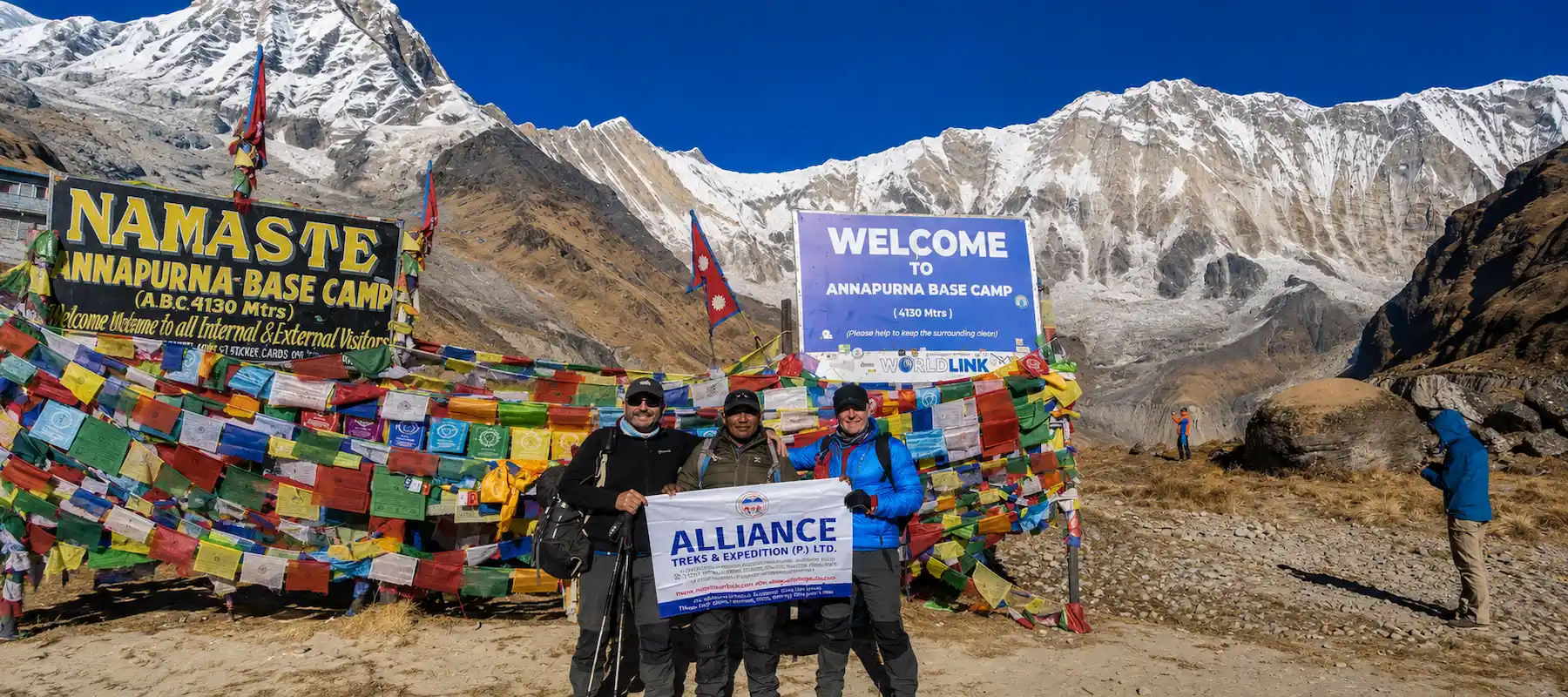
Choose Annapurna Base Camp (ABC) if you want a shorter, more affordable trek (7–8 days, from $405) that drops you directly inside a natural amphitheater of 8,000m peaks. Choose the Annapurna Circuit if you have more time (10–18 days, from around $550) and want a longer, more varied journey, crossing the high Thorong La Pass (5,416m) through subtropical forest, Tibetan-style villages, and high desert. Neither is objectively “better”; they’re built for different trips, and this guide breaks down exactly which one fits yours.
Both treks sit inside the Annapurna Conservation Area, Nepal’s largest protected region, but they deliver almost opposite experiences. ABC is a direct, concentrated push into the mountains. The Circuit is a long loop around them. Below is a full side-by-side comparison, followed by the specific factors, difficulty, cost, scenery, culture, and safety, that should actually drive your decision.
| Factor | Annapurna Base Camp | Annapurna Circuit |
|---|---|---|
| Duration | 7–8 days | 10–18 days (shorter road-assisted version to classic full circuit) |
| Max altitude | 4,130 m | 5,416 m (Thorong La Pass) |
| Trip grade | Moderate | Challenging |
| Starting point | Pokhara (road access) | Kathmandu (road access, no flight required) |
| Ending point | Pokhara | Pokhara |
| Accommodation | Teahouse throughout | Teahouse throughout |
| Permits needed | ACAP + TIMS | ACAP + TIMS |
| Approx. permit cost | $40–45 total | $40–45 total |
| Starting price (Alliance Treks, 11+ group) | From $405 | From $550 |
| Best for | First-time trekkers, shorter trips | Trekkers wanting more variety and a bigger physical challenge |
| Signature moment | Sunrise inside the Annapurna Sanctuary | Crossing Thorong La Pass |
Annapurna Base Camp takes you directly into the Annapurna Sanctuary, a natural amphitheater at 4,130 m ringed by Annapurna I, Annapurna South, Hiunchuli, and Machhapuchhre (Fishtail). It’s a focused, in-and-out journey: forest, river valley, Gurung villages, then the mountains close in around you at the very end.
The Annapurna Circuit does the opposite. Instead of one destination, it loops around the entire Annapurna massif, passing through dramatically different terrain, subtropical lower valleys, Tibetan-influenced villages like Manang, and the arid, rain-shadow desert beyond Thorong La, before descending into Mustang. It’s less about one big view and more about the sheer range of landscape and culture you pass through along the way.
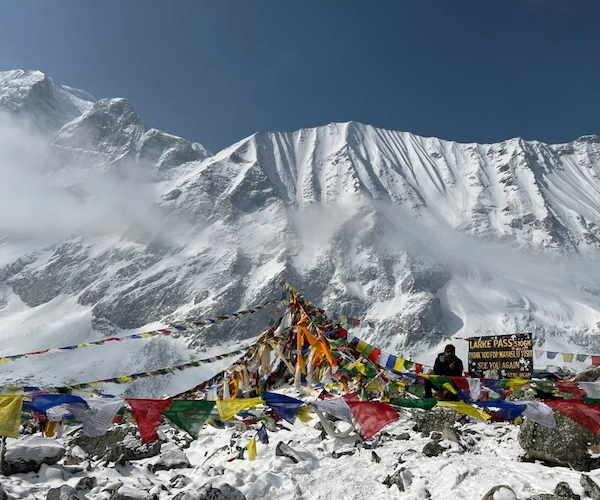
The Annapurna Circuit is harder, and the gap is mostly about altitude and duration, not daily difficulty. ABC’s highest point, 4,130 m, sits well below where serious altitude sickness becomes a real concern, and its 7–8 day length limits how much cumulative fatigue builds up. The Circuit’s Thorong La Pass at 5,416 m is one of the highest trekking passes in the world, and reaching it means several consecutive days above 4,000 m, plus a demanding single push day crossing the pass itself, often starting before dawn.
That said, ABC isn’t “easy.” Its daily walking involves long stretches of stone steps, particularly between Chhomrong and Sinuwa, that put real strain on legs and knees in a way flatter, longer Circuit stages sometimes don’t.
| Trek Style | Days | Notes |
|---|---|---|
| ABC standard | 7–8 days | Most common version; Pokhara to Pokhara |
| ABC with Poon Hill add-on | 9–11 days | Combines both for a longer Annapurna foothills experience |
| Annapurna Circuit (modern, road-assisted) | 10–14 days | Uses jeep transport on the lower approach and return legs |
| Annapurna Circuit (classic, full) | 15–18 days | The traditional route, almost entirely on foot |
If your available time is a hard constraint, under 10 days firmly favors ABC. If you have two to three weeks and want a deeper, more varied trip, the Circuit makes better use of that time.
| Cost Item | Annapurna Base Camp | Annapurna Circuit |
|---|---|---|
| Alliance Treks starting price (11+ group) | $405 per person | ~$550 per person |
| Solo trekker price | Higher per-person rate | Higher per-person rate |
| ACAP permit | ~$20–25 | ~$20–25 |
| TIMS card | ~$10–15 | ~$10–15 |
| Daily food/accommodation (if self-funded) | Lower (shorter trek) | Higher (longer trek, remoter sections) |
The permit costs are nearly identical since both treks fall under the same Annapurna Conservation Area. The real cost difference comes from duration: more trekking days means more teahouse nights and meals, which is why the Circuit costs more overall even though its daily rate isn’t dramatically higher.
ABC delivers one of the most photographed mountain views in Nepal: standing inside a bowl of 8,000m peaks with Annapurna I, Annapurna South, and Machhapuchhre surrounding you almost 360 degrees. It’s a single, overwhelming payoff near the end of the trek.
The Circuit trades that concentrated moment for constant change: rice terraces and subtropical forest in the lower valley, apple orchards and pine forest around Manang, then a stark, treeless high-altitude desert beyond the pass that looks more like Tibet than Nepal. Photographers drawn to landscape diversity tend to prefer the Circuit; those chasing one unforgettable mountain panorama tend to prefer ABC.
ABC’s trail runs through Gurung and Magar settlements like Chhomrong and Sinuwa, with a fairly consistent cultural character throughout. The Circuit passes through a noticeably wider range: Gurung villages in the lower Marsyangdi valley, the distinctly Tibetan-influenced trading community of Manang, and Thakali culture around Jomsom and Muktinath on the descent, a genuine cross-section of Nepal’s hill and trans-Himalayan cultures in a single trip.
Annapurna Base Camp is the clearer beginner choice, and not by a small margin. Its lower altitude ceiling, shorter overall length, and simpler logistics (no high-pass weather risk, no multi-day extreme-altitude stretch) make it genuinely achievable for a first-time trekker with reasonable fitness.
The Annapurna Circuit can work for a fit beginner, but it’s better treated as a second trek rather than a first one. If you’ve already completed a shorter trek like ABC or Poon Hill and want a bigger step up, the Circuit is a realistic next goal, provided you train properly and respect the pass-crossing day.
Both treks carry real seasonal considerations, but they differ in kind. On ABC, the main risk window is monsoon season (June–August), when trails become slippery and leeches are common at lower elevations. On the Circuit, the central concern is Thorong La Pass itself: heavy winter snow (December–February) can make the crossing genuinely dangerous or temporarily impassable, and even in shoulder seasons, sudden weather shifts at that altitude demand a guide who can make a sound call on whether to push on or turn back. Neither trek is “closed” in winter in a strict sense, but winter Circuit attempts carry meaningfully higher risk and require real experience and the right gear.
Yes, Gurung Heritage and Ghorepani-Poon Hill routes offer a natural link between the two trek systems, and some operators build extended itineraries that incorporate sections of both the Sanctuary approach and the wider circuit. This suits experienced trekkers with three or more weeks available who want the full range of what the Annapurna region offers in a single trip, rather than choosing one over the other. If this interests you, it’s worth discussing directly with a trekking agency, since combined itineraries are custom-built rather than a fixed, standard package.
| Choose Annapurna Base Camp if… | Choose the Annapurna Circuit if… |
|---|---|
| You have one week or less available | You have two to three weeks available |
| This is your first Himalayan trek | You’ve trekked before, or want a bigger physical challenge |
| You want one concentrated, dramatic mountain view | You want a wide variety of landscapes and cultures |
| You’d rather avoid high-altitude pass crossings | You specifically want to cross a major Himalayan pass |
| Budget and time are tightly constrained | You’re prioritizing depth of experience over cost and speed |
The Annapurna Circuit is harder, mainly due to its higher maximum altitude (5,416 m vs 4,130 m) and longer duration, which together increase both altitude risk and cumulative fatigue.
Annapurna Base Camp is the better choice for true first-time trekkers. The Annapurna Circuit is achievable for a fit beginner but is better approached as a second trek after some prior trekking experience.
With Alliance Treks, ABC starts from $405 per person for groups of 11 or more, while the Annapurna Circuit starts from around $550, reflecting its longer duration rather than a higher daily cost.
Yes, through extended or combined itineraries connected via routes like Ghorepani-Poon Hill, best suited to experienced trekkers with three or more weeks available.
Not entirely, but heavy snow at Thorong La Pass between December and February significantly increases risk and can make the crossing temporarily impassable, so winter attempts require real experience and proper gear.
ABC offers one concentrated, dramatic payoff, a 360-degree amphitheater of 8,000m peaks. The Circuit offers more varied scenery throughout the journey rather than a single standout viewpoint.
Yes. Both fall within the Annapurna Conservation Area and require the ACAP permit and a TIMS card, at roughly the same combined cost.
ABC typically takes 7–8 days. The Circuit ranges from 10–14 days for the modern road-assisted version up to 15–18 days for the classic full route.
There’s no universal answer to Annapurna Base Camp vs Annapurna Circuit, only the right answer for your time, fitness, and what you actually want out of the trek. If you want a shorter, more affordable trip with one unforgettable mountain moment, ABC delivers that efficiently. If you have more time and want a longer journey through dramatically different landscapes and cultures, culminating in one of the world’s great high-altitude pass crossings, the Circuit is the deeper experience. Match the trek to your trip, not the other way around.
Alliance Treks & Expedition Pvt. Ltd. runs both the Annapurna Base Camp Trek and the Annapurna Circuit Trek, with licensed guides who can help you choose the right route based on your fitness, timeline, and goals, or build a combined itinerary if you want both. “If you are looking to book your journey, view our fully guided 7-Day Alliance Treks Annapurna Base Camp Package.”
Alliance Treks & Expedition Pvt. Ltd. Once is not enough for naturally and culturally Himalayas