(Viber, Whatsapp, Cell) +977 9851022814

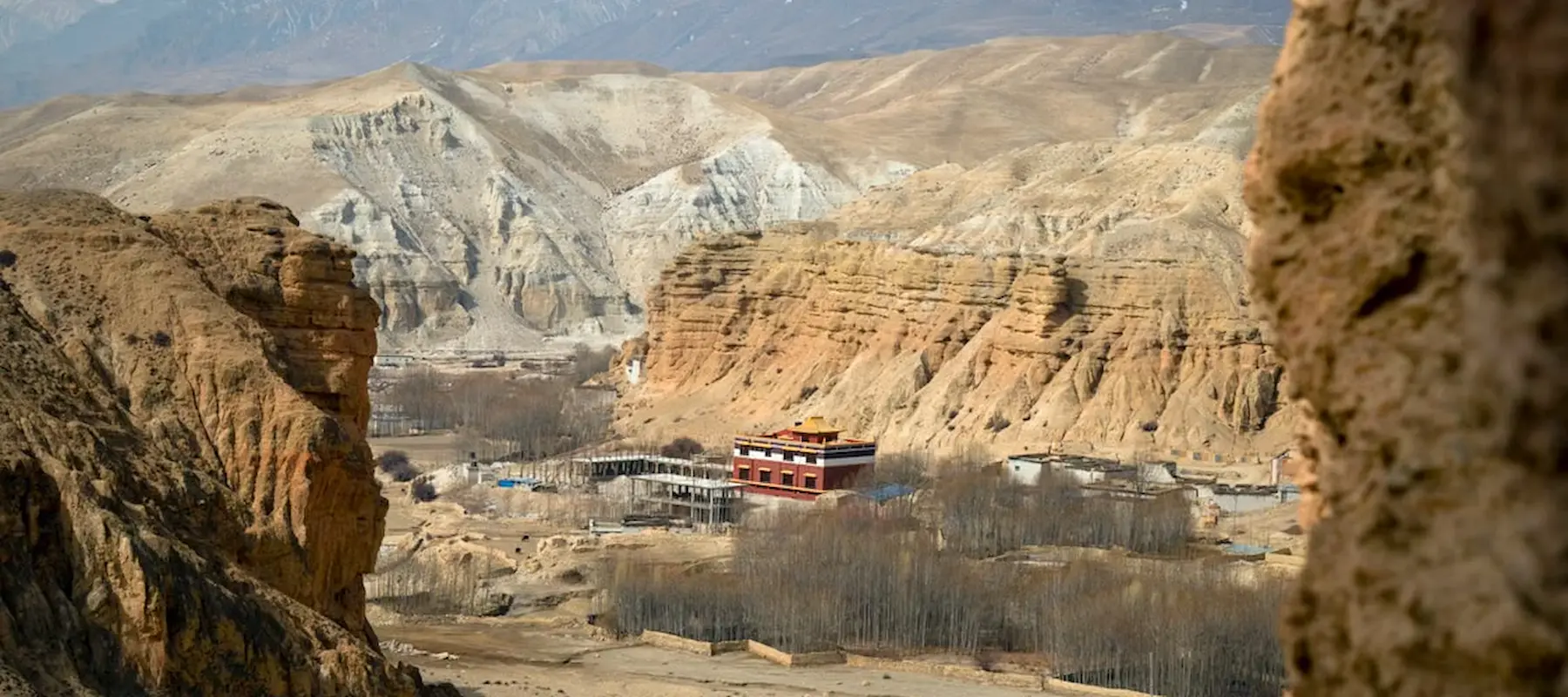
In the high, remote kingdom of Upper Mustang, where the mountains pierce the clouds at an altitude of 3,880 m, an ancient and culturally rich festival is celebrated in August each year. The prayer flags are hung above the stone walls of villages that seem dramatically magnificent. The horsemen gather on the dusty plains, and the sound of drums echoes across the Mustang valley. The locals don traditional dress, which has been passed down through generations were worn during the festival.
This is not a modern commercial event created to target tourists and travelers. The Yartung Festival is a living cultural celebration that Upper Mustang’s communities have practiced for centuries. It represents the deepest spiritual and cultural traditions of the Tibetan plateau, which are maintained purely because it matters to the people who call these mountains their home. For most of the world, the Yartung Festival remains unknown, and limited information exists in English. Few international as well as local trekkers & tourists witness it. This makes it extraordinarily authentic and valuable for those who do attend. You don’t see staged performances or commercialized tourism infrastructure. You see genuine cultural practice in its original context.
This comprehensive guide reveals what the Yartung Festival is, when it happens, how it’s celebrated, and what you’ll experience if you trek to Upper Mustang during this sacred time.
The Yartung Festival is Upper Mustang’s premier cultural celebration—a sacred 3-day event held annually in August that combines spiritual ritual, traditional horse racing, community gathering, and cultural expression. The name “Yartung” has Tibetan roots, reflecting the region’s deep connection to Tibetan culture despite Nepal’s political borders.
This is fundamentally a local community festival celebrated among the local peoples, organized by Upper Mustang residents rather than for external tourism. However, trekkers who happen to be in Lo Manthang (the capital of Upper Mustang) during the festival are welcome to observe and participate respectfully. The festival draws locals from throughout the Mustang region and from neighboring Tibetan communities, creating a gathering that is simultaneously deeply local and regionally significant.
The festival combines several cultural elements that reflect Upper Mustang’s unique position at the intersection of Tibetan Buddhism, Himalayan mountain culture, and ancient kingdom traditions. Central to the celebration are horse racing competitions that test the skills of local riders and the quality of their horses. Woven through these secular competitions are spiritual rituals honoring protective deities, blessing the community for the year ahead, and maintaining the sacred traditions that have defined Upper Mustang culture for centuries.
Unlike many modern festivals that have been adapted for tourism or commercialization, the Yartung Festival and Tiji Festival remain fundamentally unchanged in their core practices. The schedule, activities, and spiritual elements follow patterns established over generations. This authenticity makes it one of Nepal’s most culturally significant (and least known) celebrations.
The exact origins of the Yartung Festival are difficult to document with complete certainty, as Upper Mustang’s history was traditionally preserved through oral tradition rather than written records like other cultures. However, evidence suggests the festival has been celebrated for at least several centuries, predating modern Nepal as a political entity.
Upper Mustang existed as an independent kingdom until 1951, when it was formally incorporated into Nepal. During this period as an independent kingdom, the Yartung Festival was already an established tradition. Local oral histories indicate the festival likely originated during the reign of various Mustang kings, though specific dates are difficult to verify.
The festival appears to have evolved from two converging traditions:
Spiritual Tradition: Buddhist practices focused on community blessing and protection of the realm. Local monasteries and spiritual leaders played central roles in organizing rituals intended to purify the community and ensure prosperity.
Secular Tradition: Horse racing and martial competitions that served both practical and cultural purposes. In a mountain kingdom where horses were essential for trade, travel, and military defense, racing traditions tested the quality of animals and horsemanship skills.
Over centuries, these two traditions merged into the unified Yartung Festival we observe today, where spiritual rituals and secular celebrations are woven together as expressions of community identity and cultural continuity.
The festival has remained largely unchanged despite Nepal’s modernization and increased external contact. This continuity reflects the deep cultural conservatism of Upper Mustang communities and their commitment to maintaining traditional practices. The 1992 opening of Upper Mustang to limited foreign tourism did not significantly alter the festival’s essential character or practices. Local authorities and community leaders have maintained the festival as a community event first, with outside observers accommodated but never prioritized.
This commitment to cultural preservation makes the Yartung Festival increasingly rare—a genuine traditional celebration in an increasingly modernized world.
The Yartung Festival is celebrated annually in August, typically spanning 3 consecutive days. The exact dates vary slightly from year to year because the festival follows the Tibetan lunar calendar rather than the Western Gregorian calendar used elsewhere in Nepal. This year the Yartung Festival will be celebrated on August 17th, 18th, & 19th, 2026.
August timing reflects practical and spiritual considerations:
Practical Reasons:
Spiritual Reasons:
The Yartung Festival is primarily celebrated in Lo Manthang, the capital of Upper Mustang and the largest settlement in the region.
| Detail | Information |
|---|---|
| Elevation | 3,880 meters (12,727 feet) |
| Population | Approximately 2,000-2,500 people |
| Location | Upper Mustang, Nepal |
| District | Mustang District, Gandaki Province |
| Access | Trekking only (4-5 days from lower Mustang) |
| Nearest Road | Jomsom (3-4 day trek away) |
| Airport | Jomsom Airport (45 min flight from Pokhara) |
Lo Manthang serves as the cultural, administrative, and spiritual heart of Upper Mustang. The town contains:
The festival’s concentration in Lo Manthang makes it the essential destination for experiencing Yartung, though smaller celebrations and individual events may occur in nearby villages.
Getting There
Attending the Yartung Festival requires trekking into one of Nepal’s most remote regions. You have to travel from Kathmandu → Pokhara → Jomsom → Marpha → Kagbeni → Chele → Lo Manthang.
For more details, you can contact Alliance Treks & Expedition.
The nature of the activities and timing will vary from year to year, but the Yartung Festival is typically three days of traditional horse racing, Buddhist ceremonies, cultural events, communal feasts, and social events. The days are unique, build up to the main events and competitions, and then wind down to the end ceremonies and community celebrations.
The first day sets the spiritual and cultural tone for the Yartung Festival. Morning starts with prayers and religious rituals in the local monasteries, which hold ceremonies and pray to protective deities to bless the community and the festival. Prayer flags and ceremonial banners adorn the temples and gathering places, and the local leaders, monks, riders and residents get ready for the festivities to come.
The community gathers at about midday for a formalised walk through Lo Manthang. Honored guests and festival participants are welcomed, and blessing ceremonies are performed by senior monks and spiritual leaders. The air slowly becomes more festive, and the traditional music, drumming and cultural performances begin.
Riders can even compete informally in horse-racing competitions or preliminary races in the afternoon, helping to whet visitors’ appetites for the horsemanship that will be the main attraction at the festival. When it gets dark, the families and visitors sit around the table to eat together, served with typical Upper Mustang dishes. The evening is followed by traditional songs, dances, and storytelling that help to foster a sense of community and a spirit of celebration.
Day 2 is considered the primary day of the Yartung Festival, and is the most crowded and exciting horse-racing day. Riders get their horses ready and decorated before participating in a ceremonial parade in the morning. The horses and riders are a magnificent sight to behold when they come into the racing ground, and the people from Lo Manthang and neighboring villages will be watching them.
Riders start the races, and the intensity of the competition involves the agility, speed, and skill of both horse and rider, along with the balance of the two. As thrilling as the races are, spectators gather around the racing field to cheer for their favourite competitors. There’s a competitive feel to the event, thanks to prize presentations and recognition of successful riders.
During the afternoon, there may be more racing categories or informal sporting events run. Between the competitions, there are cultural performances, traditional music and dancing, and food and drink stalls to taste some of the unique cuisine from Mustang. Other events like archery or wrestling may also be part of the celebration, depending on the year’s program.
The evening hours are enjoyed in a competitive setting, followed by social events. Another group feast and the traditional music and dance performances remain. The day can also be spent at the monasteries in the area where religious activities are organized, adding to the excitement of the horse race.
The third and last day of the festival is a culmination of competitions and a return to the spiritual and community traditions. The morning may start with the last horse races, with their riders having one last chance to show their horsemanship and race for recognition. These usually include closing activities at the end which recognize the participants and winners.
Awards and Community Recognition Ceremonies are held about midday. Those who have successfully completed the ride and/or participation are recognized, and a shared meal is served at the end of the ride for the entire community. The events are significant not only as a sporting event, but also as a time for families and communities to come together, as Yartung is a celebration of both.
In the afternoon senior monks conduct the closing prayer and spiritual ritual. Prayers are made for the health, welfare, and safety of the community throughout the year. Formal spiritual end of the festival can be performed at important temples or monasteries in sacred ceremonies.
As the evening moves on, the arrangements of the celebrations slowly fade. Some visitors and participants get ready for the trip home to their home villages; others stay on to see relatives and friends. As the crowds leave, the air grows quiet, marking the end of the three-day celebration of the Yartung Festival and the memories of the horse, its religion, music, food, and community.
Ready to Trek to the Yartung Festival?
Alliance Treks specializes in Upper Mustang trekking and festival participation. With 36 years of experience guiding this remote region, we can help you plan and execute this extraordinary journey.
Our Upper Mustang Festival Packages Include: ✅ English-speaking guide with Upper Mustang experience ✅ Experienced porter (reduce your load) ✅ All permits (RAP, TIMS) ✅ All accommodation (quality teahouses) ✅ All meals (breakfast, lunch, dinner, snacks) ✅ Pre-trek briefing and preparation ✅ 24/7 emergency support
Upper Mustang Trek Details:
Contact Alliance Treks:
📧 Email: [email protected] / [email protected]
📞 WhatsApp/Viber: +977 9851022814 / +977 9841451681
📱 Phone: +977 01 5326667, 01-5320317
🌐 Website: https://www.alliancetreks.com
📍 Address: Jp Marg, Thamel, Kathmandu, Nepal
Alliance Treks & Expedition Pvt. Ltd. Once is not enough for naturally and culturally Himalayas