(Viber, Whatsapp, Cell) +977 9851022814

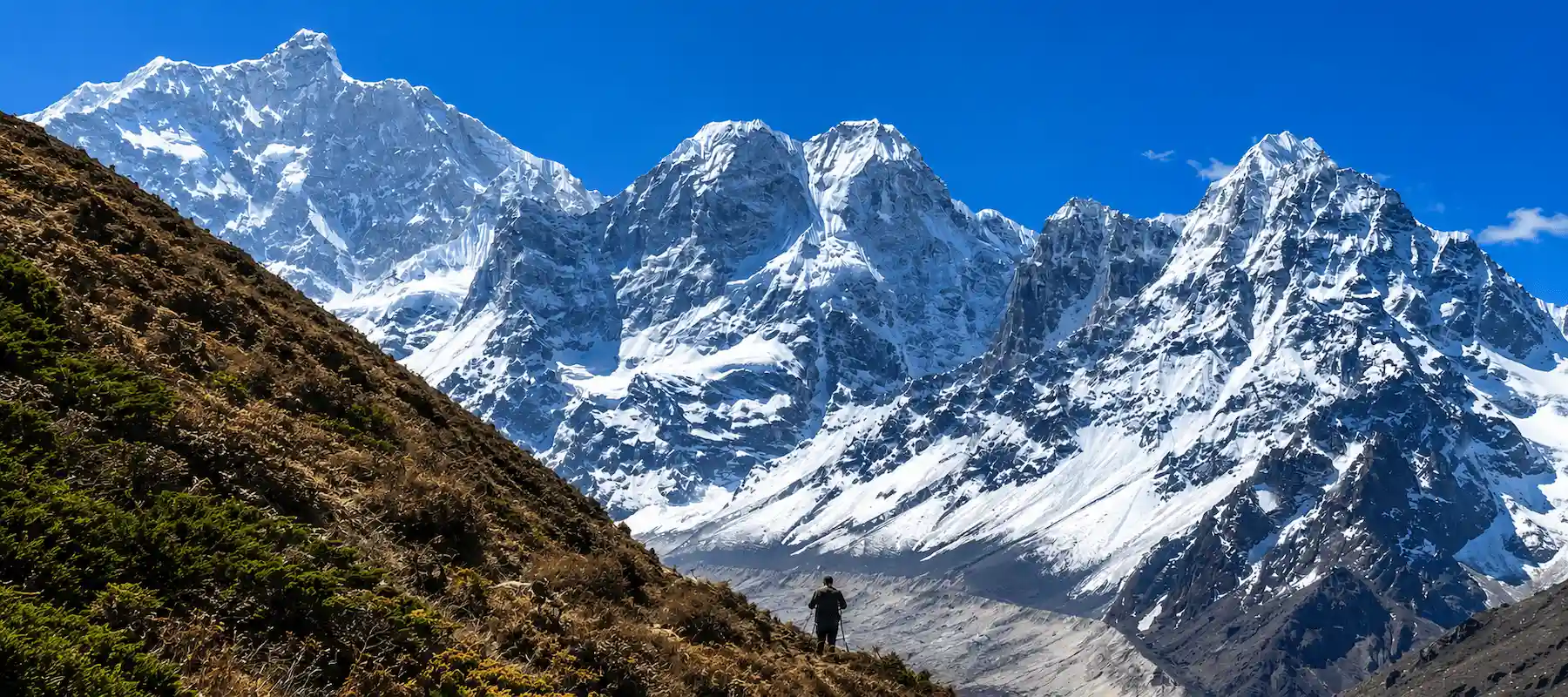
For the Kanchenjunga Circuit Trek, pack for two climates in one trip: warm, humid, often wet valleys at the start and end, and sub-zero nights above 4,000 m. The essentials are a sleeping bag rated to at least -15°C, a warm down jacket, a layering system (thermal base, fleece, waterproof shell), broken-in waterproof boots, a 25 to 35 L daypack, a 60 to 80 L duffel for the porter, trekking poles, a headlamp, water purification, and a personal first-aid and altitude kit. Pack light, because the trek is long, remote, and has no gear shops or ATMs beyond Taplejung.
The Kanchenjunga Circuit is 21 days long and visits both North Base Camp (Pang Pema, 5,143 m) and South Base Camp (Oktang, 4,780 m), crossing the Sele La pass complex in between. It’s quieter and more remote than Everest or Annapurna, so what you bring matters more. TAAN’s October 8 advisory listed the Kanchenjunga region among the areas open for autumn 2026. This guide gives you the full list, plus what to wear at each stage, how much weight to carry, and what to rent, buy, or leave at home.
| Category | Must-have items |
|---|---|
| Sleeping | Four-season sleeping bag (-15°C or colder), sleeping bag liner |
| Warmth | Down jacket, fleece or mid-layer, thermal base layers |
| Weather | Waterproof jacket and trousers, windproof layer, pack rain cover |
| Feet | Broken-in waterproof boots, camp shoes, 4 to 5 pairs of wool socks, gaiters |
| Head and hands | Warm hat, sun hat, buff, liner gloves, insulated gloves |
| Bags | 60 to 80 L duffel (porter), 25 to 35 L daypack, dry bags |
| Trek gear | Trekking poles, headlamp with spare batteries, sunglasses, water bottles |
| Health | First-aid kit, altitude medication (ask your doctor), blister care, purification |
| Power | Power bank (about 20,000 mAh), cables, spare batteries |
| Paperwork | Passport, insurance, photos, cash in small notes |
Most packing lists are written for Everest or Annapurna. Kanchenjunga is different in five ways:
| Difference | What it means for your pack |
|---|---|
| Two climates | You start in humid, rainy lower valleys at about 1,700 m and finish in them, but spend days above 4,200 m in the cold. You need both rain gear and serious insulation |
| Remote and basic | Lodges above Ghunsa are simple and unheated, with limited food choices and minimal supplies. Bring what you can’t do without |
| Long duration | Twenty-one days means more socks and underwear, and no laundry service on most of the route |
| Two high-altitude days | Pang Pema (5,143 m) and Oktang (4,780 m) both involve cold, pre-dawn starts |
| Few shops | Gear shops and ATMs end at Taplejung. Forgetting something is hard to fix |
These are indicative conditions, not forecasts.
| Zone | Altitude | What to expect |
|---|---|---|
| Lower valley (Taplejung, Sekathum, Tortong, Yamphudin) | About 1,700 to 3,000 m | Mild to warm days, humid, possible rain and leeches in wet seasons |
| Middle valley (Amjilosa, Gyabla, Ghunsa) | About 2,500 to 3,500 m | Cool days, cold nights near freezing in late autumn |
| High valley (Khambachen, Lhonak) | About 4,200 to 4,800 m | Sub-zero nights, strong wind, snow possible |
| Pang Pema (North Base Camp) | About 5,143 m | Bitterly cold at dawn, with temperatures commonly well below freezing |
| Sele La and Cheram | About 3,900 to 4,500 m | Snow or ice on the pass, wind, changeable weather |
| Stage | What to wear |
|---|---|
| Long road days (Kathmandu to Birtamode to Taplejung) | Light, comfortable layers; a fleece for cool evenings |
| Lower valley walking | Moisture-wicking shirt, trekking trousers, light fleece, rain jacket in the pack |
| Ghunsa and acclimatization day | Base layer, fleece, down jacket in the evening |
| Khambachen and Lhonak | Thermal base, fleece, down jacket, hat and gloves from afternoon |
| Pang Pema pre-dawn start | Thermal top and bottom, fleece, down jacket, windproof shell, insulated gloves, balaclava or buff, headlamp |
| Sele La crossing | Base and mid-layer, shell, gaiters, microspikes if there is ice, sunglasses |
| Descent to Yamphudin | Strip back to light layers as it warms up |
| Item | Quantity | Notes |
|---|---|---|
| Moisture-wicking T-shirts | 2 to 3 | Merino or synthetic, no cotton |
| Thermal base layer (top and bottom) | 2 sets | One for walking, one clean set for sleeping |
| Fleece or mid-layer | 1 to 2 | One light, one warmer |
| Down jacket | 1 | Rated for -10°C to -20°C, hooded if possible |
| Waterproof jacket and trousers | 1 each | Breathable, with hood and side zips |
| Windproof layer | 1 (optional) | Useful on passes |
| Trekking trousers | 2 | Quick-dry, one convertible if you like |
| Insulated trousers | 1 (optional) | Worth it for Lhonak and Pang Pema evenings |
| Underwear | 4 to 5 | Quick-dry |
| Wool or synthetic socks | 4 to 5 pairs | Plus 1 to 2 thick pairs for the cold sections |
| Sleepwear | 1 set | Keep dry for nights only |
| Item | Notes |
|---|---|
| Warm hat | Wool or fleece |
| Sun hat or cap | For lower valleys and sunny high days |
| Buff or neck gaiter | Wind and dust protection |
| Balaclava | Helpful for pre-dawn starts |
| Liner gloves | Light, for daytime |
| Insulated gloves or mittens | Waterproof, for Pang Pema and Sele La |
| Sunglasses | Category 3 or 4, with side protection |
| Sunscreen and lip balm | SPF 50, UV is strong at altitude |
| Item | Notes |
|---|---|
| Waterproof trekking boots | High ankle, fully broken in, never new |
| Camp shoes or sandals | For lodges in the evening |
| Gaiters | Keep out snow and mud |
| Microspikes | Light traction for icy sections, especially around Sele La |
| Leech socks | Only if you travel in monsoon or early spring |
| Item | Notes |
|---|---|
| Four-season sleeping bag | Comfort rating -15°C or colder, mandatory above Khambachen according to many operators |
| Sleeping bag liner | Adds warmth and keeps the bag clean |
| Earplugs and eye mask | Lodges are thin-walled |
| Inflatable pillow (optional) | A small comfort upgrade |
Lodge blankets exist, but they don’t replace a proper bag.
| Item | Size | Notes |
|---|---|---|
| Duffel bag (porter) | 60 to 80 L | Waterproof, with a small padlock |
| Daypack | 25 to 35 L | With a rain cover; this is what you carry |
| Dry bags or zip bags | Several | Keep clothes, electronics and documents dry |
| Rubbish bags | A few | Waterproofing and carrying out trash |
| Item | Why |
|---|---|
| Water and snacks | You can’t count on shops |
| Rain jacket and a warm layer | Weather changes fast |
| Sunscreen, glasses, hat | UV and glare |
| Headlamp and spare batteries | Pre-dawn starts |
| Camera, phone, power bank | Keep warm |
| Documents and cash | Never in the duffel |
| Personal medicines and first aid | Immediate access |
| Item | Typical limit |
|---|---|
| Porter duffel (per trekker) | About 10 to 15 kg, as many operators allow one porter per two trekkers |
| Daypack | About 5 to 7 kg |
Ask Alliance Treks for its exact limit for your group. If you’re tempted to bring “just in case” items, remember that 21 days of gear adds up, and every extra kilo is carried by a porter.
| Item | Suggested approach |
|---|---|
| Sleeping bag and down jacket | Bring your own if you own good ones; otherwise rent in Kathmandu and inspect carefully |
| Boots | Bring your own, broken in |
| Trekking poles | Bring or rent |
| Duffel bag | Often provided or rentable |
| Microspikes, gaiters | Rent or buy in Kathmandu |
| Snacks | Buy in Kathmandu before you leave |
| Sunglasses, headlamp, socks | Bring from home |
Alliance Treks’ published Kanchenjunga package doesn’t list equipment rental as included, so confirm with the team whether you’ll be renting or bringing your gear, and rent before leaving Kathmandu because there are no rental outlets on the trail.
| Item | Notes |
|---|---|
| Altitude medication | Ask your doctor about acetazolamide (Diamox) before you travel |
| Pain relief | Paracetamol, ibuprofen |
| Rehydration salts | For headaches, upset stomach, long days |
| Blister care | Moleskin, plasters, medical tape |
| Stomach medicine | Anti-diarrhea, antacids, per your doctor |
| Personal medicines | Bring enough for the whole trip plus extra |
| Water purification | Tablets or a filter bottle |
| Hand sanitizer, wet wipes, toilet paper | Facilities are basic |
For symptoms and prevention, see our guide to altitude sickness. Your insurance should cover trekking to at least 5,200 m and helicopter evacuation.
| Item | Notes |
|---|---|
| Power bank | About 20,000 mAh; cold drains batteries quickly |
| Cables and a universal adapter | Charging on the trail may cost extra and rely on solar power |
| Spare camera batteries | Keep them in your sleeping bag overnight |
| Offline maps | Signal is unreliable or absent |
| Waterproof pouch | For phone and documents |
| Item | Notes |
|---|---|
| Passport and a copy | At least 6 months’ validity |
| Nepal visa | $30 (15 days) or $50 (30 days) |
| Kanchenjunga Restricted Area Permit, KCAP and TIMS | Arranged by your agency; a licensed guide is mandatory |
| Passport photos | A few copies |
| Travel insurance policy | With emergency evacuation cover |
| Cash | Nepali rupees in small notes for tea, charging, showers, tips and extras |
See our guides to trekking permits, mandatory guides in Nepal, and how much to tip your guide and porter.
| Season | Adjustments |
|---|---|
| Autumn (September to November) | Clearest weather; nights get colder as November goes on, so choose a warmer bag and heavier gloves |
| Spring (March to May) | Rain showers and rhododendron forests; pack solid rain gear and a bit more for the lower valleys |
| Winter (December to February) | Not recommended; heavy snow and extreme cold on the passes |
| Monsoon (June to August) | Not recommended; leeches, landslides, and poor visibility |
| Aspect | Kanchenjunga Circuit | Everest Base Camp | Annapurna Base Camp |
|---|---|---|---|
| Sleeping bag | -15°C or colder | -15°C | -5°C to -10°C is usually enough |
| Gear shops on trail | None beyond Taplejung | Several in Namche | Some at lower villages |
| Duration | 21 days | 12 days | 7 to 8 days |
| Rain gear | Essential in lower valleys | Useful | Useful |
| Cash | Carry extras for the whole trek | Carry extras | Carry extras |
| Unique need | Gaiters and microspikes for Sele La | Category 3 to 4 sunglasses | Trekking poles for stairs |
Compare with our Everest Base Camp packing list, Annapurna Circuit packing list, and Annapurna Base Camp packing list.
| Mistake | Why it hurts |
|---|---|
| Bringing a light sleeping bag | Nights above Khambachen are bitterly cold |
| Wearing cotton | Stays wet and cold |
| Packing only for the cold | Lower valleys are humid and wet |
| New boots | Blisters can end a 21-day trek early |
| Forgetting spare batteries | Cold drains them and there are few charging points |
| Overpacking | You’ll carry the rest of the trek in your mind and your porter on his back |
| Not carrying cash | There are no ATMs past Taplejung |
| Packing everything in one bag | Keep essentials in your daypack, not the duffel |
| When | What to do |
|---|---|
| 8 to 12 weeks before | Break in boots, test your sleeping bag, start training |
| 4 weeks before | Book insurance, see your doctor about altitude medication |
| 2 weeks before | Finish your packing list, buy missing items |
| In Kathmandu | Rent sleeping bag and down jacket if needed, buy snacks, withdraw cash |
| Night before | Pack duffel with padlock, check daypack and documents |
A four-season bag with a comfort rating of at least -15°C. Nights above Khambachen are the coldest part of the trek.
Usually not. Microspikes and gaiters are enough for icy sections around Sele La. Your guide will advise on conditions.
A 25 to 35 L daypack for what you carry and a 60 to 80 L duffel for your porter.
Yes. Sleeping bags, down jackets, poles and duffels can be rented in Kathmandu, but there are no rental outlets on the trail, so rent before you leave.
Many operators allow about 10 to 15 kg per trekker when a porter is shared by two people. Ask Alliance Treks for the exact limit.
Four to five pairs of wool or synthetic socks, plus one or two thick pairs for the cold sections.
Thermal top and bottom, fleece, down jacket, windproof shell, warm hat or balaclava, insulated gloves and a headlamp for the pre-dawn start.
Generally no. Pack enough quick-dry clothes and plan to hand-wash small items.
Often, but sometimes for a fee, and power is limited. Bring a 20,000 mAh power bank and keep batteries warm.
Enough Nepali rupees for tea, snacks, charging, showers, and tips for 21 days, plus an emergency reserve. There are no ATMs past Taplejung.
The standard list plus a warmer sleeping bag, thicker gloves, and an extra insulating layer, since nights get colder through the month.
Yes. Bring purification tablets or a filter bottle, and refill rather than buying bottled water.
The best Kanchenjunga packing list is a short, well-chosen one. Prioritize your sleeping system, your boots and your layers, keep your daypack ready for rain and cold, and leave the extras behind. Get these right and you can spend 21 days thinking about the mountains instead of your gear.
Alliance Treks & Expedition Pvt. Ltd. runs the Kanchenjunga Circuit Trek with licensed guides, restricted-area permits handled, and ground transport from Kathmandu to Taplejung. Ask the team to review your packing list, confirm what is included in your package, and advise on rentals. If you’re still choosing, look at the Makalu Base Camp Trek or the Annapurna Circuit.
Alliance Treks & Expedition Pvt. Ltd. Once is not enough for naturally and culturally Himalayas