(Viber, Whatsapp, Cell) +977 9851022814

The Makalu Base Camp Trek for beginners is not a realistic first trek, and Alliance Treks says so directly in their own trip FAQ. At 21 days, with 5–9 hour walking days, remote tent and shelter accommodation above Tashi Gaon, and a maximum altitude near 4,870 m, this is one of the most demanding named treks in Nepal. It’s suited to fit, well-prepared trekkers who’ve already completed at least one or two shorter Himalayan treks, not someone attempting their very first multi-day hike.
This guide is for people seriously weighing Makalu as an early trek, and it’s written to give you a straight answer rather than talk you into it. It covers the real day-by-day itinerary, permits, a training plan, what to pack, including a logistics detail that catches a lot of first-timers off guard, and honest answers to the questions people actually ask before booking.
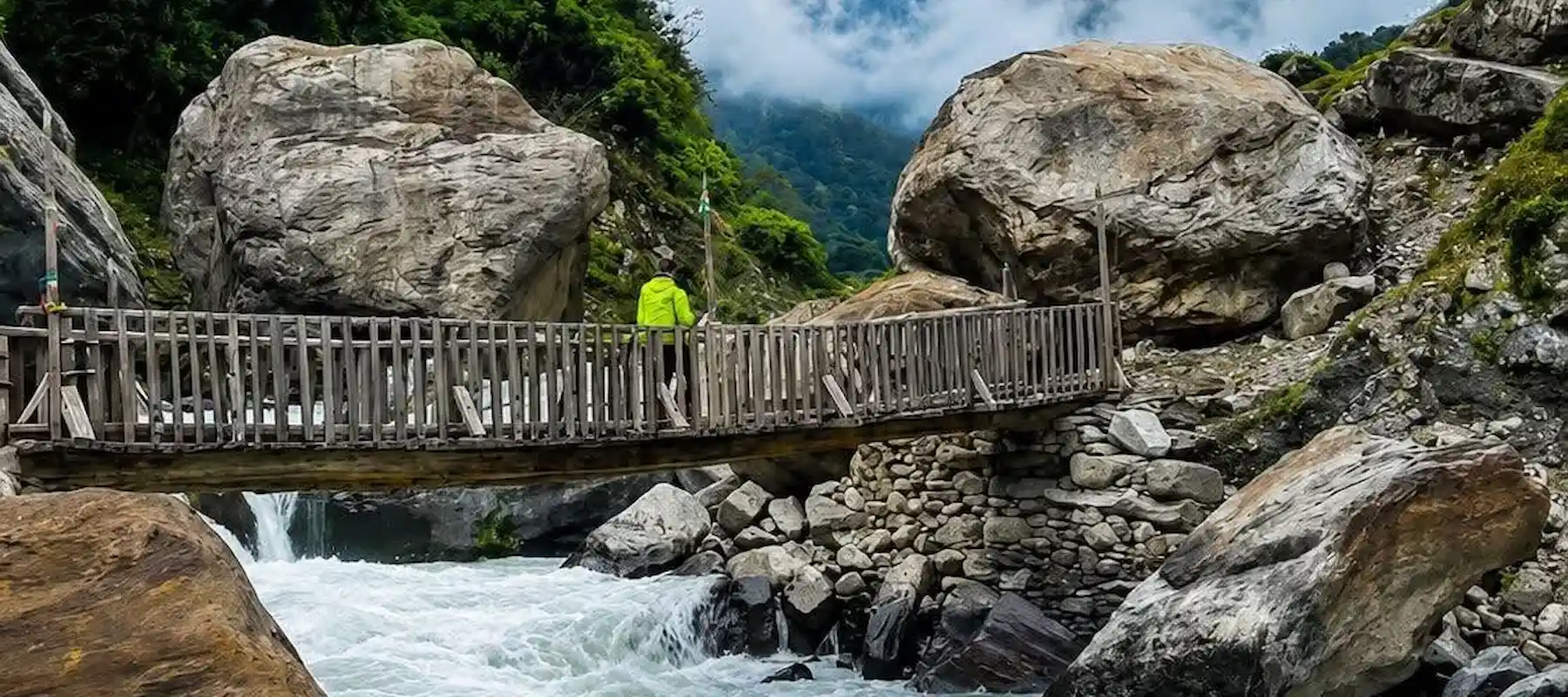
Makalu is the world’s fifth-highest mountain (8,485 m), rising in a remote corner of eastern Nepal where the Barun Valley has no road access and almost no trekking infrastructure beyond the most basic teahouses in its lower villages. The route runs through Makalu Barun National Park, the only protected area on Earth preserving an unbroken ecological corridor from subtropical lowland to an 8,000-meter summit, passing through Rai and Sherpa villages that see only a fraction of the visitors Everest or Annapurna attract.
That remoteness is exactly the appeal, and exactly why it’s a poor starting point. There’s no quick exit if you’re struggling on day 10, no large teahouse network to fall back on, and the trek’s own operator is upfront that this isn’t built for complete beginners. If you’re reading this because Makalu is genuinely your first trek idea, read the honest difficulty section below before you book anything.
| Day | Route | Altitude | Time | Key Places |
|---|---|---|---|---|
| 1 | Arrive in Kathmandu | 1,325 m | — | Airport pickup, permit paperwork, trek briefing |
| 2 | Kathmandu sightseeing and preparation | 1,325 m | Full day | Swayambhunath, Pashupatinath, Boudhanath; gear check |
| 3 | Fly to Tumlingtar, drive to Num | 1,560 m | 6–7 hrs | 35-minute flight, then 4-hour jeep to the road-head village |
| 4 | Num to Seduwa | 1,500 m | 6–7 hrs | Steep descent into the Arun gorge, one of Nepal’s deepest river valleys |
| 5 | Seduwa to Tashi Gaon | 2,100 m | 5–6 hrs | Last permanent settlement on the route; a genuine Sherpa village |
| 6 | Tashi Gaon to Khongma Danda (Kauma) | 3,470 m | 6–7 hrs | Rhododendron forest giving way to open high pastureland |
| 7 | Acclimatization day, Khongma Danda | 3,470 m | Rest day | Short hikes, rest, views of the Makalu and Barun ranges |
| 8 | Khongma Danda to Mumbuk | 3,570 m | 5 hrs | High alpine terrain, glacial-melt stream crossings |
| 9 | Mumbuk to Yangle Kharka (Neha Kharka) | 3,700 m | 4–6 hrs | One of the last grassy meadows before glacial terrain begins |
| 10 | Yangle Kharka to Sherson | 4,615 m | 6–7 hrs | The longest, most difficult ascent day; first full view of Makalu’s southwest face |
| 11 | Sherson to Makalu Base Camp | 4,870 m | 4–5 hrs | Crosses the Barun Glacier moraine to reach base camp |
| 12 | Rest day, explore Sherson / Base Camp | 4,615–4,870 m | Rest day | Photography, nearby viewpoints, recovery |
| 13 | Return to Yangle Kharka | 3,700 m | 6–7 hrs | Long descent day |
| 14 | Yangle Kharka to Mumbuk | 3,570 m | 6–7 hrs | Moderate recovery descent |
| 15 | Mumbuk to Khongma Danda | 3,470 m | 6–7 hrs | Return through alpine meadow and forest |
| 16 | Khongma Danda to Tashi Gaon | 2,100 m | 5–6 hrs | Long forest descent, welcome return to real beds |
| 17 | Tashi Gaon to Pakuwa | — | 5–6 hrs | Alternate return route, different villages from the ascent |
| 18 | Pakuwa to Bumling | — | 5–6 hrs | Increasingly subtropical terrain; riverside village stay |
| 19 | Bumling to Tumlingtar | 400 m | 4–5 hrs | Final trekking day |
| 20 | Fly Tumlingtar to Kathmandu | 1,325 m | 35 min | Return flight, transfer to hotel |
| 21 | Departure | — | — | Airport transfer |
A note on accuracy: Alliance Treks’ published itinerary has a few internal inconsistencies, Khongma Danda and Mumbuk each appear with two different altitudes in different sections, and the return route (Days 17–18) is labeled with destination names that contradict the page’s own route description elsewhere. The table above reconciles these using the most consistent figures and the explicitly stated Pakuwa–Bumling return route. Confirm exact overnight stops with your agency when booking.
No, not as a first trek, and here’s the specific reasoning rather than just a blanket no.
What makes it genuinely hard for a beginner:
What would make it realistic for a fit, prepared beginner:
Bottom line: if Makalu is your dream trek, that’s a legitimate goal; several reviewers on this exact route describe it as the most rewarding trek of their lives. Just don’t make it your first one. Build toward it.
| Aspect | Makalu Base Camp | Everest Base Camp | Annapurna Base Camp | Kanchenjunga Circuit |
|---|---|---|---|---|
| Duration | 21 days | 12 days | 7–8 days | 21 days |
| Highest point | ~4,870 m | 5,364 m (5,545 m Kala Patthar) | 4,130 m | 5,143 m |
| Acclimatization days | 2 | 2 | 0 (gradual gain instead) | 1 |
| Accommodation above the last village | Shelter/tent | Teahouse throughout | Teahouse throughout | Teahouse (basic) |
| Restricted-area permit | No | No | No | Yes |
| Beginner suitability | Not recommended as a first trek | Achievable with preparation | Best true beginner option | Not recommended as a first trek |
| Permit / Document | Notes |
|---|---|
| Makalu Barun National Park Entry Permit | Required to enter the park |
| Makalu Rural Municipality Permit | Local entry fee |
| TIMS Card | Trekker registration and safety tracking |
| Valid passport | At least 6 months’ validity |
| Nepal entry visa | $30 (15 days) / $50 (30 days), on arrival or online |
| Travel insurance | Mandatory, must cover helicopter rescue to a minimum of 5,500 m |
Unlike Manaslu, Upper Mustang, or Kanchenjunga, Makalu does not require a restricted-area permit, since the route doesn’t cross into a formally restricted zone. A licensed guide is still strongly recommended, and Alliance Treks includes both a trekking guide and a dedicated high-altitude support guide for the upper Barun and base camp sections. For more detailed permit guidance, check our blog Nepal Trekking Permits 2026
| Group Size | Price Per Person |
|---|---|
| Solo (1 person) | $2,139 |
| 2 to 5 people | $1,969 |
| 6 to 10 people | $1,869 |
| 11 or more | $1,769 |
The package includes breakfast meals on the trek days, round-trip Kathmandu–Tumlingtar flights, both guides, a shared porter, tented camp equipment for the high-altitude sections, emergency oxygen, and a satellite phone, a noticeably more comprehensive safety setup than their shorter, less remote treks.
| Category | Key Items |
|---|---|
| Head | Warm hat, sun hat, sunglasses, neck buff, headlamp |
| Body | Thermal wear, fleece jacket, down jacket, waterproof rain jacket, trekking pants, gloves, warm socks |
| Foot | Broken-in trekking boots, lightweight camp shoes, quality trekking socks |
| Sleep | Sleeping bag (Alliance Treks lends one on a returnable basis), rated for genuinely cold shelter and tent conditions |
| Health | Comprehensive first-aid kit, water purification, personal medicines |
| Practical | Trekking poles, reusable water bottle, power bank, cash in small denominations |
The one thing beginners consistently overlook: accommodation above Tashi Gaon shifts from lodges to basic local shelters, and larger groups need tents. Discuss your group size with Alliance Treks before departure so you know whether you’re renting a tent in Kathmandu (roughly $4–5/day) or relying on shelter accommodation along the way.
| Timeline | Focus | Example |
|---|---|---|
| 3 months out | Build cardio base | Regular walking, running, or cycling, 3–4 times a week |
| 6–10 weeks out | Add elevation and load | Weekly hill or stair sessions with a loaded daypack |
| 4–6 weeks out | Simulate long days | Weekend hikes of 6+ hours in your actual trek boots |
| 2–4 weeks out | Taper and prepare | Reduce training volume, confirm gear and permits |
Alliance Treks itself recommends starting physical preparation 2–3 months before departure, with long-distance hiking, cardio training, and ideally some prior experience above 3,500 m.
| Season | Months | Suitability |
|---|---|---|
| Spring | March–May | Good: rhododendron blooms, clear skies |
| Autumn | September–November | Best: most stable weather, clearest mountain views |
| Winter | December–February | Not recommended: cold, snow, fewer resources on trail |
| Monsoon | June–August | Not recommended: rain, leeches, slippery trails |
Not recommended as a first trek. Alliance Treks’ own guidance states it’s unsuitable for complete beginners due to long walking days, remote trails, and high altitude; it suits fit trekkers who’ve already completed at least one shorter Himalayan trek.
It’s rated challenging, with 5–9 hour daily walks on remote, sometimes poorly marked trails, and a maximum altitude near 4,870 m.
The standard Alliance Treks itinerary is 21 days from Kathmandu to Kathmandu; some operators offer shortened 18-day versions.
Possibly. Smaller groups (2–3 people) can generally rely on basic local shelters most nights, while groups of four or more typically need tents, and an overnight stay directly at base camp requires tented equipment.
The Makalu Barun National Park Entry Permit, a Makalu Rural Municipality Permit, and a TIMS card. No restricted-area permit is required.
With Alliance Treks, prices range from $1,769 per person for groups of 11 or more up to $2,139 for a solo trekker, including full board, both guides, and tented equipment.
Alliance Treks’ own materials list both 4,870 m and 5,000 m in different places on their site; the itinerary’s specific day-by-day figure is 4,870 m, with some nearby exploration reaching closer to 5,000 m.
Yes. The itinerary includes two acclimatization days, at Khongma Danda and again at Sherson/Base Camp, but given the trek’s remoteness, cautious pacing matters more here than on more developed routes.
It’s strongly recommended, even though not strictly compulsory. Good physical fitness and proper preparation matter more than any specific technical skill.
Makalu is longer, more remote, has far less teahouse infrastructure above its last village, and sees only a few hundred trekkers a year compared to Everest’s tens of thousands, meaning less backup support if you’re struggling.
Start with Annapurna Base Camp or Poon Hill, build genuine multi-day trekking experience, then return to Makalu once you understand your own pacing and altitude tolerance.
Not legally mandatory, since it’s not a restricted area, but strongly recommended, and Alliance Treks includes both a trekking guide and a separate high-altitude support guide as standard.
Makalu asks more of a trekker than almost any other named trek in Nepal, and that’s not a marketing line; it’s a genuine logistical reality reflected in its 21-day length, shelter-and-tent accommodation, and the operator’s own honest admission that it’s not for complete beginners. For a fit trekker who has built real multi-day experience first, it delivers something increasingly rare: genuine wilderness, a mountain that dominates its valley with full visual force, and trails where you might not see another trekking group for days. Respect the difficulty, prepare properly, and it becomes one of Nepal’s most rewarding treks.
With over 34 years of experience, Alliance Treks & Expedition Pvt. Ltd. provides NATHM-certified guides plus a dedicated high-altitude support guide for the upper Barun and base camp sections, porters carrying up to 20 kg each, and full tented camp equipment, sleeping, dining, toilet, and kitchen tents, for the sections beyond teahouse access. The package includes round-trip Tumlingtar flights, all required permits, breakfast throughout the trek, a first-aid kit with emergency oxygen, a satellite phone for upper-camp communication, and a returnable sleeping bag, down jacket, and duffel bag- a genuinely comprehensive safety setup for a trek this remote.
Alliance Treks & Expedition Pvt. Ltd. Once is not enough for naturally and culturally Himalayas