(Viber, Whatsapp, Cell) +977 9851022814

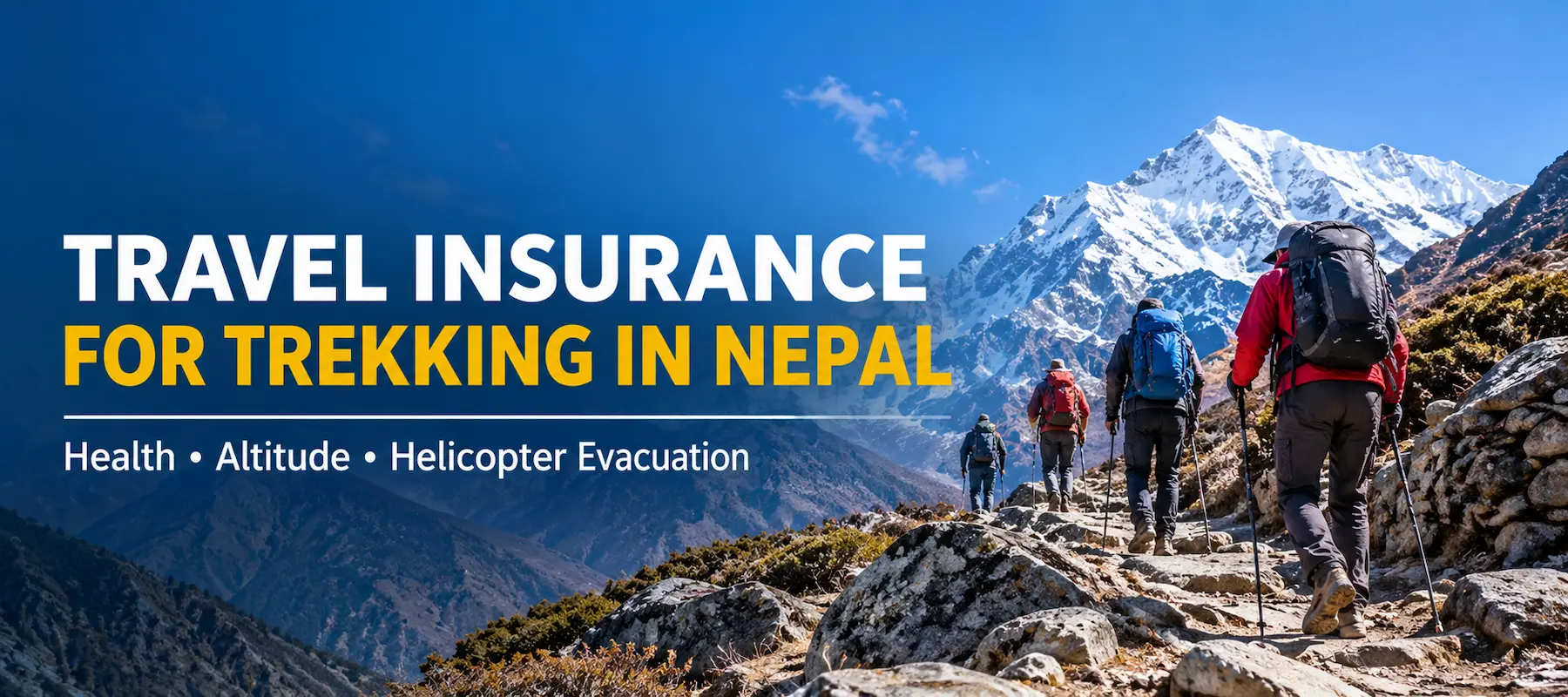
Yes, you need travel insurance for trekking in Nepal, and it should include health (medical) cover, emergency helicopter evacuation, and an altitude limit of at least 6,000 m that explicitly names trekking. Nepal’s mountain clinics are basic; serious cases are flown to Kathmandu or Pokhara, and a single helicopter rescue is commonly quoted at several thousand US dollars. Insurance is not clearly required by law for every trek, but restricted-area permits and most licensed agencies expect proof of it. Buy a policy before you pay for flights and permits, and read its altitude and activity wording rather than trusting the headline.
| Question | Short answer |
|---|---|
| Is insurance needed to trek in Nepal? | Strongly yes. Treat it as non-negotiable. |
| Is it legally mandatory? | Reported inconsistently. Often required in practice for restricted-area permits and by agencies. See below. |
| Minimum altitude cover | The highest point on your route, plus a margin. Aim for 6,000 m. |
| Must include | Trekking named as covered, medical expenses, emergency helicopter evacuation, altitude illness, repatriation |
| Medical cover to aim for | At least US$100,000 (many guides suggest more) |
| Typical premium (operator-quoted) | About US$80 to 300 for one to three weeks, depending on age, altitude, and extras |
| Typical helicopter evacuation cost | Often quoted at roughly US$3,000 to 10,000 or more, depending on altitude and location |
| When to buy | Before booking flights and applying for permits |
| Most common claim problem | No pre-authorisation for the evacuation, or an altitude ceiling below the route |
The honest answer is “it depends who is asking.”
Most trekkers think of “travel insurance” as a bundle for lost bags and cancelled flights. On a trek, the part that matters most is health insurance: the medical expenses, treatment, evacuation and repatriation cover that pays for care when something goes wrong. Here is why it matters in Nepal in particular.
Trails are long, remote and often without road access. Villages have small health posts or clinics, but they are not hospitals. Serious illness or injury usually means a stretcher, a horse, or a helicopter to Kathmandu or Pokhara, which can take hours or days when weather closes in.
Altitude illness can start from about 2,500 m. Mild symptoms such as headache, nausea, poor sleep and tiredness are common. Severe forms involve fluid in the lungs or swelling of the brain and need immediate descent. A policy that covers “altitude illness” in the wording (not just “medical expenses”) is what pays for treatment, oxygen, rescue and hospital care in these cases.
You do not need a dramatic emergency to need cover. Typical claims include:
Private hospitals in Kathmandu and Pokhara commonly expect payment or a guarantee at admission. If you have a policy that offers direct payment or “cashless” assistance, tell the hospital immediately. Otherwise, keep every receipt and medical report for reimbursement.
| Home cover | Does it work for a Nepal trek? |
|---|---|
| National health system or domestic health insurance | Usually not. Most plans pay little or nothing for treatment abroad and do not cover evacuation. |
| EHIC / GHIC (Europe and UK) | Not valid in Nepal. |
| Credit card travel insurance | Often capped at lower altitudes and rarely covers helicopter rescue at height. Check the wording and call the provider. |
| Standard travel policy | Often stops at 3,000 to 4,000 m or excludes “trekking.” Needs an altitude or adventure add-on. |
| Specialist trekking policy | Designed for this. Check it names trekking, covers your altitude and includes evacuation. |
If you have asthma, heart conditions, diabetes or anything you are treated for, declare it when you buy. Undisclosed conditions can invalidate a large claim. If you have a medical condition, talk to your doctor before trekking, and ask whether altitude is safe for you.
For route-specific preparation, read our trek preparation guide.
Use this table as a checklist when you compare quotes.
| Feature | What to look for |
|---|---|
| Trekking named as covered | The wording should say “trekking” (not just hiking) and give an altitude. Mountaineering with ropes and ice axes is usually a separate category. |
| Altitude limit | At or above the highest point on your route, ideally 6,000 m |
| Emergency helicopter evacuation | Named explicitly, not hidden under general “emergency transport” |
| Medical expenses | At least US$100,000, plus repatriation |
| Altitude illness cover | AMS, HAPE and HACE should be covered, not excluded |
| Search and rescue | Costs of locating and recovering you |
| Trip cancellation and curtailment | Important because weather often disrupts flights to Lukla and Jomsom |
| Baggage and gear | Suits the value of the equipment you carry |
| Pre-existing conditions | Declared and accepted, not silently excluded |
| 24-hour assistance | Phone and email that work from Nepal |
| Natural events | Clear terms for floods, landslides and road closures |
Insurers use different altitude tiers, and there is no universal standard. Common tiers include around 3,500 m, 5,000 m, 5,500 m and 6,000 m. A policy that covers “trekking up to 4,500 m” will not help on the Annapurna Circuit.
| Trek | Approx. highest point | Minimum cover to ask for |
|---|---|---|
| Ghorepani Poon Hill | ~3,210 m | 4,000 m |
| Upper Mustang | ~3,840 m at Lo Manthang, with higher passes | 4,500 m |
| Tsum Valley | ~3,700 m plus side trips | 4,500 m |
| Annapurna Base Camp | ~4,130 m | 4,500 m |
| Mardi Himal | ~4,500 m at Base Camp | 5,000 m |
| Langtang Valley | ~4,770 m at Kyanjin Ri | 5,000 m |
| Manaslu Circuit | ~5,106 m at Larkya La | 5,500 m to 6,000 m |
| Annapurna Circuit | 5,416 m at Thorong La | 6,000 m |
| Everest Base Camp | ~5,364 m at Base Camp, ~5,545 m at Kala Patthar | 6,000 m |
| Gokyo and Three Passes | Up to ~5,500 m | 6,000 m |
Most policies require the insurer to approve an evacuation unless it is a genuine life-or-death emergency. An unauthorised flight is the most common way a valid claim turns into a bill. Make the call early, ideally before the helicopter is committed. Your guide or agency usually makes it for you, which is another reason a trained guide matters.
Operators quote a helicopter rescue at roughly US$3,000 to 10,000 or more, and costs rise with altitude and remoteness. These are not official prices. Weather also matters. Fog, wind and poor visibility ground helicopters, and sometimes walking down is the faster and safer option. Insurers treat evacuation as conditional on medical need, weather and policy limits, so it is never automatic.
Nepal has had cases of exaggerated and fraudulent helicopter claims, and insurers have tightened verification as a result. Honest claimants should expect more paperwork, so keep:
| Common exclusion | What it means for you |
|---|---|
| Altitude ceiling below your route | Evacuation or treatment above the limit may not be paid |
| Mountaineering or climbing peaks | Trekking peaks and climbing permits are usually excluded without an extra add-on |
| Trekking without a required guide or permit | An insurer may refuse the claim where its policy requires you to follow local rules |
| Alcohol-related incidents | Often excluded |
| Undeclared pre-existing conditions | Can void a large claim |
| Travel against a government advisory | Often excluded |
| Adventure activities not listed | Paragliding, rafting, bungee and canyoning in Pokhara may need an add-on |
| Late purchase | A policy bought after a known event (such as a flood or road closure) may not cover it |
Operators and insurers quote different figures, so treat these as rough guides:
| Trip length | Typical premium range (US$) |
|---|---|
| About 1 week | 70 to 90 |
| About 2 weeks | 90 to 200 |
| About 3 weeks | 140 to 220 or more |
Your price depends on your age, nationality, the altitude ceiling, evacuation limits, deductible and add-ons such as cancellation or gear cover. A very cheap policy usually means a low altitude limit or no helicopter cover, so compare the wording, not just the price.
Ways to keep the cost sensible
Your agency will usually ask to see your policy certificate before departure, so send it when you book. See our how to book and payment methods pages for the booking process.
Your own cover protects you. Your staff also need protection. Operators report that Nepali guides and porters must be covered by personal accident insurance through the agency, and responsible agencies also provide fair pay, equipment and altitude care for their team. Ask any agency you are considering how they insure and look after their guides and porters. If you want to compare operators, see why trekkers choose Alliance Treks and read our reviews.
Yes, though the requirements are lighter. If you are visiting Kathmandu, Pokhara and Chitwan, choose a standard travel policy that covers medical care, evacuation and any adventure activities you plan. Our Nepal travel guide shows a classic route, and our Nepal tour packages include the 7-day Kathmandu, Chitwan and Pokhara tour and the Best Nepal Tour. If you add a short hike or a high viewpoint, make sure the policy covers it.
Yes. It is the single most important thing to arrange. Insurance may not be legally required for every trek, but agencies and restricted-area permits expect it, hospitals expect payment and rescues are expensive.
We found no official notice requiring every visitor or trekker to hold insurance. It is required in practice for restricted-area permits and by most licensed agencies. Check with your agency for your dates.
Medical care is far from the trail, altitude increases the risk of serious illness, hospitals expect payment, and home health plans usually do not cover treatment abroad or evacuation. Health cover within a trekking policy pays for treatment, hospital stays, evacuation and repatriation.
Choose at least the highest point on your route, ideally 6,000 m. That covers Everest Base Camp (about 5,364 m, with Kala Patthar at about 5,545 m), the Annapurna Circuit (5,416 m) and the Manaslu Circuit (about 5,106 m).
Often not. Many standard policies stop at 3,000 to 4,000 m or exclude trekking. You may need a trekking or high-altitude policy or an add-on.
Only if the policy names emergency helicopter evacuation and covers your altitude. Evacuation is usually conditional on medical necessity, insurer authorisation and weather.
Operators quote about US$70 to 220 or more for one to three weeks, depending on age, altitude and extras. Compare the wording, not only the price.
A proper trekking policy should cover altitude illness, including serious forms. Check that the wording does not exclude it above a certain height.
Some insurers allow it, but cover may not start immediately and may exclude existing problems. Buy before you leave home, ideally before booking flights and permits.
Tell your guide immediately, stop climbing, descend if advised, and call the insurer’s 24-hour line before a helicopter is committed. Keep every receipt and medical report.
Operators report that agencies must provide personal accident insurance for Nepali guides and porters. Ask your agency how it insures and cares for its staff.
Yes. These routes are lower than Everest, but altitude, injuries and weather still apply. Mardi Himal reaches about 4,500 m at Base Camp, above many standard policy limits.
Insurance does not make the trek easier, but it removes the biggest financial and logistical risk. Choose a policy that names trekking, covers at least 6,000 m, includes helicopter evacuation and gives you serious health cover for illness and injury. Read the altitude and exclusions wording, declare any medical conditions, and send your certificate to your agency. Do that, and you can focus on the mountains instead of the “what if.”
Ready to plan? Explore our trekking packages, including Everest Base Camp, the Annapurna Circuit and the Manaslu Circuit, learn about conservation-area permits in our Annapurna Conservation Area guide, or contact our local team for advice on permits, guides and what to send before you go.
Alliance Treks & Expedition Pvt. Ltd. Once is not enough for naturally and culturally Himalayas