(Viber, Whatsapp, Cell) +977 9851022814

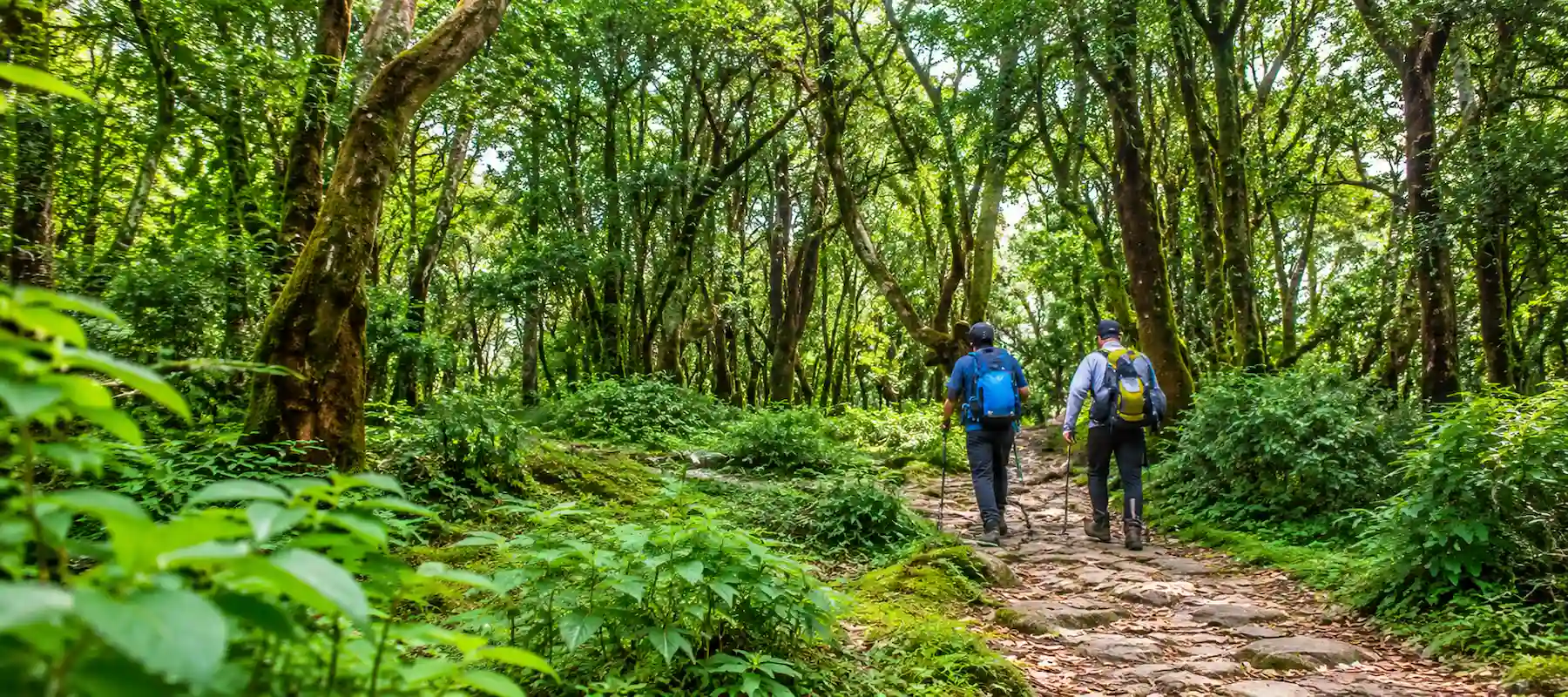
There are 13 national parks in Nepal. The newest, Chhayanath in Mugu, was declared in 2025. Chitwan (1973) was the first. Sagarmatha, home to Mount Everest, and Chitwan are the two UNESCO World Heritage national parks. For trekkers, the best national park in Nepal is usually Sagarmatha or Langtang. For wildlife safaris, choose Chitwan or Bardiya. Foreign visitors pay roughly NPR 1,000–3,000 per entry, depending on the park.
| # | National park | Declared | Area (km²) | Region | Best known for |
|---|---|---|---|---|---|
| 1 | Chitwan | 1973 | About 953 | Central lowlands (Terai) | Rhinos, tigers, jungle safari; UNESCO site (1984) |
| 2 | Sagarmatha | 1976 | About 1,148 | Everest region | Mount Everest, Sherpa culture; UNESCO site (1979) |
| 3 | Langtang | 1976 | About 1,710 | North of Kathmandu | Valley treks, red panda, Gosainkunda |
| 4 | Rara | 1976 | About 106 | Far west (Mugu, Jumla) | Rara Lake, Nepal’s largest lake |
| 5 | Khaptad | 1984 | About 225 | Far west | Plateau hiking, medicinal herbs |
| 6 | Shey Phoksundo | 1984 | Nepal’s largest park (sources give roughly 2,700–3,550) | Karnali (Dolpa, Mugu) | Phoksundo Lake, trans-Himalayan landscape |
| 7 | Bardiya | 1988 | About 968 | Western Terai | Tigers, river dolphins, fewer crowds than Chitwan |
| 8 | Makalu Barun | 1992 | About 1,500 | East (Solukhumbu, Sankhuwasabha) | Makalu and Barun Valley, biodiversity |
| 9 | Shivapuri Nagarjun | 2002 | About 159 | Kathmandu valley rim | Day hikes close to the capital |
| 10 | Banke | 2010 | About 550 | Western Terai | Quieter jeep safaris |
| 11 | Shuklaphanta | 2017 (reserve since 1976) | About 305 | Far-west Terai | Swamp deer grasslands |
| 12 | Parsa | 2017 (reserve since 1984) | About 637 | Central Terai | Elephants, wild Terai forest |
| 13 | Chhayanath | 2025 | Roughly 840–900 (sources differ) | Mugu, Karnali | Newest park; remote alpine terrain |
There are 13 national parks. Many pages still say 12, because they were written before Chhayanath was declared in 2025. Nepal also protects:
Protected areas cover about a quarter of the country (Nepal Tourism Board gives 23.23%). The difference between a national park and a conservation area matters when you plan: parks are run by the government and have stricter rules, while conservation areas let local people live and farm within them.
Sagarmatha protects the highest ground on Earth and the Sherpa villages of Khumbu. Almost every Everest trek crosses it. Highlights include Namche Bazaar, Tengboche monastery and the Gokyo lakes. If you want to walk in this park, start with the Everest Base Camp trek, the lake route of the Gokyo Lake trek, or the demanding Everest Three High Passes trek. Best months are October–November and March–May.
Closest to Kathmandu and a popular first Himalayan trek. The park spans Tamang villages, rhododendron forest and the holy lakes of Gosainkunda. Walk it on the Langtang Valley trek in about a week, or read our Langtang trek blog. Red panda and snow leopard live here, though sightings are rare.
A remote eastern park with steep valleys and some of the richest plant life in the country. The Makalu Base Camp trek is a long, wild route; see Makalu Base Camp for beginners if you are unsure about the grade.
The largest national park in Nepal, set on the dry, Tibetan-style side of the Himalaya. It holds deep-blue Phoksundo Lake and the Dolpo valleys. Routes include the Shey Phoksundo Lake trek, the Lower Dolpo trek and the Upper Dolpo trek. Upper Dolpo needs a restricted-area permit and an agency.
Home to Rara Lake, Nepal’s largest lake, in a quiet pine and juniper setting far from the main trekking routes. See our Rara Lake trek. Best months are spring and autumn.
A high plateau in the far west with grassland, temples and medicinal herbs. It suits travellers who want an off-route walk with few visitors. See also less crowded treks in Nepal.
The smallest national park, on the rim of the Kathmandu valley. It is the easiest to reach for a day hike, a bird-watching morning or an acclimatisation walk at the start of a trip.
Declared in 2025 in Mugu, this is the newest park. It was carved from the Shey Phoksundo area and protects remote high-altitude landscape. Visitor facilities are not yet well documented, so ask a local operator before planning a trip.
Nepal’s first national park and a UNESCO World Heritage Site since 1984. Chitwan is the best place in the country to look for the one-horned rhinoceros, and it also protects tigers, gharial crocodiles and more than 500 bird species. Typical activities are jeep safaris, canoe rides and guided jungle walks. You can combine it with other highlights on our 7-day Kathmandu, Chitwan and Pokhara tour. Best months are October to March.
A large lowland park in the west, known for tiger sightings and river dolphins on the Karnali. It is quieter than Chitwan but takes longer to reach.
Three newer parks in the Terai. Parsa is known for wild elephants, Shuklaphanta for its swamp-deer grasslands and Banke for quieter safaris. They are good choices if you want fewer people, but infrastructure varies.
The fees below are published for foreign visitors and come from a 2026 compilation. They are not an official price list, so confirm with the park gate, the DNPWC or your agency.
| Park | Foreign visitor (NPR) | Notes |
|---|---|---|
| Sagarmatha | 6,000 | 3,000 entry plus a 3,000 local tax; paid in Lukla or Monjo |
| Langtang | 3,000 | Per entry |
| Rara | 3,000 | Per entry |
| Shey Phoksundo | 3,000 | Per entry; restricted areas need extra permits |
| Chitwan | 2,000 | Per day |
| Bardiya | 2,000 | Per day |
| Shivapuri Nagarjun | 1,000 | Day hikes |
Children under 10 are generally free but need a passport. Use about NPR 135 to the US dollar for a rough conversion. For the full budget, including guide, porter and flights, see our Nepal trekking cost breakdown.
| Type | Best months | Why |
|---|---|---|
| Mountain parks (Sagarmatha, Langtang, Makalu Barun) | Oct–Nov and Mar–May | Clear views and stable weather |
| Dry-side parks (Shey Phoksundo, Rara) | Spring and autumn | Trails open; monsoon is much drier here |
| Lowland parks (Chitwan, Bardiya) | Oct–Mar | Cooler weather, shorter grass for wildlife viewing |
The Terai gets very hot from April to June and very wet from July to September, and winter snow can close high routes.
Prepare early with how to prepare for a trek in Nepal, then browse every route on our Nepal trekking hub. For a tailored plan, contact Alliance Treks with your dates and group size.
Nepal has 13 national parks, following the declaration of Chhayanath National Park in 2025.
Chitwan, declared in 1973.
Shey Phoksundo, in the Karnali region.
Shivapuri Nagarjun, near Kathmandu, at about 159 km².
Sagarmatha (1979) and Chitwan (1984).
Chitwan for rhinos and a wide range of species, and Bardiya for tigers and fewer visitors.
Sagarmatha and Langtang are the most popular, and Shey Phoksundo suits remote treks.
Roughly NPR 1,000–3,000 for foreign visitors, and NPR 6,000 for Sagarmatha. Confirm current fees before you travel.
October to March for the lowland parks, and October–November and March–May for the mountain parks.
Rules differ by area and are partly disputed, and restricted areas need an agency. See our guides post for details.
Yes, mainly in Chitwan and Bardiya, but sightings are never guaranteed.
Yes. Mount Everest lies within Sagarmatha National Park.
Alliance Treks & Expedition Pvt. Ltd. Once is not enough for naturally and culturally Himalayas