(Viber, Whatsapp, Cell) +977 9851022814

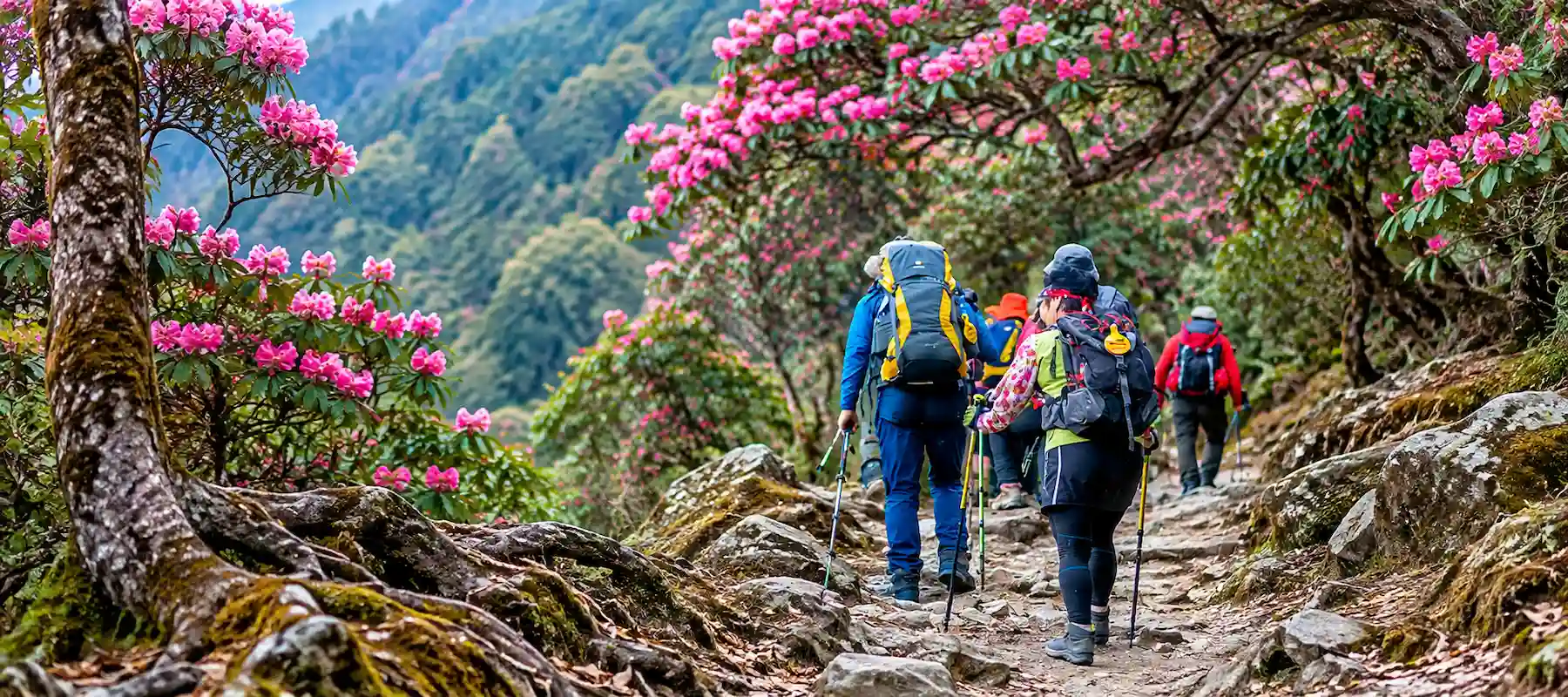
For a Nepal tea house trek, you need five layers of clothing, broken-in waterproof boots, a four-season sleeping bag (or a rented one), a headlamp, sun protection, a small medical kit, and about 10–15 kg of total gear. Tea houses provide beds, blankets, and meals so that you can leave tents, stoves, and cookware at home. What matters most is warmth at night and above 4,000 m, because the cold, not the walking, is what catches under-packed trekkers. Nepal Trekking Packing List includes all the information a trekkers needs to know.
| Category | Must-have items | Rent in Nepal? |
|---|---|---|
| Warmth | Down jacket, fleece, thermal base layers, warm hat, gloves | Yes (jacket) |
| Rain and wind | Waterproof shell jacket and trousers | Sometimes |
| Feet | Broken-in boots, 3–4 wool socks, camp shoes | No (bring your own boots) |
| Sleep | Four-season sleeping bag or liner plus rented bag | Yes |
| Carry | 30–40 L daypack, waterproof duffel | Yes (duffel) |
| Health | Blister plasters, rehydration salts, personal medicines | No |
| Paperwork | Passport, insurance covering your top altitude, permit copies | No |
Start from the limit, not the list. Two numbers decide how much you can bring, and sources disagree on both, so confirm them with your operator:
• Porter load. Guides commonly cap the kit a porter carries for you at about 10–15 kg, though some operators quote up to 20–25 kg including the porter’s own gear. Packing to the lower figure keeps you safe on every route.
• Lukla flight allowance. One guide lists 10 kg checked plus 5 kg hand luggage. Airline rules change, so ask before you pack. Alliance Treks lists Lukla flights in its itineraries but does not publish a baggage figure, so ask your trip coordinator directly.
The five-layer system. Cold in the Himalaya comes in waves: warm valley mornings, windy passes, freezing nights. Dress in thin layers you can add or remove, rather than one thick garment.
1. Base layer: merino or synthetic, never cotton, which stays damp and chills you.
2. Mid layer: a light fleece or grid-fleece top.
3. Insulation layer: a down or synthetic jacket for rest stops, evenings and summit mornings.
4. Shell layer: a waterproof, breathable jacket and trousers for wind, rain and snow.
5. Extremities: hat, buff, liner gloves and warm gloves.
Three packing rules that save weight. Pack two or three trekking outfits and rotate them, because tea houses offer laundry or space to hand-wash. Wear your boots and heaviest layers on the flight to Lukla. Put the trek kit in a waterproof duffel, and keep your passport, money, medicines and one spare outfit in a carry-on you will not hand to a porter.
Quantities below suit a 10–14 day tea house trek to around 5,000 m. Trim them for lower routes and add warmth for winter.
| Layer | Pack this | Qty | Notes |
|---|---|---|---|
| Base | Long-sleeve merino or synthetic tops | 2 | One to walk in, one to sleep in |
| Base | Thermal leggings | 2 | Wear under trousers above 4,000 m |
| Base | Lightweight T-shirts | 2 | Wicking fabric only |
| Mid | Fleece or grid-fleece jacket | 1–2 | Your daily workhorse |
| Bottom | Quick-dry trekking trousers | 2 | Convertible pairs save weight |
| Insulation | Hooded down or synthetic jacket | 1 | Available to rent or borrow |
| Shell | Waterproof, breathable jacket | 1 | Needs a hood that fits over a hat |
| Shell | Waterproof over-trousers | 1 | Light enough to live in your daypack |
| Head | Warm hat, sun hat, neck buff | 1 each | Cold nights and strong UV |
| Hands | Liner gloves plus insulated gloves or mitts | 2 pairs | Cold hands end more days than sore legs |
| Underwear | Quick-dry briefs or sports bras | 3–4 | Rinse and re-wear |
Rent or bring? Down jackets and sleeping bags are the usual rentals. Alliance Treks’ Jiri to Everest Base Camp Trek lists a returnable down sleeping bag, rain coat, down jacket, water bottle and walking poles among its included equipment, so check your trek’s inclusions before you shop.
Your feet decide whether the trip is fun. Spend your gear budget here.
• Boots: waterproof, ankle-supporting and already broken in over at least 50 km of walking. Do not rent boots; one guide recommends wearing in your own pair instead. Boots should leave a thumb’s width of space at the toe, since feet swell on long descents.
• Socks: three or four pairs of midweight merino or synthetic socks, plus one thicker pair for sleeping above 4,000 m. Thin liner socks are optional and help prevent blisters.
• Camp shoes: light sandals, running shoes or down booties for tea house evenings. Your boots dry out while you rest.
• Gaiters: useful for snow above 4,500 m or a winter trek; otherwise, skip them.
• Blister kit: blister plasters, a small roll of tape and petroleum jelly. Treat a hot spot the moment you feel it, not at the end of the day.
• Trekking poles: two collapsible poles take real load off your knees on the long descents. If you hesitate to buy a pair, check whether your trek includes them, as some Alliance Treks itineraries list walking poles among returnable equipment.
• Hand and lip care: high-altitude air is very dry, so carry SPF lip balm and a small tube of hand cream.
Tea houses supply a bed, a mattress, a pillow, and blankets, but rooms are unheated, and walls are thin. Night temperatures at altitude can fall to roughly -5°C to -10°C in spring and autumn, colder in winter, so bring your own warmth.
Sleeping bag. Choose a four-season bag with a comfort rating near -10°C for high routes. Many trekkers instead rent a bag in Kathmandu and add a thin liner for hygiene and an extra few degrees. On the Alliance Treks Everest Base Camp trek, a sleeping bag is available on a returnable basis, so you may not need to buy one.
Packs. Carry a 30–40 L daypack with a hip belt and rain cover for water, layers, camera, and snacks. Use a soft, waterproof duffel of 60–100 L for the porter-carried kit, with a lockable zip and no wheels or rigid frame, because porters carry the load on their backs. Line the duffel with a heavy-duty bin liner so your gear stays dry in rain.
Small comforts that earn their weight
• Earplugs and an eye mask for thin walls and early starts
• A leak-proof bottle that you can fill with hot water as a bed warmer
• A pillowcase or buff to stuff with spare clothes
• A small microfibre towel
• A headlamp with spare batteries for night toilet trips
• A lightweight padlock for your duffel
Altitude medicine needs a doctor, not a packing list. Ask your doctor or a travel clinic before you leave whether acetazolamide (Diamox) suits you, and learn the dose and side effects. Do not take prescription altitude drugs on a friend’s advice. The best protection is slow ascent: Alliance Treks’ insurance guide notes that altitude illness can begin from around 2,500 m and suggests gaining roughly 300–500 m of sleeping altitude per day above that height.
Know the warning signs. A headache that does not ease, nausea, dizziness, or unusual breathlessness at rest mean you should tell your guide at once and stop climbing. Descent is the fastest treatment. Our guide to how hard the Everest Base Camp trek is explains how acclimatisation days are built into the route.
Charging costs money in most high tea houses, and cold drains batteries fast. Plan for fewer devices and more reliable ones.
The Sagarmatha Pollution Control Committee works on waste in the Everest region, so fewer disposable bottles helps. For wider context on protected areas you will cross, see our guide to national parks in Nepal.
Send your insurance certificate to your agency before the trek and carry both a digital and paper copy.
| Season | What changes in your pack | Good fit |
|---|---|---|
| Spring (March–May) | Lighter layers for warm valleys, sun protection, rain shell for afternoon showers | Everest Base Camp, Annapurna Base Camp |
| Autumn (September–November) | Stable weather but freezing nights; add a warmer sleeping setup in November | Manaslu Circuit, Langtang Valley |
| Winter (December–February) | Heavier down jacket, insulated gloves, thermal trousers, gaiters; some high passes can close | Nepal Winter Trek options |
| Monsoon (June–August) | Full rain gear, pack covers, leech socks on low trails, dry bags for electronics | Rain-shadow routes only |
Whatever the season, carry a spare pair of gloves and keep your warmest layer in your daypack, not the duffel. Weather on passes such as the Larkya La or Cho La changes quickly, so carry the insulation you would want if you had to wait an hour in the wind. Read our Everest vs Annapurna vs Manaslu comparison to match your trek to your gear and fitness.
Kathmandu’s Thamel district sells and rents most trekking gear, usually for less than you would pay at home. The trade-off is quality: some shops sell imitation brands, so one expert advises renting through your trip host rather than a random stall. Rental prices run about USD 1–2 per item per day for items like down jackets and sleeping bags, with a refundable deposit, according to the same source.
| Item | Best choice | Why |
|---|---|---|
| Boots, socks, base layers | Bring from home | Fit and comfort cannot be rented |
| Down jacket | Rent or borrow | Bulky, needed only a few days |
| Sleeping bag | Rent or borrow | Heavy to fly with |
| Trekking poles | Rent or buy locally | Cheap and easy to find |
| Duffel bag | Borrow or buy locally | Often supplied by your agency |
| Waterproof shell | Bring from home | Quality varies in shops |
| Gloves, hat, buff | Buy locally if forgotten | Inexpensive in Thamel |
Check what your package covers before you shop. On our Trek to Everest Base Camp a sleeping bag, down jacket and trekking bag are free to use on a returnable basis, and our Everest Three High Passes Trek lists the same loan items. Leave non-trek luggage at your Kathmandu hotel to travel light.
Pack layered clothing (base, fleece, down jacket, waterproof shell), broken-in waterproof boots, a four-season sleeping bag or a rented one, a headlamp, sun protection, a small medical kit, a power bank and cash. Tents, stoves and cookware are not needed because tea houses provide beds and meals.
Porter-carried kit is commonly limited to about 10–15 kg, and some operators allow more. Keep your daypack to around 6–8 kg. Lukla flights carry their own baggage allowance, so confirm it with your airline or agency before you pack.
Not necessarily. Sleeping bags and down jackets are widely rented in Kathmandu, and some Alliance Treks itineraries include them on a returnable basis. A thin liner adds warmth and keeps a rented bag hygienic.
For high routes such as Everest Base Camp, choose a bag comfortable to about -10°C. Rooms are unheated, and nights at altitude can be well below freezing.
Bring your own. Boots must be broken in, and renting leads to blisters. Down jackets, sleeping bags and poles are better rental items.
Yes, in most tea houses, usually for a fee, and the price rises with altitude. Carry a power bank and keep it warm at night.
Discuss it with a doctor or travel clinic before you leave. Altitude medicine is a personal medical decision. Slow ascent, acclimatisation days and listening to symptoms remain the main protection.
Choose a policy that names trekking at your route’s highest altitude and emergency helicopter evacuation, and confirm that altitude illness is covered. Our travel insurance guide explains what to check.
A good packing list is half of a good trek. Alliance Treks has guided trekkers in the Himalayas since 1990, and our team will review your gear against your route and season before you fly.
Ready to plan? Message the team through our contact page or on WhatsApp at +977 9851022814.
Alliance Treks & Expedition Pvt. Ltd. Once is not enough for naturally and culturally Himalayas