Exclusive Offer: 7 Days Annapurna Base Camp Trek $405 Per Person

(Viber, Whatsapp, Cell) +977 9851022814 +977 9841451681

Experience

Best Time for Annapurna Base Camp Trek

Post Date: 03 Aug 2026 Post by - Kul Bahadur Gurung

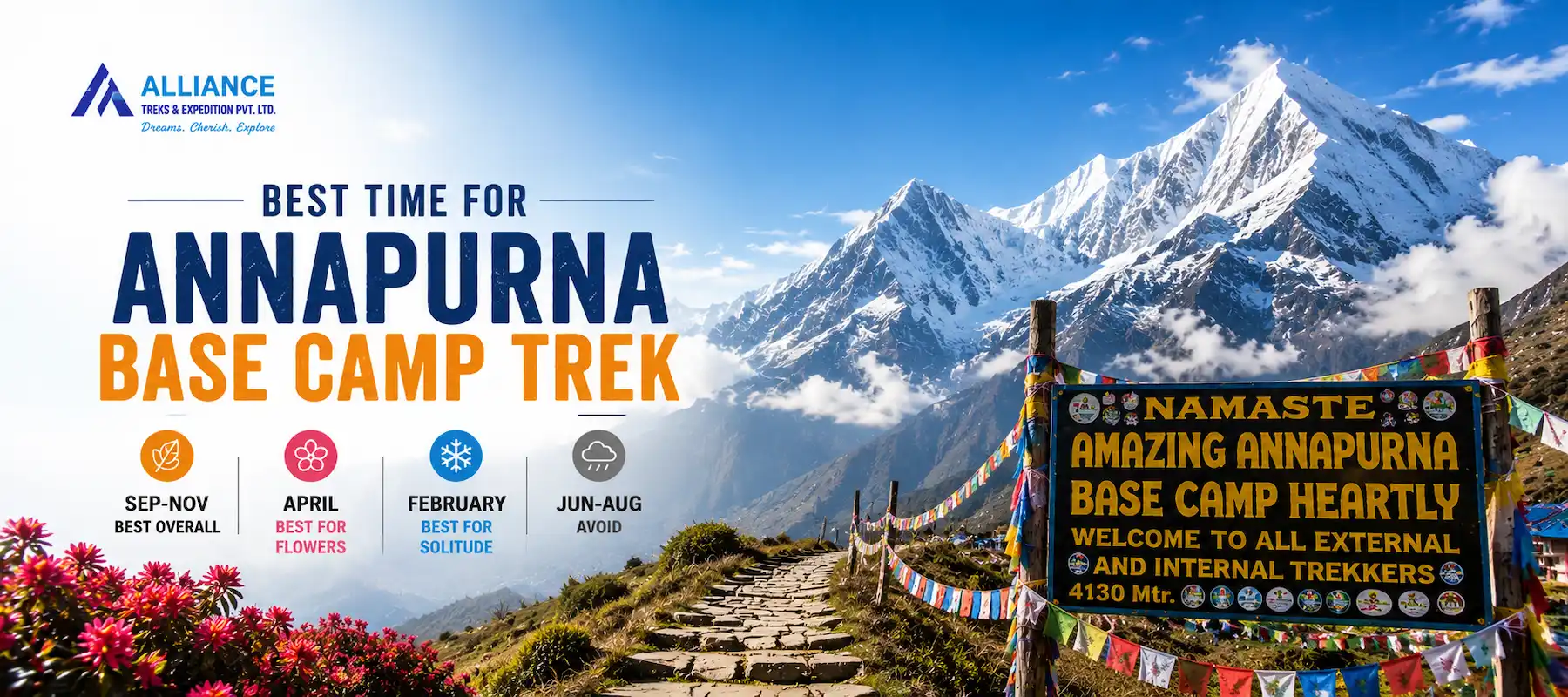
The best time for Annapurna Base Camp Trek is September-November (Autumn) for most trekkers.

But here’s the nuanced reality:

  • October: Best overall—crystal clear views, moderate temperatures, great photos. Most popular, most expensive, most crowded.
  • April: Best for rhododendrons—forests exploding with flowers. Fewer crowds than in October. Warmer during the day. 2nd best choice.
  • February: Best for solitude—almost no trekkers, 50% cheaper than October, crystal clear views. Nights are dangerously cold (-10°C).
  • June-August: Worst time—constant rain, mountains hidden, dangerous landslides, poor visibility.

Key differences from longer treks (like Manaslu Circuit Trek):

Unlike the 17-day Manaslu trek, the 7-day ABC trek is affected differently by seasons:

  • Shorter duration means the weather window is less critical
  • Lower maximum altitude (4,130m vs. 5,160m) means less extreme cold
  • More developed infrastructure = more crowded, even in low seasons
  • Rhododendron blooms are more extensive (at the ABC elevation zone)

Choose October if you want the best overall. Choose April if you love flowers and slightly lower prices. Choose February if you want alone time and don’t mind extreme cold. Avoid June-August entirely.

Why Timing Matters for Annapurna Base Camp Trek

Annapurna Base Camp trek spans 822m (Pokhara) to 4,130m (ABC) in just 7 days. Season affects everything about your experience:

What Timing Controls:

1. Safety & Pass Conditions

Annapurna Base Camp approach (Day 4: Deurali to ABC) requires stable weather.

  • Autumn: Clear skies, stable weather, safe passage 95% of days
  • Spring: Clear mornings, afternoon clouds, but still safe
  • Winter: Clear but icy, avalanche risk increases with snow accumulation
  • Monsoon: Fog, poor visibility, avalanche/landslide risk—genuinely dangerous

Unlike Larkya La Pass on Manaslu Circuit Trek (5,160m technical pass), the ABC approach at 4,130m is less technically demanding. But poor visibility still creates danger.

2. Temperature Comfort

ABC low elevation (4,130m) compared to Manaslu (5,160m) means:

  • Temperature is 3-5°C warmer at same elevation
  • But nighttime cold is still significant (0 to -10°C depending on season)
  • Autumn (Oct): Days 8-12°C, nights -2 to 2°C—comfortable range
  • Spring (April): Days 12-16°C, nights 5-8°C—warmest season
  • Winter (Feb): Days 5-8°C, nights -8 to -12°C—extreme cold
  • Monsoon (July): Days 12-14°C, nights 8-10°C—warm but rainy

3. Mountain Visibility

The entire reason people trek to ABC is to see mountains—Annapurna I, South, and Machhapuchhre.

  • Autumn: 90% visibility all day—crystal clear views from ABC
  • Spring: 85% visibility—clouds form afternoons, mornings spectacular
  • Winter: 95% visibility—clearest of all seasons, sharper images
  • Monsoon: 20% visibility—mountains hidden 80% of the trek, trekkers often don’t see ABC at all

4. Crowds & Social Experience

ABC is Nepal’s most popular trek (more accessible than Manaslu, Everest BC).

  • October: 3,000-5,000 trekkers for season = 40-60 per day = crowded teahouses, social dinners
  • April: 2,000-3,500 trekkers for season = 30-50 per day = moderately busy
  • February: 400-800 trekkers for season = 5-15 per day = mostly alone, intimate experience
  • July: 300-600 trekkers for season = 4-8 per day = but weather is terrible

5. Rhododendron Blooming

ABC altitude (2,165m-4,130m) crosses the rhododendron zone extensively.

  • Late March-April: Peak bloom (2,500-3,500m elevation zone)
  • May: Blooms fading, more rain
  • Other months: No flowers

This is unique to the spring season and a significant draw.

6. Acclimatization Stress

ABC requires rapid altitude gain (1,343m Day 1, total 3,308m in 4 days).

  • Cold seasons: Cold + altitude = harder acclimatization
  • Warm seasons: Warmth aids altitude adaptation
  • Spring (April): Easiest acclimatization due to warmth
  • Winter (Feb): Hardest acclimatization due to cold

This matters for altitude sickness risk.

Peak Season (September-November): Clear Skies & Mountains

September-November is unquestionably best for most trekkers.

The Reality:

The weather between the month September – November is objectively perfect:

  • Temperature: 15-20°C days, -2 to 2°C nights (manageable cold)
  • Precipitation: Almost none (maybe 1-2 rainy days in 7)
  • Visibility: 85-95% all day
  • Wind: Light to moderate (strong only at ABC itself)

Most trekkers experience this season successfully. The mountains are visible. The weather is stable. The views are stunning.

October is Peak-of-Peak:

Mid-October (October 10-25) is an absolute sweet spot for this Annapurna Base Camp Trek:

  • Mountain visibility: Clearest (air is crisp)
  • Temperature: Perfect (not too warm, not too cold)
  • Trail conditions: Optimal (dry, firm, clear)
  • Weather stability: Highest (high-pressure system stable)

Trade-off: October is most expensive (USD $450-500) and most crowded (40-60 trekkers daily).

Early September & Early November Offer Balance:

Early September (Sept 1-15):

  • Monsoon just ending, air still clearing
  • Crowds haven’t yet arrived
  • Prices are slightly lower than in October
  • The weather is slightly less stable than in October, but can still be considered as good

Early November (Nov 1-10):

  • Weather still excellent
  • Crowds declining from October
  • Prices dropping (10-15% cheaper than October)
  • Still early enough before winter clouds increase
  • Last window before winter arrives
  • Avoid Mid-November Onward:

After November 15:

  • Winter weather patterns beginning
  • Clouds increasing
  • Temperature dropping faster
  • Snow risk above 3,500m increases
  • Windows closing for safe high-altitude access

Why October is Most Popular:

Objective factors make October unbeatable:

  • Clearest skies of the entire year (95% visibility)
  • Warm enough for comfort (15-18°C days)
  • Cool enough to sleep (good sleeping bag adequate)
  • Dry conditions (minimal rain)
  • Peak pressure system (stable, predictable)

Subjective factors:

  • Mountain photography is best
  • Views from ABC are most dramatic
  • Teahouse atmosphere (other trekkers creating social experience)
  • Festival season (Dashain festival occurring, local celebrations)

Spring Season (March-May): Rhododendrons & Warmth

Spring (March-May) is the second-best season, with a unique charm: rhododendron blooms and the whole forest looks bloody red.

The Reality:

Spring is warmer than autumn and features incredible flower blooms:

  • Temperature: 15-22°C days (warmer than autumn), 5-10°C nights (warmer than autumn)
  • Precipitation: Increasing toward the end of May (2-3 rainy days possible)
  • Visibility: 80-90% (good but not quite as clear as autumn)
  • Wind: Light (warmer air creates less wind)

Spring is a genuinely good season—different from autumn but excellent.

Rhododendron Magic:

ABC altitude zone (2,165m-4,130m) crosses the entire rhododendron belt. In April, rhododendron forests are in peak bloom:

Days 5-8 (Dovan to Deurali):

  • Entire mountainside carpeted with pink, red, white, and purple flowers
  • Some bushes are 3-4 meters tall, covered in blooms
  • Photography opportunities are extraordinary
  • Experience is visually stunning

This rhododendron blooming is unique to spring—it doesn’t occur in any other season.

Temperature Advantage:

Spring warmth is significant:

  • Daytime: 15-22°C (5-7°C warmer than autumn)
  • Nighttime: 5-10°C (7-12°C warmer than autumn)
  • Acclimatization: Easier due to warmth
  • Comfort: Better for those sensitive to cold
  • Sleep: Warmer nights = better sleep quality

This warmth means you need a lighter sleeping bag than in autumn (you can use a -5°C bag instead of -10°C).

April is Peak Spring:

April 15-25 is the absolute best for rhododendrons:

  • Weather: 80% clear, 20% cloudy = Good
  • Days: 18-22°C (warmest walking temperature)
  • Nights: 6-10°C (comfortable)
  • Rain: 0-2 days (increasing but still manageable)
  • Flowers: Peak bloom (maximum flowers open)
  • Crowds: 25-40 trekkers daily (moderate, less than October)

Advantages:

  • Rhododendron peak bloom (flowers everywhere)
  • Warmest temperatures (easiest hiking)
  • Photography opportunities (flowers + mountains)
  • Fewer crowds than in October
  • Cheaper than October
  • Teahouses are moderately full (social but not packed)
  • Spring festival atmosphere

Disadvantages:

  • Clouds increasing (afternoon clouds common)
  • Visibility is not as clear as in autumn
  • More rain risk than in autumn
  • Flowers only bloom April 15-May 5 (outside this window, no flowers)

Best for: Photography lovers. Nature enthusiasts. Those who want warmth AND fewer crowds. Trekkers who value a unique experience over perfect weather.

Winter (December-February): Solitude & Extreme Cold

Winter (December-February) offers a unique experience: Solitude and the clearest views. But extreme cold creates significant challenges.

The Reality:

Winter is uncompromisingly harsh:

  • Temperature: 5-15°C days, -8 to -12°C nights (brutal)
  • Precipitation: Almost none (very dry)
  • Visibility: 95% (clearest of all seasons)
  • Wind: Strong at altitude

Winter is stunning but difficult. Only experienced, well-equipped trekkers should attempt.

February is the Best Winter Month:

Why February over January:

  • January is the coldest (sometimes -15°C nighttime)
  • February is slightly warmer (-8 to -10°C nighttime)
  • Still very cold, but slightly more manageable

December (late December):

  • Acceptable, but getting into the coldest period
  • Early December is transitional (still moderately cold)
  • Late December dropping into winter extreme

February Specifics:

  • Weather: 92% clear, 8% cloudy = Outstanding
  • Days: 8-12°C (cold but still hiking-viable)
  • Nights: -8 to -10°C (dangerous cold)
  • Rain: 0 days (bone-dry)
  • Visibility: 95% (clearest views possible)
  • Crowds: 5-12 trekkers daily (almost alone)

Advantages:

  • Absolutely clearest visibility (95%+)
  • Most solitude (often hiking completely alone)
  • Cheapest season (significant savings)
  • Stunning mountain photography (crisp, clear air)
  • Authentic mountain experience
  • Intimate teahouse dinners (just your group + local family)
  • Challenge/achievement feeling

Disadvantages:

  • Dangerously Cold (-10°C nights)
  • Risk of frostbite/hypothermia if not prepared
  • Thin air feels thinner in cold
  • Sleep is difficult (cold penetrates everything)
  • Limited local food supplies (less trekker demand)
  • Mentally challenging (long nights, extreme cold)

Best for: Experienced mountaineers. Hardy adventurers. Budget-conscious solo trekkers who love solitude. Those seeking extreme challenge.

Best Time Overview Table

Season Best For Weather Crowds Cost Visibility Rating
October (Peak) First-time trekkers, photographers Perfect (15–18°C) Very High (40–60/day) US$450–500 95% ⭐⭐⭐⭐⭐
September 1–15 Budget travelers with good weather Excellent (20–24°C) Moderate (15–25/day) US$420–450 90% ⭐⭐⭐⭐⭐
November 1–10 Balanced option Excellent (16–20°C) Low–Moderate (15–25/day) US$390–420 85% ⭐⭐⭐⭐⭐
April 15–25 Rhododendron blooms, warmer temperatures Good (18–22°C) Moderate (30–40/day) US$410–450 80% ⭐⭐⭐⭐
March 1–20 Budget-conscious trekkers Good (12–18°C) Low (12–20/day) US$360–400 70% ⭐⭐⭐⭐
February Solitude and winter challenges Clear skies (-8°C nights) Very Low (5–12/day) US$350–390 95% ⭐⭐⭐
June–August Not Recommended Rainy (about 90% chance of rain) Very Low (4–8/day) US$330–360 20%

Rhododendron Blooming Timeline

If rhododendron blooms are your goal, timing is critical.

Rhododendron Biology:

Rhododendrons bloom when:

  • Temperature rises (triggers flowering hormone)
  • Days lengthen (increasing daylight)
  • Moisture is available (water needed for blooms)

On ABC elevation gradient:

  • Lower elevations (2,500m) bloom before higher elevations (3,500m)
  • Warmer elevations bloom first
  • Cooler elevations bloom 1-2 weeks later

Timeline:

  • Late March: Early buds appear at lower elevations (2,500m zone). Early March has only green leaves.
  • April 1-10: Buds are developing. Some flowers starting to open at lower elevations. Upper elevations still budding.
  • April 15-25: PEAK BLOOM. Maximum flowers open across entire trek elevation. Every hillside explodes with color. This is “flower window.”
  • May 1-10: Blooms still present but beginning to fade. Upper elevations at peak, lower elevations past peak.
  • May 15+: Blooms mostly faded. Flowers going to seed. Still some color but not spectacular.

Best Days for Rhododendrons:

April 15-25 is absolutely optimal. Outside this 10-day window:

  • Before April 15: Not enough blooms
  • After April 25: Blooms fading


Frequently Asked Questions

What is the best month for the Annapurna Base Camp Trek?

October is the best month for most trekkers thanks to its stable weather, crystal-clear mountain views, and ideal trekking conditions. If you prefer fewer crowds and slightly lower prices, April is another excellent choice.

Is spring or autumn better for the Annapurna Base Camp Trek?

Both seasons are excellent. Autumn (September to November) offers the clearest skies and most stable weather, while spring (March to May) features blooming rhododendrons, warmer temperatures, and fewer trekkers.

Can I trek to Annapurna Base Camp during the monsoon?

Yes, but it is generally not recommended. Heavy rainfall, slippery trails, poor visibility, leeches, and landslide risks make June to August the least favorable trekking season.

Is winter too cold for the Annapurna Base Camp Trek?

Winter trekking is possible, but temperatures can fall below -10°C at night around Annapurna Base Camp. It is best suited to experienced trekkers equipped with proper winter clothing and gear.

When do rhododendrons bloom on the Annapurna Base Camp Trek?

Rhododendrons typically bloom from early April through late April, with peak flowering occurring around the middle of the month, creating colorful forests along the trail.

Is October crowded and more expensive?

Yes. October is the busiest trekking month in Nepal, so teahouses and trails are more crowded, and accommodation and guide prices may be slightly higher than during other seasons.

Can solo trekkers do the Annapurna Base Camp Trek?

Yes. Solo trekking is popular, particularly during spring and autumn. However, hiring a licensed guide is recommended for improved safety, navigation, and local knowledge.

Is May a good time for the Annapurna Base Camp Trek?

Early May still offers pleasant trekking conditions with warm temperatures. By late May, afternoon clouds increase and the monsoon season begins to approach.

Are trekking permits available throughout the year?

Yes. Annapurna Base Camp trekking permits are available year-round. Seasonal weather conditions—not permit availability—are the primary factor when planning your trek.

Should I choose spring or wait for autumn?

Choose spring if you enjoy blooming rhododendrons, warmer temperatures, and colorful landscapes. Choose autumn if your priority is the clearest mountain views and the most stable weather.

Which season is best for photography?

October is ideal for landscape photography because of its exceptionally clear skies, while April is perfect for capturing vibrant rhododendron forests against the Himalayan backdrop.

What temperatures can I expect at Annapurna Base Camp?

Temperatures vary by season. In spring, expect around 10–15°C during the day and 4–8°C at night. Autumn averages 8–12°C by day and -2 to 2°C at night. Winter brings daytime temperatures of 5–8°C and nighttime temperatures between -8 and -12°C, while the monsoon season averages 11–14°C during the day and 6–10°C at night.

Does the season affect altitude sickness?

Slightly. Warmer temperatures in spring may make acclimatization feel easier, but altitude sickness can occur during any season. Ascending gradually, staying hydrated, and allowing enough acclimatization time are the best ways to reduce the risk.

Should I trek during the peak season or the off-season?

If you want the best weather and panoramic mountain views, choose the peak trekking seasons of spring or autumn. If you prefer quieter trails and lower costs, the off-season can be rewarding, but you should be prepared for more challenging weather conditions.

Nirmal “Nims Dai” Purja: Legacy of the Mountaineering Legend (1983-2026)

Nirmal “Nims Dai” Purja: Le...

Post Date: 02 Aug 2026 Post by - Kul Bahadur Gurung
Honey Hunting in Nepal

Honey Hunting in Nepal

Post Date: 31 Jul 2026 Post by - Kul Bahadur Gurung
Annapurna Base Camp Trek: Complete 7-Day Itinerary Guide

Annapurna Base Camp Trek: C...

Post Date: 31 Jul 2026 Post by - Kul Bahadur Gurung
Tihar Festival in Nepal

Tihar Festival in Nepal

Post Date: 30 Jul 2026 Post by - Kul Bahadur Gurung
Manaslu Circuit Trek Weather

Manaslu Circuit Trek Weather

Post Date: 29 Jul 2026 Post by - Kul Bahadur Gurung
What is Festivals In Nepal

What is Festivals In Nepal

Post Date: 26 Jul 2026 Post by - Kul Bahadur Gurung
Ghorepani Poon Hill Trek Elevation Guide

Ghorepani Poon Hill Trek El...

Post Date: 23 Jul 2026 Post by - Kul Bahadur Gurung
Kanchenjunga Circuit Trek Elevation Guide

Kanchenjunga Circuit Trek E...

Post Date: 21 Jul 2026 Post by - Kul Bahadur Gurung
Upper Mustang Trek Elevation Guide

Upper Mustang Trek Elevatio...

Post Date: 14 Jul 2026 Post by - Kul Bahadur Gurung
Manaslu Circuit Trek Elevation Guide

Manaslu Circuit Trek Elevat...

Post Date: 12 Jul 2026 Post by - Kul Bahadur Gurung

Alliance Treks & Expedition Pvt. Ltd. Once is not enough for naturally and culturally Himalayas
Contact us